The Certainty of Uncertainty | My time as a Laidlaw Scholar

Su’esu’ega
(Samoan noun) - Investigation, exploration, experiment
(pronounced: soo / ehsoo / engah)
Or, as I was once told, ‘The Spirit of Inquiry’.
This is a word I heard only once during my LiA in Samoa, thrown into a short lecture to Australian high school students learning about reviving traditional Samoan crafts. In the moment, it was used to describe the persistence, investment and genuine curiosity Samoans used to have for the land around them and thus produced ingenious natural tools that are being forgotten today in favour of the convenience of commodification. This word has stuck with me, and I couldn’t quite figure out why until I came to summarise my entire 2 years of development with Laidlaw Scholar’s Leadership and Research Programme.
Being genuinely curious about the world around us is so important.
It is something I originally thought I expressed because of my anthropological training, but I’ve come to find that it is perhaps a more crucial element to my mindset as a leader. Of course, curiosity as a researcher is something that I’ve seen in all my peers in the programme, but I think that it was also a vital undercurrent hiding behind the values of humanity, drive and transcendence that we explored in our leadership training from the Oxford Character Project. Through realising this connection, I’ve learnt that leadership and research come together when you try and deeply understand what’s right in front of you. Often, that learning gives you the power to act. It is people that choose to do both of these that we need more of in the world.
 |
 |
 |
But neither of these things are easy. We know this – we are Laidlaw Scholars for crying out loud, when has any one of us executed a plan without challenges? Each one of us has gone into two separate projects with a plan, and a big teaching of the research phase is that information cannot be ignored just because it challenges the hypothesis. Leadership is the same. Both phases of our learning have proven that going in with a plan is great, but being ignorant to – or even just compliant to – the world around you can create superficial and meaningless outputs.
So, what drives us forward throughout both leadership and research when our ideas about reality are challenged by, well…reality?
A spirit of inquiry, I should hope.
In my personal experience, it was curiosity that kept my LiA grounded in ethical leadership when my plans were thrown out the window, and I had to reevaluate the possibilities of my project within a Samoan context. As I describe in my LiA video ‘Reframing Leadership from the Ground Up’, the construction of a Samoan fale (house) that was the foundation for all of my SMART goals was never actually built. Since these plans and the fale never created the structure around me that I’d imagined, I found myself truly seeing the world around me with an unobstructed view and was faced with the task of building my own place within this context. Our Westernised goals were not so smart in a culture where distilling time into numbers on a clock or calendar is an offence to the richness of every moment in each new day. Moreover, these goals were nonsensical in a culture where each step of a process is assigned value and meaning, and the final outcome is a product of these cumulative experiences rather than a strict goal that can be decided beforehand. As a result, my LiA showed me the power of rebuilding my leadership through a quiet curiosity as I simply listened to the needs of those around me and went from there. My initiative was hidden between the lines of an Excel-sheet archive that few people will ever see, and my determination sat softly in the background of each conversation that informed cultural appropriacy and built my relationships with my team.
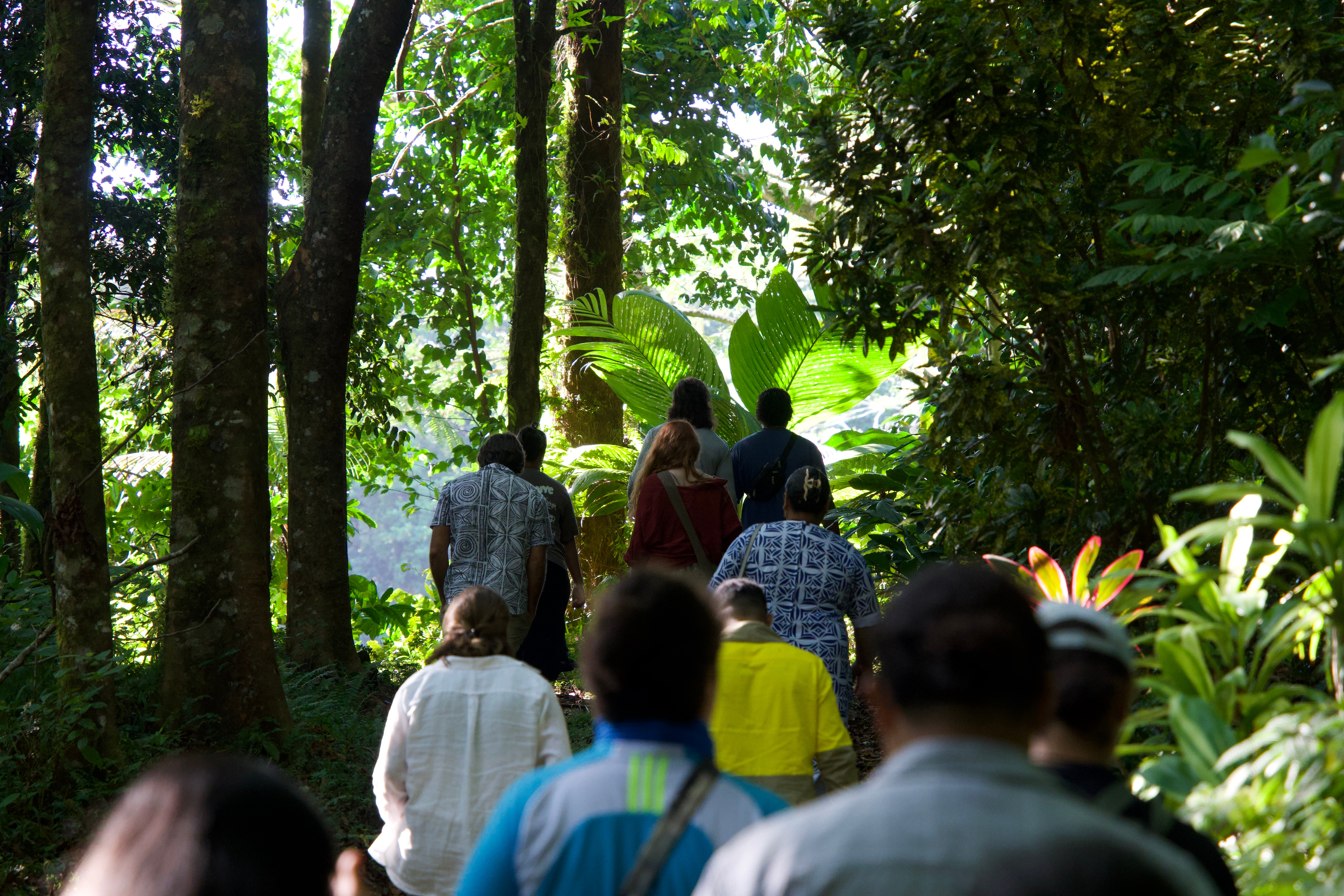
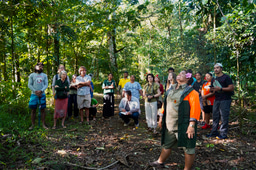
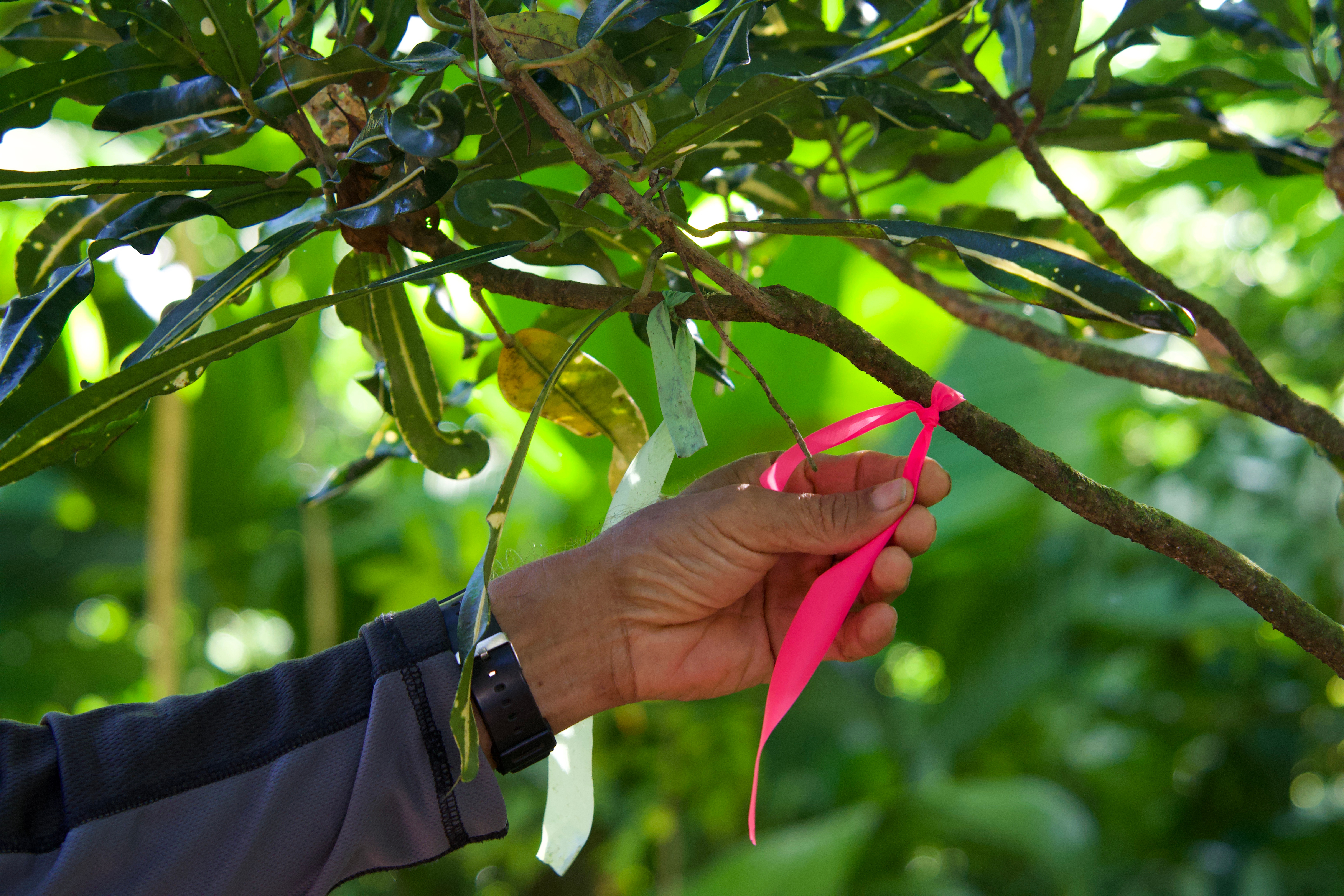
Taken by me during my LiA
This was a development that was difficult as someone who was assigned a ‘dominant’ style of leadership in my first Laidlaw training weekend. Similarly, as someone eager to learn from people directly, I struggled through the new territory of library-based research in my first year. Researching cultures as distant as those in the Pacific forced me to overcome my anthropological dissatisfaction with not being able to hear people’s stories in-person, and to instead lean into the pre-field benefits of a literature review. Furthermore, I only faced this curveball halfway through my research project as I was investigating the opportunity for interviews and discovered a reality I later witnessed in Samoa; Pasifika peoples are often invested in the present moment and people in front of them, and not the prospect of an online call. They knew the importance of being present to the world around them in a way I had yet to learn.
So, in both leadership and research, I was stepping forward tentatively into new territory that I hadn’t anticipated needing to cover and for two distinct periods of time, everything was uncertain.
But to experiment and inquire is to go forward with uncertainty – perhaps to even choose the path of uncertainty because the unknown is the only thing that is certain. The Laidlaw Programme has taught me the joy that can come with this. Most of us who earn this opportunity to be a Laidlaw Scholar live in worlds where being curious isn’t usually facilitated as we go about our routines and walk with our heads down into our career paths. Curiosity without reward - without a grade – is hard to come by. So, one of the things I am most grateful for having experienced during the last 2 years is having this soft place to land when all of our questions about the world are up in the air and being surrounded by peers with which to discuss our journeys.
I think it is often hard to really see how uncertain our experiences were when we’ve come out the other side of them with the certainty of growth that has already happened, solidified into the concrete of the past. So as I discuss this journey with you, I hope that as a fellow scholar I can encourage you to find the same joy and satisfaction by replaying the memories of past-you stumbling about and eventually finding their footing to take you to where you are today; hopefully resting on solid ground for now but with capacity – and desire – for growth soon.
My experience as a Laidlaw Scholar has proved to me that my su’esu’ega and curiosity for the world around me is strong enough to carry me through the unknowns of leadership and research in the future. I feel that pull to use my learning and act upon it.
I’m uncertain of where my curiosity will take me next, but I am certain that I now have the confidence to hit the ground running.
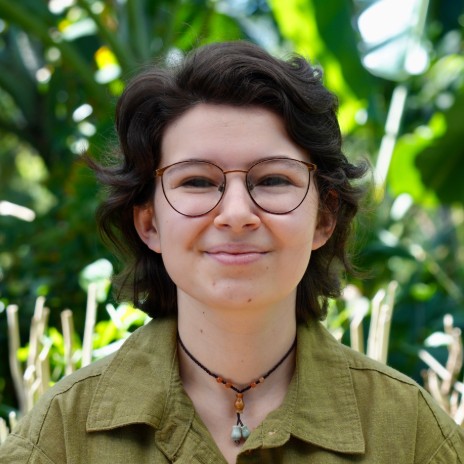
Hia! I'm Bethan, but most people know me as Bea. I am going into my third year at the University of St Andrews studying Social Anthropology.
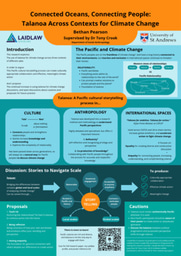
My Laidlaw research project explores the power of the Pacific research methodology and cultural storytelling tool of talanoa within the sphere of Pacific climate change discourse. In order to make meaningful change happen on the terms of those most affected by climate change and with some of the greatest history of connections with the ocean, I examined how talanoa can be expanded to facilitate culturally appropriate collaboration and effective, meaningful climate change action.
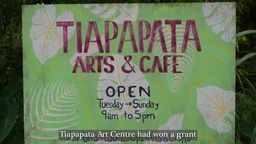
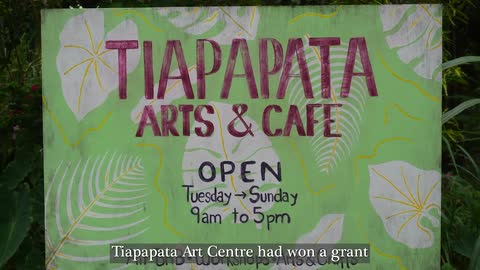
The following summer, I took my learning to the Pacific for my Leadership in Action project working at Tiapapata Art Centre, Samoa. My work lended my passion for visual storytelling towards capturing and promoting the phenomenal, ever-developing projects that the art centre runs. As an educational and creative hub dedicated to fostering the continued transmission of both tangible and intangible cultural heritage, my collaboration with them involved creating a new archival system to catalogue their cultural projects, being a photographer/videographer capturing events during my time there, and helping to both facilitate and then preserve their amazing work.
__
More broadly, my interests lie in environmental and visual anthropology, overall aiming to understand and put into practice how visual storytelling can empower people in the face of climate change, and inspire audiences beyond academia to see how interconnected our world is - and the people within it. In bridging the intersection of human experiences and our physical environments, I hope to portray a future that highlights localised solutions to environmental challenges and to make this future more engaging and accessible to a wider audience through film.