Tallying up: a reflection on my time as a Laidlaw Scholar
As my time in the Laidlaw Scholars Programme comes to an end, it feels important to reflect on my learning as a whole. I have already written separately about various individual pieces of it, so rather than going event by event and listing what each one taught me, I want to work the other way round: start with the learning itself and trace back how it came about. No meaningful development happens in one go. The things I am proudest of learning did not arrive during a single leadership day or a single week in the lab. They accumulated.
For that reason I have picked only three learnings, the three that permeated my whole experience. I would rather cover three themes properly than spread myself thin across ten. To give the reflection further shape I will keep referring back to the 3Cs framework that Laidlaw champions: character, changemaker values, and capacities. And I will finish by looking ahead at how I intend to carry all of this forward, because if this programme has convinced me of one thing, it is that I need to keep learning more.
1. Learning to lead by learning to be a team player
Before Laidlaw I already knew I was not a great leader, for the very simple reason that I was a control freak. I was arguably a decent manager, except not really even that, because I would always collapse into micromanaging, or into my personal favourite: quietly redoing everybody else's work.
What surprised me was how many opportunities Laidlaw handed me to fix this. Surprising, because fixing it involved a great deal of teamwork, and the scholarship is not necessarily designed to function that way. I just happened to have that experience.
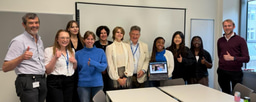
It started on day one. When I decided to apply, I went down the route of a pre-defined research project advertised by the School of Medicine, and it turned out I would be working in a group: eight other researchers from Duke University, also Laidlaw Scholars, plus a few from St Andrews holding StARIS awards. That is exactly where the challenge arose. It was my first ever research project and I am a deeply individualistic person, and I discovered two things quickly. One, research is hard. Two, it is so much harder if you are not being a team player and are trying to be a manager instead.
The same thing happened with my Leadership in Action project. I did a group LiA with Luka, entirely by choice this time, and it did not mean I struggled any less. What was different was that I embraced the struggle a bit more.
A big part of that shift came from the Oxford Character Project, which introduced me to the idea of virtues and, more importantly, to the idea that virtues have to sit in balance with one another. Through it I worked out that I carry an excessive virtue of drive while my temperance often runs deficient, and that this imbalance is precisely why I find it so painful when group work slows the pace down. Being able to name the problem that way, to have language for it in my own character and then apply judgment to regulate it, has been enormously relieving.
Beyond the Character Project, though, it has simply been continual exposure. I partly lied earlier when I said Laidlaw was never necessarily about teamwork. That was my view from the outside, and really it was just my stereotype of what research and leadership look like. In my head, research was a lonely scientist in the lab late at night with nobody else around, and leadership was a stern CEO sitting by themselves in an empty office in front of an enormous computer screen. Neither is true, of course.
Neither research nor leadership happens in isolation, and the Laidlaw Foundation knows that very well, which is why such a large chunk of the programme is built around promoting collaboration.
Two parts of it in particular changed how I work when it comes to communication and influencing: the Laidlaw Scholars Network and the Laidlaw Conference. Both make it obvious how central a collaborative mindset is to research and to leadership alike. Through them you are constantly pushed to share your work, to collaborate, and to take in and discuss views of the world that are not your own, and to notice how much richer that makes everything. In my recent "LiA confessions" post I wrote about how the programme was a big reason I got rid of my habit of gatekeeping career opportunities. All of it helped me realise how important it is to take on the challenges of life alongside other people, because on your own you can only get so far. You have one set of life experiences and one skill set.
Those constant nudges to share scholarly work and achievements on the LSN, and to meet scholars from across the country and the world at the conference, feel refreshing at a time when so much else is becoming more isolated. That, more than anything, is what built a global mindset for me.
All in all this first lesson has been an ode to the people capacity of the 3Cs: communication and influencing, a collaborative mindset, diversity, equity and inclusion, emotional intelligence, and global citizenship. I would not claim to have developed all five evenly, but I cannot point to one of them that the programme left untouched.
2. Staying calm when nothing is certain
Laidlaw also gave me the chance to face down my other great fear, which is uncertainty. I saw this one coming a little more clearly than the teamwork problem, but I still could never have imagined the extent of the learning involved.
I always knew research would be uncertain. You are literally creating new knowledge, so how could it be anything else? And voluntary projects? The key word there is projects. I had always imagined how confusing it must be to build something from the ground up, but again, the true extent of it was never obvious to me and I was shocked by it.
Let me go chronologically again and start with writing a research proposal for a scholarship you do not know whether you will get, and discussing a project with potential supervisors you do not know whether you will get to work with. That is what applying for a scholarship like Laidlaw feels like. You put your whole heart and soul into a proposal, describing the ins and outs of what you hope to do if the funding comes through, and over all the excitement and hardship of it hangs an enormous veil of uncertainty. You do not know what will happen.
Say you get it. You are over the moon. Is the uncertainty done? Absolutely not. That turned out to be the easiest uncertainty of the entire research experience, because what comes next is essentially not knowing anything, and my inner control freak duly freaked out. How am I supposed to plan my life? How do I know how long something will take when you literally cannot predict it? Research is not A to B. It is A to Z, except you never know what C is until you have reached B, and you never know what Y is until you have reached X. So I will ask again: how am I meant to plan anything? How am I meant to know that things will work out and that my research will fit neatly into six weeks?
That is when, at one of the leadership days hosted by University of St Andrews Laidlaw Programme Managers, in the run-up to the research programme, I was introduced to Gantt charts, along with a whole range of other project management and prioritisation and time management techniques. Those less formal leadership days turned out to be some of the most formative experiences I have had, and they are where I picked up the strategies that built out my processes capacity in the 3Cs framework.
By the next round of proposal writing, the LiA proposal, I was certainly better equipped for the uncertainty. I want to stress that it was still hard, but this time I had a bit more control and a bit less fear. I still worried about what if I ran out of time to come up with a self-defined project, and what if it did not get approved, but I had more experience behind me by then and more confidence that I could problem solve my way through.
The LiA itself went similarly. I went into it deliberately doing less planning and more problem solving in the moment, as and when issues arose, precisely because I had become more confident and better at problem solving. But as you might have guessed, no matter how prepared you think you are, you will never be prepared enough. This time the challenge became discovering that my idea of "minimal planning" is very different from what minimal planning actually has to look like when your project involves working with children. Children know nothing of your plans and do not want to hear about them. So on top of the improved problem solving and time and resource management I took from summer one, I gained something new: adaptability and acceptance, or in plain terms, working with what you have. That is no less a part of project management than the Gantt chart.
Looking back over this strand I can see project management, prioritisation and time management, design thinking and problem solving, and impact measurement and analysis all developing at once. Most of that learning came either from the leadership days at St Andrews run by our programme managers, or, once again, from simply doing the thing.
3. Ambition, bravery, and the courage to propose
This is the last of the three, and probably the one that ties the other two together. In a way it started before I even joined the programme.
Two of the key Laidlaw change-maker values are "ambitious" and "brave". Before I even knew the values existed, I think I was acting on them by applying. I second-guessed myself constantly. I assumed I would never be accepted, that I should not waste my time applying and should go and do something more useful instead. When I was accepted, my world flipped, and not because I had got in. It flipped because I realised how far my ambition could carry me; 'you don't achieve 100% of everything you don't apply for'.
From there it kept building, and my confidence built with it. What I learned was that beyond being good for me personally, ambition and bravery are often excellent drivers of positive impact.
The first time that properly showed up was in the original extension of my research project in summer one. We worked in subgroups on threads of a much larger project, and as my group neared the end of the tasks set within our thread, I saw an opportunity for a further line of investigation using the data we had already collected, approached from a new angle. I was able to pursue it because of the leadership drop-ins that the St Andrews Laidlaw team ran, where I got to talk to our leadership coach about values like curiosity and being extraordinary. Those conversations helped me reach for more in the moment and run an extension of the investigation that lined up with my own interests, which later turned out to matter enormously for sharing and disseminating my work at conferences.
And speaking of conferences. Because I have always been fairly self-doubtful, I almost dismissed the Laidlaw Conference. I did not apply to give an oral presentation or anything of the sort, because I laughed and thought, "why would they pick me? What is the point?" Once I was there, I did not put much energy into talking to other scholars either, because I assumed nobody would want to talk to me and that I was not the best person to network with. That is where the mindset ended, though. Attending the Laidlaw Conference as my first ever conference, in an environment that was supportive and welcoming, made me far more at ease in that kind of setting. It matters, because conferences and symposiums are how knowledge gets exchanged in any job and any industry, so knowing how to hold myself in one is valuable to me now.
Fast forward, and I applied to present my work at two more conferences, entered a poster competition at one of them, and was ranked in the top five. That is where being brave and ambitious stopped being an idea and became a practice, and the curiosity with which I approached the Laidlaw Conference is what gave me a low-stakes way into conferences and gatherings as a whole. This is the changemaker values strand of the 3Cs doing its work.
In the same vein, I found my voice and my footing in my Leadership in Action project by proposing, and then successfully executing, its extension to Shetland. That extension was originally not in the books for Science Ceilidh, the organisation we worked with, and it ended up becoming an important part of resource dissemination for them. For Lukas and me it was life-changing in a different way. It let us see a different side of Scotland and understand that a global mindset must be embraced even within a single country, adapting to different ways of doing things as you go.
None of it would have happened if we had not had the ambition and bravery to ask and to propose. And this, above everything else, was the most ambitious thing I did: running full public events. It was the culmination of all three Cs at once. Processes capacity in the project management. People capacity in working with Lukas. Changemaker values in being curious, ambitious and brave. And character virtues in the teamwork itself, through balancing drive against temperance.
While I am on character, it is important to say that although I did develop self-confidence and courage, it never crossed a line. Around the same time as I was really leaning into building courage, I was also partway through the six months of training for the Oxford Character Project, and that reinforced how important it is to balance courage with humility. So throughout my LiA, courageous as I was, I always remembered where to draw the boundary: to let the organisations we worked with lead us, and to speak up when speaking up was needed.
The bonus lesson and my overall conclusions: learning how to learn
Those were all reflections I am proud of. But above and beyond every one of them, the Laidlaw Programme taught me the single most crucial skill, which is how to learn.
That is a strange thing to hear from someone who has been in formal education for fifteen years, if we count from kindergarten. But it is true. I knew how to learn maths, biology and chemistry. I had no idea how to learn life skills, and I always found it intimidating even to talk about, because it feels as though everyone else simply knows them innately.
This links directly to another crucial C: the performance capacity of critical thinking and reflection. Through the endless outputs for the research project and the LiA, the LSN posts, and the Oxford Character Project handbook where we wrote something before every session to prepare for it, I was pushed to reflect more and more. Reflection turns out to be unavoidably important!
This post is an example of it.
Condensing my learning and working out what it actually was that I learned, and also where I still need to do more learning and more practice, while tallying up all the timeless tools I have picked up along the way.
That is what will let me carry on acting as a global citizen and leading ethically. Constant reflection, the last of the performance capacities I want to name here. Remembering the tools I have gained, including the remarkable tool of not being afraid to learn. And learning, for me, happens mainly through honest reflection.
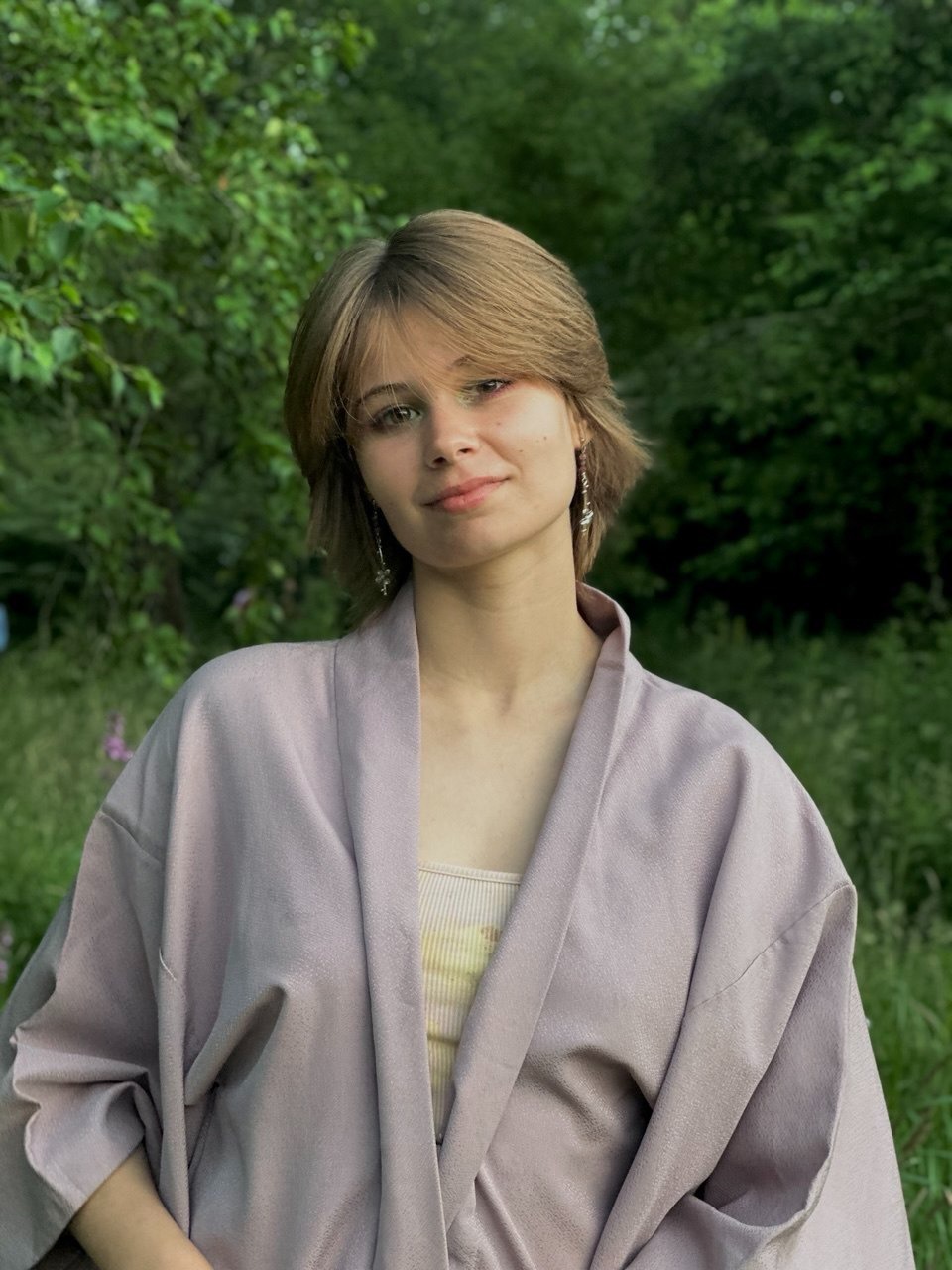
Hi! I'm Alina, a Biochemistry undergraduate fascinated by health sciences, my long-term goal is making healthcare more accessible, equitable, and effective. For my Laidlaw research, I stepped outside my home School of Biology into the School of Medicine to study direct-to-consumer health screening (think at-home genetic tests). These tests promise autonomy but risk misinformation, false positives, and overdiagnosis; so my work pushes for a shift from early diagnosis to optimal diagnosis, where a result is only useful if it's actually clinically actionable.
For my Leadership in Action project, I co-led When Science Dances; using Scottish ceilidh dance to teach gravitational-wave physics to children in underserved communities across Glasgow and Shetland, in partnership with Science Ceilidh, Wild Skies Shetland, and the University of Glasgow's Institute for Gravitational Research. It was a joy to take something as abstract as spacetime and turn it into something kids could dance out and giggle through, and to watch the project grow from a Glasgow workshop series into a Shetland outreach programme along the way.
Outside of "work hours", I'm always on the move. In uni I picked up judo, which has since become kind of my whole personality (big shout out to USTA Judo, I love you). I also absolutely love cycling; started as a way of coping with not having a car, ended as a full-blown addiction. Beyond sport, I've got a soft spot for anything creative: embroidery, crochet, photography, and losing hours to discovering electronic music. Basically: endlessly curious, always chasing whatever new thing has caught my eye.