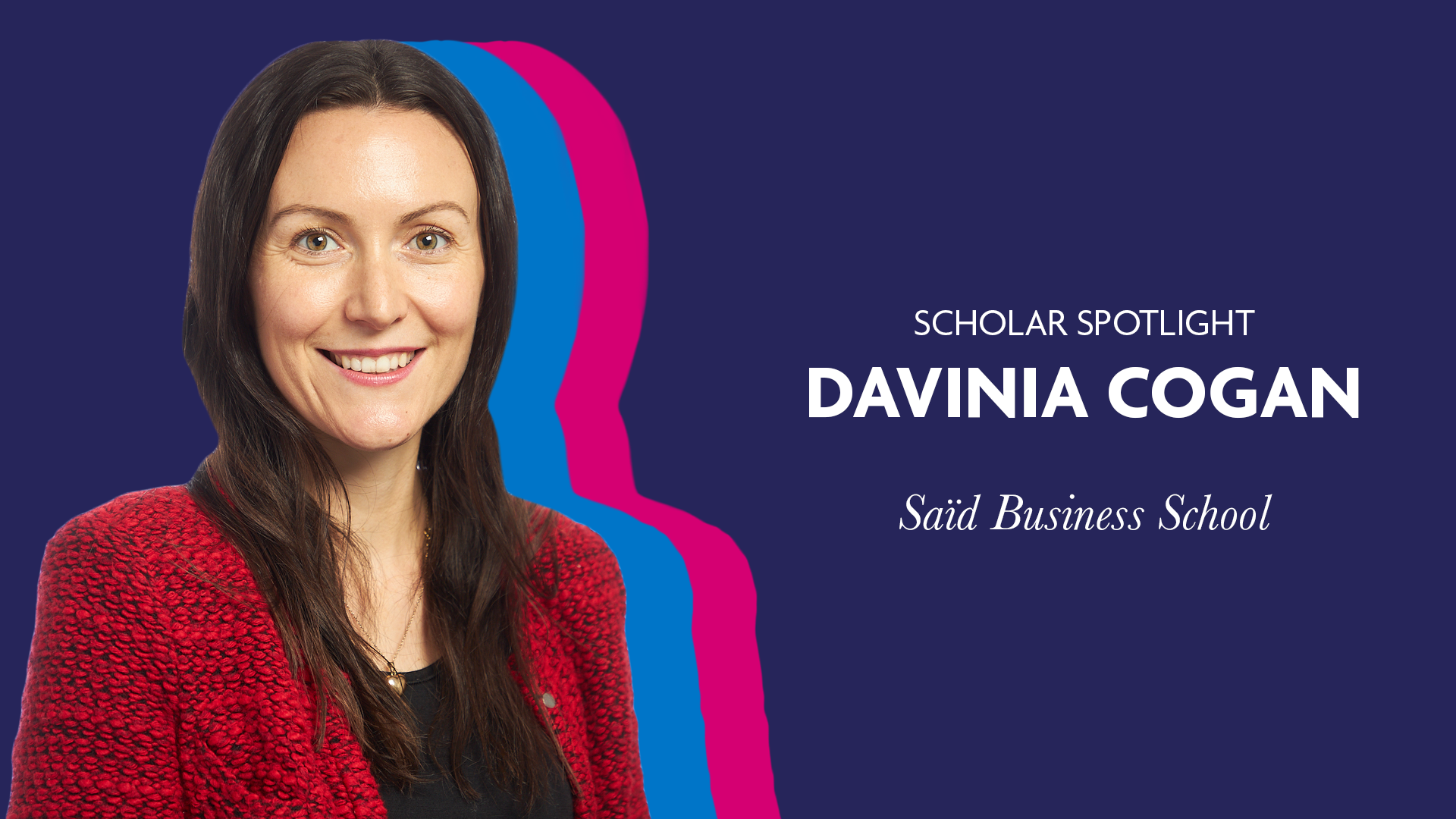
Scholar Spotlight - Davinia Cogan
Discover more Scholar Spotlights.
Davinia Cogan, a Laidlaw Scholar at Saïd Business School, on working as a single mother and seeing opportunities instead of challenges.
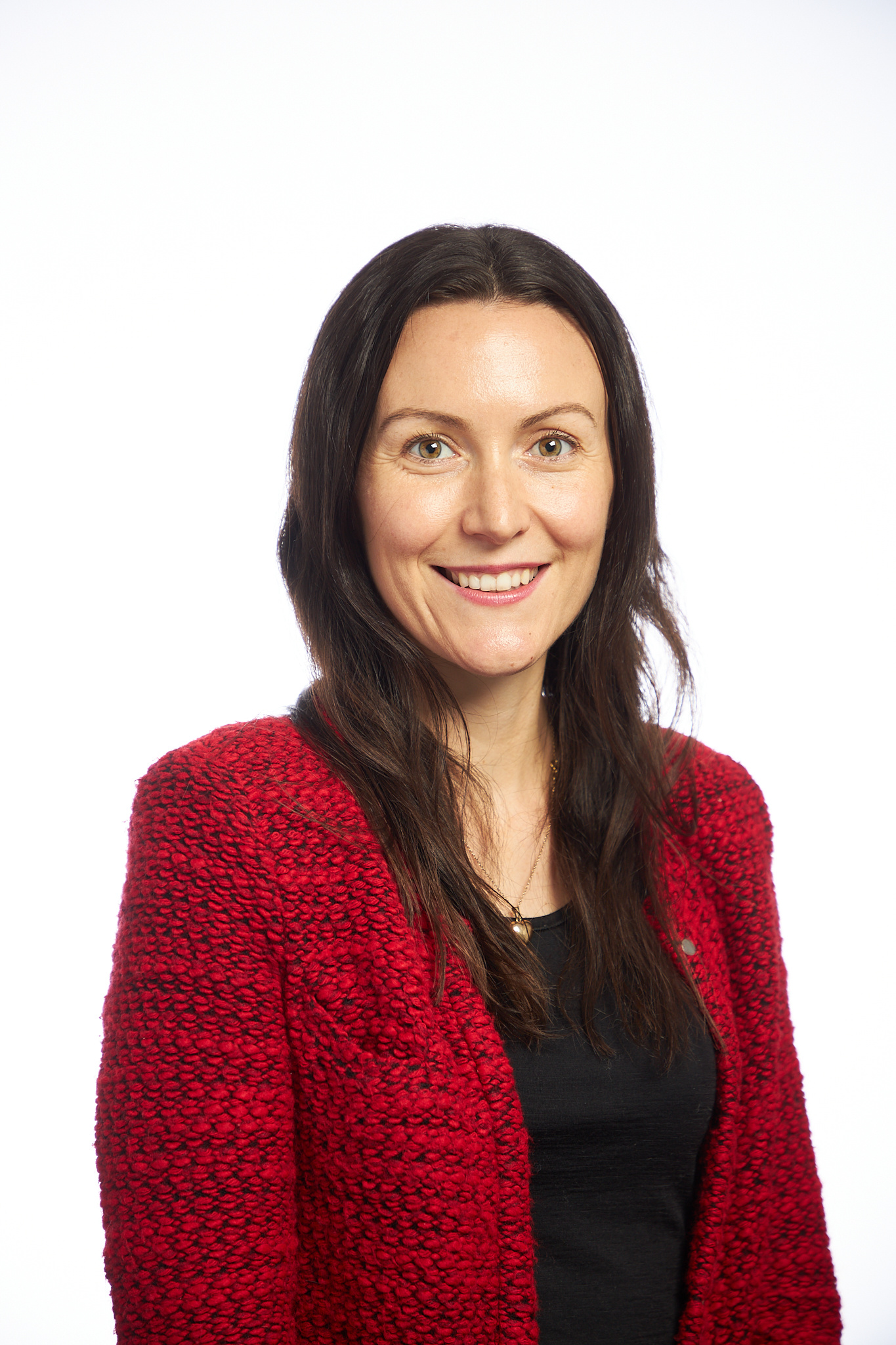
My first professional role was in investment management with ING in Sydney. I quickly realised traditional financial services were not my thing. After completing an M.A. in International Studies while working full-time, I quit my job and did a series of internships. I moved to Uganda and worked in the specialty coffee sector. I moved to London to work for the world’s first stock exchange designed for social-purpose businesses. I then moved to Tajikistan to complete a fellowship in microfinance. Afterwards, I returned to East Africa to work for a non-profit founded by the World Bank and UNDP to reduce energy poverty. For the past eight years, I worked with clean energy start-ups, selling life-changing solar and clean cooking products, to help them raise investment capital.
While working in the off-grid energy sector in East Africa, I met several impressive Said Business School alum that really impressed me and I knew I wanted to apply to Oxford. Six years ago, I visited the business school and planned to apply, but a few months later I fell pregnant unexpectedly and my plan was derailed. Eventually, I felt I was in a place to apply to the programme. I had taken the GMAT and completed the application. I was also working two jobs to save for living expenses. The Laidlaw Scholarship provided the final piece of the puzzle - the tuition fees – and meant I could finally fulfil my dream of doing an MBA at a top school.
What is the biggest life challenge you overcame, and what did you learn from it?
The biggest life challenge I have faced is becoming a single mother of my, then, eight-month-old baby. The exorbitant cost of childcare and living, combined with the physical and emotional stress of juggling everything solo, put an enormous amount of pressure on me. There were moments when I couldn’t afford to go to the grocery store. I wanted to break, but I couldn’t. When my daughter was three years old the Australian Government reformed childcare subsidies and I had access to full-time childcare. I took on two jobs and began saving and dreaming of a future rather than being stuck in survive-each-day mode. Remembering this trying period continues to be a source of strength and confidence. It forced me to build an internal reservoir of strength and learn how to look after myself. Seeing the transformational role of policy change in my life drew me to political activism in Australia. During the 2019 federal election, while working two jobs, I volunteered for the winning independent candidate taking on the incumbent, the former Prime Minister of Australia. Her win cemented my belief in perseverance - and ideals followed by action.
What is the best piece of advice you have been given?
I attended a talk a while back where the speaker quoted Shimon Peres:
"Optimists and pessimists die the same way. They just live differently."
As humans, we are ultimately responsible for how we react to any situation we might encounter. This advice showed me the power of choice, whether to see challenges or see opportunities. I have had several moments in my life where I had to stop myself from spiralling into despair despite how bleak the situation seemed at the time. I know, it is easier said than done, and it takes practise, but what experience has taught me is that things are never that bad. Everything will pass.
What is the worst piece of advice you have been given?
"Sleep when you’re dead."
This is just the worst, and most scientifically unsound, piece of advice I have ever heard. It can also perpetuate burn-out culture and promote unhealthy ways of working, impacting health and performance. Importantly, this kind of culture can lead to the exclusion of people who bear the brunt of caring responsibilities (i.e. women) from certain jobs - particularly high-paying work.
Top 3 tips that will help someone become a better leader
⚡ Know yourself. Spend the time to really get to know yourself and understand who you are without external pressures and expectations. Having a strong sense of self is integral to building quality relationships and to keeping a clear mind as you navigate work and life.
⚡ Listen. Sometimes it feels easy to jump into solution mode before developing a deep understanding of a problem and other perspectives. The higher up you get, the more acceptable it can be to become “the problem-solver”, which is a real danger. The best leaders I’ve seen listen well, ask thoughtful questions and shape the way teams solve problems. They let collective intelligence emerge.
⚡ Be elastic. The past few years have reminded us that flexibility is a huge asset. Leaders need to be able to adapt, and lead, in an everchanging world. They also need to maintain a flexible mindset. Don’t be afraid to change your opinion.
Which leaders in the world inspire you the most and why?
I love Michelle Obama’s honesty, tact, humour and intelligence. I feel like she paved the way for more authentic leadership and gave others permission to be themselves. I also have a lot of respect for Brene Brown and her work on the importance of connection and vulnerability, and cultivating great relationships in the workplace and life. I also admire the subtle and strategic rebellion of women with more old-school approaches, like Queen Elizabeth and Australian politician Julie Bishop. It’s definitely not my style, but I hold a lot of respect for them.
What does it mean for you to be a Laidlaw Scholar?
Getting the Laidlaw Scholarship was very emotional. After years of working towards this goal, receiving the Laidlaw Scholarship helped me to see that all the effort I put in was worth it. It also helped me to feel seen. Being a Laidlaw Scholar has been the most incredible experience. I have the most incredible group of stand-out women around me and I believe our bond will last a lifetime. I can see us continuing to reach out to each other for support and advice as we progress in the business world.
Briefly describe a scene from the future you are striving to create.
Women hold more decision-making power in business and government, and men hold more responsibility in the home. Caring responsibilities are equally allocated and parental leave for men is normalized. Productivity and creativity are prioritized over the number of hours worked, and the workplace is a safe place for everyone to thrive and express themselves.
Quick-Fire Questions
📺 Currently binging: I don’t have time for TV atm, but last year I laughed my head off watching Pretend It’s a City. Fran Lebowitz is hilarious!

🎵 My current anthem: love nwantiti (ah ah ah)
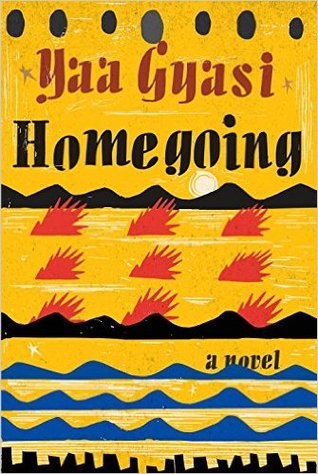
📚 My top book recommendation: Homegoing, Yaa Gyasi
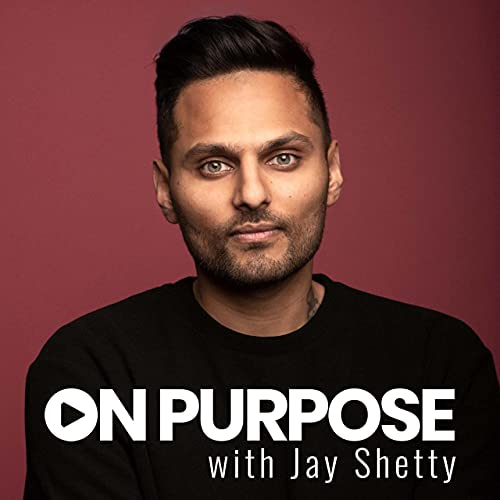
🎧 Podcast obsession: On Purpose with Jay Shetty
🌈 Something that made me feel joy recently: Cycling my daughter to school in Oxford, sun shining and Afrobeats playing.
❤️ A cause I care about: Girls On Fire Leaders is a non-profit that runs rich and transformative leadership camps for girls that live in Kibera, Africa’s largest urban informal settlement.
Davinia is a Laidlaw Scholar at Saïd Business School. The Laidlaw Women's Business Education Scholarship aims to help build a pipeline of future women leaders through access to best-in-class education, resources and global networks by providing full and half scholarships to women who would not otherwise be in a position to reap the benefits of attending an outstanding school.
🔦 Discover more Scholar Spotlights:
- Asha Scaria Vettoor on running a successful social enterprise and empowering rural women artisans.
-
Xuerui Yin on overcoming societal norms, creating opportunities for underrepresented groups, and working with compassion.
-
Paseka Khosa on overcoming financial hardship and advocating for unwavering belief in oneself.
-
Fisayo Adeleke on her mission to increase women's access to opportunities, and dealing with uncertainty.
-
Helena Couto on breaking out of your pre-defined place in society, and larger than life goals.
Hello! I was Laidlaw scholar in 2019, and I studied national, regional, and local identity in northern Tajikistan through the lens of women's fashion. For a year after graduating, I worked for the UN Mine Action Service which removes landmines from conflict and post-conflict regions. I then worked for the Laidlaw Foundation 2021-22 and completed a Master's Degree in Anthropology and Development Management at the London School of Economics. Now I'm working with the UN on innovative finance for biodiversity conservation, focusing on marine ecosystems.
Please feel free to reach out on the network, on LinkedIn, or by email. I'm always happy to meet new people and chat.