Research Summer Reflection
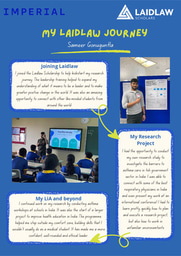
Over the past six weeks, this research project has unfolded largely as I hoped when I first sketched out my summer plan. I was able to move step by step from refining the core question to securing ethics approval, building the survey, and starting to recruit young derivatives traders in Mumbai. Seeing the pieces begin to connect—the introduction, the literature review on gamification and loss‑chasing, and the survey questions about rewards, leaderboards, and notifications—made the project feel real rather than hypothetical. Alongside the research itself, spending time in New York and meeting other Laidlaw Scholars through workshops and informal conversations gave me a sense of being part of a wider community of people wrestling with very different, but equally complex questions.
Looking back, one change I would make is to give myself more time early on to interrogate my design choices. In the first weeks, I shifted from a broad focus on “gamified finance” to a more specific focus on real‑money derivatives apps and 20–30‑year‑old traders in Mumbai. That sharpening improved the project, but it also meant revising my survey and rethinking my sampling strategy while I was already deep into reading and writing. If I had settled on this narrower frame sooner, I could have started recruiting participants earlier and left more room at the end of the program for analysis and writing rather than rushing to fit everything in.
Working with my mentor has been a central part of the process. Our meetings pushed me beyond simply describing interesting features of trading apps and forced me to articulate a clear, testable claim about how those features might shape behaviour. He asked difficult but helpful questions about what I meant by “post‑loss persistence,” how I would measure it, and how I could design survey items that captured more than vague impressions. His emphasis on clarity about variables, sampling, and the eventual audience for the work has already changed how I think about structuring a research project.
As I look ahead to the deadline for the full paper and poster, I feel that the groundwork is in place. The argument is defined, the literature review is drafted, and the survey instrument is ready to generate the data I need. My next steps are to complete data collection, run the quantitative analyses, and translate the results into visual and written forms that clearly show how game‑like features relate to loss‑chasing among young derivatives traders. I am curious to see whether the patterns I expect will actually appear, and I am looking forward to turning this summer’s planning and piloting into a finished piece of work I can share.

Hi! My name is Syna, and I am a freshman at Barnard College of Columbia University, class of 2029. I am fascinated by the way economics can shape everyday life and how public policy can expand or limit opportunity. Majoring in Economics and Mathematics gives me the knowledge to explore those connections, but what excites me most is asking bigger questions, about inclusion, fairness, and the systems we build to govern ourselves.