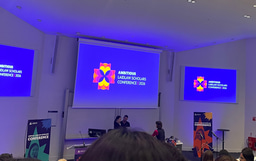
In roaring heat of summer, Group One's research endeavours moved forward with cool efficiency, and steadiness to boot.
Despite a term's worth of inductions and other various icebreaking exercises, the true nature of this summer's work lay largely untouched and undefined until the end of June 29th. When the research briefing finally reached our hands, I was ready to carve into the meat of what's to come.
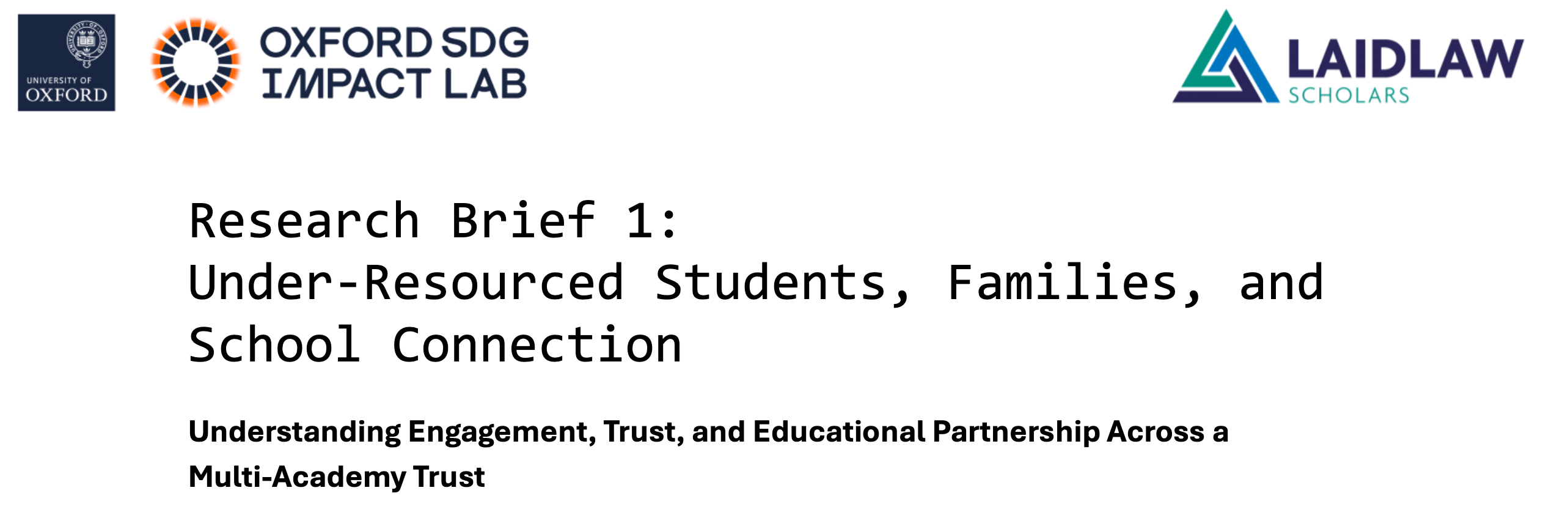
Truly, I was both surprised and invigorated by the premise: a meta-study on the state of learning trusts and their subsidiary schools was not on my summer menu, nor was it a topic I was particularly informed with beforehand. The immediacy of the work, its varied methodologies, and the prospect of engaging the communities of greater Oxfordshire outside of its medieval scholastic centre was especially enticing.
Our subsequent first meetings, overseen by Jovera Shakeel, made great strides in defining the premise of the question. We delineated the stakeholders, covered a range of existing literatures on educational inequalities, and realised that we might be able to make a serious contribution given the scarcity of analysis available on trust-backed schools and their students.
Extant literature tended to focus on the relationship between trusts and schools, or schools and students/parents; almost none identified the causal relationship between all three.
So then, we ask:
How does an educational trust - such as the Rivers Learning Trust with whom we're working with - foster stronger relationships between its participant schools and the disadvantaged students within their systems?
More broadly, how does a trust assess disadvantage, and what contingencies do these assessment metrics create for the schools and students downstream?
That the work which Amy, Ijeoma, Radha, and I will conduct over this summer stands at the threshold of a possible breakthrough is galvanising, and somewhat daunting. Do we have enough confidence to address the question in full? Will we obtain data with enough salience to draw conclusion? What obstacles - of the unknown-unknown - still lie ahead? These are questions which will only be answered in time. As of this journal, all is bright, and exciting while the majority of work lies ahead.
As Old English poetics would advise - forþ ic gefare: I venture forth.
![[Research Poster] Mitigating Rare Earth Element Contamination: A Geochemical Quantification of Sustainable Extraction Reagents](https://images.zapnito.com/cdn-cgi/image/metadata=copyright,fit=scale-down,format=auto,quality=95,width=256,height=256/https://images.zapnito.com/users/970260/documents/328089/ff1fa52d-0f73-45b9-81fe-76abc2eddf1d-med.jpg)