Report on my LIA in Chile
My Leadership in Action project took place in Chile, in a rural region near Santiago. I volunteered for an ongoing ecological project which aimed to restore indigenous woodland and curate a space where a multicultural community could come together in nature and exchange knowledge and reflect on environmental issues.
Aim 1: helping to curate a space for multicultural gathering
One of the key aims of the project was to create a place where people from different communities could gather in nature, slow down and reflect on wider societal issues.
When arriving in this project, I expected that my role as a volunteer would mean I would take more of an outsider role, helping facilitate the curation of this space but not necessarily be a part of it. As I got to know the project more, I realised that I was in fact a part of this community that the project was aiming to curate, and that in order to contribute effectively I needed to take a more participatory role.
The people who gathered in this space came from a variety of backgrounds and my role was to listen, exchange and share knowledge about environmental activism and social justice with other volunteers and community members from across the globe. Through this, I was forced to confront a different form of leadership. Typically, my understanding of leadership has revolved around a strong hierarchy, where being a leader involves being the dominant individual controlling and shaping a project through their vision. Through this project, however, I was able to reflect on and develop a different form of leadership - one which involved participation as part of a community of leaders and listeners.
The founder of the ecological project also worked for the municipality of the region. Through this, I was able to gain unique and in-depth knowledge on the environmental issues within the local region and at a national scale, and tensions within the government, between advocates for environmental protection and the increasingly non-supportive government. As well as this, it was fascinating to learn about and compare different approaches to environmental issues across South America. Whilst I had learnt before about projects like Buen Vivir, in Ecuador, it was valuable to gain perspectives from South American citizens on these issues. Many members of the ecological project were also advocates for a movement built from indigenous land-rights movements in South America which pushes for legal and citizenship rights for nature. What surprised me about this experience was the extent to which ‘leadership’ is as much about educating yourself through others, as it is about sharing and implementing your own skills.
Aim 2: Maintaining and supporting the regeneration of the woodland.
Another aim of the project was to maintain and restore indigenous woodland. The founder of the project was able to explain how she had allowed this to happen. When she first arrived on the barren land, instead of taking the instinctive step of actively working on the land to restore the space (i.e., planting seedlings) she took an unconventional approach. She decided to take a more passive approach, leaving the land to rewild naturally, mimicking primary succession. This allowed the space to return to the natural indigenous environment of Chile which is rapidly declining. Many indigenous people who visit the space have described to the founder how this is an exact recreation of the environment from their childhood, something they don’t have access to anymore because of deforestation. This approach runs counter to typical approaches to ecological issues, where ecological projects often plant trees that aren’t indigenous to the area, as part of carbon sequestration schemes, but this actively disrupts the biodiversity and often the trees don’t thrive in the environment.
The role of the volunteers was to help continue this project, by working alongside the land rather than actively going against it. As well as this, the volunteers helped to attempt to spread this method to neighbouring farms who would benefit from a more regenerative approach. For example, we created a plant nursery of the native saplings. These were sold to the neighbours on one of the project's open days, where the community visited the site to learn about regenerative woodland restoration and ways to integrate these practices into their own spaces.
Lasting impacts:
Through these two aims and outcomes I was able to support the maintenance of a much needed space for environmental restoration and community gathering. What this project taught me was not necessarily the lessons I expected to learn when I arrived. Aside from the practical skills of restoration, this project has made me reflect on what it means to make an impact. This project is small-scale but has the potential to be transformative to the local region. The space provides an alternative to the typical damaging practices in the region. It shows the community that this is feasible and possible, creating hope for a future with more harmonious interactions with nature. What it also illustrates is that change can be more grounded and grassroots, and act beyond the political system (which can be especially useful if the current government does not align with your political beliefs). When I typically think about leadership or social transformation, I have often focused on how to contribute to larger, more systemic changes. This project has made me realise that there are different scales of impact which I can contribute to and all are valuable.
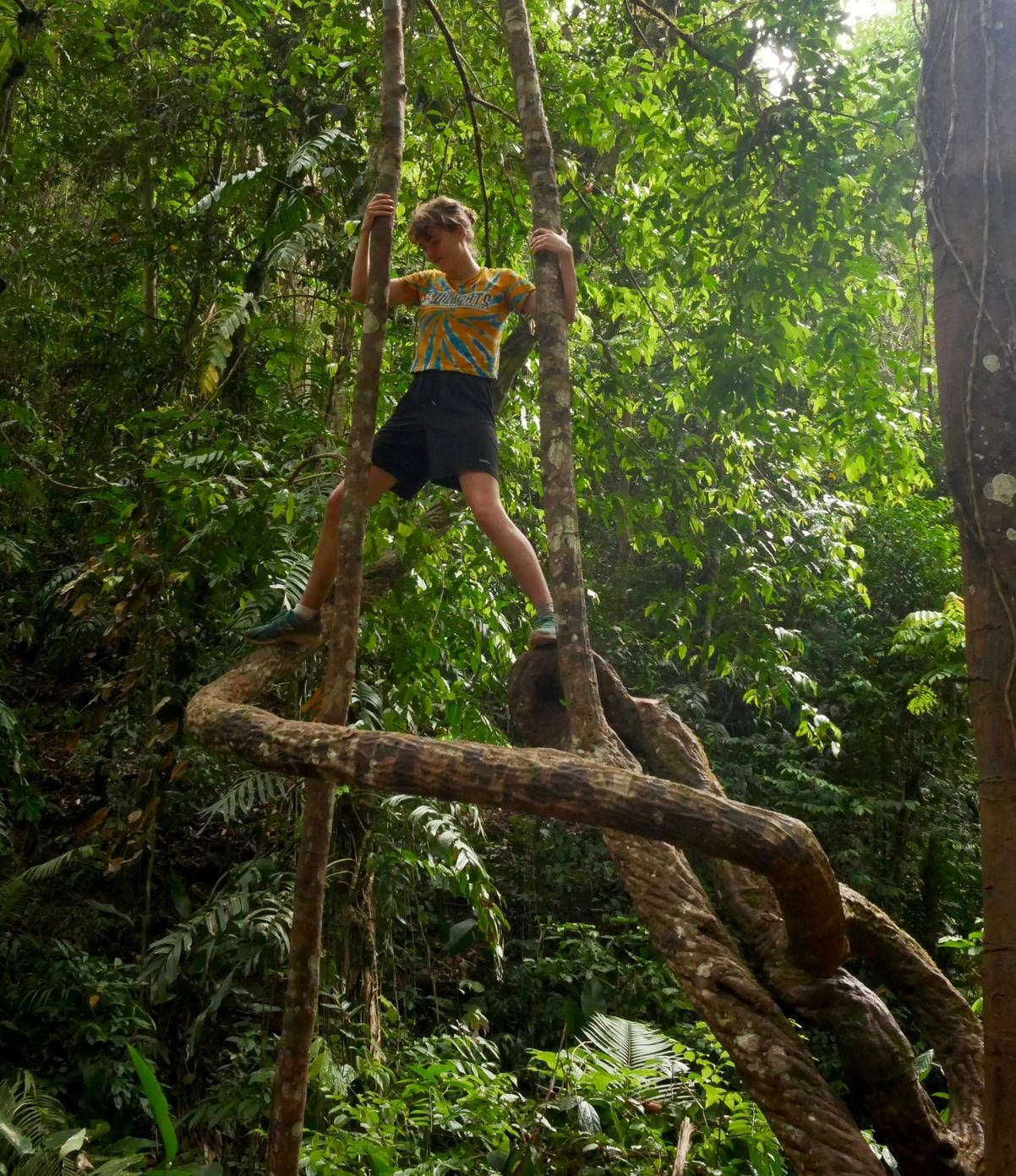
Hey!
I am an undergraduate student at the University of Cambridge studying Geography.
My project looks at agricultural systems that use cooperative practices (cooperatives, CSAs, intentional communities). I want to use Ostrom's eight design principles as a framework to understand similarities in their success stories. I want to understand how they operate alongside and within a capitalist economic system and how law and land policy shape their systems. Though I am realising this is perhaps way too much for one 6-week research project, the hope is that this can serve as a framework to upscale Commoning practices in Cambridgeshire. If you have any knowledge about land-use (policy + law), community economics, Commons and cooperation send it my way! Equally, if you have an LIA suggestion that can build on these interests that would be fab.
Whilst my project is very food and community focused, I am fascinated by all things geography, with a passion for social justice. My interests are definitely multidisciplinary and I am jealous of every project on here. 🦎