Introduction
Over the course of six weeks, I completed a research placement within the LICAMM laboratories investigating the role of BACE1 in obesity and metabolic regulation. Prior to this project, my practical laboratory experience had been largely restricted to undergraduate teaching laboratories where experiments are highly structured, and outcomes are generally known in advance. This placement provided my first opportunity to contribute to ongoing biomedical research with genuine scientific uncertainty and potential real-world impact.
The project allowed me to develop a wide range of technical laboratory skills, gain experience working independently within a professional research environment, and reflect on my future aspirations within healthcare and biomedical science. Beyond the scientific knowledge that I acquired, the experience challenged me to become more resilient, adaptable and self-reliant. This report reflects on the research undertaken, its potential significance, the personal and professional skills I developed, and how the experience has influenced my future career plans.
Research Undertaken During the Placement
My project focused on investigating the role of Beta-site APP Cleaving Enzyme 1 (BACE1) in obesity and energy metabolism. Obesity is one of the most significant public health challenges facing the United Kingdom with Over 64% of adults in the UK being overweight or obese, and increasing the risk of numerous chronic diseases including cardiovascular disease, hypertension, type II diabetes and atherosclerosis. The prevalence of obesity creates substantial financial pressure on the NHS costing roughly £6.1 billion a year and contributes significantly to preventable illness and mortality.
During the project I worked with tissue samples from mice which had the BACE1 gene removed to investigate key proteins involved in the fat burning process. My work involved learning and performing several laboratory techniques including protein extraction, BCA protein assays, Western blotting and data analysis from mass spectrometry experiments. Initially these techniques were demonstrated by my supervisor, Dr Amanda MacCannall, before I gradually began carrying out procedures independently. Additionally, I also got to observe many other techniques during my time in the lab including Cell media changes, Haematoxylin & Eosin staining, Mouse culling and Muscle extraction.
One of the most rewarding aspects of the project was seeing how different experimental techniques contribute to answering a larger scientific question. Prior to this placement, practical sessions at university often felt isolated, with each experiment existing as a separate exercise. During my placement, however, I began to appreciate how each stage of the research process contributes evidence towards a broader hypothesis. Even routine tasks such as preparing samples accurately became more meaningful when I understood how errors could affect downstream analyses and ultimately influence my results.
The project also introduced me to the reality that research rarely follows a straightforward pathway. Often, I found at the start of my project that protocols were taking way longer for me to complete than I expected or I would have to redo experiments due to what I perceived as small errors having a large impact. For example After incubating my samples during my BCA assay the colour change I expected to see did not occur, as I was unsure where I made an error in the protocol I had to restart the experiment leading to me being in the lab until half-past 6 in the evening, I was grateful this occurred in week 2 as it made me understand that if errors occur I’m the one who has to spend the time to fix it, fortunately I went through the protocol with my supervisor and realised I had made a miscalculation in the volume of one of my reagents, (a simple error with big consequences) I was grateful to make these mistakes now during this placement as I would rather learn from my mistakes now rather than during a year in industry placement where my work may contribute to a team output rather than individual work. Learning to work through these challenges helped me understand that scientific research is not solely about carrying out the protocol and obtaining your results but about how well you can troubleshoot and work through errors when problems arise. 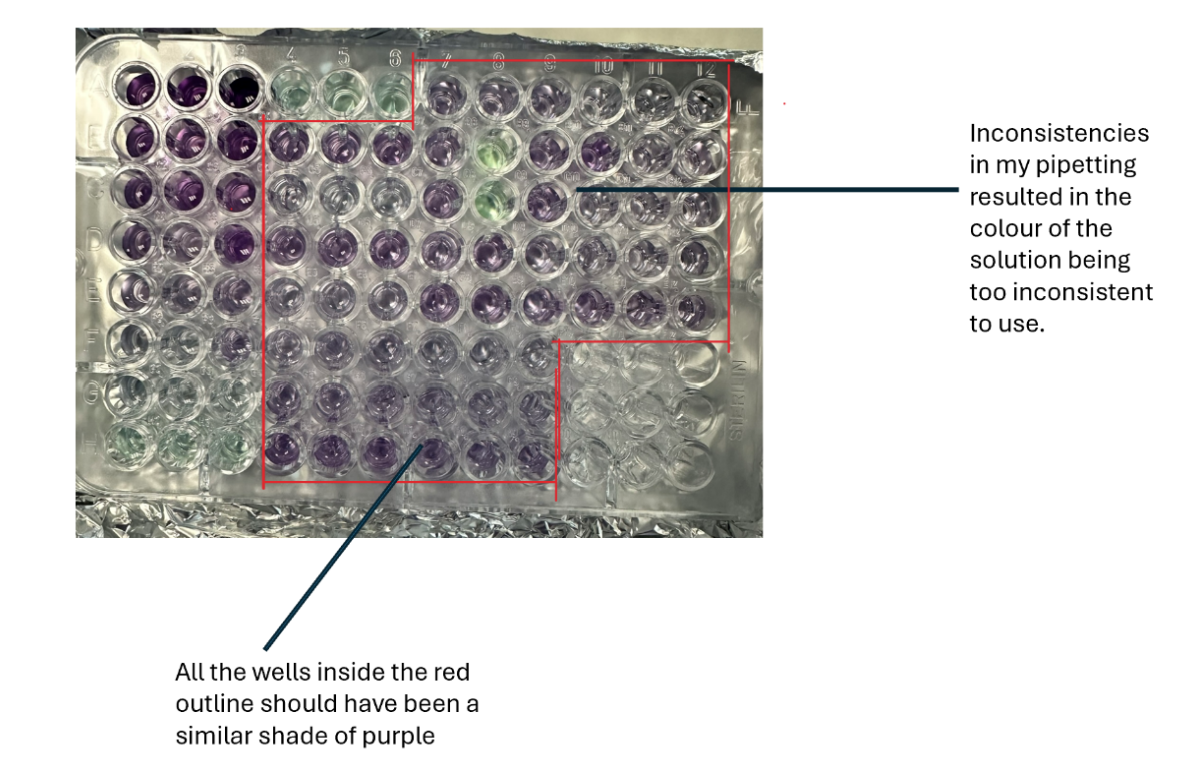
Why is this research impactful
A major reason that I found this project particularly engaging was its potential clinical relevance. Current pharmacological treatments for obesity largely focus on GLP-1 receptor agonists such as Wegovy and Mounjaro. Whilst these medications have demonstrated significant effectiveness for weight loss and type II diabetes management, they are not without limitations. Responses vary considerably between individuals, treatment can be expensive, administration often requires injections, and weight loss can include reductions in muscle mass.
The focus of my project was to investigate whether BACE1 acts as a molecular "brake" that restricts the body's ability to burn excess fat. Previous evidence suggests that inhibiting BACE1 may promote fat burning rather than storage, leading to healthier weight reduction. If this process can be better understood, it may contribute to the development of alternative obesity treatments with fewer limitations than existing therapies.
What particularly interested me was the possibility that targeting BACE1 could address some concerns associated with current medications. Evidence from experimental models suggests that reducing BACE1 activity may support weight loss without the substantial muscle loss observed in some GLP-1 treatments. Furthermore, weight reduction appears to stabilise once a healthy body weight is reached, potentially reducing the risk of excessive weight loss.
Reflecting on the wider significance of the project helped me appreciate the importance of fundamental biomedical research. Throughout my Time at LICAMM I have developed a greater appreciation for how research goes from an idea to laboratory experiments to clinical trials and eventually clinical practice, alongside how the work of the scientists in the lab can impact healthcare policy and patient outcomes indirectly. Although my contribution represented only a very small part of a larger research programme, it was rewarding to know that the work could contribute to future advances in obesity treatment.
Activities to Disseminate Research
An important component of research is communicating findings effectively to others. During my placement, I participated in opportunities to present and discuss my work with researchers and fellow summer students.
The most significant activity was preparing and delivering a presentation during the final week of the project. This presentation required me to summarise six weeks of laboratory research, explain the scientific background, justify the rationale for the project and communicate the significance of my findings to an audience consisting of both peers and experienced researchers such as my Supervisor and PhD students.
Despite me being a confident speaker during presentations I have done in my first year of university I found this prospect extremely intimidating. Presenting scientific information to individuals with far greater experience than myself felt both exciting but also strange, I worried that I had little to contribute to a room full of experts especially experts who were already knowledgeable on the topic I was presenting. This presentation was the largest struggle of my Research project, I found that I froze up once I got Infront of everyone which hasn’t happened to me during my time so far at university, Upon reflection I believe this was down to two main reasons, the first was a lack of preparation as despite it being a very informal presentation I still should have rehearsed more what I was going to say, secondly it was the result of me feeling like I didn’t have anything that I could teach the experienced researchers in the room.
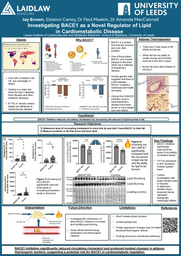
Despite the presentation not going as I had hoped the session ultimately became one of the most valuable experiences of the placement. Feedback from researchers on both my Poster and how I could discuss it at the Laidlaw conference in October helped me plan out how I want to improve my scientific communication skills so I can confidently discuss my research at the Laidlaw conference. It also highlighted the importance of tailoring presentations to different audiences. While experts may understand highly technical terminology, effective communication requires balancing scientific detail with accessibility this has led to me making alterations to not only my presentation but to my poster itself to make it more accessible to a broader audience.
The experience has helped prepare me for future opportunities outside of the Laidlaw Programme including Year in industry applications which will open up this September and also applications for further study after I complete my degree. Overall knowing that I will have further opportunities to discuss my work has motivated me to continue developing my presentation and science communication skills.
Impact on Me
The greatest impact of this placement was the development of confidence in my own practical abilities. At the beginning of the project, entering a professional research laboratory was intimidating. I was surrounded by highly skilled researchers and was conscious of my own lack of experience. As a result, I frequently sought reassurance from my supervisor before proceeding with even relatively simple calculations or procedures.
Over time, I realised that constantly seeking confirmation was limiting my growth. Whilst asking questions remains important, there is a difference between seeking guidance and lacking confidence in my own judgement. To challenge myself, I began independently checking my calculations and reviewing protocols before approaching my supervisor.
To improve on this I asked many questions in the initial two weeks of the project so that I could get as much information as possible, I would write down everything my supervisor and other researchers told me, whilst I felt uncomfortable constantly asking questions of the people around me this enabled me to work much more independently in the second half of my project as everything I needed to know I had already asked and written down.
This method significantly improved both my confidence and productivity. By the end of the placement, I felt capable of organising experiments, troubleshooting issues and working through problems with greater independence, whilst also being able to recognise when it is important to check for my supervisors’ approval as mistakes in a real lab setting cost both time and money unlike the more isolated practicals we do during our undergraduate degrees.
The project also changed my understanding of scientific research as a career. Before starting, I was attracted to the idea of laboratory research but had limited insight into what working in research involved on a daily basis. Experiencing the realities of research for six weeks allowed me to make a much more informed judgement.
I discovered that I enjoyed the intellectual challenge and problem-solving aspects of research. Designing approaches to solve scientific problems and interpreting data were highly rewarding experiences. However, I also realised that I would not want laboratory work to be the sole focus of my career. I value interaction with people and would prefer a role that combines scientific expertise with patient-facing responsibilities.
In this sense, the placement was extremely valuable because it provided clarity about my future aspirations. Rather than discouraging me from research, it helped me understand how research fits into the type of career I hope to pursue.
Another important lesson was gaining an appreciation for the financial realities of research. Much of the work within LICAMM is supported through charitable funding from the British Heart Foundation. Understanding the costs associated with reagents, consumables and specialised equipment highlighted the responsibility researchers have when managing resources.
Initially this made me nervous, as I worried about wasting expensive materials if experiments did not go according to plan. Despite this nervousness not really going away I also began to understand the privilege of being able to access and work with this specialised equipment at such an early point in my career.
Leadership Skills Developed
One of the key aims of the Laidlaw programme is developing future leaders, and this placement provided several opportunities to strengthen leadership-related skills.
Perhaps the most important lesson I learned was that effective leadership requires humility. Entering an unfamiliar laboratory environment meant acknowledging that I had much to learn from the researchers around me. Rather than attempting to demonstrate competence immediately, I focused on listening, observing and asking questions. This experience reinforced my belief that good leaders are not individuals who blindly believe they always have the answers but those who recognise when they need support and are willing to learn from others who are more knowledgeable than them in areas where they may be weaker.
The final presentation required me to explain complex scientific concepts in a clear and engaging way. Whilst I believe I did not meet this standard during this presentation I think highlighting areas for further development is equally as valuable as developing current skills, to work towards this goal I know I must more thoroughly prepare for presentations and think about how I can structure information logically and communicate with confidence. Once I have improved my ability to communicate to more experienced researchers through further practice it will be valuable not only within academic settings but also in future healthcare roles where effective communication is essential.
The placement also strengthened my problem-solving abilities. Experiments did not always produce the expected outcomes and unexpected obstacles frequently arose. Rather than viewing these setbacks as failures, I gradually learned to approach them analytically by identifying possible causes, consulting my protocols and adapting my plans accordingly. This ability to not get deterred by setbacks and remain solution-focused during a time-limited project is a skill that I believe will be important in future leadership positions. For example, during my Western Blot protocol I ripped my gels several times attempting to do it the way my supervisor showed me as this way had always worked for her but I could never do it properly, I decided I needed to find a different way to move the gel if I wanted my future western blots to be successful.
Therefore, I decided to observe one of the PhD students carrying out a western Blot, I found that they moved the gel in a different way to my supervisor. When I decided to try the transfer the way the PhD student did it, I did not rip the gel at all. I found that despite protocol’s being very rigid, each member of the lab had different techniques for the same experiment and that by learning from as many different people as possible it allowed me to find the approach that best worked for me. 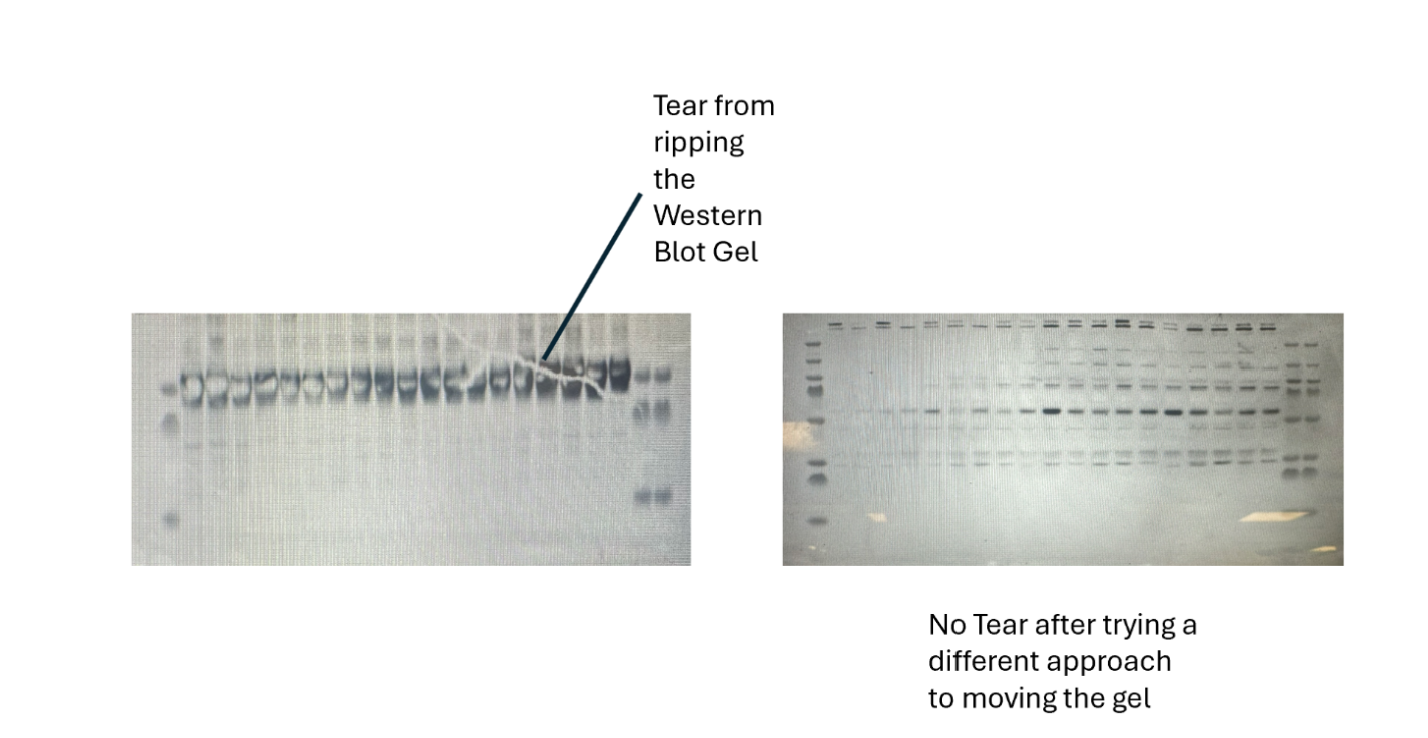
Finally, I developed greater self-management and accountability. Working independently required me to organise experiments, manage my time effectively and take responsibility for the quality of my work. Unlike structured university practical sessions, there was no predefined schedule dictating each step of the process, and no backup data given if your experiment failed. I had to plan each week, what practicals were achievable in certain time constraints, and account for additional time if I had to redo any assays, this required regular reflection on how previous practicals had gone and weekly planning of what experiments I could carry out on what days. Learning to prioritise tasks and manage my workload independently increased my confidence in my ability to operate in professional environments.
Future Career and Educational Plans
This research experience has had a significant influence on my future aspirations. My long-term goal remains to pursue a career within healthcare, either through postgraduate medicine or through the Neurophysiology route of the Scientist Training Programme within the NHS.
The placement reinforced my interest in the scientific foundations of healthcare and highlighted the value of evidence-based practice. Seeing how laboratory discoveries contribute to the understanding and treatment of disease strengthened my appreciation for research as a key component of healthcare.
In the shorter term, I intend to apply for a year-in-industry placement between the second and third years of my Neuroscience degree. The practical skills developed during this project have provided valuable experience that will strengthen future applications for the programmes previously mentioned. More importantly, the placement has demonstrated my ability to work independently within a professional laboratory environment, adapt to unfamiliar situations and contribute meaningfully to a research team.
I am also interested in remaining involved in research throughout my degree. Whether through future opportunities to return to lab work or my final-year capstone project, I hope to continue developing both laboratory, data analysis and presentation skills. Even if my eventual career is primarily patient-facing, I believe an understanding of research will enable me to become a more effective healthcare professional.
Conclusion
My six-week placement at LICAMM was both challenging and rewarding. Through investigating the role of BACE1 in obesity, I gained experience of research that has potential implications for future obesity treatments while developing a range of practical laboratory skills.
More importantly, the experience strengthened my confidence, independence, communication skills and ability to solve problems in unfamiliar situations. It also provided valuable insight into the realities of biomedical research and helped clarify my future career goals. Although I learned that I do not wish to pursue a purely laboratory-based career, I developed a deeper appreciation of the role that research plays in improving healthcare outcomes.
Overall, this placement has been one of the most valuable experiences of my academic journey so far. It has provided technical skills, professional development and a greater understanding of both myself and my future aspirations. As I continue my degree and progress towards a career in healthcare, the lessons learned during this project will remain highly influential in shaping my development as both a scientist and a future leader.