When I first began the Laidlaw Scholarship, much of my understanding of what leadership is centered around performance and tangible outcomes. Regardless of the setting, I associated success with empirical metrics of success, whether that be producing results in research, winning games, or contributing something measurable. Over the course of the scholarship, however, I have come to realise that leadership is a lot more than just the superficial outcomes. Although that is admittedly the first thing most people would see, behind the scenes, leadership plays a crucial role in how decisions are made, how people are treated, and whether the change that is being pursued actually serves a genuine purpose to those it is intended to serve.
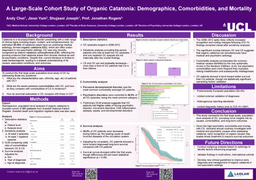
My first year as a Laidlaw Scholar involved research into catatonia, a complex neuropsychiatric syndrome that often affects vulnerable patients and can significantly impair communication. It was my first experience working on a large-scale cohort study, and I developed strong statistical analysis skills using R and gained an in-depth insight into methodologies. It was a challenging experience that greatly expanded my skillset and thinking, but it also made me consider how patients’ perspectives can be difficult to capture within research and healthcare. The sample size we were working with consisted only of 213 organic catatonia patients, but I still found it surprising how this represented the largest cohort to date for catatonia. Existing knowledge was relatively limited and based on a handful of case studies/series. This made me appreciate that numbers alone don’t dictate the value of research, and that the context in which that evidence is generated is just as important. At the same time, working with clinical data from the Swedish National Patient Register made me increasingly aware of the limitations of such quantitative data. Catatonia often features with mutism, impairing a patient’s ability to communicate. Behind the numbers, I felt that patient voice often disappeared.
The following year was my Leadership in Action project with Bookmark, which provided a very different environment in which to develop these ideas. Instead of working in an academic research setting, I instead spent 6 weeks providing one-to-one reading support to primary school children. At first, after working in the realm of statistics where every size matters, the scale of this new project felt small. However, this experience challenged my assumptions of what leadership looks like according to the Laidlaw 3Cs framework.
Laidlaw 3Cs framework
Through my research and LiA projects alongside the leadership workshops, I developed significantly across all 3 domains: capacities, character, and change maker values.
Prior to the Laidlaw Scholarship, I placed the greatest emphasis on capacities, particularly regarding process and performance. Research naturally reinforced many of these skills, including the people aspect; as the catatonia research was conducted in collaboration with co-authors from the Karolinska Institute, I found that there was a slight difference in the research culture between the UK, US, and Sweden, and I had to adapt how I communicated and received feedback from them correspondingly. Additionally, when disagreements arose within the team, it was essential that we all got together and collaboratively worked towards a shared solution. A striking example of this was when the survival analysis for the cohort violated the proportional hazards assumption, precluding the use of the standard Cox proportional hazards model. There was initially some disagreement on what the best alternative was, ranging from using an age-stratified Cox model to using age standardization according to the European population data. However, we eventually all met online to constructively discuss what would be feasible and simultaneously most statistically robust to perform.
Bookmark built on this growth further. At the core of the project were the primary school pupils, and so ensuring success directly meant engaging with them and finding what they liked and what didn’t. A plan that worked in one session didn’t necessarily work in another. The child’s concentration, mood, and interest often fluctuated day-to-day, meaning that I had to put emphasis on listening to them at the start of each session and gauging how they were feeling. This subsequently also meant being flexible and occasionally abandoning what I had planned for something that the child would find more engaging.
With regard to character, while I have always been strongly motivated by purpose and growth, the Scholarship particularly strengthened my understanding of humility. Effective leadership does not mean attempting to solve every challenge independently. Recognising when I had reached the limits of my own knowledge was equally important. During my research, approaching my supervisor or co-authors when we encountered methodological problems exposed me to perspectives and expertise that I would not have reached alone. Similarly, working with Bookmark showed the importance of maintaining adaptability. Leadership requires enough confidence to make decisions, but also enough humility to recognize and admit when those decisions are not working.
Finally, these experiences strengthened my connection with Laidlaw's Change Maker Value of “Good.” I initially chose literacy for my LiA because my previous research had made me interested in social determinants of health and the role that communication can play in accessing healthcare. However, working directly with a child reminded me that addressing inequality is far more complicated than identifying a problem and designing an intervention around it. Although individual change, when done collectively, can lead to wider changes, they still require systemic action alongside it to resolve structural inequalities. Therefore, for me, being a “good” change maker requires one to ask whether the impact they are making is sustainable and genuinely serves the people that it is intended to benefit, rather than simply pursuing the intervention at hand without considering the wider implications.
Global mindset
Beyond the 3Cs framework, my understanding of a global mindset also developed throughout the Laidlaw Scholarship. As an international student in the UK, I associated global citizenship with simply being someone with international experience who has experienced several cultures before. However, my LiA showed me that global citizenship is not solely defined by one’s geographical mobility or familiarity with different countries. Rather, it is greatly influenced by the awareness of how the intersectionality between social, cultural, and economic dimensions shapes people’s perspectives and opportunities.
Working in a primary school in a socioeconomically disadvantaged community in London accentuated this point to me. Although the project took place not too far away from where I typically go to university, it highlighted how markedly different people’s educational opportunities and experiences can be despite being only a short while away geographically. This challenged my assumption that developing a global mindset necessarily requires travelling somewhere unfamiliar. Instead, I began to see global citizenship as the ability to recognise perspectives and circumstances beyond one’s own, and to approach these differences with curiosity rather than assumption.
Looking forward
Looking forward, I wish to take everything I have learned during my Laidlaw Scholarship to my career as an aspiring academic physician. In both clinical and research contexts, I hope to consider not only the pathology in front of me, but also the sociocultural and individual circumstances that may influence a person’s ability to engage with healthcare and how their voices are being represented.
Importantly, as a leader, I want to lead ethically by listening to those in my team and those whom we intend to serve before acting, being honest about my own limitations, and ensuring that everyone’s perspectives are being heard as much as possible. I began this Scholarship envisioning what I could accomplish, but I leave it now thinking more carefully about how, rather than the what. How could I accomplish it? How could I include perspectives that may be missing? How could I ensure that the change I am trying to create is genuinely meaningful to the people it is intended to serve?