Reflecting on my Laidlaw Scholarship Experience
Introduction
When I applied for Laidlaw, I anticipated curious and fulfilling summers. However, I didn't anticipate how differently each summer would challenge me, or that the framework — Change Maker Values, Character, Capacities — would become the essential lens through which both made sense.
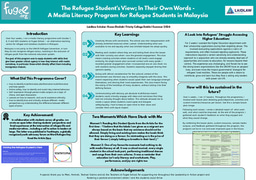
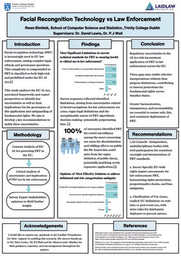
Summer 1 was depth: examining how the EU AI Act handles facial recognition in law enforcement, and whether current regulations adequately protect the right to non-discrimination. Summer 2 was breadth: a four-week media literacy programme with refugee students in Malaysia who have no legal access to formal education.
Part 1: Change Maker Values
Summer 1: Research
Examining whether the EU AI Act protects people from discriminatory facial recognition was ambitious work. Yet ambition and clarity are different things. Early on, I had to learn to rebalance my detail-oriented approach to maintain rigorous integrity with rapid progress. I spent weeks refining methodology, anticipating every possible direction the research might take rather than focusing on immediate steps.
The challenge wasn't the intellectual content; it was accepting that I didn't yet know how to do legal analysis, and that learning required vulnerability, iteration, and repeated conversations with supervisors where I admitted uncertainty.
The learning: Being ambitious means accepting incomplete knowledge while learning, incomplete knowledge is not the same as incompetence. Doing hard things means doing them imperfectly, iteratively, and accepting help early on.
Summer 2: Placement
The ambition was to give refugee students—who lack legal access to formal education—tools to understand and create media, counter misinformation, be heard and re-engage on their own terms with critical tools at their disposal.
Against a backdrop where only 35% of registered refugee school-age children in Malaysia access formal education, there were moments I questioned whether this mattered. Doubt was present, but so was commitment to the question: What do these students actually need? That orientation—toward asking rather than assuming—sustained the work.
The learning: Brave ambition isn't about guaranteeing outcomes. It's about staying committed to a question despite uncertainty.
Part 2: Character
Summer 1: Intellectual Integrity
Maintaining analytical objectivity in my research was demanding. I care deeply about surveillance and discrimination, but caring isn't the same as analysing fairly. I had to separate personal conviction from evidence, acknowledge gaps in my own arguments, and revise conclusions when data didn't support my anticipated direction.
Weekly supervisor conversations required filled gaps in this uncertainty. Through these meetings, I built the capacity to read a legal text and distinguish between what is and what I wish were true—a distinction central to integrity.
The learning: Academic integrity includes understanding a gap in knowledge is an opportunity to discover new perspectives. It's honesty about what you don't know, and letting that honesty shape your conclusions.
Summer 2: Humility and Sound Judgment
At Fugee School, I came with a curriculum plan. Within the first few days, I realised I was in an environment that required adaptation and , and in these moments I relied on observation to judge how to interact with students. Once of these people was Teacher Salma, who juggled many roles and responsibilities in the school all while maintaining a positive rapport with students across many grades. Her dedication to her work, was a pleaure to observe.
Sound judgment meant knowing when to follow the students' lead rather than my plan, accepting feedback, and rebuilding activities mid-week when they weren't landing. It meant recognising that scholarship applicants were people waiting years for UNHCR recognition in a country that wouldn't grant it—and holding both honesty and kindness simultaneously with that reality.
The learning: Humility is recognising your access and education as a privilege, not guarantees of understanding or knowledge. It means listening to how people name their own experience and taking them at their word, and actions.
Part 3: Capacities
Summer 1: Research and Communication
I underestimated how much skill is required to read a legal text and extract meaning efficiently. The iterative process—reading, coding, discussing with supervisors, reading again—built the ability to identify which gaps matter and why.
The research also required translating across disciplines: explaining technical AI concepts to legal audiences, legal frameworks to technical experts. This translation work felt like leadership—understanding different audiences deeply enough to know what questions matter most to each.
Capacity built: Rigorous work on things I don't yet fully understand, and communicating uncertainty clearly rather than concealing it.
Summer 2: Collaboration and Adaptability
No single lesson plan survived every grade. Grade 8 thrived with independent work and AI exercises; Grade 7 needed smaller groups and structure; GED students responded to discussion-heavy formats.
Rather than failure, this was capacity-building: learning to see the room as a student with an unfamiliar person and unfamiliar lessons. Student and teacher feedback shaped each week's activities.
Both summers taught the same principle: iterate, get feedback, improve, repeat. In research, supervisor meetings would demolish my conclusions, and the best thinking happened there. In the LiA, weekly debrief sheets—What went well? What to improve?—made the work feel like learning rather than failure.
Capacity built: The ability to pivot quickly, see feedback as information, and let other people's strengths reshape the work.
Part 4: Uncertainty, Pivoting, Perseverance
Both summers involved genuine doubt. In research, identifying regulatory gaps while realising solutions were far more complex than problems felt paralyzing. In the LiA, seeing students disengage or lessons miss their mark raised real questions about lasting impact.
What became clear across both experiences: effective leadership involves embracing uncertainty and pivoting when initial approaches don't work. In research, my stakeholder engagement approach was too broad; narrowing it wasn't failure but clarification. In the LiA, gamification emerged as core strategy after initial formats didn't land—that wasn't settling, it was adapting.
The Laidlaw network was crucial. Not because other scholars had answers—they didn't—but because they were asking the same questions. Knowing others were wrestling with Is this actually creating change? normalised the uncertainty rather than reinforcing doubt.
What sustained both projects wasn't confidence. It was commitment to the work itself. In research, contributing meaningfully to policy conversation mattered, even if I couldn't personally fix the AI Act. In the LiA, showing up for students who fought to access school at all was its own justification, regardless of measurable outcomes.
Perseverance, ultimately, is about staying committed despite uncertainty and finding meaning in the work itself rather than in guaranteed results.
Part 5: Integration
The 3Cs framework works not because each element is separate, but because they're interdependent.
Change Maker Values in practice means doing hard things imperfectly, spending weeks on approach before knowing if it'll work, asking for help, staying curious about unmeasurable impact.
Character is practiced, not achieved. It means regularly asking whether you're seeing people accurately or through assumptions, listening to disagreement as information, making decisions that honor both values and limitations.
Capacities grow through deliberate iteration: treating feedback as the most valuable part of work, seeking people who think differently, being willing to be a beginner repeatedly.
Critically, the Laidlaw framework works because it's not individual. There's a cohort wrestling with similar questions from different angles. When I doubted research impact or felt overwhelmed in placement, turning to other scholars normalised the discomfort rather than confirming failure. That network didn't solve problems; it made clear that uncertainty is part of the work.
Conclusion
The Laidlaw Scholars Programme offered two different summers deliberately juxtaposed. That contrast was essential.
Research taught me depth and rigorous analysis. Placement taught me to listen and meet people where they are. Together, they clarified what leadership actually is: not having answers, but asking good questions with people; not controlling change, but creating infrastructure for it to emerge.
What I'm taking forward: not certainty, but commitment. Not all the answers, but better questions. The understanding that uncertainty is information, that iteration is where learning happens, and that showing up with integrity and genuine curiosity is enough.
The 3Cs aren't separate elements to develop—they're the same work approached from different angles. The work of becoming someone who can contribute to change without controlling it, who leads by listening, who stays committed despite uncertainty.
That's the gift of Laidlaw: not answers, but the network and framework to keep asking better questions, and the evidence that when you do, the work matters.