Refinement, a suprise and a bit of analysis: week 3 of Research

Refinement and more refinement.
Mondays always start with a weekly meeting with my research supervisor, Dr Resul Umit. The focus of this research meeting was to finalise the scope and direction of my research project.
Upon reflecting my research outline provides a good foundation, however there were questions particularly around my qualitative analysis to which direction I take the research i.e. do I look at how young people compare to other group appeals, how young people are talked about pre virus post votes at 16 etc.
I landed on looking at if there are any trends on how political parties change the way they talk about young people, after the introduction of votes at 16 in Scotland and Wales. However it didn't occur to me that qualative analysis requires reading the source you are analysising in full, thus this would mean reading 63 documents of often 100 pages or more. I had to ask myself is this realistic? my answer, no, so refinement in scope it was.
The words of my supervisor really stuck with me, sometime a piece of research done well is smaller and more focused, than a research project bigger in scope, done poorly. This made me realise that being realistic and always evaluating this aspect in project management and leadership is invaluable to ensure success.
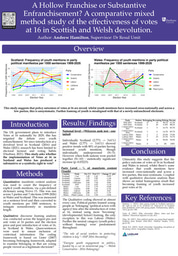
Therefore i decided to split my research into two parts, a quantative macro analysis of comparing the frequency of youth policy mentions in party political manifestos, pre verus post introduction of votes at 16, and centre my research poster around this as quanative research is often easier for an audience to grasp at a glance.
Then do a smaller more focused qualative study of only manifestoes from an election pre and post votes at 16 introduction of votes at 16. This would mean i'd only need to read about 20 manifestos instead of 63, a far more realistic task given the time restraints of my research project. This would allow me to expand the depth of my 3000 word research paper and would complement the quanative analysis quite well.
Lastly i recieved some invaluable feedback regardin my dictionaries i had created; specifically that not all youth policy mentions required the words 'youth' to be presenr, such as policies such as care leaver or child protection etc. So i also had to seperate and create versions of my dictionaries for words that could be deemed as explicitly refering to young people.
The plan for the week.
My supervisor also set the goal for the week of analyising and interpreting the data in relation to Scottish and Welsh party political manifestos, which is exactly what i worked on throughout the week.
Further i managed to go further than the SMART goal that me and my supervisor had set, in that i managed to create a graph for both Scotland and Wales, which was a fantastic step towards being able to create my research poster.
The suprise: the outcomes of analysis didn't match my expectations
I had gone into this research project, confident and hopeful that my research would show that the introduction of votes at 16 had strong policy outcomes when it comes to political parties catering to a new younger electorate. So i was suprised when i finished analysising my quanative data, that these findings never materialised. And instead upon intial investigation that it appears votes at 16 has no impact on political parties increasing the focus of policy platforms on youth policy. (there may be some nuanced findings amongst left/right axis that i am yet to fully analyse yet).
Some of my key findings was that on average across both Scotland and Wales devolved elections on average youth issues cover 4% of party manifestoes and from some prelimanarly readings i have done, this is roughly inline with what research has found in a UK General election context. This therefore indicates to me that my dictionaries are robust in picking up youth policy themes across political literature which is a relief.
I did have a small bit of hope in that when i calaculated seperate averages for before and after votes at 16 in Scotland, there was a small rise in mentions of youth policy, albeit upon looking back it was an insignificant 0.15% increase. This was confirmed when i ran a Walsh T Test, which gave a P value of 0.7, way outside of the accepted 0.05 figure for it to be statistically significant.
There was a brief point were i questioned myself in terms of choosing the correct research project and that i was now a failure of sorts because my research project was not showing what i had assumed from the beginning.
However upon reflecting research that doesn't show what you expect is often times far more interesting and can be equally as impactful. This was a key learning point for me after talking to my supervisor, as i had often assumed the sucess of research hinged on the outcomes alining with the hypothesis.
Upon reflecting, this is also an invaluable learning opportunity for me in my leadership joruney as well, that assumptions should be avoided were possible, as you can't make a judgement or form a proper opinion/view or judgement on any subject matter without the detail or the facts; as being informed is key to sucessful leadership.
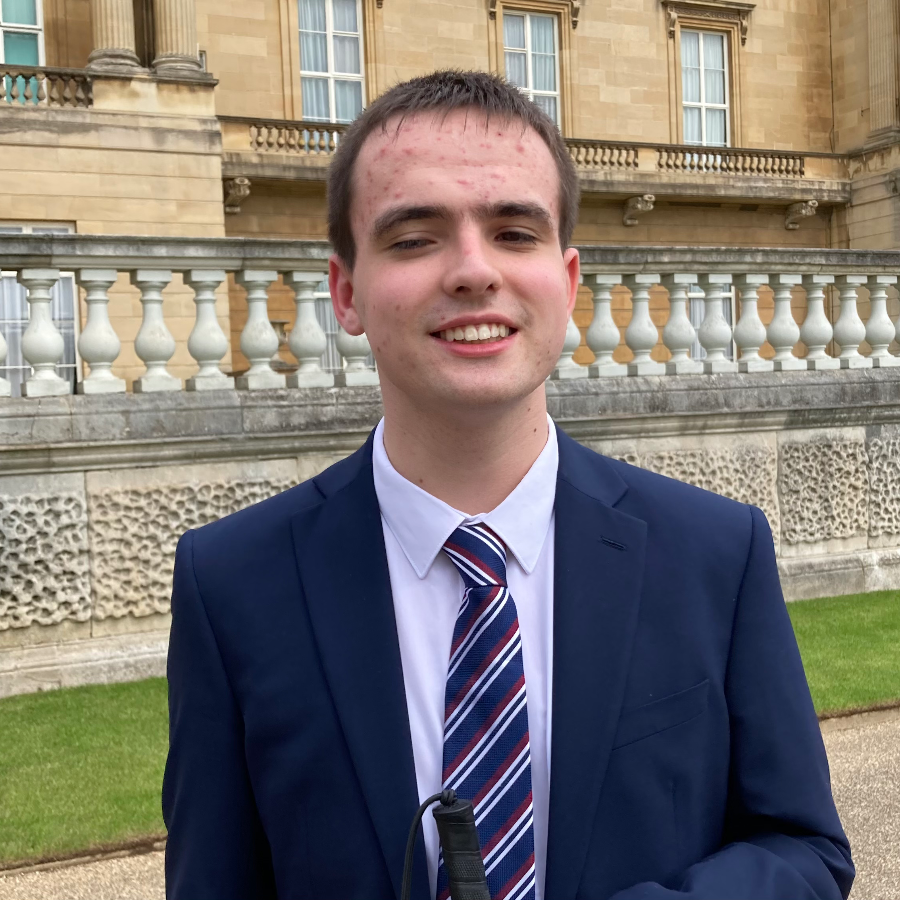
I am Andrew Hamilton, I have a keen interest in both methods of quantitative statistical analysis through R and also through the discipline of comparative politics, in looking at electoral turnout and civic participation in the UK.
My work has included being a co author on a experiential case study on pedagogic practice into how methods of statistical analysis through R, can be made accessible for students with visual impairments.
Millican, A., Toth, F., & Hamilton, A. (2025, December 4). Seeing differently: Making R accessible for visually impaired students through collaborative learning design. National Centre for Research Methods. https://eprints.ncrm.ac.uk/id/eprint/5006/
Further I am an award winning disability rights activist and have a particular interest in disability rights and digital accessibility, work has included lobbied politicians, co-authored a UN report, delivered oral evidence to the UN CRPD committee’s inquiry into the UK government and most recently being invited to give a witness statement to the Covid 19 national enquiry alongside advising an Northern Irish MLA on a disability private members bill.
Through my 4+ years experience of campaigning, I have developed a passion for media, as a tool to spread awareness. I am also passionate about ensuring young people have a voice in matters that affect them.
Lastly I am an active participant in Durham University’s venture scene, having founded an award winning public affairs startup, Just Include, which aims to ensure that everyone has a voice within politics.