Project Outline: Storytelling as a Mechanism of Co-Creation of Public Policy
Background
Storytelling's role in public policy is a well-established strand of research, with frameworks, such as the Narrative Policy Framework and Deborah Stone's work, tracing its impact. Yet even within participatory strands of this literature, participants are rarely treated as co-creators of the narrative and therefore rarely treated as co-creators of policy. Storytelling is treated as an outcome of participation - evidence of policy impact rather than a shaping force feeding back to institutional decision-making. Where co-authorship is taken seriously, it clusters in health and environmental communication; the creative sector, whose practitioners produce storytelling as their actual professional practice, is comparatively under-examined. I aim to delve into how storytelling is translated between participant narrative and institutional decision, what changes, in authorship and framing.
Into the Light offers a well-suited case for this inquiry. Now in its third year, the programme is a partnership between Durham County Council, Durham University, and a network of cultural organisations, including Beamish Museum, The Bowes Museum, TIN Arts, No More Nowt, and Northern Heartlands, funded through the UK Shared Prosperity Fund, Arts Council England, and Durham County Council. It works collaboratively with the Council and partner organisations to respond to what creative practitioners in the county need. This offers a case to examine a sector rarely studied in this way.
Methodology
The core assumptions of my research are that:
1. Knowledge is not discovered but actively built through collective narratives.
2. I, as the researcher, am not an objective observer but am co-constructing knowledge alongside participants, my experiences inevitably shape my research.
Data Sources
I will conduct documentary analysis from the previous year's evaluation reports, alongside other artifacts of policy narrative such as booklets, website material, social media posts. I will also conduct semi-structured interviews with key stakeholders across roles (programme director, community members, commissioned creatives) to offer multiple vantage points. I have also attended several events and will use field notes of participant observation as first-hand experience of co-creation, strengthening my research.
Analysis
I will use my own method, inspired by Constructivist Grounded Theory to analyse my source materials. This will involve:
1. Close reading the source material and taking notes throughout
2. Identifying broader theme, mood, atmosphere, tone and diction through comparison of notes
3. Construct a coherent argument for the narrative that is grounded by the notes and broader themes identified
Throughout my research, I will keep memos to mitigate the effect of my own biases and my own involvement in the research.
Limitations
1. This can only be a snapshot and not a full view of how storytelling functions as a mechanism of co-creation within policy, given time and word budget.
2. As an insider, I may not have enough critical distance from the programme to fully assess it, though, as I mentioned before, this will be mitigated through memos.
3. This is also only a single case study and thus is not a generalisable framework, though this may also be an advantage as it is customised for this project.
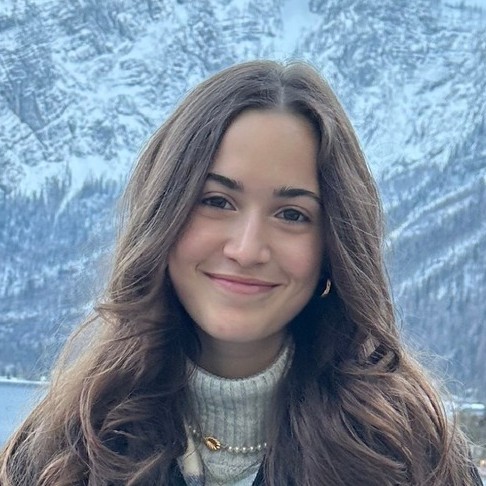
Hi! I'm Bruna, a first-year English Literature undergraduate at Durham University, currently working on my research project. My passion for stories is reflected in my research which focuses on examining storytelling's role in policymaking in creative fields in County Durham.
I am from Brazil but have lived in the Netherlands and Kuwait and therefore have come to love learning all about languages and cultures. Moving around also means I am always open to learning more and adapting to new situations.
In my free time, I am usually cosplaying an old grandma: I crochet, embroider, bake and read. At times, I may also be playing the sims.
Please feel free to reach out!