Project Outline: Neuromorphic Imaging of Particles in Flow
Research supervisor: Dr Julia Gala de Pablo
Project Aims and Objectives:
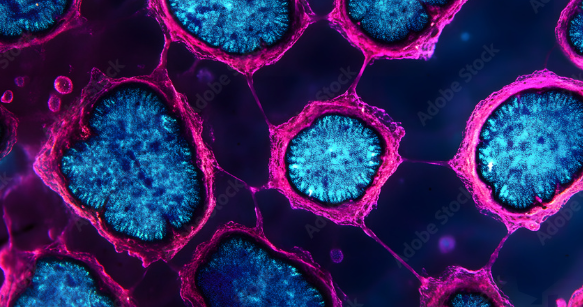
The aim of this project is to explore a new way of measuring the size and "squishiness/ rigidity" (deformability) of particles and cells as they flow in a. Deformability is very important because it can reveal a lot about a cell's health, relating to a lot of diseases, making it very useful for diagnoses, but measuring it accurately and quickly, at a high throughput, is difficult, without needing a £100000+, heavily data-consuming camera. To tackle this, the project pairs: a microfluidic deformability cytometry setup, which channels cells through tubes thinner than a human hair, and an event-based, neuromorphic camera. Unlike an ordinary camera that captures full frames at fixed intervals, the event-based (or neuromorphic) camera only captures changes by the pixel by flux, as in pixel by pixel, instead of the entire frame of pixels, as they happen. This makes it extremely efficient and fast (as the camera can essentially capture events at 10,000+ frames per second), but it also produces a unique sort of data - a continuous stream of events, measuring time, space and polarity, rather than conventional images - which needs entirely new and very unique processing method.
The objective is to 'fine-tune' this process, find which way of measuring the data gives back the 'best' results. To do this, the software will be designed and tampered with to optimise the camera's capture settings to ensure no waste data is generated/ determine what waste data is. The eventual goal of this project would be to prove the camera's usefulness so much so that every hospital in the country has one of these cameras to both save lives, by delivering quicker and more accurate diagnoses and saving energy/costs on cameras that generate a lot of images and data that isn't needed.
Motivation:
My main motivation for applying to this project is a genuine enthusiasm for research that solves issues in people's lives, no matter how small, and the chance to work on a problem that sits outside the boundaries of my own discipline. Additionally, I had always loved biology in school, I'd taken it at A-Level, and was extremely close to choosing to do a degree in it. So the idea that I could possibly contribute to the process of medical diagnoses in such a significant, positive way doesn't seem real to me, whilst being able to apply my current engineering knowledge. On the more specific side, as a civil engineering student at the University of Leeds, much of my work has involved understanding how fluids behave and move, and I am keen to take that grounding in fluid mechanics in a new and unfamiliar direction, into the microscopic scale. This combination of knowledge, between my biology background and fluid mechanics to apply them to individual cells, and particle flow, and deformation, is exactly the kind of challenge that excites me, precisely because it asks me to stretch my existing knowledge into territory I have not encountered before. I truly cannot wait to embark on this project with the Laidlaw Foundation.
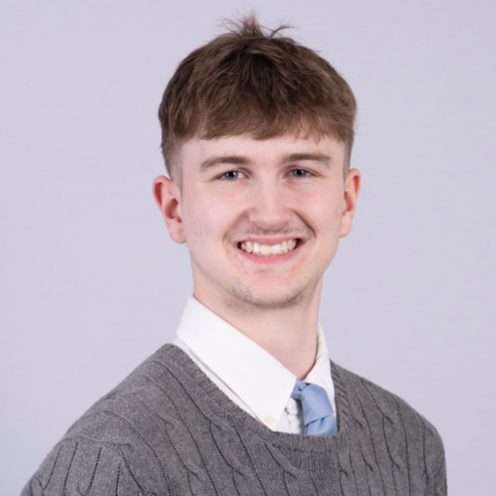
Hi there, I'm Joe, an undergraduate student at the University of Leeds, and a part of the 2026 Laidlaw cohort, in the second year of my studies, undertaking an integrated master's in Civil Engineering. I'm from a coastal village in Northumberland, UK. Around my studies, I love hiking, playing ice hockey and spending time with friends.
Academically, as aforementioned, I'm interested in a wide range of civil engineering disciplines, including structural and environmental engineering; my research project is in a slightly different field, however. Over the course of the summer, I shall be studying applicability of neuromorphic imaging, set cameras for use to measure and map cell deformities in real time.
I'm, very excited to be a part of the Laidlaw community, and I'd love to meet as many people as possible so please feel free to reach out to this email address bcms1943@leeds.ac.uk .

Please sign in
If you are a registered user on Laidlaw Scholars Network, please sign in