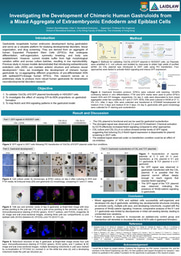
Project Outline: Developing a Gastruloid Model from Expanded Potency Stem Cells (EPSCs) to Study Neurodevelopmental Disorders
Background
In the past, studying human developmental disorders at early stages of embryonic development had been restricted by ethical and technical challenges. Yet, with advances in stem cell research, it is now possible to recapitulate developmental processes using a gastruloid model derived from human Expanded Pluripotent Stem Cells (EPSCs). Gastruloids can capture the gastrulation process up to early neurulation in vitro in the absence of maternal tissues. It requires proper culture conditions and signaling molecules at specific times to facilitate key developmental processes, including self-organization, breaking symmetry, and axis formation. However, there still exist some developmental features that deviate from those observed in human body. Recent progress has focused on elucidating these key differences to develop competent models.
Objectives and Methodology
In this project, I am working with my lab mentor to investigate the process of anterior-posterior (A-P) axis formation, which is influenced by Wnt/NODAL signaling dynamics. We are studying how manipulation of regulatory genes or signaling molecules involved in this pathway affects the formation of gastruloid structure. To track tissue organization, gastruloid is transfected with pDNA that carries a fluorescence reporter using nucleofection. Fluorescence signals differ between cells in the anterior and posterior ends because they have distinct transcriptional profiles that drive differential reporter expression. Mapping these signals reveals spatiotemporal developmental patterns. For example, TOPflash-GFP-transfected cells with posterior identity should show green fluorescence signal due to active Wnt/β-catenin signaling.
My work focuses on:
- To maintain EPSCs for embryoid formation
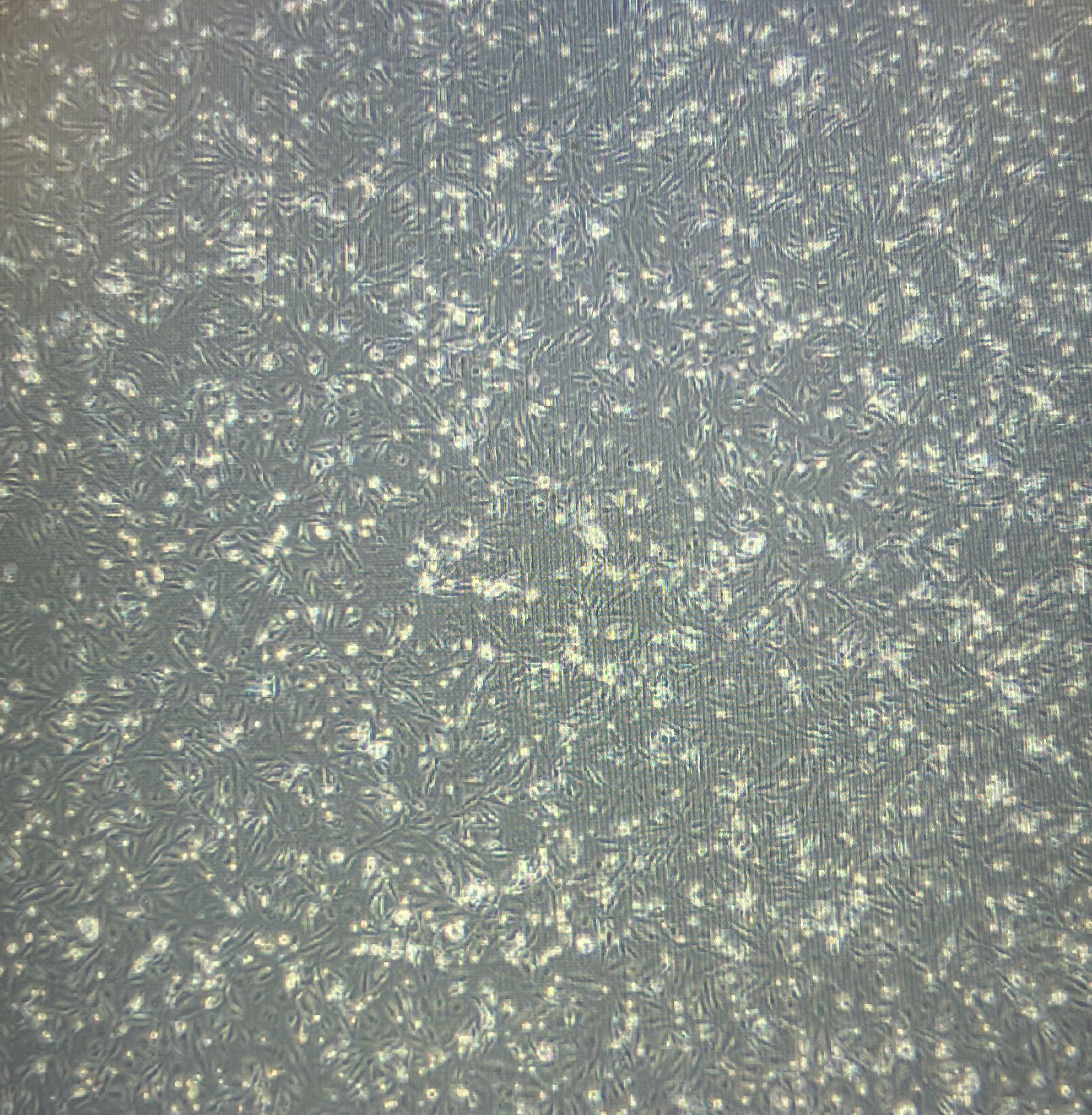
- To validate plasmid DNA (pDNA) functionality in HEK293 T cells before gastruloid nucleofection
- To optimize culture conditions for developing uniform, consistent embryoids
First, I will carry out experiments to optimize conditions for embryoid formation. This helps generate more uniform, consistent embryoid structures for establishing better gastruloid models.
Second, I will validate the functionality and expression of pDNA constructs in HEK293T cells before performing nucleofection in gastruloids.
Third, I will assess embryoid and gastruloid development by observing morphology under a microscope, performing immunofluorescence staining, and interpreting fluorescence reporter signals.
Expected Outcome
Developing a robust gastruloid model opens the opportunity to develop a better understanding of disease development as well as to design better therapeutic approaches. Specifically, a thorough understanding of A-P axis formation for specific lab-grown gastruloids is important for future applications in modeling neurodevelopmental disorders.
During a six-week research period, I will gain laboratory skills in stem cell cultures, good laboratory practices, and techniques used for stem cell analysis and characterization. Beyond laboratory training, I will carry the skills and perspectives gained in this research laboratory into my future scientific career. I wish to apply insights gained from lab meetings and deepen my understanding of stem cell-derived gastruloids in disease modeling. I also hope to grasp the interdependence of dry-lab bioinformatics and wet-lab benchwork, as I am interested in applying AI tools to biomedical research, especially in identifying gene targets that drive disease progression. It has become clearer to me that biological processes are far more complex than computational models can fully capture, and experimental validation remains essential for translating predictions into meaningful biological insight.