Personal Reflection: Development Training Days
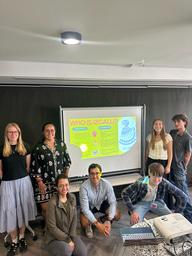
The Laidlaw training days provided a valuable opportunity to engage critically with both leadership theory and its practical application within the context of my Leadership in Action (LiA) project. One of the most beneficial aspects of the sessions was the dedicated time allocated to working on our individual projects. This enabled me to directly apply newly acquired concepts and frameworks to my own LiA plans, reinforcing my understanding through immediate practice rather than abstract discussion.
A particularly effective component of the training was the use of scenario-based and situational judgement exercises. These activities encouraged me to apply key leadership principles, such as the “three Cs”, to real-world contexts. This not only deepened my understanding of these concepts but also highlighted their relevance beyond personal leadership, extending to broader social and organisational settings. Engaging with these scenarios required critical thinking and reflexivity, both of which are essential skills for ethical and effective leadership.
The session led by Nikki on the distinction between volunteering and voluntourism was especially impactful. I found this to be the most valuable part of the training, as it challenged previously unexamined assumptions about the inherent value of charitable work. It prompted me to adopt a more critical perspective on international volunteering, particularly in relation to power dynamics, sustainability, and community agency. This was especially relevant to my planned work within a charity focused on domestic violence, where sensitivity to local context and lived experience is paramount.
A key insight I gained from this discussion is that community work is only truly ethical when it is grounded in the needs and desires of the community itself. Prior to the training, I had largely assumed that all forms of aid were inherently beneficial. However, I now recognise that this perspective is overly simplistic. Meaningful and ethical engagement requires listening to, and collaborating with, the community, rather than imposing external ideas of what is needed or desirable. This shift in understanding has significantly influenced how I approach my LiA project and my broader conception of leadership.
The training also facilitated a deeper level of personal reflection. I feel more confident in articulating what leadership means to me and how my own values inform my approach. In particular, I have begun to consider the role of personal values - such as faith - in shaping leadership identity. Previously, I had viewed such aspects as separate from leadership; however, the training has helped me recognise their importance in guiding decision-making, integrity, and purpose. This process of reflection has allowed me to better understand my goals, both in the immediate context of my LiA project and in my longer-term aspirations.
At the same time, the sessions highlighted areas for personal development. I have identified organisation, administrative skills, and time management as key areas for improvement. I often find myself overcommitting, which can lead to feelings of being overwhelmed. However, the training helped to normalise this experience, particularly among students balancing multiple responsibilities. Recognising this has made me more proactive in addressing these challenges, and I intend to develop strategies to manage my workload more effectively moving forward.
Overall, ethics emerged as a central theme throughout the training. I am now more attuned to the ethical dimensions of leadership, particularly within charitable and community-based contexts. The insights gained from both speakers and peers have encouraged me to approach my LiA project with greater awareness, sensitivity, and critical reflection.
In terms of next steps, I plan to complete all outstanding administrative preparations for my LiA project and to connect with previous scholars who have undertaken similar placements. This will provide valuable insight into the practical realities of working in Mexico City and help me prepare more effectively for the experience.
While the training was highly beneficial, one area for improvement would be the inclusion of a wider range of guest speakers. Hearing diverse perspectives would enhance engagement and provide a broader understanding of leadership in different contexts, ultimately enriching the learning experience.

Hi! My name is Liam Jones and I am a Laidlaw Scholar from the 25/26 cohort. I am an undergraduate student reading Modern Languages and Cultures at Durham University, St. Cuthbert's Society College. I study French, Arabic, and Persian too! I am interested in international affairs, peacekeeping, and linguistics.
During my first year, I completed a research project in French musicology throughout my 6-week research summer, which was thrilling and I managed to learn a lot about French linguistics, as well as the evolution of the French language, and music too - including competency using music software which I had never had the chance to do before.
I am from Nairobi, Kenya, but I now live in Loughborough in the UK.