The Laidlaw Scholarship was my first scholarship, a moment that felt like both recognition and responsibility. I remain deeply thankful for the support that makes this transformative journey possible. I used to picture "leadership" as something reserved for people in positions: class monitors, managers, people with official titles. Laidlaw has gradually rewritten my understanding: leadership is not a rank you are given — it is a collection of character traits you practise, refine and live out day by day.
Research Summer
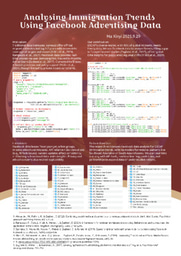
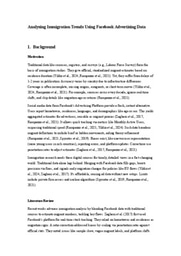
My starting point was the research summer. I dedicated myself to my demographic research project: analysing immigration trends across ESCAP member states using Facebook & LinkedIn advertising data.
Working on this project was far from straightforward. I ran into barriers: Meta account restrictions blocked my direct access to the Marketing API; the legacy fbRads R package had become non‑functional. I collaborated with other researchers, cleaned large datasets, and wrote filtering scripts to separate local residents and expat migrant groups. We wrestled with methodological challenges including digital bias, uneven internet penetration across Asia‑Pacific countries, and more.
This summer taught me that research is rarely a smooth path. It requires patience and adaptability. These lessons would later echo throughout my life.
On‑Campus Leadership Training
Next came the on‑campus leadership training sessions. As an introverted person, I was initially nervous about group chatting and public sharing. I worried that I couldn't contribute meaningfully.
But the safe, supportive space built by facilitators and peers changed everything. Our sessions invited quiet reflection, careful listening and respectful exchange. I began to understand that inclusive leadership starts with holding space for people who do not naturally take the floor.
Oxford Character Training
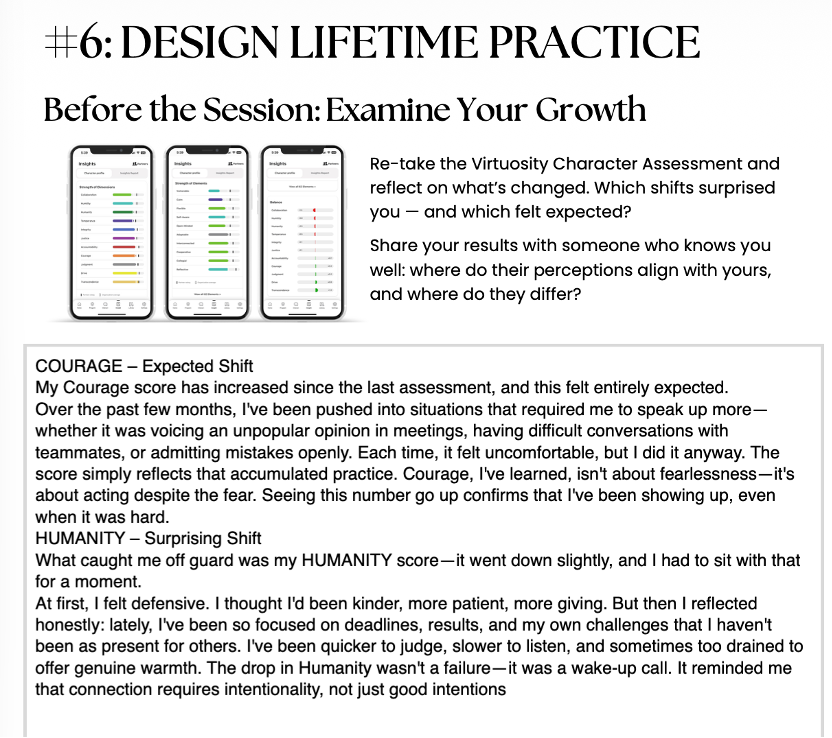
The Oxford Character Training is the most thought‑provoking part of the journey. The reflective assessments pushed me to pause and examine my behaviours, motivations and blind spots.
Two themes stuck with me: Transcendence and Courage. Transcendence was framed as being a “fire‑keeper”: nurturing an inner flame of purpose and hope without ignoring hardship or pretending struggles do not exist. During stressful study periods, I adopted a daily ritual: writing down one thing I was grateful for and one modest goal, which kept my inner purpose alive.
The module also re‑defined courage: not fearless heroism, but value‑driven action taken despite uncertainty. Vulnerability is not weakness; admitting gaps and asking for help builds stronger selves.
Looking Forward
Looking ahead, I anticipate the upcoming Global Conference. I can't wait to meet outstanding peers from universities worldwide, exchange ideas around research and leadership.
I am also preparing for my Leadership‑in‑Action Project. After exploring platforms including AIESEC, WWOOF and GoEco, I discovered a rich landscape of welfare opportunities across the world. Due to heavy academic workload, I have deferred my project to next summer. Even so, I am excited to translate the leadership insights into hands‑on service. I look forward to learning from communities.
This two‑year journey is not just about what I can accomplish for myself. It is also about paying it forward — lifting others up, supporting fellow scholars, and creating space for more people to pursue their big dreams.
I’m Maggie from HKU. In high school, I won 1st prize in mathematical paper writing and ability tests. I chose statistics as my first major in college and learned probability theory. I also master linear algebra, multivariable calculus, and Python. I’m pretty interested in supply chains and optimization strategies. I wish to pursue a doctoral degree and make a difference in the world by estimating and optimizing strategies in life. Undergraduate research is an important chance to explore my interests and learn more about this field.