More Than a Title: What Laidlaw Programme Taught Me About Leadership
Before applying for this scholarship, I mostly viewed leadership as a social role. There were people who were leaders because they held positions, organised things, or were the ones others naturally looked to when something needed to be done. Leadership was something you could recognise from the outside: a behaviour, a responsibility, sometimes even a title.
One of the things Laidlaw has changed most for me is that I no longer think leadership has to look like that.
Across the programme, I have come to see leadership as something much broader. There is leadership in a position, but there is also self-leadership, quiet leadership, situational leadership and leadership through influence. Sometimes it is about being the person who takes responsibility and speaks up. Sometimes it is about listening, adapting, or helping someone else become more confident. I found myself thinking about these ideas while actually teaching some of them to young people during my Leadership in Action placement, which was slightly ironic: I was explaining concepts that I was still learning to understand myself.
Looking back across the whole Laidlaw Scholars Programme, I think that is what makes the experience difficult to reduce to a list of skills. The programme gave me experiences in which I had to practise leadership, research, communication and reflection, but it also gave me opportunities to reconsider what those things actually mean.
Becoming a change maker
The Change Maker Values were particularly interesting to me because I think my understanding of what it means to create change has become less dramatic.
There is a tendency to associate change with something large and visible: an ambitious project, a major achievement, a new initiative that can be clearly attributed to one person. Laidlaw has made me more comfortable with a different idea of change. A person does not have to create a revolution to contribute to one. Sometimes you are one part of something much larger, and your contribution only makes sense because it sits alongside the contributions of other people.
During my LiA, this became very real. I arrived in the Cook Islands with a carefully planned set of goals and activities. Once I was actually there, the priorities of the organisations were not necessarily the same as they had been when the proposal was written. Rather than forcing my original plan into the six weeks simply because it was what I had promised on paper, I had to understand where I could genuinely be useful.
That meant doing things ranging from youth workshops and conversations about self-leadership to filming environmental events, helping with fundraising activities, supporting visiting groups, working on an inventory system, painting a staircase, participating in environmental action and contributing ideas to advocacy work. None of these things, individually, constitutes some enormous transformation. That was never really the point.
What mattered was learning that contribution can be cumulative. Sometimes being useful means taking on a task that frees someone else to concentrate on something more important. Sometimes it means offering a perspective that is useful because you happen to see something differently. Sometimes it means simply being willing to help.
That has changed how I think about the word "change maker". I do not think being one requires constantly proving that you have made a large difference. It also requires knowing when a contribution is yours to make, when it belongs to somebody else, and how your work fits into something that was already happening before you arrived.
Character is something you practise
The Character element of the programme gave me a different way of thinking about something much more personal: myself.
After my research year and before my LiA placement, I took part in the Oxford Character Project. I would not describe it as the most transformative part of my Laidlaw experience, but I did find value in having different aspects of character explicitly named. It gave me a vocabulary for thinking about qualities such as courage, humility, temperance, transcendence…and I found the idea that virtues need to be balanced particularly useful. Having more of one quality is not automatically better if it comes at the expense of another.
What stayed with me most was not a particular exercise or definition, but the process of becoming more conscious of character itself. It became easier to notice certain tendencies in myself and to think about whether they were helping or hindering me.
That awareness continued through the rest of the programme. Meeting other Scholars, listening to people with different perspectives, taking part in new experiences and eventually spending six weeks living and working on the other side of the world all gave me plenty of opportunities to notice things about myself that are difficult to see when life stays familiar. That awareness matters for leadership. It is difficult to lead ethically if you assume that being capable means being the person with all the answers.
At the same time, I have become more comfortable with bravery. The programme repeatedly put me into situations where I could not rely entirely on familiarity. Research required me to deal with uncertainty. Conferences required me to explain my work to people who knew nothing about me or my project. LiA meant travelling far from the people and routines I knew and finding my way through an unfamiliar environment.
The result was not that I stopped finding unfamiliar situations difficult. Instead, I became more confident that I could enter them anyway and work things out as I went.
Perhaps that is one of the most useful things character development has meant for me: not becoming a completely different person, but becoming more aware of the person I already am and more deliberate about who I want to become.
Developing the capacity to act
The Capacities part of the 3Cs framework gives language to some of the more practical changes I have noticed in myself.
Communication is an obvious one. Throughout the programme, I had to communicate with people with very different backgrounds, ages and levels of familiarity with what I was doing. The Scholars Conference in Durham was a particularly useful experience because I was explaining my project to people who had no previous reason to know me or my work. Having to make something understandable and interesting to a room of strangers in a constrained time is very different from explaining it to someone who already knows the context.
My communication developed further during LiA. I worked with young people, adults, NGO staff, visiting groups and members of the wider community. I had to learn when to explain, when to ask questions, when to simplify an idea and when to step back.
Problem-solving developed in a similar way. The research year taught me that research is much less tidy than it appears from the outside. One interesting question can very quickly become three more questions, and each of those can lead somewhere else. I learned that curiosity is valuable, but unlimited curiosity is not particularly helpful when you have an actual deadline. I had to learn to distinguish between something being interesting and something being relevant to the task in front of me.
Perhaps surprisingly, I also discovered that I genuinely enjoy the research process. That realisation is one of the things I will take beyond Laidlaw, because it has given me a clearer idea of the kinds of work and questions I may want to pursue in the future.
More generally, I think I have become more willing to leave my comfort zone. I have greater confidence in my ability to try something new without already knowing that I will be good at it. That confidence did not come from being told that I should believe in myself. It came from repeatedly having to do things I had not done before and discovering that I could usually find a way through them.
A global mindset is more than knowing about other countries
I would not say that Laidlaw fundamentally changed my basic idea of what it means to be a global citizen. I was already curious about other cultures and generally comfortable with difference. What changed was the breadth and depth of the perspectives I had encountered.
The programme connected me with Scholars from different backgrounds, exposed me to different ways of thinking, and eventually took me to a part of the world that was very different from anywhere I had previously lived or studied.
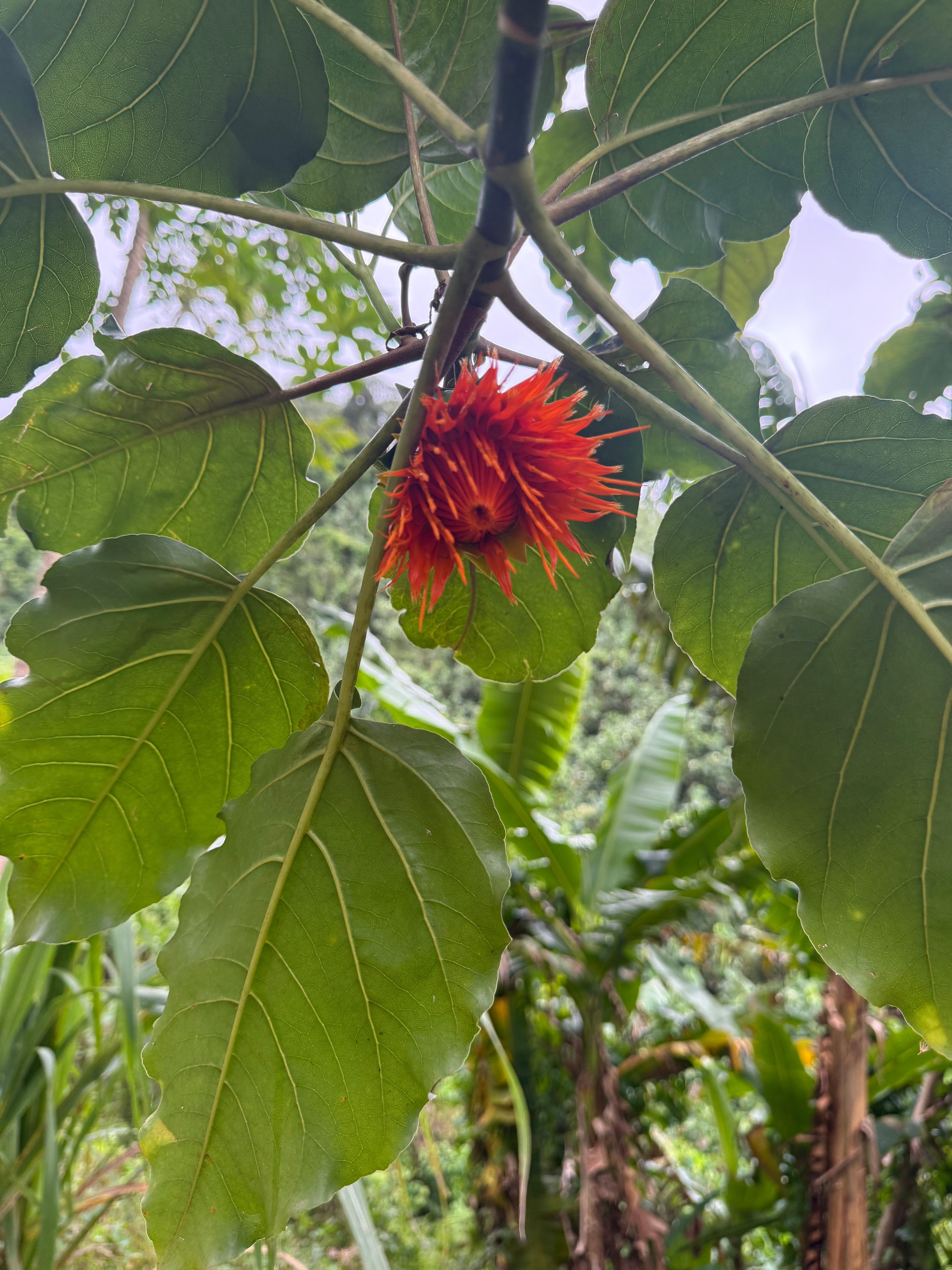
endemic treasure found only on the misty
peaks of Rarotonga, waking briefly for its
fleeting annual bloom.
LiA was particularly important in this respect. One of the biggest things I took from the experience was the importance of understanding context before making judgements.
There were cultural differences and traditions that I encountered which, viewed entirely through my own background, I might not have immediately understood. But understanding the circumstances, history and social context behind them changed the way I thought about them. It did not necessarily mean that I agreed with everything. Rather, it made it possible to replace an immediate judgement with a question: why is this the way it is? That is a small distinction, but I think it is an important one.
A global mindset cannot simply mean knowing about lots of countries. It requires accepting that your own way of seeing something is not the only possible starting point. It means being curious enough to understand before judging, and humble enough to recognise that context matters.
It also means recognising that people are not simply representatives of a country, culture or social issue. During LiA, I did not just learn about the Cook Islands as a place. I met people, worked alongside them, laughed with them, listened to their experiences and, by the end of the placement, genuinely felt that I had made another family on the other side of the world.
That is a very different kind of learning from reading about a country.
What I will take forward
I do not know exactly where Laidlaw will take me next, and I do not think I need to have a complete answer yet. What I do know is that I want to carry the habits developed through the programme into whatever comes next.
I want to keep looking for opportunities that push me beyond what is familiar. I want to remain curious, particularly when something initially seems strange or difficult to understand. I want to keep developing the confidence to act while also developing the humility to recognise when I should listen instead.
For me, ethical leadership increasingly means holding those things together. It means having the courage to contribute without assuming that you are the centre of the story. It means listening before acting, recognising the limits of your own knowledge, and being willing to contribute to something without needing to claim that you created it.
It also means understanding that being a global citizen is not a status that I have now achieved because I travelled somewhere far away. It is something I will have to keep practising. The world will continue to introduce me to people, cultures and situations that I do not immediately understand, and I want my first response to be curiosity rather than certainty.
That may be the most lasting change Laidlaw has given me. I began the programme thinking about leadership mainly as something people do. I am leaving it thinking much more about the kind of person who is doing it: their character, their judgement, their willingness to learn, their capacity to work with others, and the way they use whatever influence they have.
I am extremely grateful to have become a Laidlaw Scholar and for the opportunities that came with it. The research year, the Leadership Development Programme, the Oxford Character Project, the Scholars Network, the conference in Durham and, ultimately, the LiA, each gave me something different. None of them provided a final answer about who I should become.
Instead, together they gave me more experience, more perspective and a much better understanding of the questions I should continue asking myself.
With gratitude
It is inconceivable to reflect on Laidlaw without also thinking about the people who made the experience possible.
I am deeply grateful to Lord Laidlaw for creating a programme that gives students opportunities to do much more than simply add another achievement to their CVs. The chance to spend time researching something I genuinely became interested in, to develop alongside other Scholars, and then to take that learning into an entirely different environment through LiA has been extraordinary.
I am equally grateful to the University of St Andrews and to everyone involved in making the Laidlaw Scholars Programme what it is. In particular, I want to give a special thank you to Celina O’Connor, Manager of the Laidlaw Scholars Programme at St Andrews. Throughout these years, Celina has been a guide, mentor, organiser, problem-solver and, very often, the person making sure that all the moving parts actually came together. Her support has been a constant throughout the programme, and I am incredibly grateful for it. I also want to thank all the other staff and people behind the programme whose work often happens quietly in the background but makes these opportunities possible.
I am grateful, too, for the other Scholars. Working alongside them, getting to know them, listening to their ideas and seeing the different ways they approached their own projects was an important part of my experience. The Scholars Network became more than simply a programme requirement; it became a community of people from whom I could learn and with whom I could share the strange, exciting and sometimes difficult experience of being a Laidlaw Scholar.
I also owe a huge thank you to Dr Bernhard Struck, my research supervisor, for his mentorship, guidance and enthusiasm throughout my research year. His willingness to engage with my questions and interests, and his enthusiasm for introducing me to the world of Esperanto, made the research experience considerably richer than I expected it to be.
And finally, a very special thank you to Kōrero o te ‘Ōrau and Te Ipukarea Society, and to all the people I met through my time in the Cook Islands. They welcomed me into their work and, much more importantly, into their lives. I went to Rarotonga hoping to contribute something useful, but I came away having learned far more than I could have anticipated. The people I worked with continue to inspire me, and I am grateful for the patience, trust, generosity, knowledge, love and care they shared with me.
I began Laidlaw thinking that leadership was something you could see: a role, a responsibility, a person at the front. I leave it with a different understanding. Leadership is also what happens when nobody gives you a title, when there is no perfect plan, when you are not the most knowledgeable person in the room, and when the most valuable thing you can do may be to listen, learn and help.
I do not think Laidlaw has given me a final definition of leadership. It has given me something more useful: the confidence to act, the humility to keep learning, and the curiosity to keep asking what it means to do either well.
And that is something I hope to carry far beyond the end of the programme.
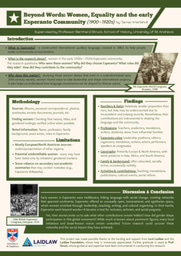
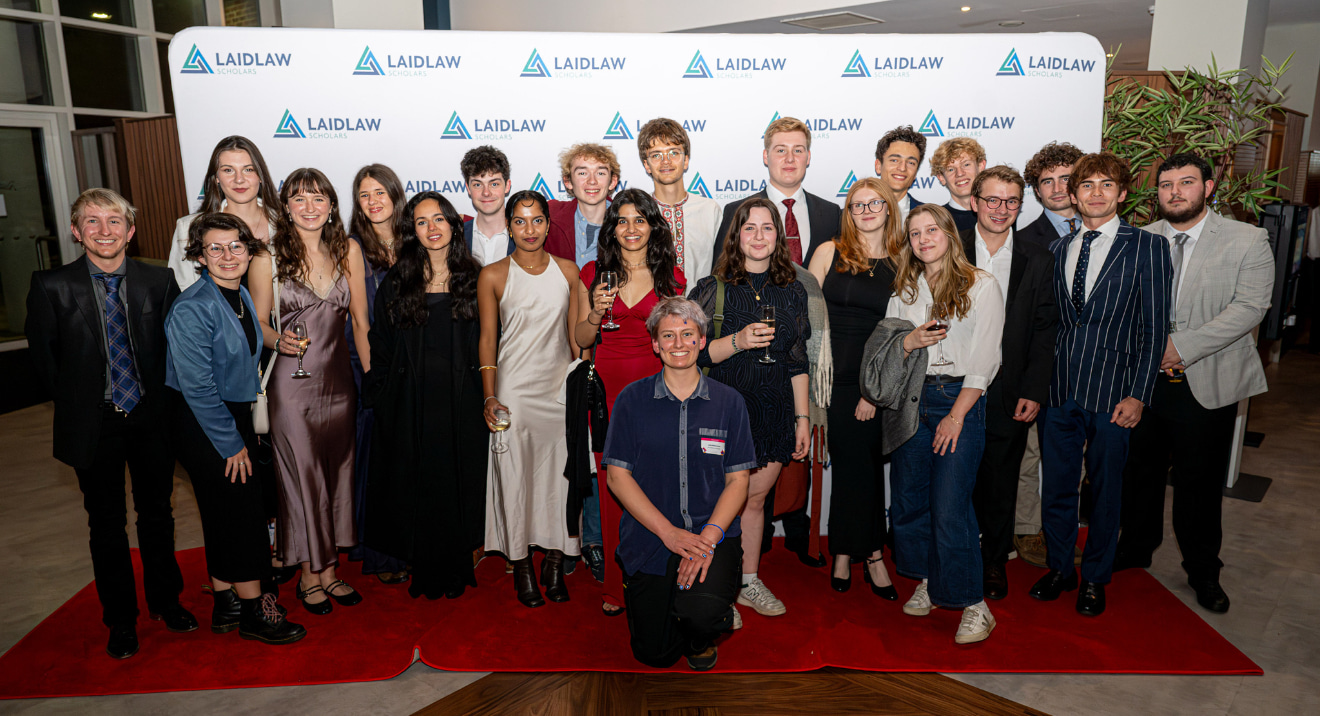
*The poster photo was taken at the Annual Laidlaw Scholars Conference in Durham, October 2025.

Hey hey! :)
I'm Tamar, a Financial Economics student at the University of St Andrews, based in historic and picturesque Scotland. I am originally from Georgia (the country!), heading into my 3rd year of undergraduate study. This summer marks my first as a Laidlaw Scholar, and I am incredibly excited to be undertaking my research project: “Beyond Words: Women, Equality and the Early Esperanto Language Community.” Through historical artefacts, I will be exploring how the early Esperanto movement (1900s–1920s) created inclusive spaces for women, challenging the gender norms of its era. Given that gender inequality remains a pressing issue today, it is fascinating to explore how earlier generations managed to confront these challenges, despite arguably more rigid societal constraints.
You might be surprised by my choice of a socio-historic topic — after all, I study finance and economics. But I have always been fascinated by interdisciplinary thinking. My curiosity often leads me to explore humanities subjects at length, and I take every chance I get to expand my horizons beyond my degree. What's more, this project gives me the perfect excuse to pick up another language! Language learning is one of my greatest passions (although I must confess I dabble more than I master), and I am always on the lookout for compelling study materials.
Outside of academics, I adore capturing the beauty of my surroundings, travelling and planning future trips, reading, watching great cinema, and unwinding with music — I even brought my national instrument, the Panduri, to St Andrews all the way from Georgia and strum it as much as I can to keep a little piece of home with me.
If any of this sparks your interest — whether you got curious about my research, want to exchange language-learning tips, or just chat about shared interests, I'd love to hear from you! Feel free to reach out here or connect with me on LinkedIn.
Look forward to connecting with you! :)