Beyond the Script: Navigating Emergent Goals and Unscripted Action in Cook Islands
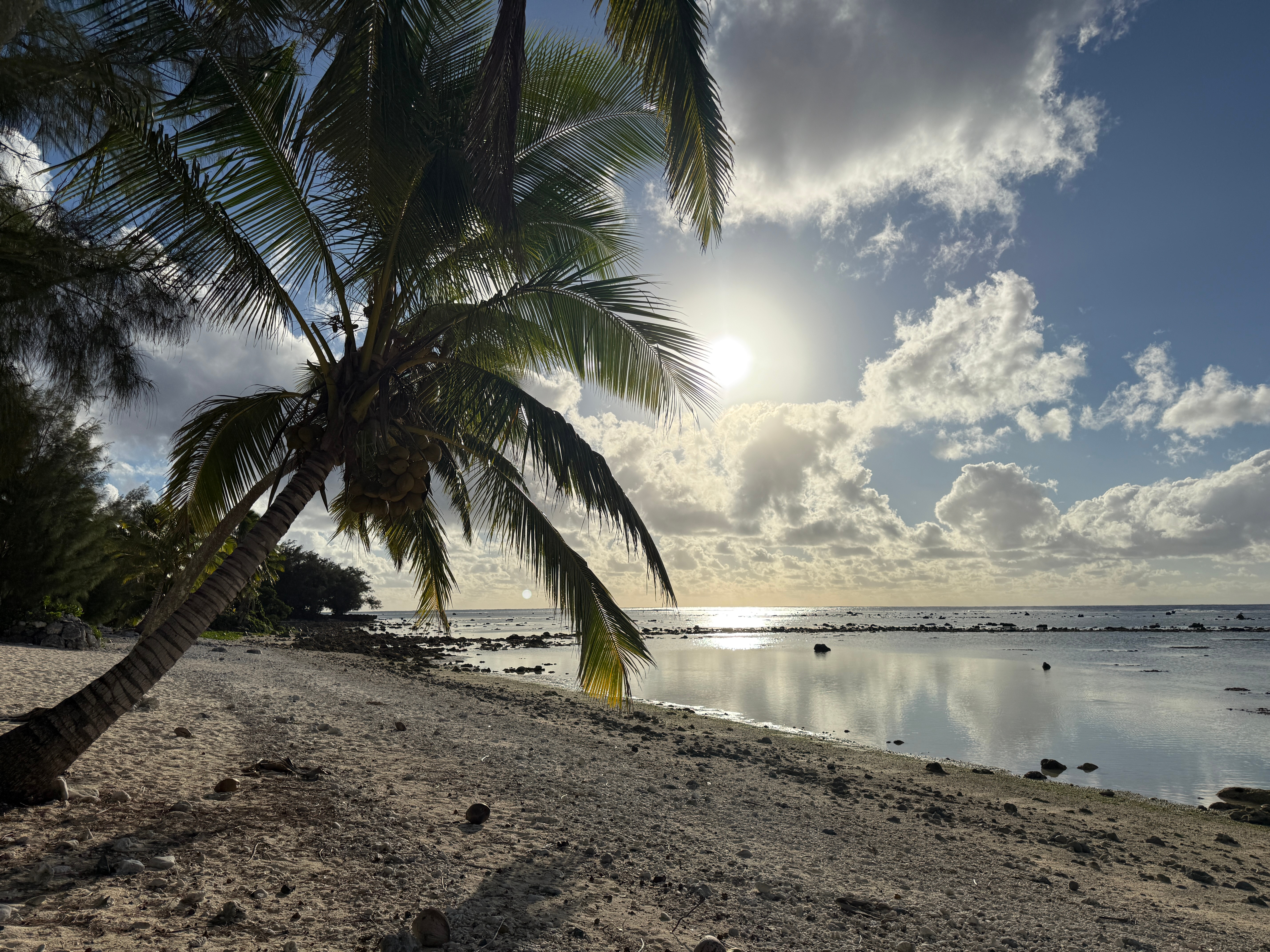
When the Plan Meets the Island
I arrived in Rarotonga with a project that looked very good on paper. There were SMART goals, planned outputs, workshops, environmental education, reusable resources and a neat list of Sustainable Development Goals that the project was supposed to contribute towards. I had deliberately designed the project to be adaptable because I knew that working with local organisations meant listening to what they actually needed rather than arriving with a solution of my own. What I had not anticipated was quite how adaptable I would have to be.
Within the first couple of weeks, the project had already started to look different from the one I had written in Scotland. Over the following six weeks, I found myself doing things that ranged from delivering youth leadership workshops to filming environmental campaigns, from discussing deep-sea mining to taking volleyball tournament scores, from helping with agricultural restoration activities to building a sea wall with young people, and from speaking at a theological college to painting pareu for the Saturday market.
At first, I found the difference slightly unsettling. I had spent a long time making sure that my project was purposeful and measurable. Suddenly, I was doing things that did not obviously belong to any of the boxes I had created.
Eventually, I stopped asking whether something fitted the project and started asking a simpler question: was it useful?
That became a much better way of understanding my six weeks with Kōrero o te ‘Ōrau (KO) and Te Ipukarea Society (TIS).
The project I thought I was going to do
My original project had three broad aims. I wanted to support the development of self-leadership among young people, create educational and outreach materials that the organisations could continue using after I left, and contribute to environmental initiatives and learning around issues affecting the Cook Islands, including the longer-term consequences and trade-offs associated with deep-sea mining.
The youth leadership side came closest to the original plan.
I delivered two workshops with young people covering self-leadership, confidence, SMART goals and practical approaches to turning ambitions into manageable steps. I did not want the workshops to feel like a corporate leadership seminar transplanted onto an island. We talked instead about leadership as something that can appear in ordinary behaviour: how you influence other people, how you respond when something goes wrong, how you take responsibility and how you can lead without having a title.
I also tried to make the examples feel like they belonged to the young people rather than to a textbook. One of the exercises was built around a Vaka (traditional boat) travelling between Rarotonga and Aitutaki (two local islands), with different people having to make decisions depending on the situation. The point was that there is no single style of leadership that works everywhere. What and who a group needs changes according to the task and the environment. That idea became increasingly relevant to my own experience as the placement went on.
Confidence was another recurring theme. One activity involved getting the young people to do something deliberately silly for a few seconds while everyone else copied them. They were initially shy, so I went first. Once somebody had broken the awkwardness, the rest became much easier and, very quickly, everyone was laughing. It was a simple demonstration of something we had discussed more seriously: confidence does not always have to come before action. Sometimes action is what creates confidence.
Some of the most useful conversations, however, were not workshops at all. A group of the young people were preparing for an exchange trip, and some were nervous about presenting. They were young, relatively inexperienced and worried about forgetting information or making mistakes. In a few brief one-to-one conversations, I tried to reframe the situation: the audience did not know the presentation they had planned, so if they forgot a point, the audience would not necessarily know that anything had gone wrong. Most people watching were probably not waiting for them to fail.
The response was immediate. They said they had never thought about it that way and seemed visibly relieved. Later, one told me that the presentation had gone very well.
It was a very small interaction. It was not a planned activity and there was no measurable intervention behind it. But it showed me something important about the kind of contribution I could realistically make. Sometimes there was no need for me to create another programme. A conversation was enough.
The workshops also grew beyond the audience I had originally imagined. The “aunties and uncles” became interested in doing something similar themselves, so I ran a session with adults as well. Except it made more sense as a discussion than a youth workshop. They brought their own experiences into it, challenged and developed ideas, and connected what we were discussing to things they had actually encountered. One person later told me they had done something the following week because of something I had said.
Again, I am careful about what I claim from that. I did not transform their behaviour through one conversation. But I did see an idea travel from a conversation into someone's actions, which was meaningful enough.
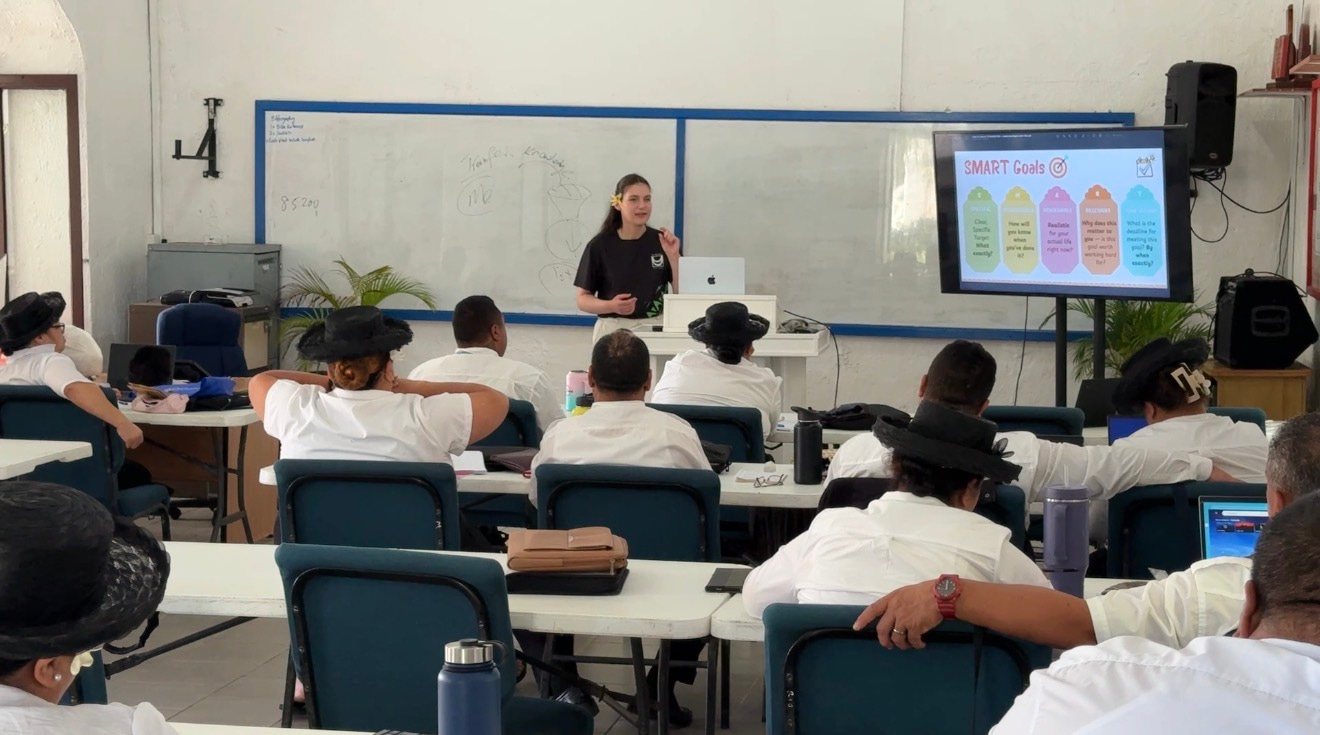
Besides these activities, I also gave a SMART goal-setting lecture at the theological college for an adult audience. That was more formal and conceptual than the youth workshops. The same basic framework could be used in a completely different setting, where the emphasis was on thinking about larger aspirations, breaking them into milestones and objectives, and deciding what actually deserved attention first.
The same material therefore ended up being used with different groups, in different ways, for different reasons. That was perhaps more valuable than delivering one perfectly structured workshop exactly as I had originally designed it.
A lot more than workshops
If the placement had only involved the leadership workshops, this would be a very different report.
Kōrero o te ‘Ōrau is a small organisation, and its work did not divide itself neatly into the categories in my proposal. The same people could be working with young people one day, preparing for an event the next, dealing with fundraising, hosting visitors, working on environmental issues, responding to something unexpected and trying to keep the ordinary operation of the organisation moving at the same time.
Stars Tournament
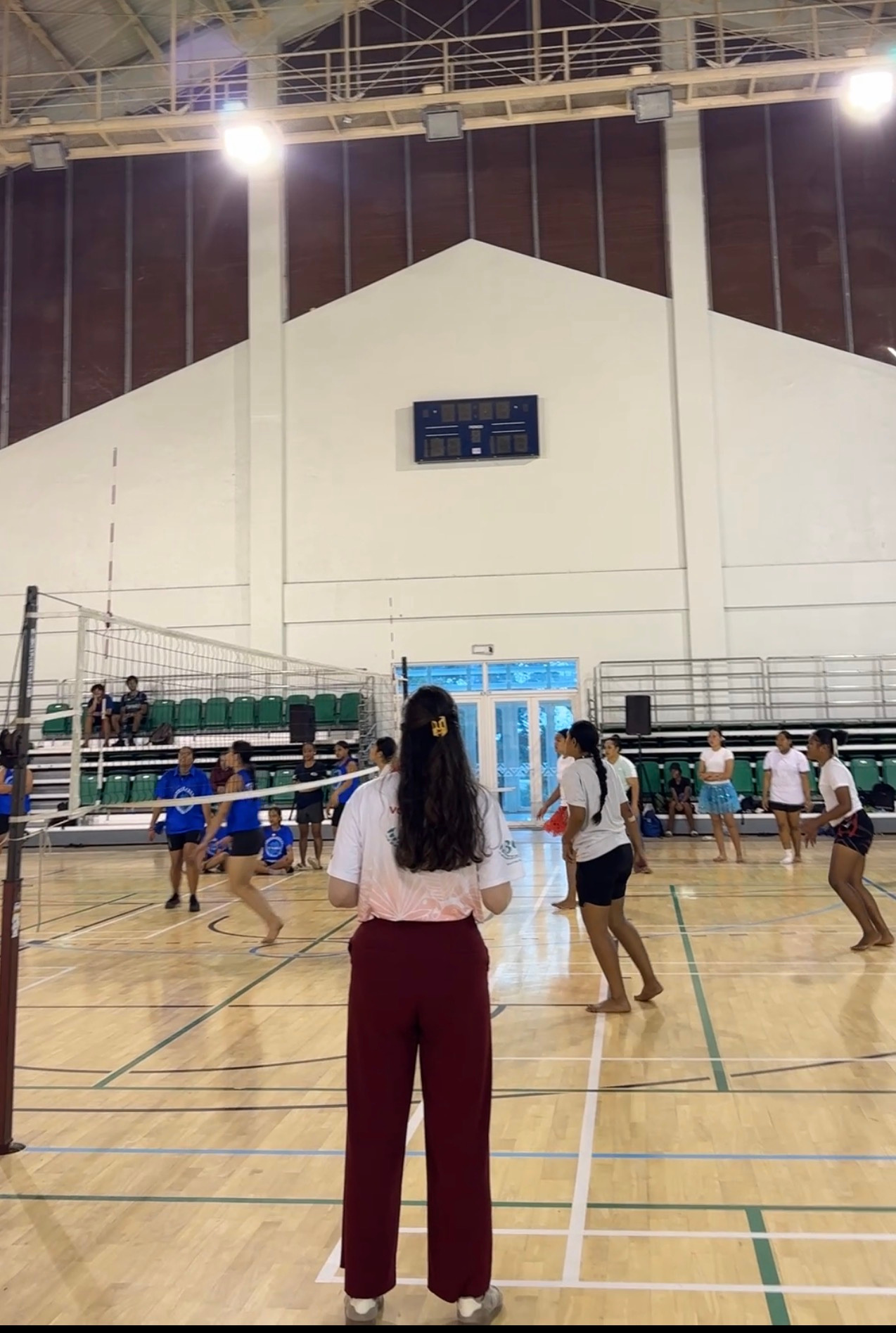
I became involved in a little bit of all of this. I helped with the Rising Stars volleyball championships, including setting up and clearing the venue and taking scores during the games. I briefly participated in agricultural restoration, including weeding and spending some time learning how to work in a taro patch. However, these were mostly a learning experience for me rather than particularly impressive contributions I had made. I also participated in Operation Taramea once, counting and burying the invasive crown-of-thorns starfish.
Furthermore, I also helped with a sea wall alongside four young people and an adult representative. This was part of the practical fundraising activities the youth sometimes undertook. The young people were not simply being given money; they were participating in practical work to earn it. My role was mostly to be another pair of hands.
I also spent a surprising amount of time helping with visitors. KO regularly hosted people and groups coming from different parts of the world, and I was able to explain what the organisation did and what I had experienced as an intern. This included groups from the Norfolk Islands, international visitors, the (now-former) French Ambassador in New Zealand, and the Māori Queen of New Zealand. I obviously could not speak on behalf of an organisation I had known for only six weeks, but being able to describe what I had actually seen from the inside gave visitors another perspective on the work they were encountering.
There were also less visible things. I contributed some suggestions to a funding proposal and helped with various tasks around the base as they came up.
One of those tasks was an inventory. KO needed to record the stock across the base for financial purposes, so I initially started working through it with one of the members. Rather than leaving the information as a one-off list, I created a digital database that could make future stock inventories easier to complete.
That is probably the kind of output that would have been very easy to overlook when designing my project. It was not exciting enough to put in a project title, and nobody would probably travel across the world specifically to create an inventory database. But the organisation needed one, and once it existed, it could continue being useful.
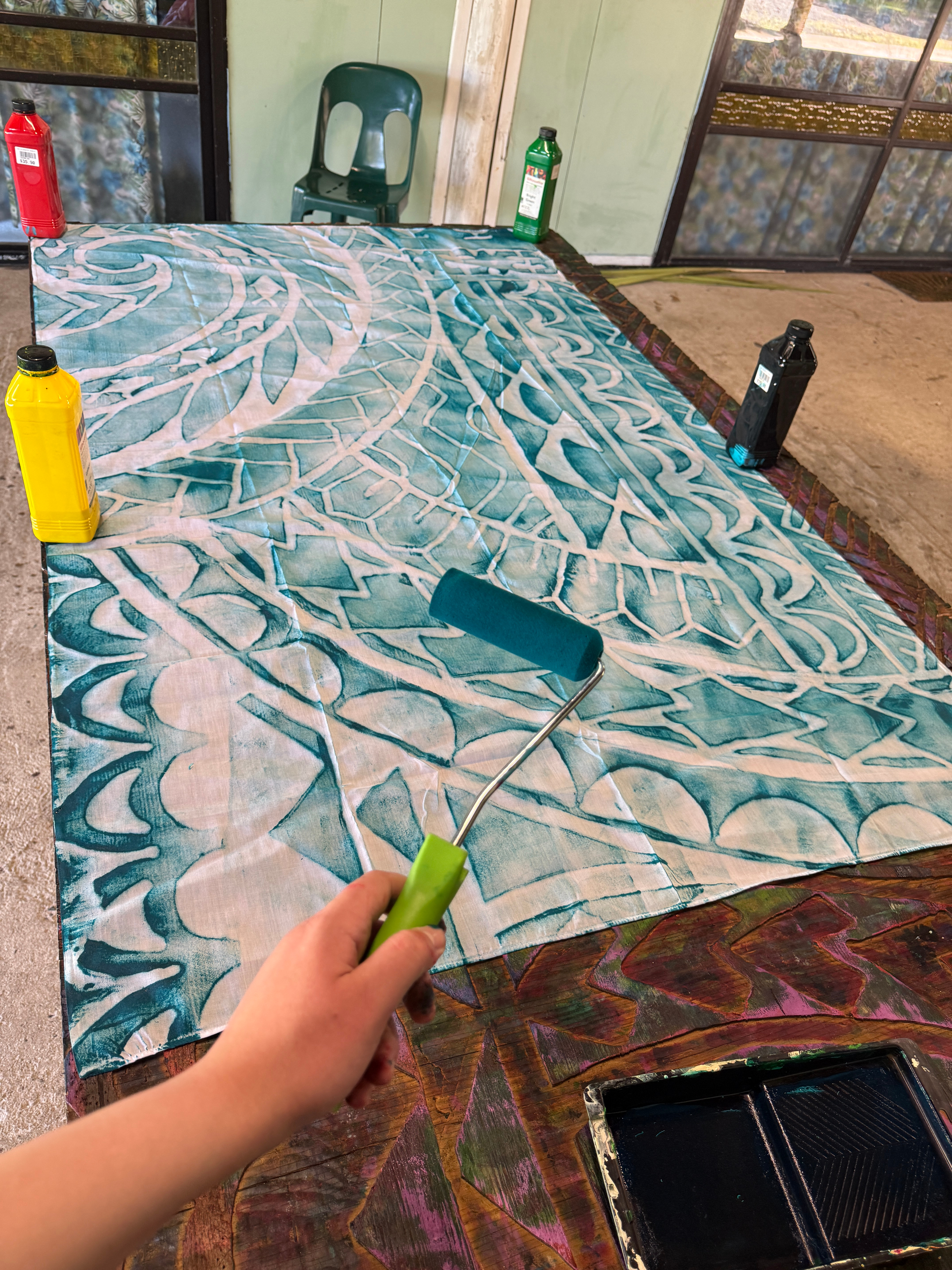
The same was true of the pareus. KO sells products at the Saturday market as part of its fundraising, and it keeps running out of stock. I spent time painting them. There was nothing particularly profound about it. But while I was painting, somebody else could spend that time doing some other significant tasks that only they had the expertise or connections to work on.
That was a useful lesson precisely because it was so ordinary. In a small organisation, there is not always somebody else waiting to do the mundane work. The person who understands the youth programme might also need to prepare market stock. The person dealing with an environmental issue might also need to organise an event. When resources are limited, being willing to do the unglamorous job can be a meaningful form of support.
Environmental work did not follow the original script either
The environmental side of the project changed more substantially.
My original idea had included structured environmental-literacy sessions and an accessible economic perspective on deep-sea mining. I was interested in questions such as who receives the benefits, who carries the risks, what assumptions sit behind economic arguments and what the longer-term consequences might be. I did not want to arrive and tell people what position they should take, particularly when the organisations I was working with already had much more knowledge of the local environmental and political context than I did.
In practice, the work became much more about listening and contributing where appropriate.
I attended a Seabed Minerals Authority community consultation to understand the arguments and proposals being presented, as well as the concerns and perspectives being expressed by people in the community. Afterwards, I discussed possible campaign approaches with KO and offered some suggestions. I also worked on a billboard concept, although the organisation ultimately changed the design.
I was also brought into some of the work of Ocean Ancestors, a wider collective of NGOs including TIS and KO, concerned with ocean protection. I attended board meetings, contributed an outsider's perspective while the purpose statement was being developed, and helped with campaign filming and an announcement video.
These were interesting experiences because they showed me another side of environmental work. It was not simply about standing on a beach or teaching people about marine ecosystems. There was communications work, organisational decision-making, advocacy, fundraising, public engagement and a great deal of discussion about how to communicate an issue without losing sight of the people and communities involved.
My direct contribution was limited, but I was able to participate in a much wider conversation than I would have experienced through the original workshop plan alone.
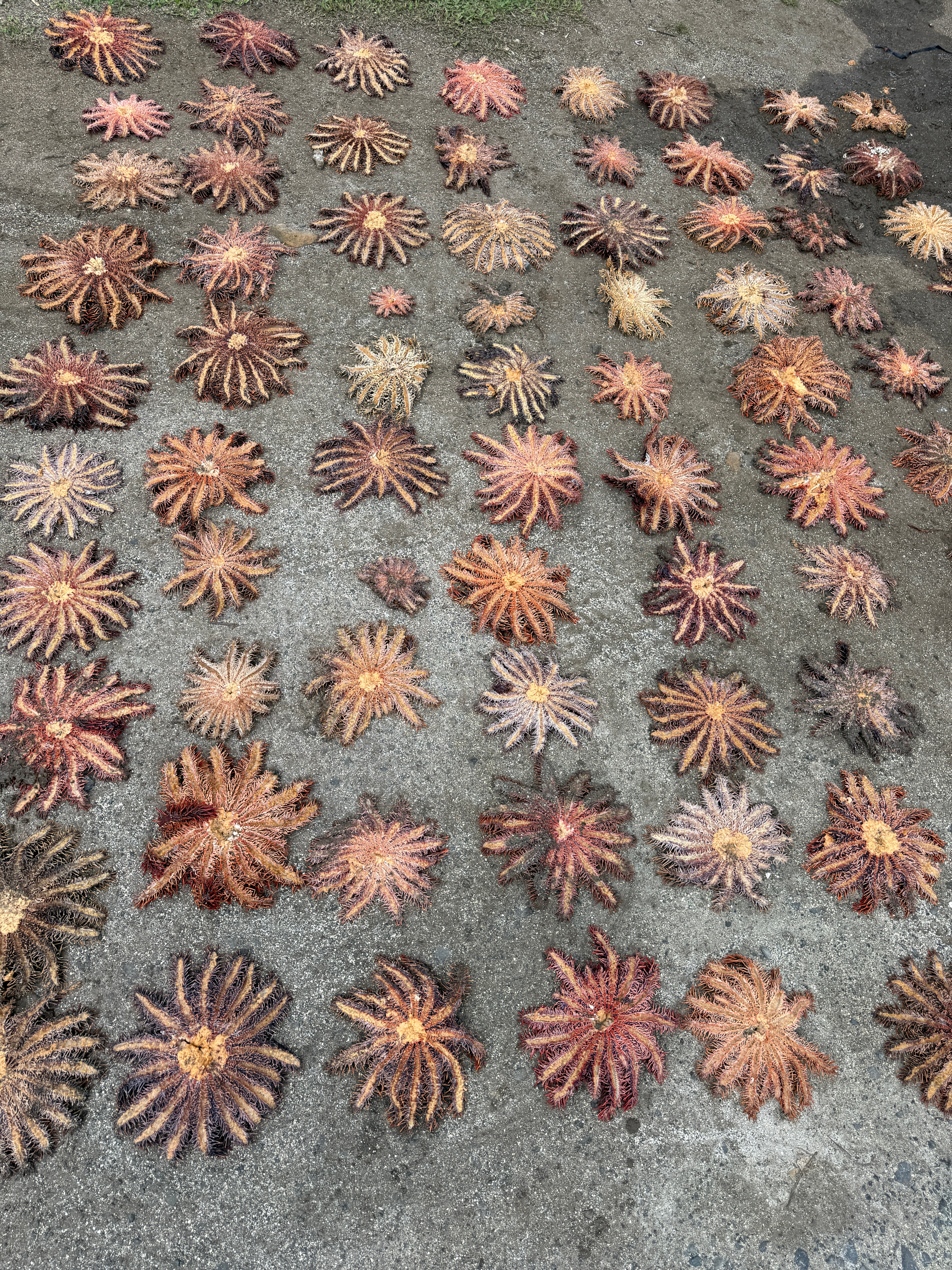
(Crown-of-thorns starfish)
I also got to participate in environmental action itself. Operation Taramea was one example. I do not have a diving license, so my role was limited to counting and burying the starfish as fertiliser collected by others. I joined agricultural restoration activities and participated in a community b
each clean-up. Again, none of these activities were large enough to justify pretending that I had made a major environmental contribution. They did, however, let me see how environmental work actually fits into the everyday life of a community organisation.
Te Ipukarea Society: communications became a contribution in their own right
My work with Te Ipukarea Society was different again.
Rather than developing a separate programme, I often supported work that was already happening by helping document it and turn it into material that could be shared afterwards.
At the “Know Your Flow” event, which focused on menstrual awareness among young people, I filmed the day and produced a short social-media reel.
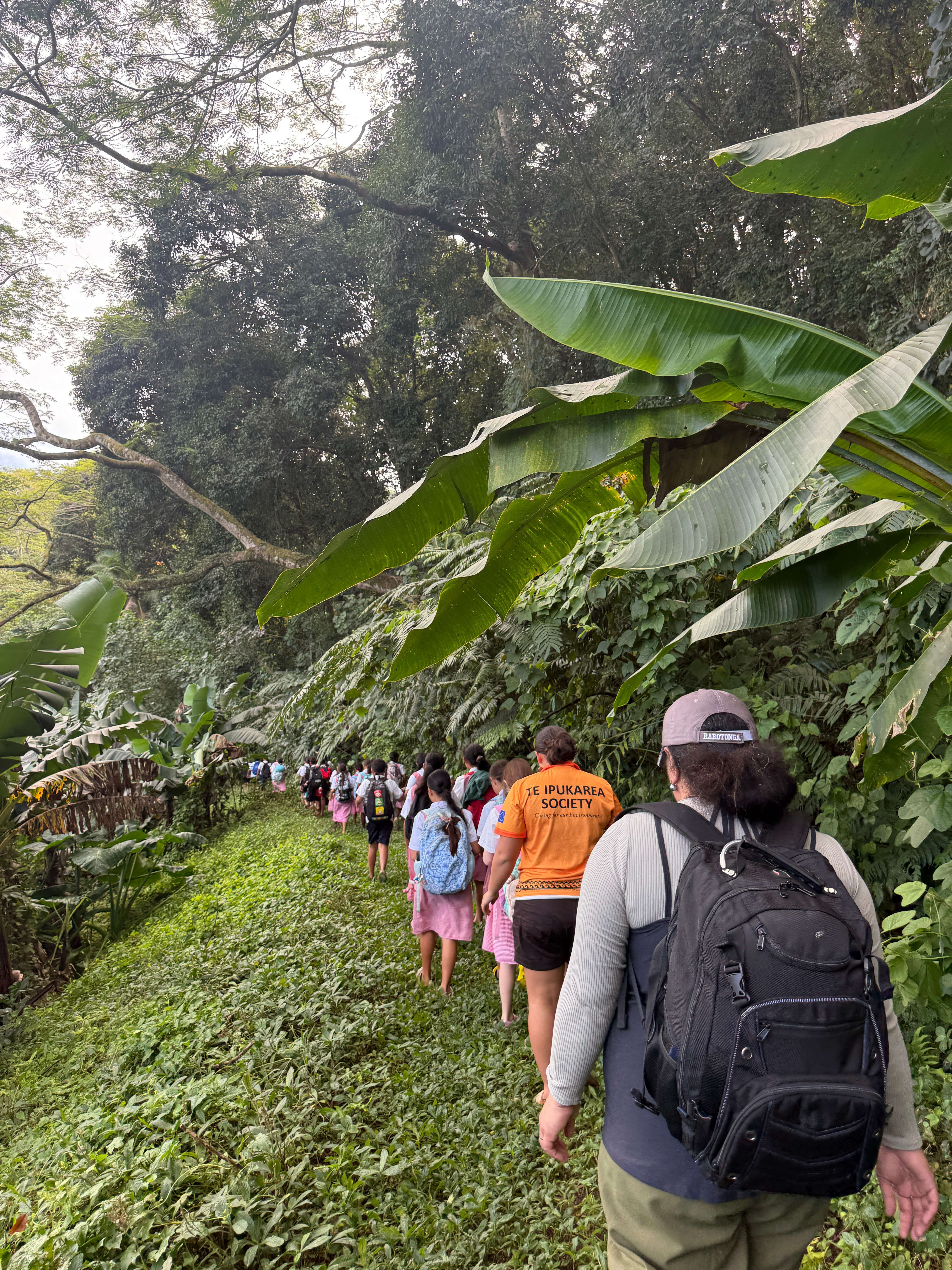
Conservation Area
I also joined a waste-management awareness day for primary-school children. The morning involved games and activities about waste before the children visited the landfill and the Takitumu Conservation Area. I helped supervise them, filmed the activities, asked some of the children what they had learned and edited two short reels afterwards.
I also gave them a short presentation about waste management in Scotland. I saw this as a comparison rather than a model: another place making different choices about waste could provide a reference point without implying that those choices should simply be transplanted to the Cook Islands. The children could consider the comparison alongside what they already knew and what they had just seen for themselves.
The same pattern appeared during a community beach clean-up. I helped with the clean-up itself, documented the day and later edited two short videos.
These outputs were modest, but they were also somewhat tangible. A short video can continue to be shared after the event has finished. It can show people what happened, communicate a message to an audience who was not there and give the organisation material for its public engagement.
The part of the placement that was not in the proposal
One of the most interesting parts of the placement was the cultural exchange, because it was not really something I could put into a SMART goal.
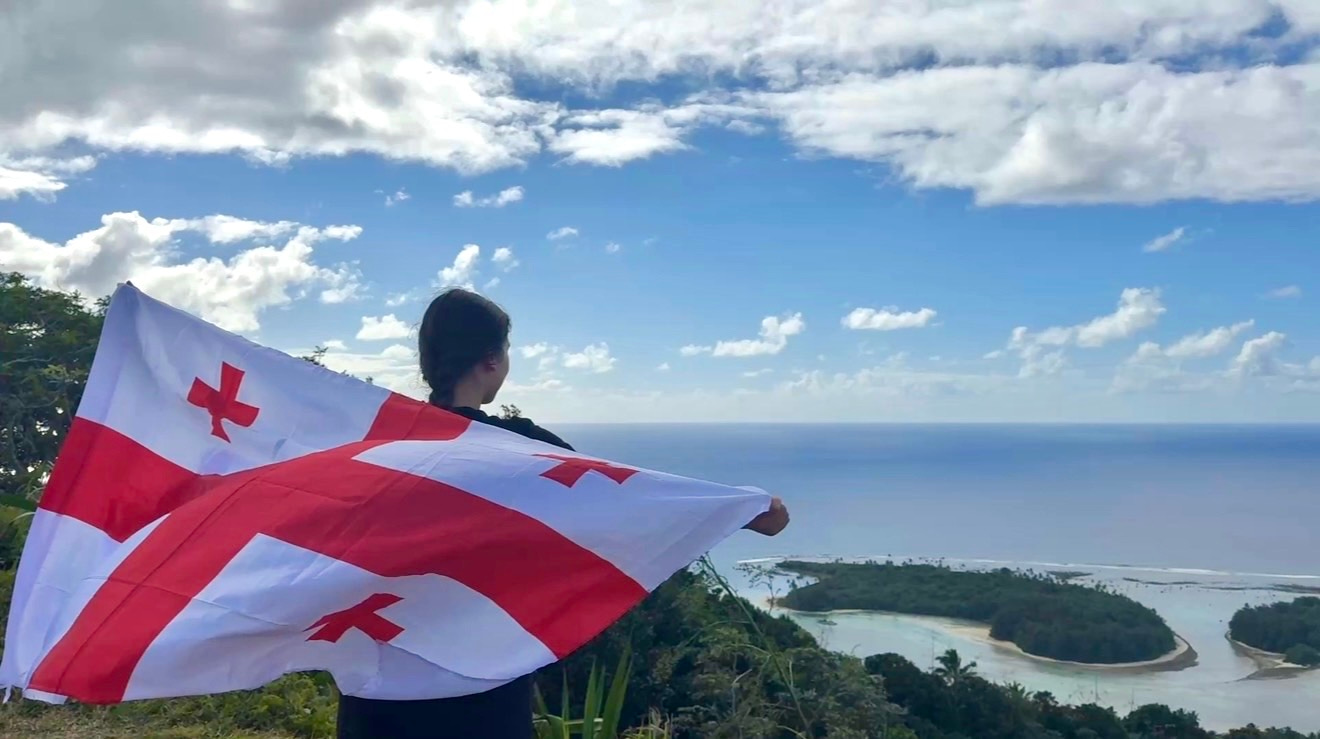
A lot of it happened through ordinary conversations. I had conversations about Georgia (my homeland): its history, language, culture, traditions, people, and the things that make the country feel distinctive to me. I cooked a Georgian dish. I answered questions and compared experiences with people who had very different backgrounds from mine.
At the same time, I was constantly learning about the Cook Islands through the people I was working with rather than simply through prepared information. The exchange was informal, but it mattered to me because international placements can otherwise become strangely one-directional: one person arrives, does their project, and leaves with a collection of lessons about another place.
That was not really what my experience felt like.
I was contributing something, but I was also simply another person in the room.
What the SDGs look like after six weeks
The SDGs were an important part of my original project design, but I think I understand their role differently now.
The project was originally aligned primarily with SDG 4: Quality Education, SDG 13: Climate Action, SDG 14: Life Below Water and SDG 15: Life on Land. Looking back, those connections are still there, but they describe the wider work rather than measuring my individual impact.
The youth leadership workshops, adult discussions, theological college session and informal confidence conversations connect most clearly with SDG 4. The waste-management education and wider environmental awareness work sits alongside SDG 13. Operation Taramea, beach clean-ups, ocean advocacy and the environmental work I observed connect with SDG 14, while agricultural restoration relates to SDG 15.
There is also an argument for recognising SDG 17, Partnerships for the Goals, particularly through the collaborative work around Ocean Ancestors and the relationships between different organisations and individuals.
But I do not want to turn a list of activities into a list of claims about global development.
KO and TIS were already working towards these goals before I arrived and will continue doing since I have left. I simply supported particular pieces of that work for six weeks. The SDGs provide useful context for understanding why the work matters; they are not evidence that I personally “achieved” four or five Sustainable Development Goals. That distinction feels important.
What I underestimated
Before leaving Scotland, I understood in principle that a project with local partners had to respond to their priorities. What I had not understood was what that actually looks like inside a small organisation.
The organisations were constantly moving between very different kinds of work. A day could contain youth work, environmental work, fundraising, communications, visitors and something completely unexpected. There was no
guarantee that tomorrow would resemble today.
What impressed me was not simply that people were “adaptable”. That word is too easy to use… They had experience. They had accumulated knowledge and skills across many different parts of their lives, and that experience gave them something to draw on when circumstances changed. Problems could be unfamiliar, but they were rarely completely disconnected from something they had encountered before. Their ability to move between different responsibilities seemed to come from years of learning how to do different things, not from some abstract quality of being flexible.
I also saw how much of organisational work is relational. Despite being busy, people repeatedly showed up for one another. They supported each other's work, checked in on each other's wellbeing and stepped in when someone needed help. The work mattered, but so did the people doing it.
The young people also stayed with me. KO was not simply trying to give them activities to fill an afternoon. There was a broader emphasis on helping them become responsible, confident and compassionate people. Even some of the younger children demonstrated a maturity and consideration that I found genuinely impressive.
Being around that made the leadership workshops feel less like something I had brought with me and more like one small contribution to something that was already being developed.
So, did I achieve my SMART goals?
Not neatly.
The original goals were too structured for the context, particularly once the reality of the organisations' schedules became clear. I realised this within the first one or two weeks and initially spent quite a lot of time trying to work out how I could reshape the project into a new set of SMART goals that would still look coherent on paper.
Eventually, I decided that this was missing the point. There would have been little value in inventing a replacement project simply because it would produce a cleaner outcome for my Laidlaw record. The organisations had their own priorities, and I was there to support them.
So, I allowed the goals to become more emergent.
Some of the original aims were met in part. The leadership workshops happened, reusable worksheets were left with the youth, the digital inventory database was created, and a range of videos and other communications materials were produced. I participated in environmental and agricultural work, contributed to discussions around deep-sea mining, and supported many smaller organisational tasks.
Other planned activities did not happen as originally imagined. I am comfortable with that now. The more important change was in the way I evaluated my own contribution. I stopped measuring the placement primarily by how closely it resembled my proposal and started considering whether the work I was doing was appropriate, wanted and useful. That is a much harder standard to put into a spreadsheet.
What I would tell the next scholar
I would still tell future scholars to plan properly. SMART goals are useful. A clear idea of what you hope to contribute is useful. Thinking about outputs, safeguarding, sustainability and the needs of your partner organisation before you travel is essential.
But I would also tell them to leave room for the project to become something different.
Not because planning does not matter, but because the reality of working alongside another organisation cannot be completely understood from Scotland.
Do not assume that the most valuable thing you can do will be the thing you originally proposed. It might be. Sometimes it will be a workshop or a resource that you planned months in advance. Other times it might be helping someone finish a task they have been trying to get through all week.
And do not judge every contribution by how impressive it sounds.
A database can be useful. A short video can be useful. Taking scores can be useful. Talking to a nervous young person can be useful. Helping prepare a venue can be useful. Painting market stock can be useful.
At the same time, future scholars should be careful not to romanticise this kind of usefulness. Small organisations should not have to depend on a succession of short-term international visitors to keep their work running. The fact that I could occasionally make someone's day easier does not mean that I had solved an organisational problem. I was there temporarily, and my contribution had limits.
That is part of the responsibility too: knowing the difference between being helpful and making yourself important.
Six weeks later...
When I think back to the project I submitted before leaving Scotland, it is almost strange to compare it with the placement I actually experienced.
The proposal was organised around a few carefully defined activities. The placement contained far more: youth workshops, adult discussions, a theological college, confidence conversations, fundraising work, pareu painting, a sea wall, agricultural restoration, volleyball, stocktaking, visitors, funding proposals, deep-sea mining discussions, Ocean Ancestors, Operation Taramea, waste education, beach clean-ups, filming, editing and countless smaller moments that would never have made it into the original project plan.
That breadth is important because it changed how I understand Leadership in Action.
I went to Rarotonga intending to contribute through a particular project. I did contribute through that project, but I also became moderately useful in many smaller ways that I could not have predicted beforehand.
More importantly, I saw how much work sits behind organisations that can look deceptively small from the outside. I saw the value of experience, the importance of relationships and the amount of care required to keep community work moving when there are not many people to carry it.
I also learned that leadership is not always about having a clear role and executing it perfectly. Sometimes it is recognising what the situation requires and using whatever skills you happen to have to respond to it.
My SMART goals gave me a starting point. They did not give me a script. The island changed the script, and I think that was where the real Leadership in Action began.
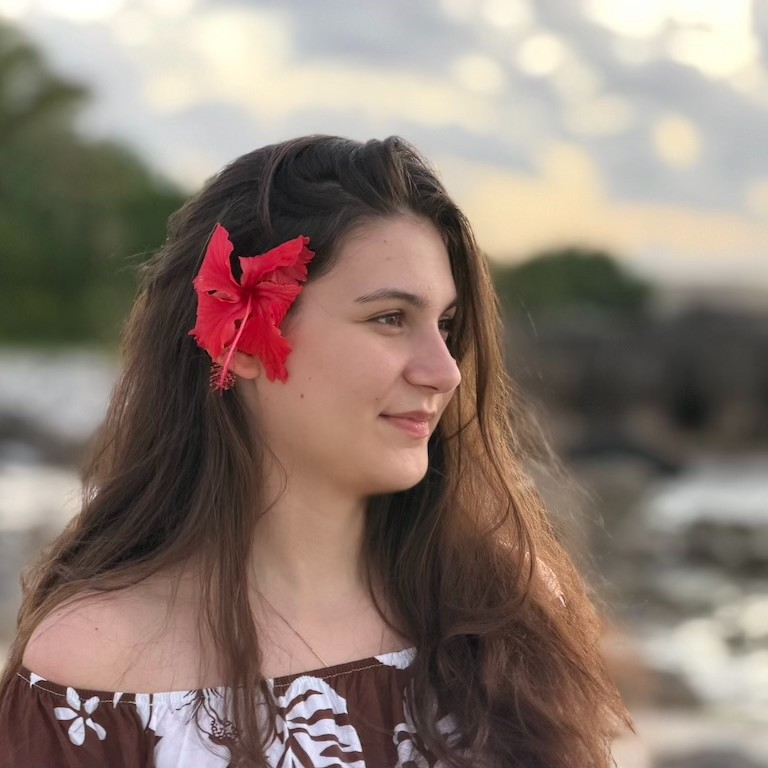
Hey hey! :)
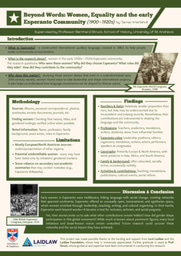
I'm Tamar, a Financial Economics student at the University of St Andrews, based in historic and picturesque Scotland. I am originally from Georgia (the country!), heading into my 3rd year of undergraduate study. This summer marks my first as a Laidlaw Scholar, and I am incredibly excited to be undertaking my research project: “Beyond Words: Women, Equality and the Early Esperanto Language Community.” Through historical artefacts, I will be exploring how the early Esperanto movement (1900s–1920s) created inclusive spaces for women, challenging the gender norms of its era. Given that gender inequality remains a pressing issue today, it is fascinating to explore how earlier generations managed to confront these challenges, despite arguably more rigid societal constraints.
You might be surprised by my choice of a socio-historic topic — after all, I study finance and economics. But I have always been fascinated by interdisciplinary thinking. My curiosity often leads me to explore humanities subjects at length, and I take every chance I get to expand my horizons beyond my degree. What's more, this project gives me the perfect excuse to pick up another language! Language learning is one of my greatest passions (although I must confess I dabble more than I master), and I am always on the lookout for compelling study materials.
Outside of academics, I adore capturing the beauty of my surroundings, travelling and planning future trips, reading, watching great cinema, and unwinding with music — I even brought my national instrument, the Panduri, to St Andrews all the way from Georgia and strum it as much as I can to keep a little piece of home with me.
If any of this sparks your interest — whether you got curious about my research, want to exchange language-learning tips, or just chat about shared interests, I'd love to hear from you! Feel free to reach out here or connect with me on LinkedIn.
Look forward to connecting with you! :)