Monocytes, Mishaps and Milestones
Hi! I’m Crystal, and over the past 6 weeks I had the opportunity to be part of the Cloonan lab in TCD, who studies iron biology and host-pathogen interactions in the context of Chronic Obstructive Pulmonary Disease (COPD). My project involved characterizing peripheral blood monocyte subsets in patients with COPD and investigating differences in cellular iron homeostasis.
My first week started off with attending the European Iron Club (EIC), which my PI was so kind to invite me to. Hosted by my lab, it got me thinking about iron biology in a whole new way, observe the collaboration between clinicians and scientists, and practice networking– I got the opportunity to talk to a researcher from Africa who I could potentially do my LiA with! The conference reminded me that research is never confined to one laboratory, but is a global community built on collaboration and shared curiosity.
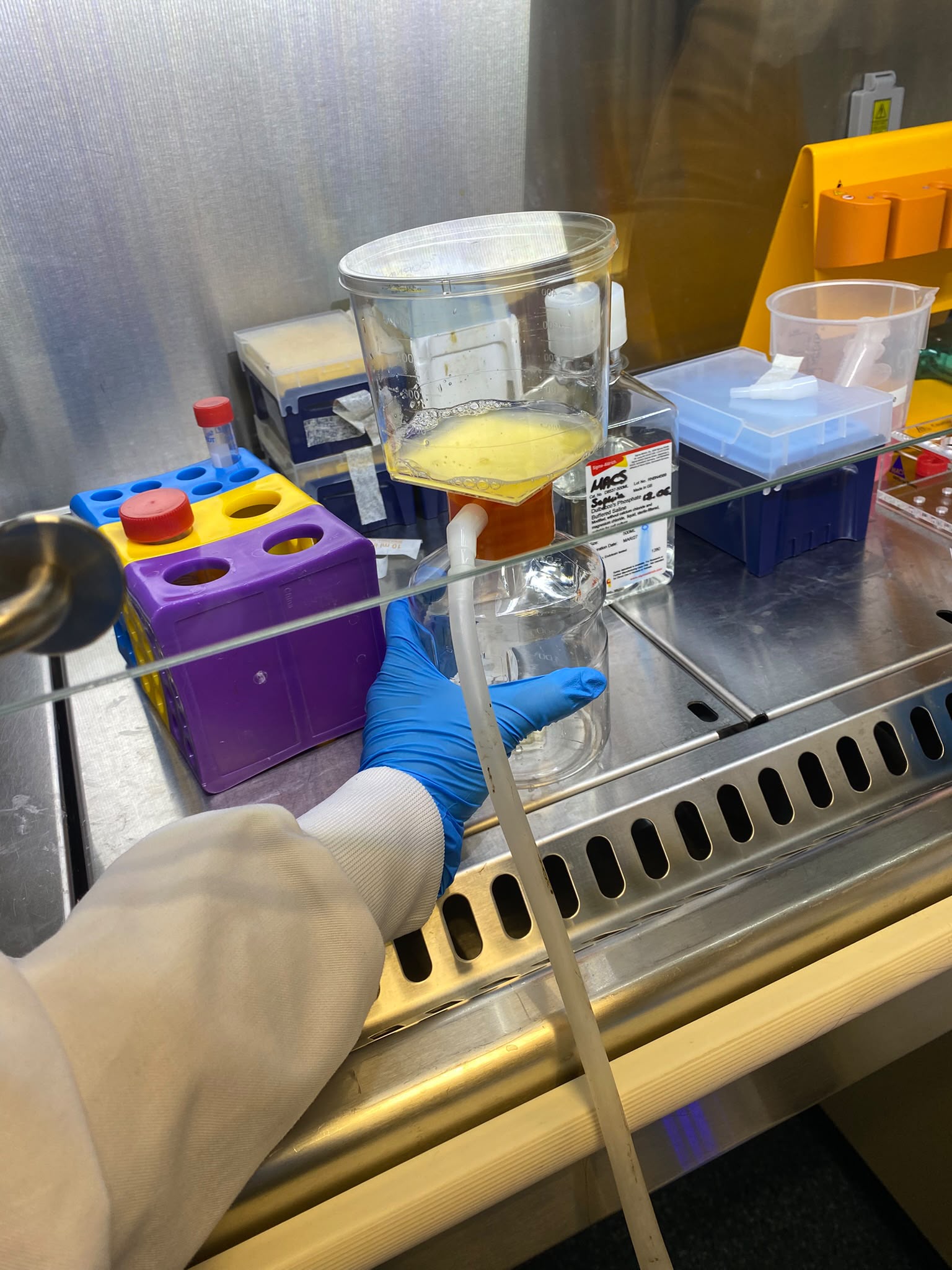
Throughout the project, I realized how much tenacity researchers have. From fungal contaminations and clogged flow cytometers, to incubators evaporating my cell culture media (imagine taking care of your cells for 7 days just to come back from the weekend to dry wells!!!!!), I realized how there can be various factors outside your control that can impact your results, and that resilience often matters as much as technical ability. I also realized that researchers work under many practical and ethical constraints: a big challenge was establishing a pipeline to recruit age-matched healthy controls within my limited 6 week time frame, making us resort to using the best alternative, which was disease controls. This taught me that research is not about chasing the "perfect" experiment, but about making thoughtful decisions within real-world limitations.
For the first time, I was completely in charge of my project, which felt scary yet liberating. I could decide when to come in to do media changes, troubleshoot when things don’t go according to plan (such as accidentally shooting blood through the Lymphoprep layer), decide if I have enough cells to plate, plan a full-day experiment around lab meeting, and make the judgement call on whether to stay late for an experiment that was unlikely to work or go home early and start afresh the next day. Moreover, as this was the first time our lab used blood samples, I found myself establishing the blood pipeline, including making micro decisions regarding which vials to use for blood collection, how to transport the samples from the hospital to the lab, what speed/brake settings to spin blood to only collect serum, etc. I learned that successful research depends on careful planning and attention to detail, which can be hard when there are so many moving parts!
My sense of ethical leadership evolved through these various challenges and setbacks. I realized that leadership is also about showing integrity and compassion, including towards yourself. Although some days, I found myself wanting to obtain results even if it meant staying at the lab very late, I had to force myself to pull the reins by the afternoon, to make sure I could rest properly and wouldn’t be burnt out by the time the academic year began. Other days, ethical leadership came in the form of consenting patients, where I learned to ensure people genuinely felt comfortable participating in research and never felt pressured.
As I built up my sample numbers, I learned how to increase the efficiency of my workflow (ie making up flow mastermixes during long spins, or plating cells during flow incubation), allowing me to cut 3 hours out of my workflow every day. At times, I felt the weight of responsibility, especially when dealing with precious samples and very expensive antibodies! I will always be incredibly grateful to my PI Dr. Suzanne Cloonan and my supervisor Dr. Lynne Faherty, who provided me with great intellectual guidance while trusting me to make decisions and run experiments independently. Their
mentorship showed me that effective leaders empower, rather than micromanage.
Something that struck me was how collaborative researchers can be. Other labs who have been working with blood and MDMs were always so kind to help me out, whether it be lending Lymphoprep when we run out, checking whether my monocytes were differentiating properly, or even donating extra PBMCs! Everyone I talked to was so kind to lend their expertise, and I will always be grateful for this spirit of collaboration.
Although I spent six weeks immersed in science, I paradoxically feel that my biggest win from this project is feeling more comfortable talking to people. As a medical student, talking to senior scientists and physicians has always made me feel like I am bothering them or taking up too much of their time. Through consistently discussing patient recruitment with physicians, consenting patients (under the physicians supervision), and discussing lab findings with my lab team, I gradually stopped feeling intimidated or awkward. I realized that everyone, regardless of seniority, is working towards the same goal of advancing science and healthcare. I especially loved participating in lab meetings, where I could see lab members challenge protocols, question assumptions, and critically analyze results. One day, I hope to contribute to those discussions with the same confidence and scientific reasoning.
As my summer 1 comes to an end, I am mostly going to miss the people I’ve met. From yapping in the reading room to sharing sweet treats, I will never forget the people who taught me not just experimental techniques, but to think like a researcher. These six weeks have shown me how deeply fulfilling research is and how naturally it complements my medical education. It has strengthened my ambition to become a physician-scientist who not only advances research, but also leads with empathy and integrity.
-369X492.jpeg)
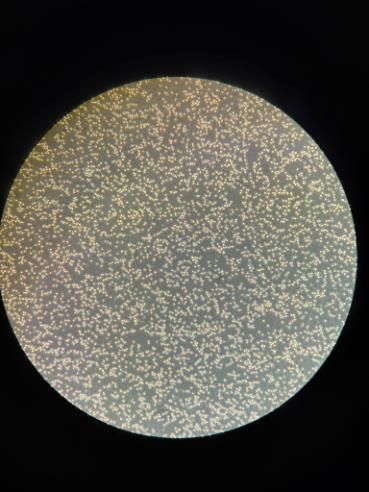
Hello! I'm Crystal, a current third year medical student from Trinity College Dublin, and originally from Yangon, Myanmar. I think physicians are in a unique position where they are entrusted by patients, understand firsthand the shortcomings in patient care, and possess the biomedical knowledge and skills needed to drive meaningful change, placing them at the forefront of cutting-edge research that can directly benefit patient care. I would love to be a physician-scientist one day who can bridge scientific discovery with clinical practice.
My research explores the effects of smoking on innate immunity and Chronic Obstructive Pulmonary Disease (COPD). I am fortunate to be part of a great research lab that allows me to explore my own ideas, design my own experiments, and, most importantly, keep moving forward when things do not go as planned!
I also love cooking and baking -- I am always thinking of what I should have for my next meal!