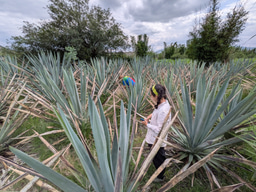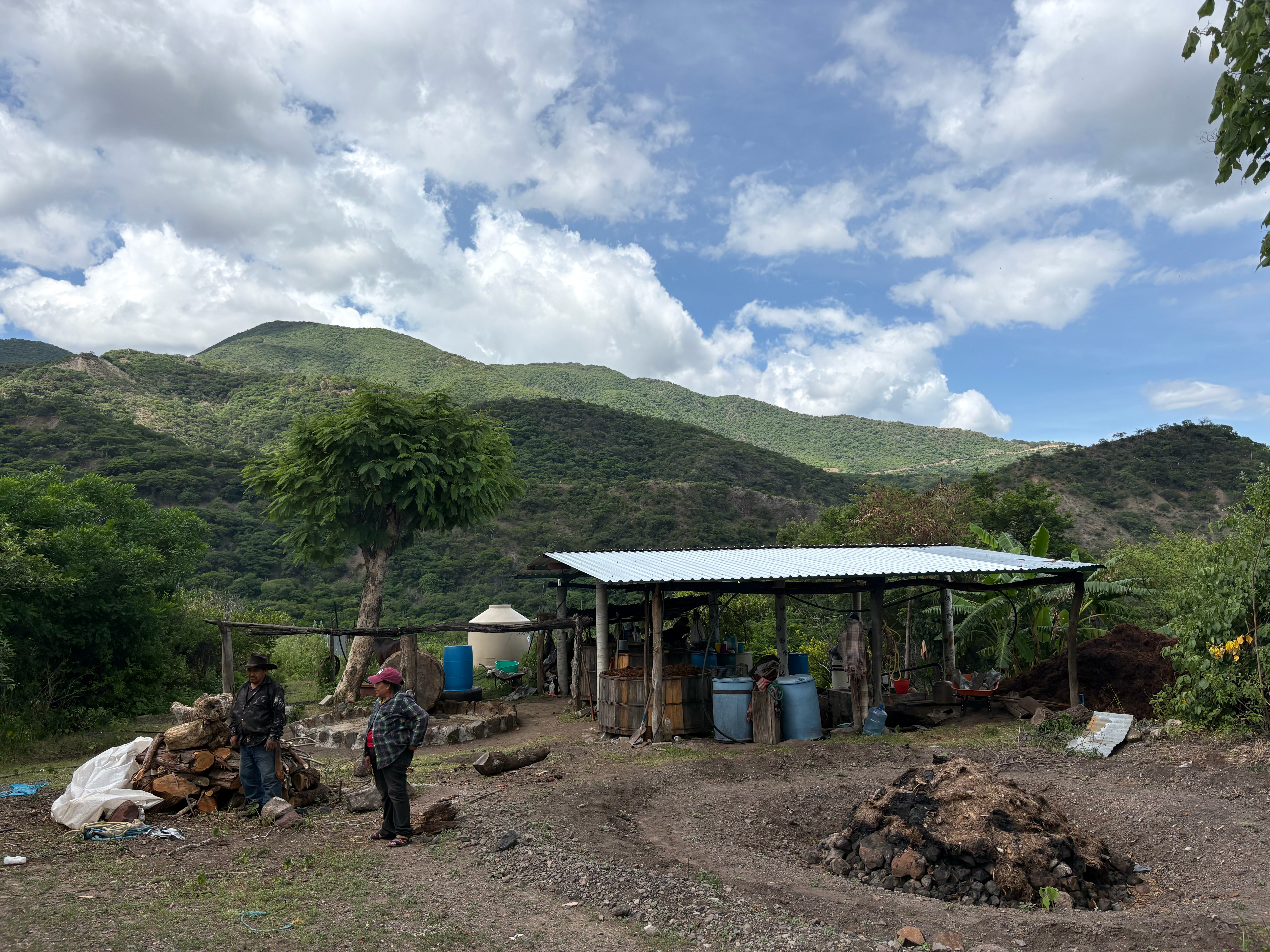
Even in my last week, I wasn’t done exploring new parts of Oaxaca. A key aspect of my project was community visits to other agricultural communities outside of the city center in order to understand what challenges may arise in introducing our sustainable agriculture project to real families.
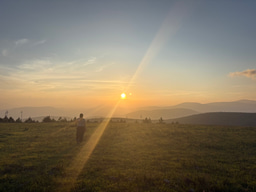
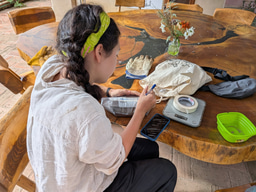
Throughout the week, we visited two other rural communities: San Dionisio and Ixcatlan. Richard’s partner, Sarahi, had personal connections to both of these communities, and it made our visit both more personal and, for me, more challenging. Richard explained that the partnerships their organization forged with rural communities was often complicated, as there were different community dynamics, personal connections, and cultural approaches to the work that may be different from what I may expect from a non-profit. Our visits included long lunches and meals with the families that owned the land, or even parties at neighbors houses for elementary school graduations. The on-site testing was only part of our work there, as Richard and Sarahi worked to build and maintain trust between these families and their organizations.
I kept these dynamics in mind as I began to write up my final deliverables, which were aimed at both potential funders and potential community partners that could help implement Pablo’s regenerative models in nearby Oaxacan communities.
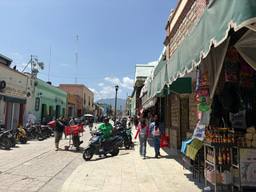
Being able to visit these farms and return to my apartment in Oaxaca reminded me of what I learned my first few days in Oaxaca Centro. I recognized the tension that existed between the city, the tourists, the locals, and the surrounding communities, and how it wasn’t always easy to determine where one community ended and the next began. Despite all my travels and work within the state of Oaxaca, I left feeling like I had only scratched the surface of Oaxaca’s cultural and economic complexity.
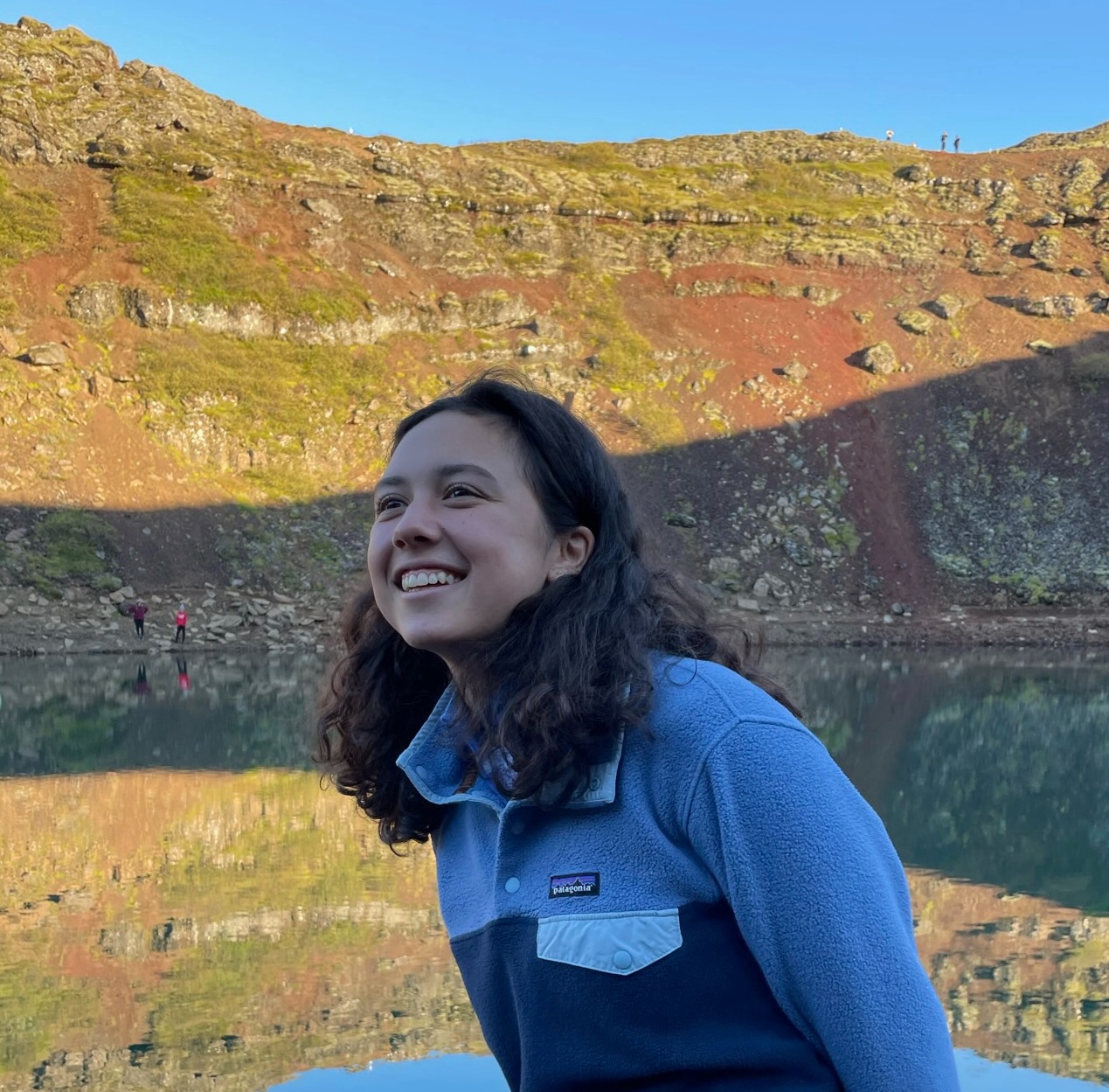
Hello! My name is Ruri Duffy and I am a rising senior at Georgetown University, studying International Politics and Law in the Walsh School of Foreign Service.
During my research summer, I am working with sociology professor Yuki Kato on an Oral History project investigating foodways in communities of color in recent DC history. Through interviews between DC youth and their older relatives, we are exploring how and why urban food provisioning practices have changed in these communities in response to environmental and social factors. I hope to connect these findings to broader discourse on food justice in the United States.