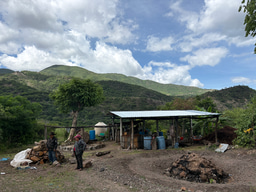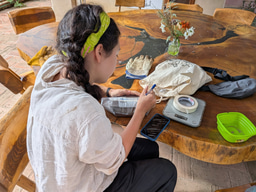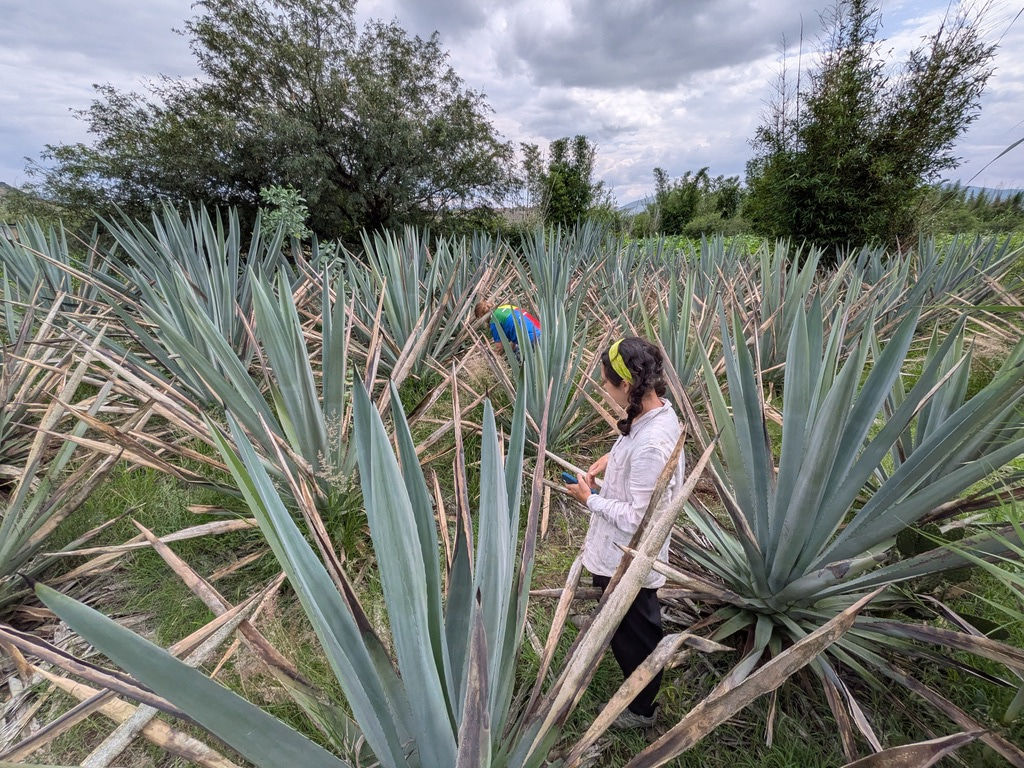
My time at Tierra del Sol, the regenerative agriculture collaborative in the Oaxacan Central Valley, was designed to be a time for intensive data collection to support Tejiendo Alianzas’ project for rural farming families. After two weeks of introduction and integration, I was finally ready to begin my field work during Week 3. I had four main tasks to complete across four testing sites on the property: compare average soil temperatures, collect soil samples to be sent to a lab in Mexico City for nutrient testing, complete water infiltration tests in accordance with USDA standards, and execute on-site nutrient testing to evaluate soil “RapiTests” as a potential low-cost option for future participants in the agriculture program. Yet despite our careful planning and intricate calendars and research guides, Week 3 did not go quite to plan.
My roommate Leonie, who had been a sort of ad hoc translator and guide for me, was leaving for the week for her program. Some of the supplies we needed to complete the more scientific tests were not yet available to us, and the layout of each testing site was much more complex than we had originally accounted for, which introduced new variables that we hadn’t been prepared to control in our experiment design. Further, we needed Pablo’s help to gain access to some of the testing sites that belonged to neighboring farmers, but Pablo proved a bit difficult to track down. Richard and I felt a bit stuck.
During the previous two weeks, I had focused on listening and observing. In a new environment, it was important for me to learn from the people around me to gain a better understanding of my new environment and integrate effectively. However this week required more explicit leadership and proactive problem solving in order to adapt to the new challenges. Now that my research had truly started, I felt more comfortable and confident with my basis from the last two weeks, and was able to contribute more to my discussions with Richard about how to proceed. I suggested alternative materials to use while we waited in order to streamline testing processes so that we could still complete testing in accordance with our timeline. I also suggested adaptations to our plans based on the workflow of Tierra del Sol now that I had a better sense of how operations ran and who would be helpful to speak with when Pablo was unavailable. Finally, I worked alongside one farmer during morning farmwork time rather than rotating in order to develop a more consistent relationship that made communication easier despite the language barrier.
This week boosted my confidence in my ability to not only assist in Richard’s project, but to lead it using the cultural and operational insight I had gained from my first introductory week. While we were behind schedule by the end of the week, I felt prepared to take on more work in Week 3 to catch up and have the data I needed before I returned to the city for analysis and deliverable development.
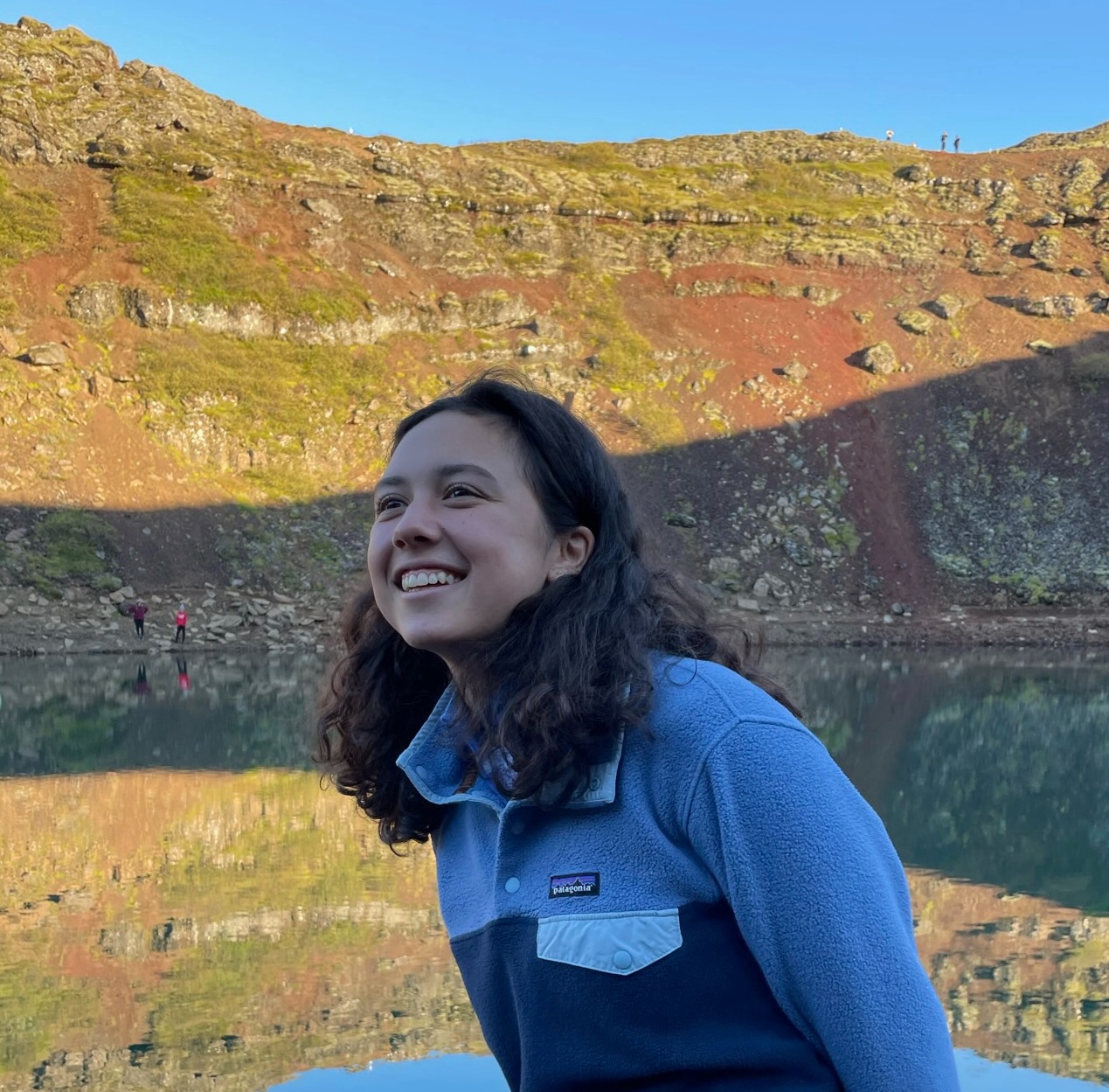
Hello! My name is Ruri Duffy and I am a rising senior at Georgetown University, studying International Politics and Law in the Walsh School of Foreign Service.
During my research summer, I am working with sociology professor Yuki Kato on an Oral History project investigating foodways in communities of color in recent DC history. Through interviews between DC youth and their older relatives, we are exploring how and why urban food provisioning practices have changed in these communities in response to environmental and social factors. I hope to connect these findings to broader discourse on food justice in the United States.