Some new skills and knowledge I have gained has been knowledge on medical diagnostics – meaning the process of identifying a disease, condition or injury using patient history, exams and tests to help doctors give treatment, specifically in the context of African countries and their health systems. I have learned about how the shortage of resources of tools in certain regions in Africa have led to technology being developed that accommodates these areas of improvement. I have also learned how patients and NGOs have changed their views of advocacy and funding in terms of diagnostics as the foreign aid and development landscape has changed. Secondly, I gained knowledge on the digitalisation of health, meaning the process of health information and documentation being conducted virtually. From general care providers and patients I learned how primary care is being shaped by tech. Specific questions are no longer being written down, but are being typed into a data spreadsheet. However, there have been debates and contrasting thoughts as to whether it improves the workflows of doctors and the better record keeping of the patient or not. Lastly, I have also learned about private and public partnerships that allow for better service of healthcare providers and the system in its entirety. As mentioned in the first part about accommodating technology, these technologies can only be fully implemented through private public partnerships between the national government’s healthcare sector and a company that is looking to have its technology implemented. To be implemented, these technologies must pass exams and must be legally and ethically procured to ensure fair competition for all private companies that want to be integrated into a national healthcare system. The knowledge I’ve gained has definitely helped in the orienting of my career and the interests that I want to pursue.
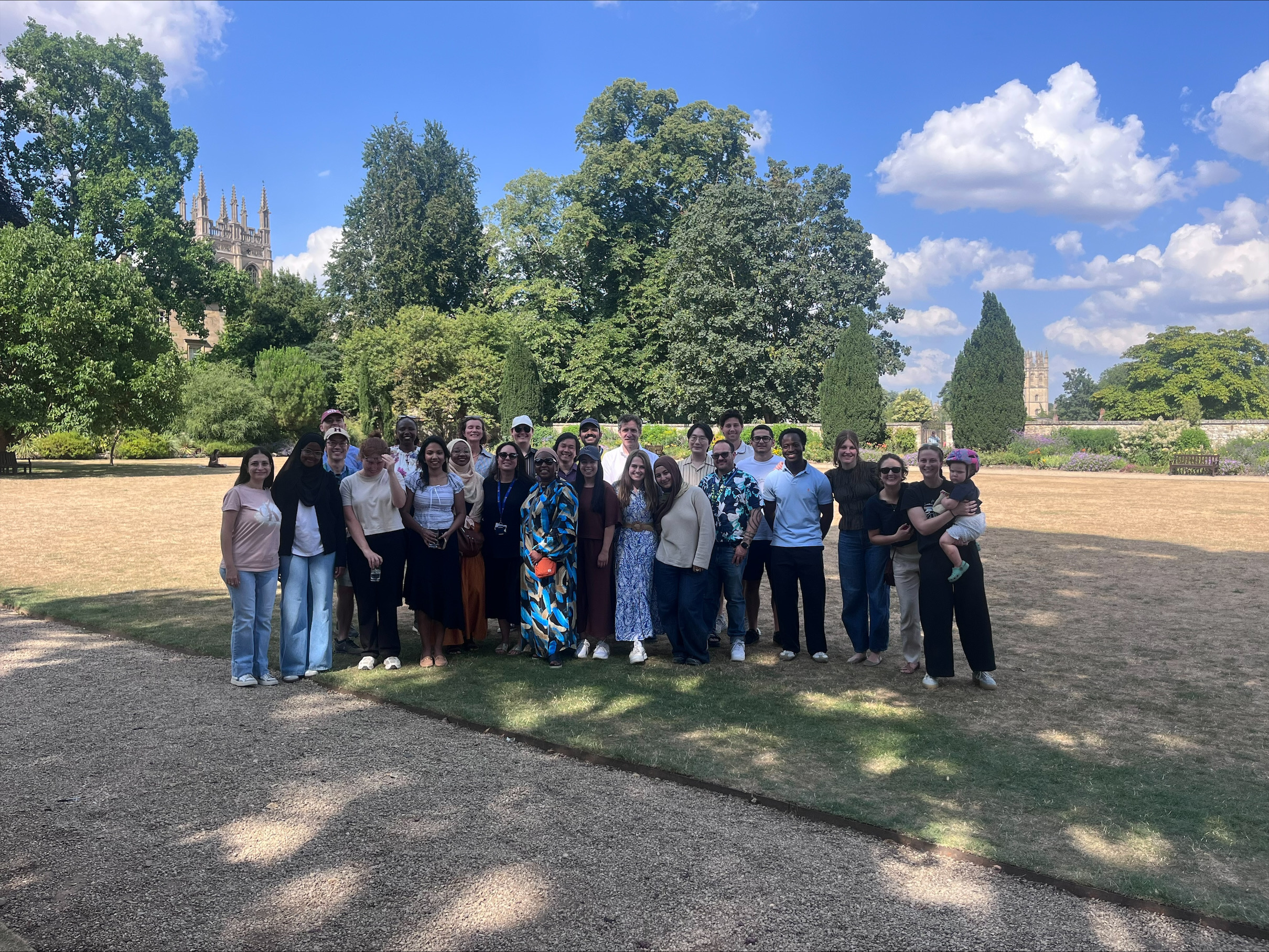
I got to meet a lot of amazing people, but I would say that some of the most impactful people were those who worked in my office and the students/ professionals I met at the diagnostics conference I attended. I think what they all had in common was the honest will to improve and progress healthcare, and that they all have a concentrated role that contributes to this goal. Meeting everyone helped me to understand that I too, can play a minor role but that this role is not finite. Almost everyone I met pivoted from one industry and career to another, and I think that is quite unique to Europe, and specifically Oxford.
I learned that leadership is not about just leading or being the face of projects, but that it is about improving the experiences of those around you. Some of the most decorated professionals I met at Oxford only got as far as they did because they wanted to make a social impact for the people around them and those they might never have the chance to meet. Recognizing the privilege we have as people born in fortunate situations means that we have a social responsibility to improve the lives of those who do not have a fraction of the rights and freedoms that we enjoy. Before this experience, I never thought twice about my ability to go see my general practitioner, to get my teeth cleaned, get lab-work or that I can go to CVS and obtain my prescription. However, that is not the case for many people in the world, and for many, access to health is seen as a privilege and not a right. Acknowledging this, my thoughts on leadership have become that I want to better the experience, environments and lives that people live through in the concentrated effort of improving health.