I connect with community members, specifically healthcare workers and those who want to better health in Africa through meetings, either team meetings or virtual collaborative meetings. Hearing from them about the specific and niche needs or concerns they are trying to address or work on is both inspiring and informative because many of these concerns or issues that are spoken about are not addressed on large platforms.
Several conversations I’ve had, whether it be about mitigating violence against workers, promoting health system autonomy and more, have always centered on how colonial systems of extraction from the global south have delayed development for these countries and by extension their healthcare systems. Even with new conversations around data and the digitization of healthcare I am having, the questions always return to whether the exchange of services and materials between the global north and south will ever truly be equal and whether the global south will equally profit and thus expand their healthcare services and system overall.
I am mostly concerned about being a valuable resource to the organization and community. I think the resource I would use to address this is checking in with my advisor to ensure I am being useful, but am also learning important information and knowledge that will help me in the future be both a better professional and advocate.
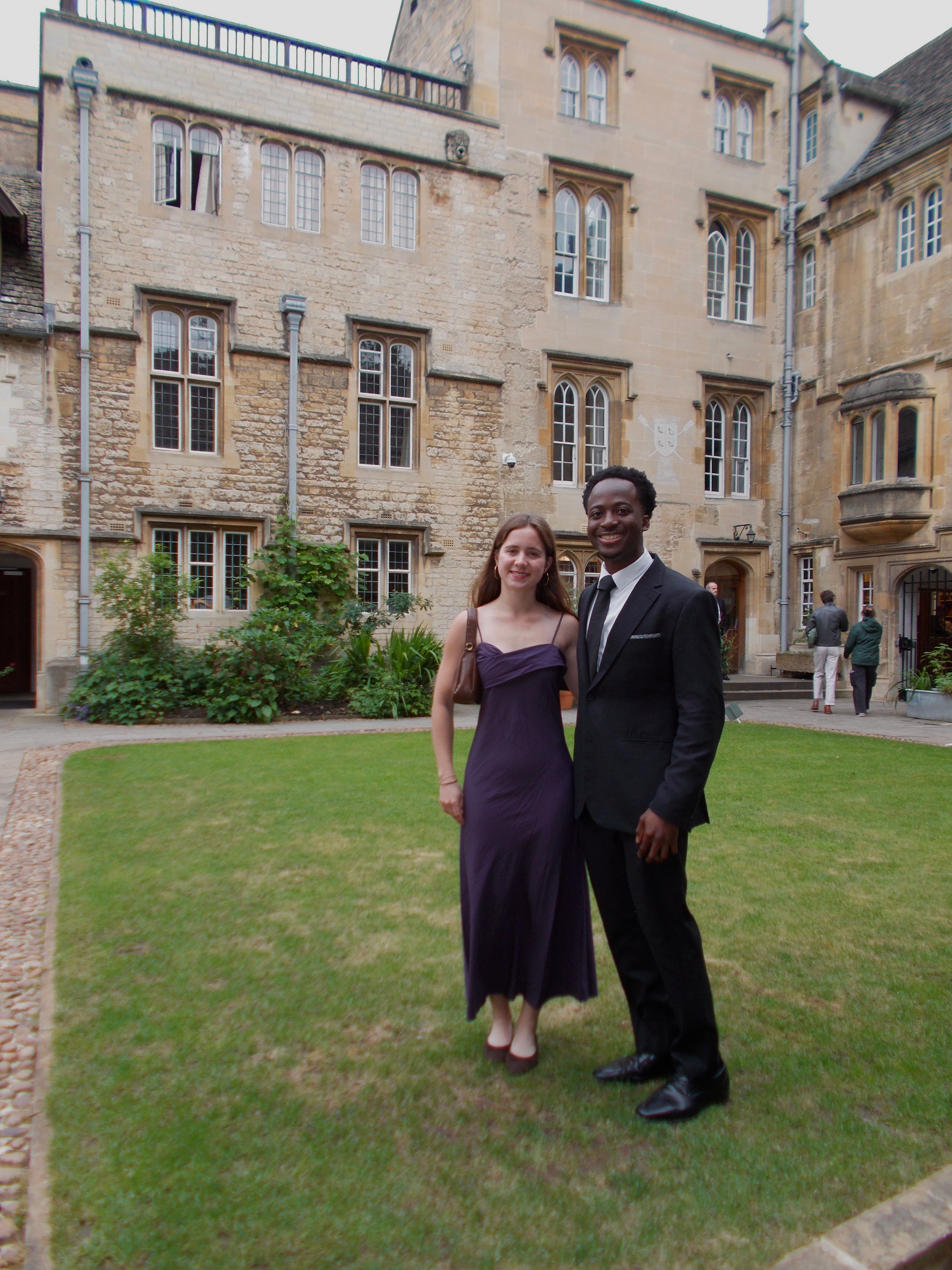
The photo I’ve included was from a formal I got to attend with another visiting American intern who goes to MIT. Formals at Oxford are fancy dinners, where there’s a high table for professors and esteemed professionals of the college the formal is being held at (there are about 40 colleges within the University of Oxford). The college formal I went to was at St. Edmund Hall, also commonly known as Teddy Hall. Since I live in Edmund housing, I got to attend! At the formal, three course meals are given, and formals happen weekly during the semester unlike the mid-semester or end of semester formals we have at Columbia.