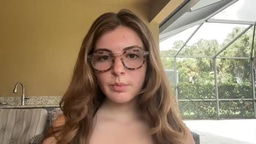
This summer, I am interning at the European Federation of Journalists in Brussels, Belgium! While the two primary languages spoken in Belgium are French and Dutch, the presence of the EU and numerous international organizations gives the city a very international, multicultural feel. At my office, English is the language spoken, and my coworkers come from Malta, Germany, France, Belgium, Italy, and Portugal. The EFJ represents journalists and journalist unions across Europe (not just including the EU), and in the past week, I was able to attend a workshop examining the biggest threats facing journalists and the free press throughout Europe with the heads of numerous European journalist unions and media think tanks.
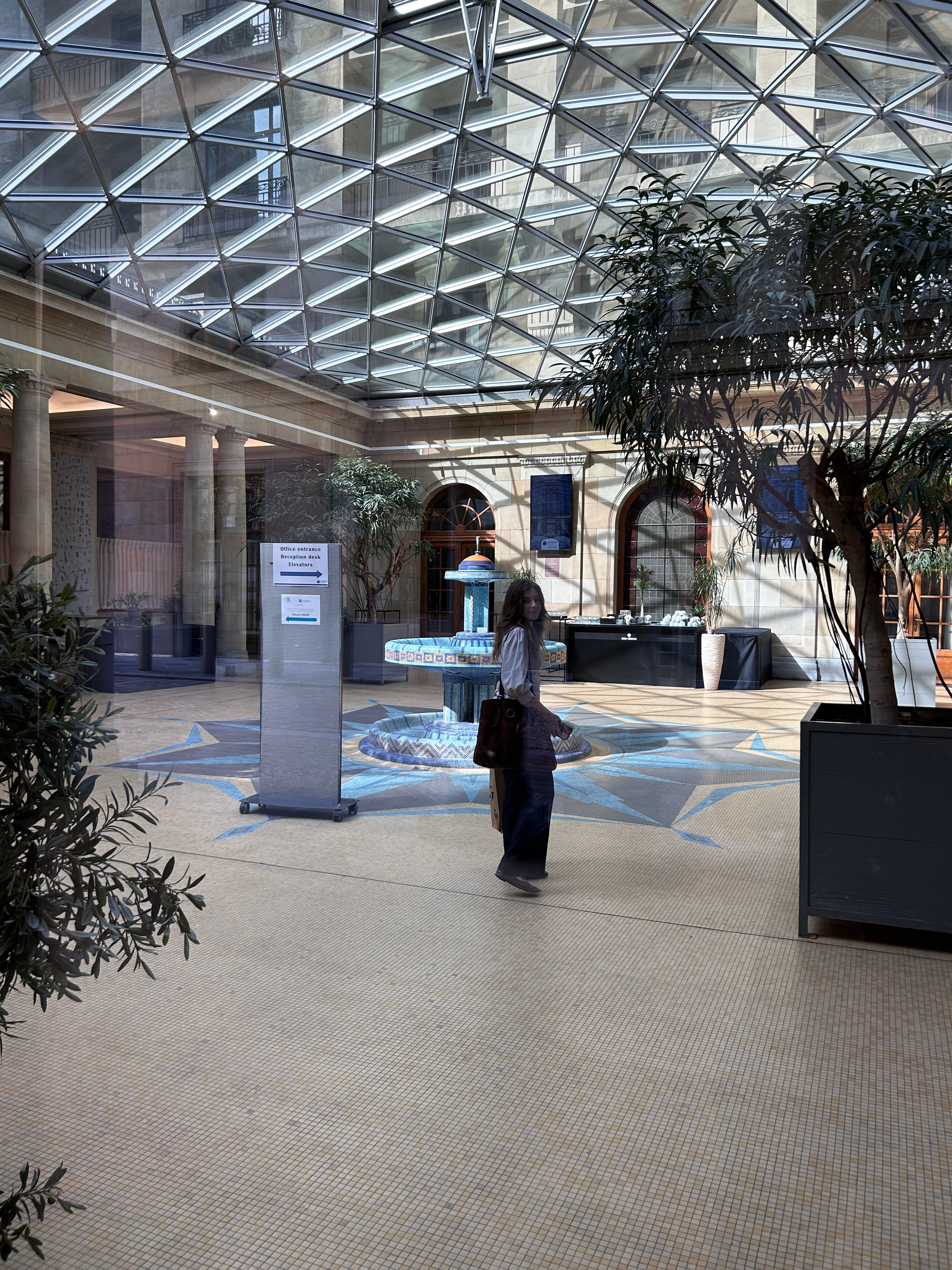
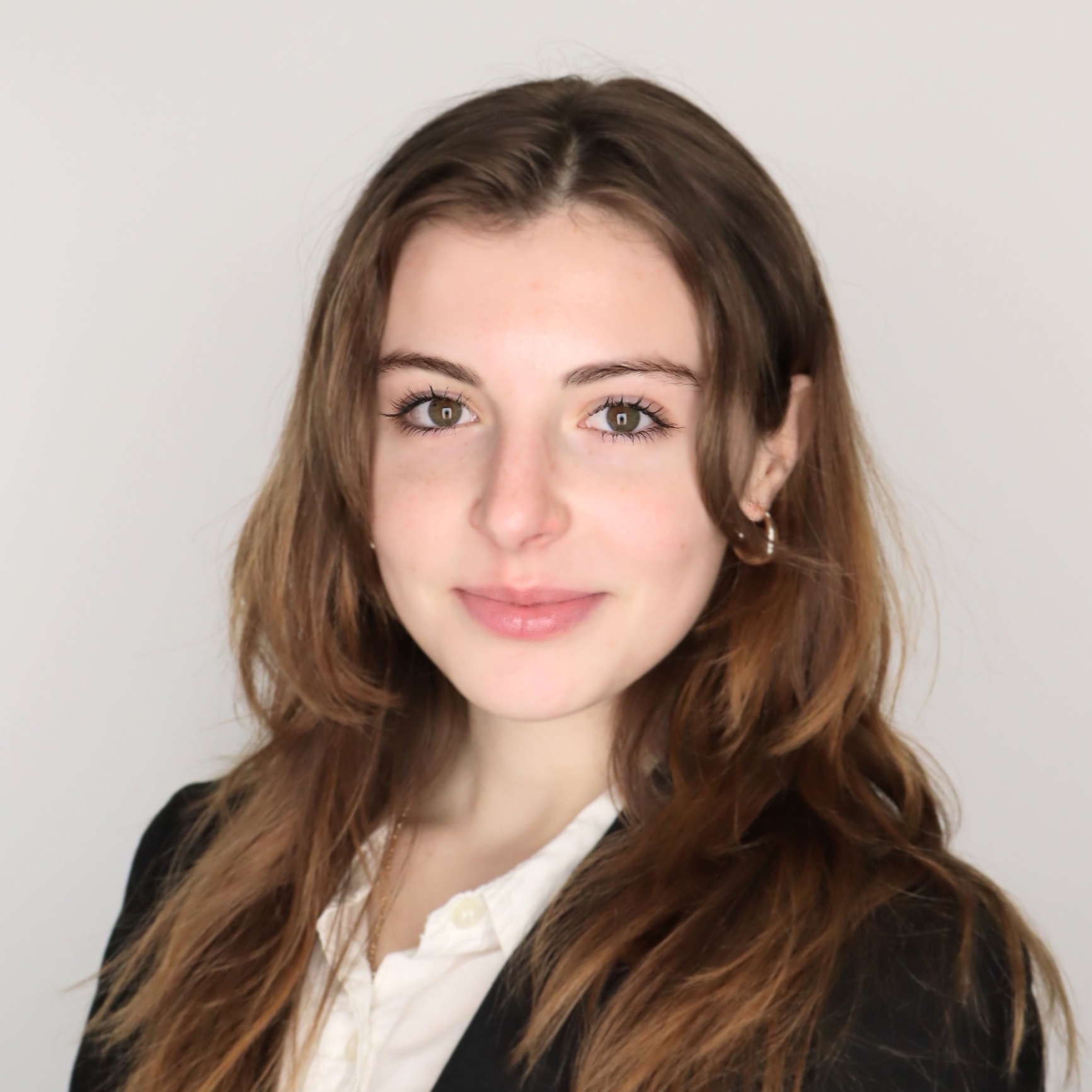
A photo my dad took of me entering my work building on my first day!
The through line between this summer and the last is the question of freedom of expression: last summer, I researched patterns of censorship and disinformation in Russian LLMs, and this summer, the entire project of the EFJ and my work in particular is aimed at defending the mission of the free press and the livelihoods of journalists. While I initially expected that the two summers would be relatively disparate in focus, unified only by my own understanding of the way my intellectual interests are reflected in the work I have done and will do, the workshop I attended during the last few days made me realize how pervasive the issue of AI is in both the context of political propaganda, as I studied during the first summer, and journalism. A summer ago, I had thought that “AI” itself was a distinct issue I could study that existed as a field of its own like journalism or international politics. Increasingly, however, I am opening my eyes to the reality that it is no longer and will never be a phenomenon that exists in an isolated sphere of life, but rather, is transforming every aspect of human existence and demands to be analyzed in intersectional and interdisciplinary contexts.
During the workshop, I witnessed debates about the place of AI in the newsroom, whether journalists themselves could benefit from its use in increasing efficiency and diversity of perspectives, as well as about the way to proceed in the journalism industry amid the rapid replacement of authentic journalism with AI summaries and chatbots. I was able to share my stories of the research I did last summer, as well as of an AI Policy internship I did in the spring semester with Senator Kristen Gonzalez, with several of the journalists who took genuine interest in the way the question of AI manifests and is explored in U.S. and international contexts.
The internship aside, my first week in Brussels has provided me with a whirlwind of inspiration and revelation. The city’s multiculturalism and multilingualism have brought the question of language as a force that can simultaneously unify and distinguish to the foreground of my mind. In some regards, the pervasiveness of the English language in professional and commercial spaces in Brussels felt like an act of anglophone-washing that diluted the visibility of Brussels’ component cultural differences. For example, during work lunches, three of my coworkers described their long-term relationships with men who each originated from different countries and spoke only English, their second or third language, to their partners. Prior to hearing their experiences, the difference in language in relationships struck me as an inevitable barrier: how was it that these women described being not just accustomed to, but intimately comfortable, with communication across cultural and linguistic differences? Would they eventually crave the familiarity of linguistic similarity amid the kaleidoscope of languages that underlies Brussels? Through conversations like these with coworkers, strangers, and new friends in the city, my first week is beginning to show me that a world of possibilities for connection opens once linguistic similarity is not privileged as the determining factor of a relationship. This question has begun to occupy my mind throughout this week, but I want to wait for future blog posts to try to answer it. For now, it is clear to me that I am newly immersed in an international environment like no other I have seen before, and it will take more conversations, time, and experience to extract and fully comprehend the insight on intercultural connections that its citizens have begun to share with me.
Regardless, some highlights of my week surrounding this theme:
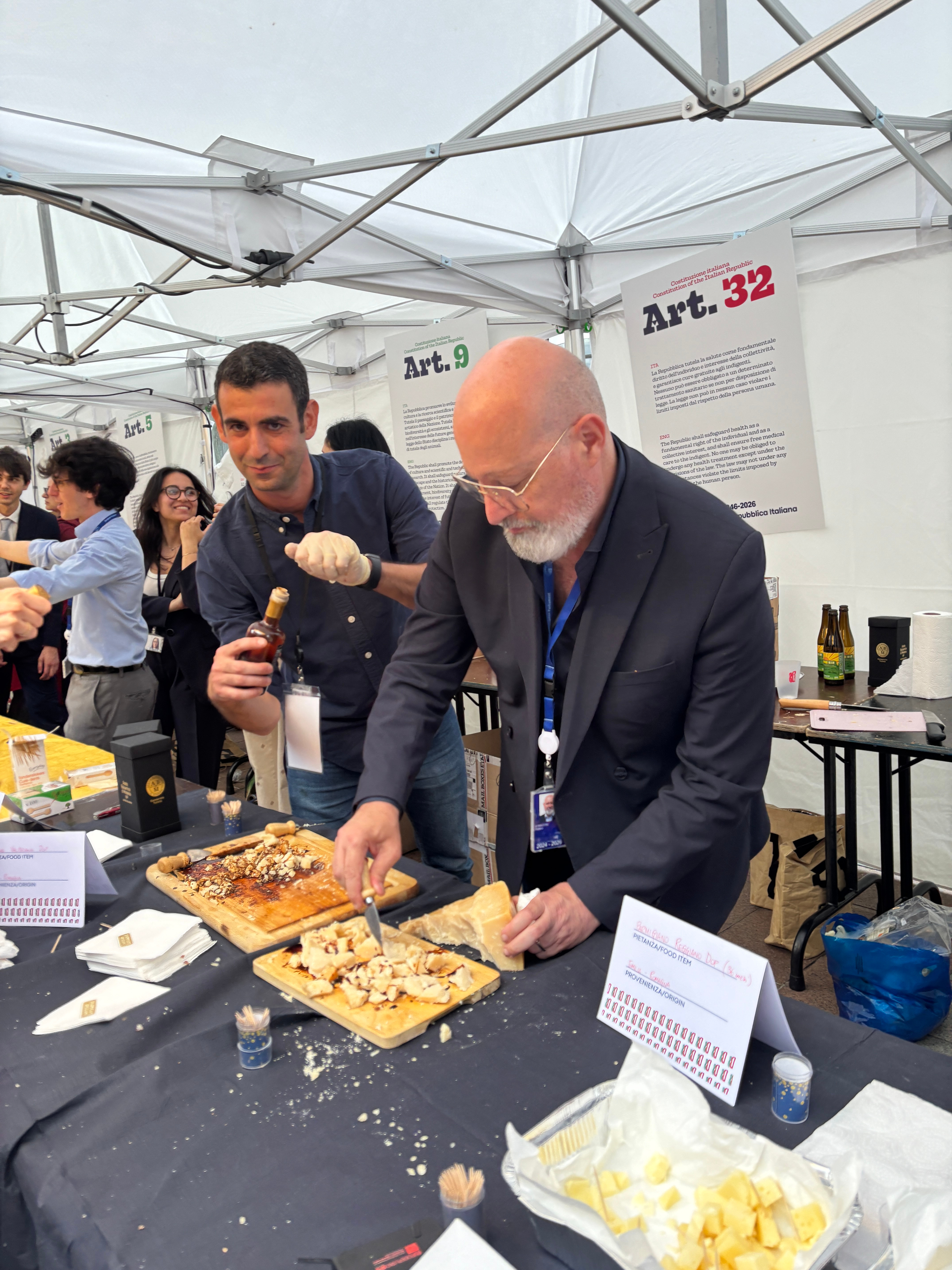
My internship and apartment are located very close to the EU offices. While I presumed the EU itself to be a relatively cold, bureaucratic institution (and in many ways, as I have learned from my coworkers, who have to meet with MEPs regularly, the stereotype can be true), I quickly learned that they often host vibrant cultural celebrations and parties highlighting member nations’ cultures. After my first day of work, for example, my dad and I stumbled upon a lively celebration of the 80th anniversary of the Italian republic featuring lots of yummy (and free!) cheese, pizza, wine, and live music!
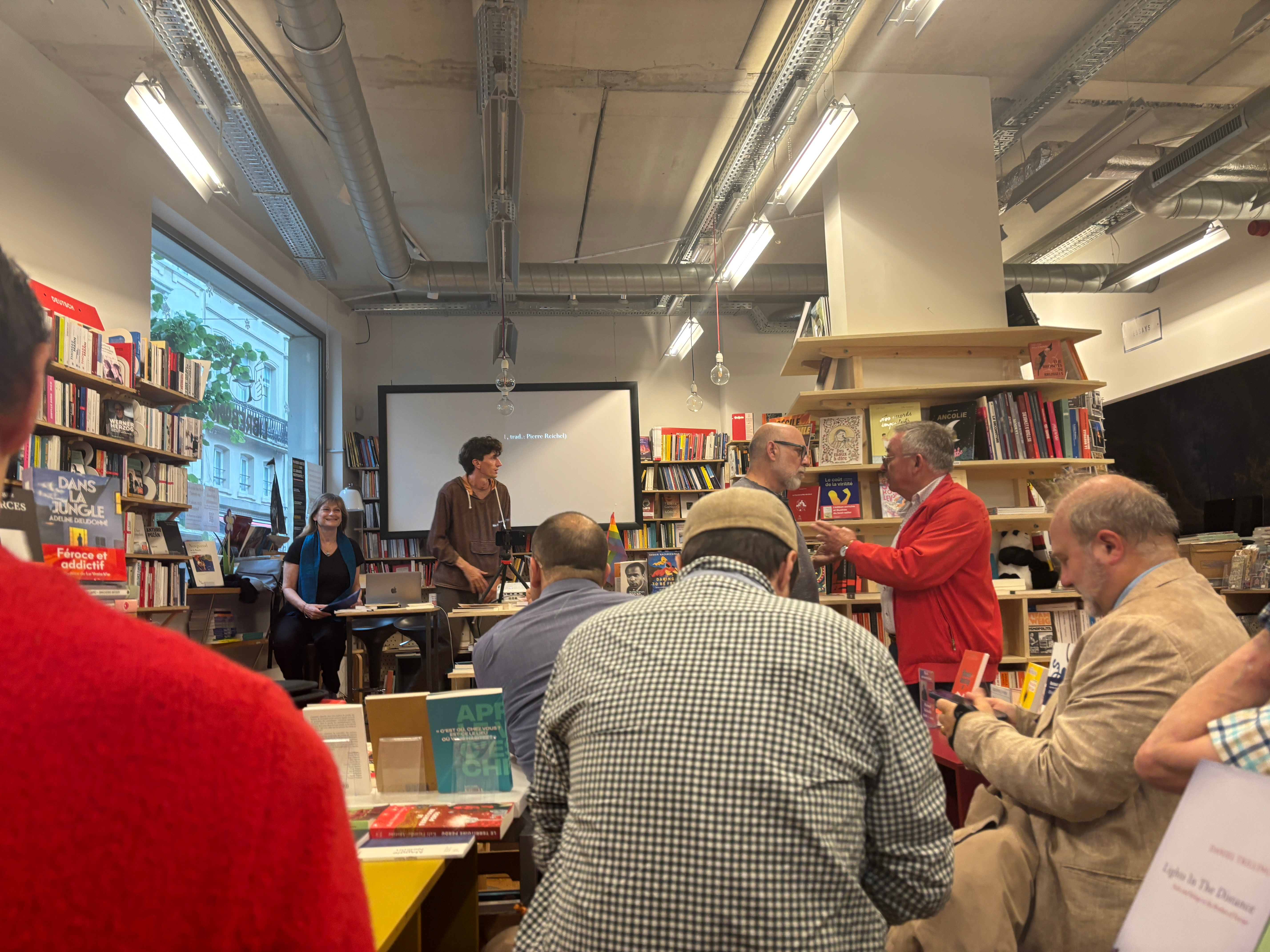
When my supervisor, a German woman married to an Italian man, learned during a lunch break that I was interested in Russia and that I study Comparative Literature, she shared that her husband owns a multilingual bookshop called Librebook in Ixelles, Brussels. She invited me to attend a book talk that evening by a Russian exile whose poetry collection, Le Russe comme langue non-maternelle, explored the topic of Russian as a mother tongue and as a highly politicized language associated with oppression and domination. My experience that evening at Librebook was unlike any other lecture or presentation I had ever been to. I arrived at the bookshop to the sound of Italian spoken in small groups as people mingled in anticipation of the presentation. In the corner, the poet of the evening, Pavel Arsenov, was conversing questions in a mixture of Russian and English, with a young man and the talk’s moderator. When the talk began, it was conducted entirely in French, though the poetry was read in Russian with French subtitles projected onto the screen behind him.
At a certain moment, Pavel realized that the subtitles he had written for one of his poems was in German, and not in French. Beginning to worry that some members of the audience would not understand his poem at all, he asked the crowd who among us did not understand Russian. Only two people raised their hands. “But we speak German!” they replied, as the entire room joined them in laughter. A moment I initially anticipated would highlight the divisive force of linguistic differences among audience members turned out to be a celebration of the multiplicity of languages that was allowed to mingle and flourish synergistically within that space.
In fact, one of the final questions posed during the Q&A was whether immigration, and cultural diffusion in general, should be seen as an impoverishment or an enrichment of a respective culture and language. While no one clear answer emerged as the man posing the question, who saw it as an impoverishment, engaged in a lively debate with the speaker, who saw it as an enrichment, the posing of the question itself was the ideal culminating moment of the talk, a testament to the sorts of questions about language, culture, community, and assimilation that occupy the minds of Brusselians and that have now been infused in my own mind. Despite the dominance of English in the city, I was also very grateful for the special space that the bookstore cultivated in which I was able to practice my French and Russian at once, and with other people who shared my love of language-learning. After the event, I signed up for Librebook’s newsletter and hope to attend many more of these sorts of events.
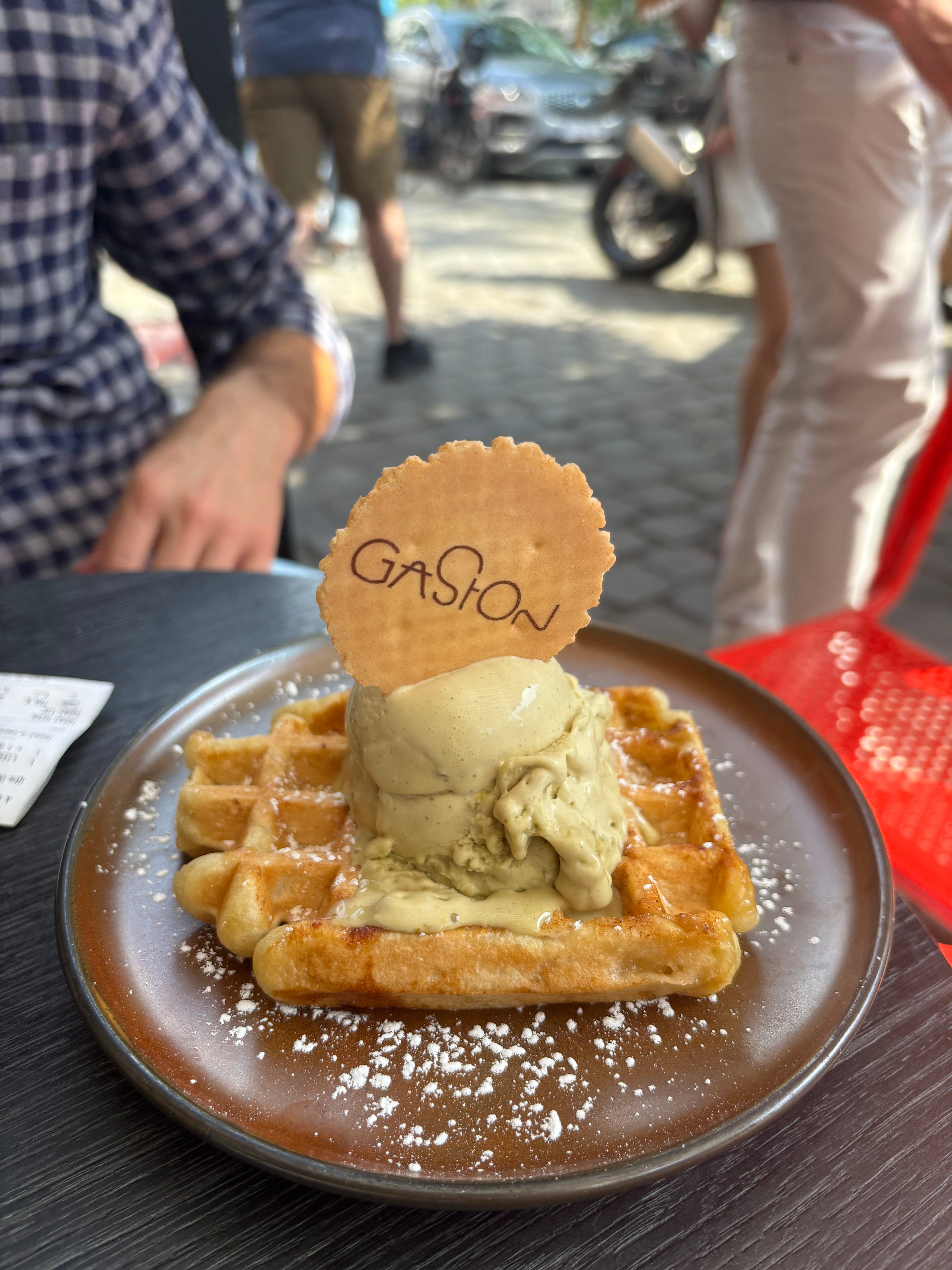
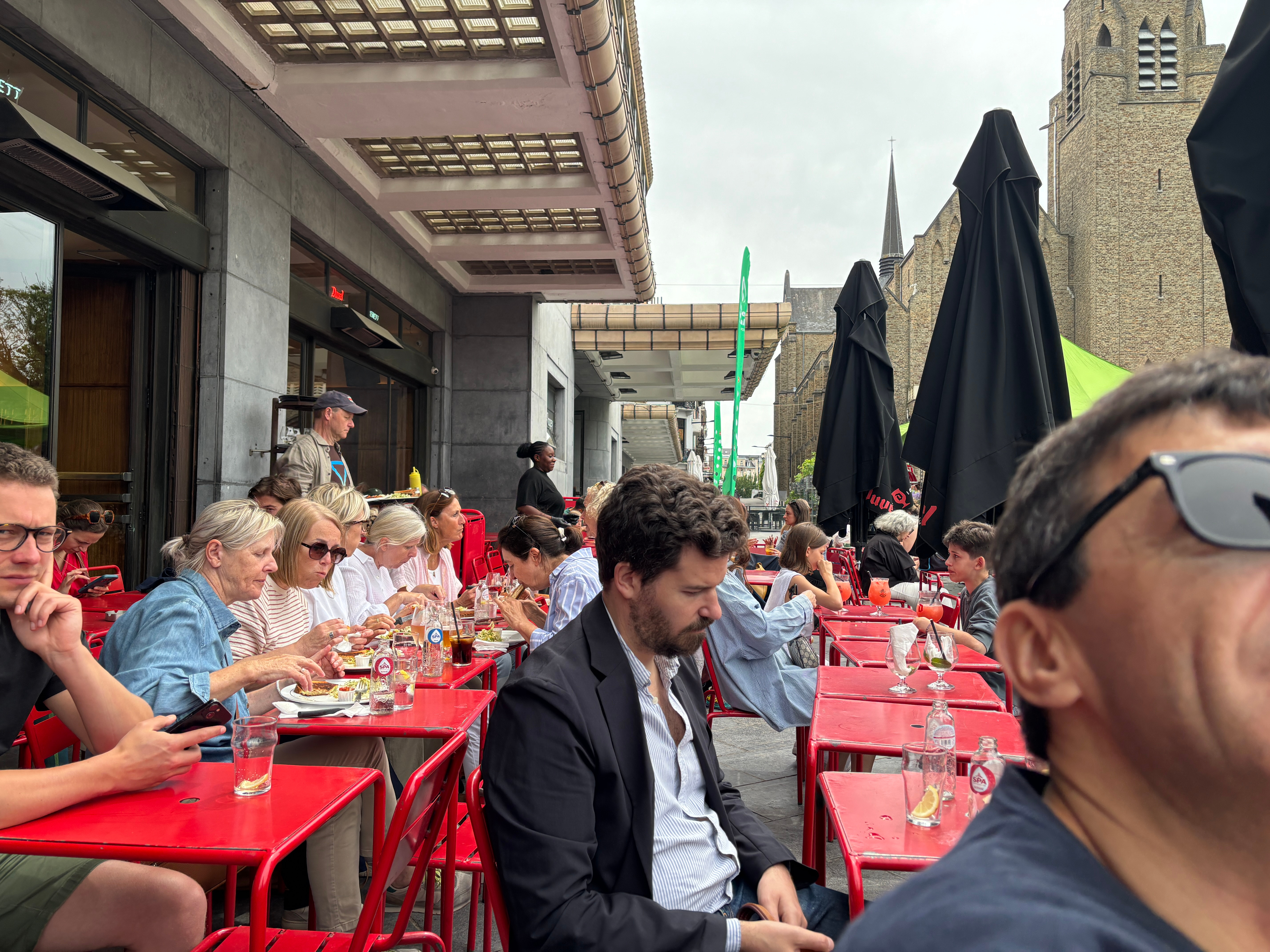
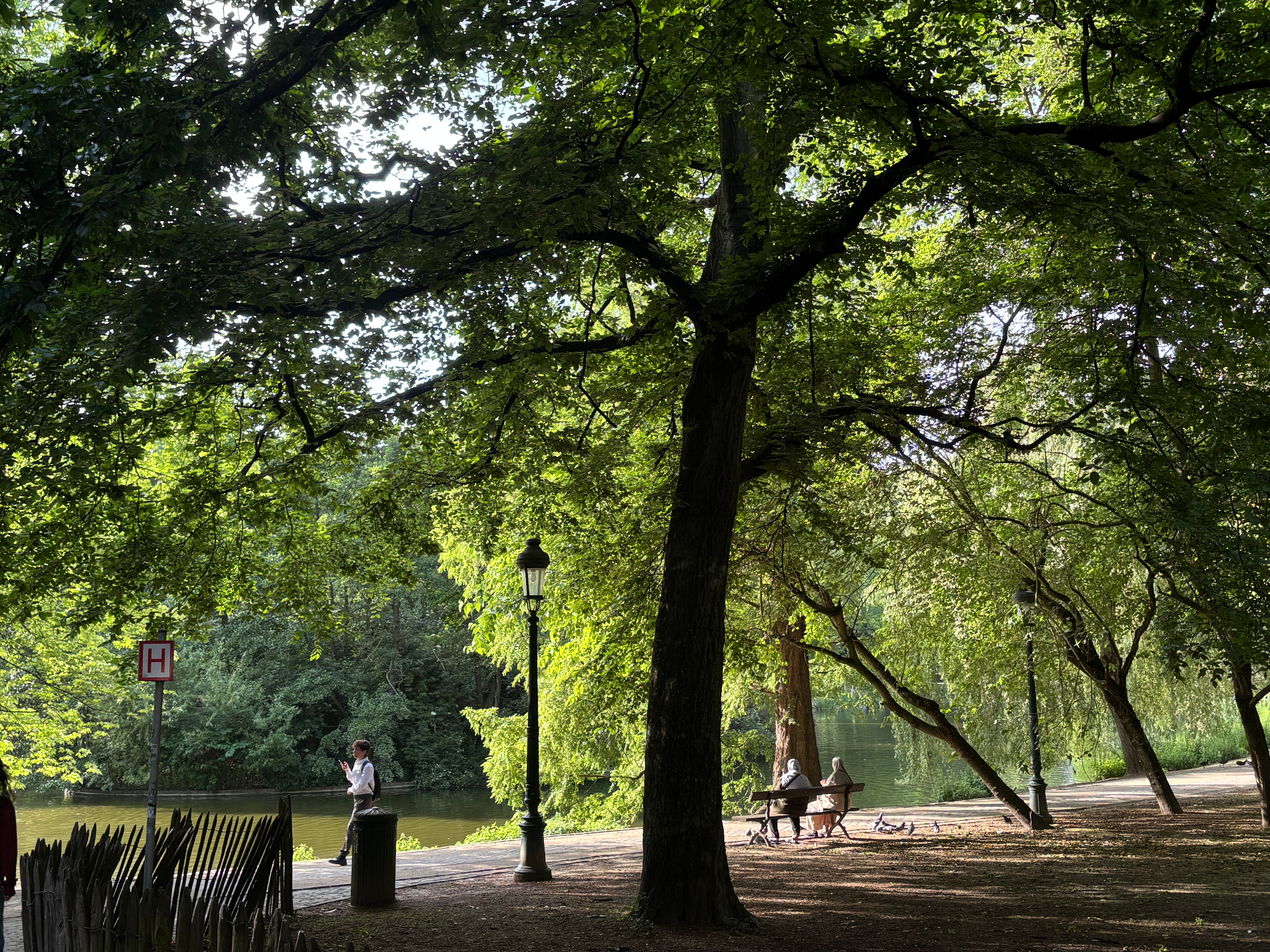
Finally, assorted highlights: inspired by Audrea Chen, I would like to share that I averaged one flat white and 16,000 steps per day. I was also lucky enough to have my dad help me move in, and together, we loved sitting outside in crowded cafes and talking for hours. Unfortunately the Brussels weather was pretty nasty this week, as I have heard is typical of early summer months, but every sunny moment we had was spent exploring some of the many parks across Brussels. As for food, I do have to say that Belgian waffles are in fact as good as they are fabled to be. I am still dreaming of this one pictured below.
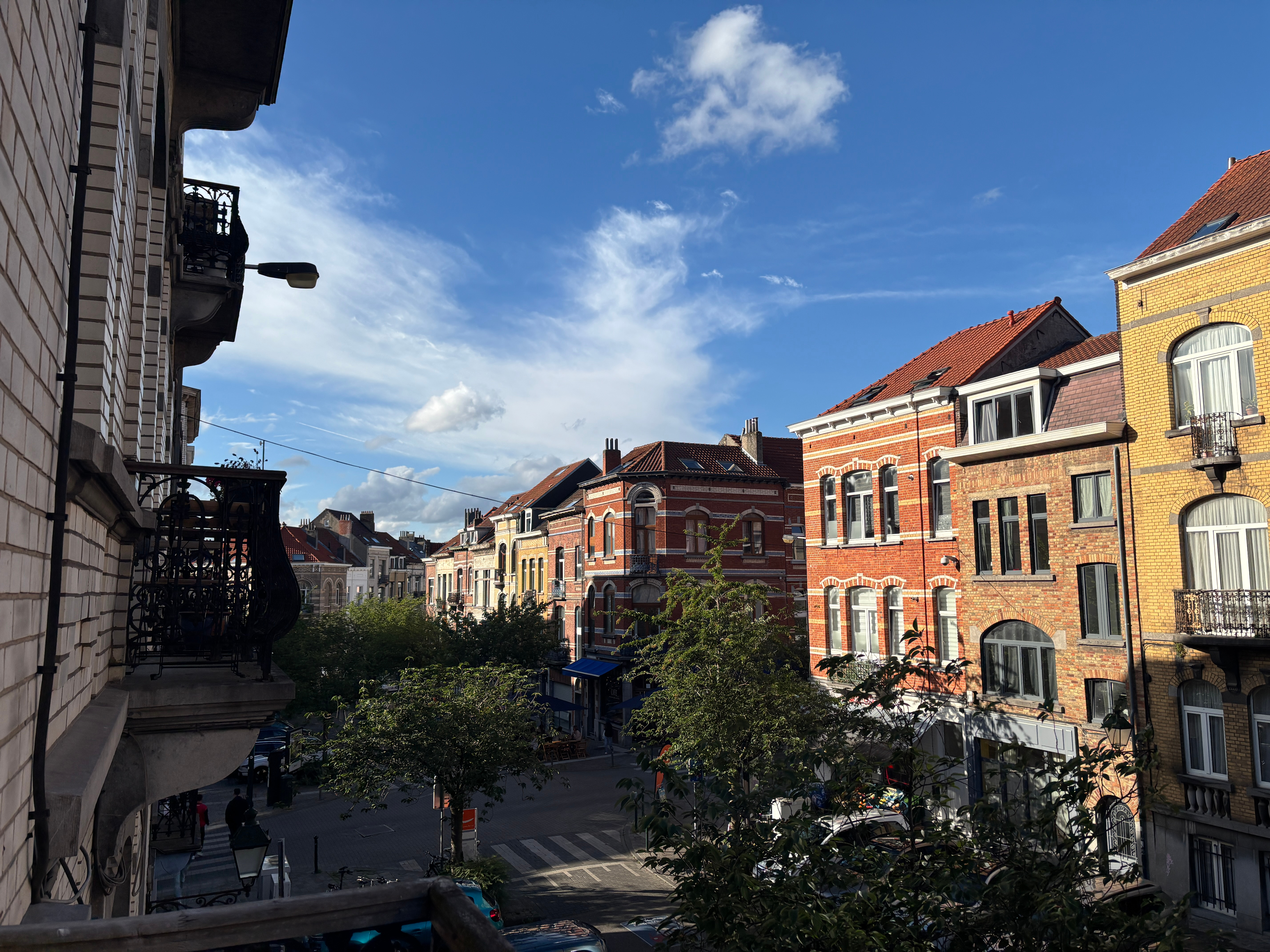
The view from my balcony in Etterbeek, a quiet residential neighborhood just outside of Brussels!