Before I arrived in Oaxaca on my first day of my LiA, I spent 6 hours in the Houston George Bush International Airport, my first ever visit to Texas. I faced unfamiliarity and a different culture before I even crossed the US border, spending 6 hours adjusting to cowboy hats and smooth southern twangs in place of Red Sox caps and Boston accents before I boarded a tiny commercial plane for my final leg to Oaxaca, Mexico.
After somehow making it through customs in the tiny Oaxaca International Airport without speaking a single word of Spanish, I was met by Richard Hanson (director of Tejiendo Alianzas, my partner organization for the summer), his wife Sarahi (Richard’s partner and a Oaxaca native), and a pounding thunderstorm. The 10-minute drive from the airport to my small bed and breakfast in the northwest of downtown Oaxaca turned into an hour-long journey through flooded streets. Even in the dark and through the rain, I could see the vibrant Oaxaca I had been nervously reading about for weeks in preparation.
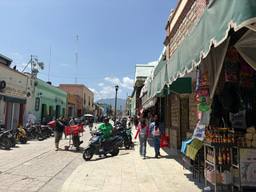
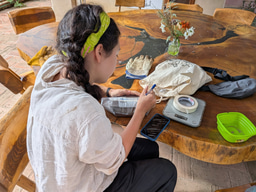
My first 4 days allowed me to explore downtown Oaxaca at my leisure before moving onto my fieldwork at a small farm outside of the city. I took advantage of this time before the true rush of research began, walking through the various downtown neighborhoods, peeking into cafes and restaurants, and taking a cooking class with a well-known local chef, who had us sweating over a stone metate until we had made a thick, shiny, spicy black mole.
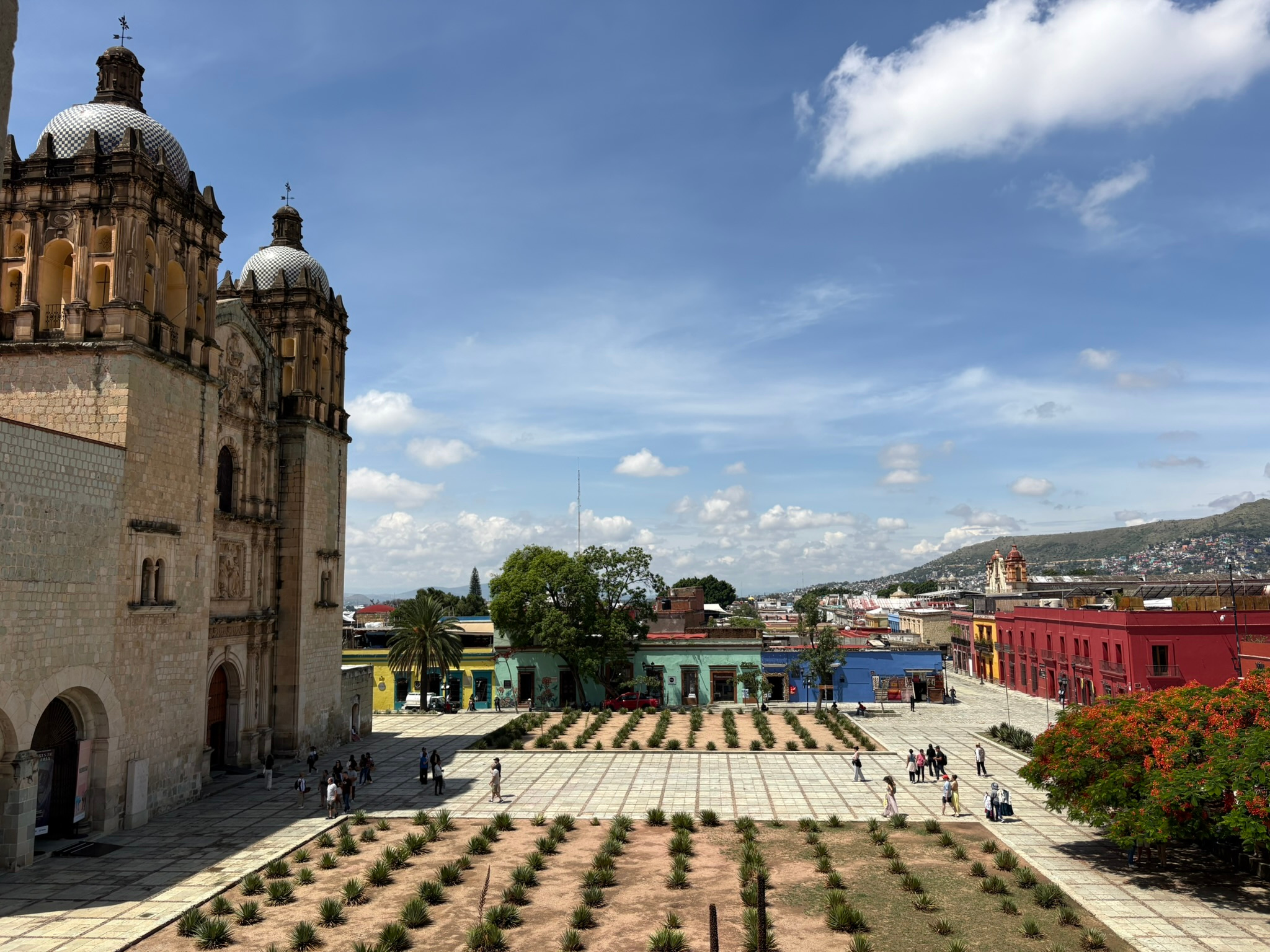
During this exploration, I saw the tension that Richard had described to me in my onboarding meetings, where we discussed the culture and history of the Oaxacan state. The northern half of downtown is dotted with matcha cafes and trendy fusion restaurants, with prices similar to those I saw near my university in DC. The Templo de Santo Domingo de Guzman is surrounded by artisanal shops and restaurants boasting “authentic” handmade textiles, mezcal, and meals, all within a few blocks. During these early summer weeks, tourists were just starting to pour into boutique hotels and renovated AirBnB’s.
As I walked on to explore the southern half of the city, marked by the Zocalo plaza, I was stopped by a wall of tents and tarps. I quickly learned that the local school teachers were occupying almost two thirds of the Centro as local unions pushed for higher pay. The streets were still bustling with locals, and the makeshift encampment was full of families cooking on grills along the sidewalks and local union leaders sharing pamphlets and information about their cause. Richard informed me that this sort of encampment happens almost every year, right around June as tourism begins to pick up, putting extra pressure on local authorities to resolve the conflict before deterring visitors.
My first week in Oaxaca flew by, but I gained incredible insight into the economic and cultural tension in Oaxaca as its appeal to mass tourism grows and the local population contends with the consequences. I feel this primed me for the coming work throughout the summer working with rural communities less than an hour away from downtown by car, but seemingly worlds away.
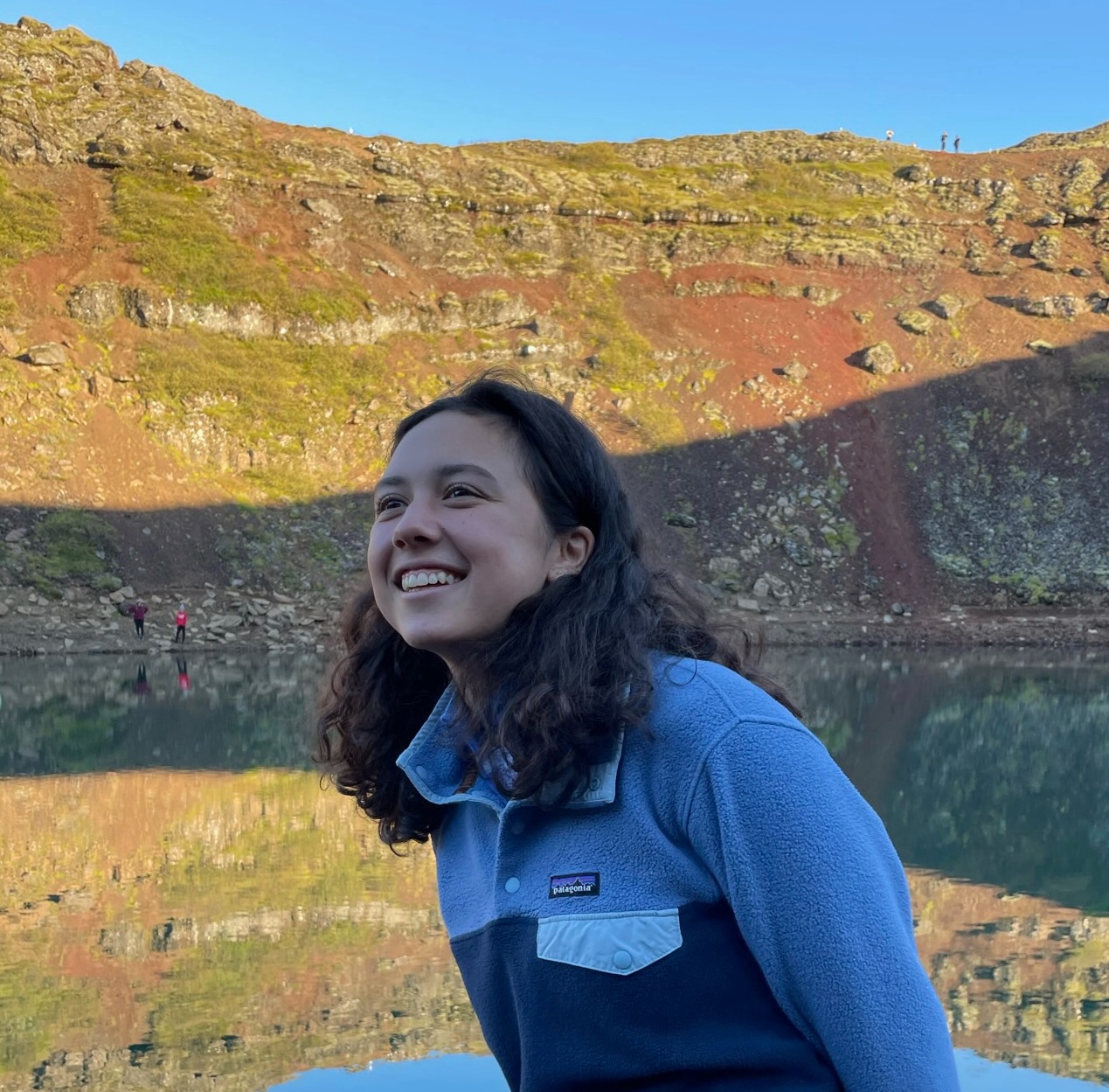
Hello! My name is Ruri Duffy and I am a rising senior at Georgetown University, studying International Politics and Law in the Walsh School of Foreign Service.
During my research summer, I am working with sociology professor Yuki Kato on an Oral History project investigating foodways in communities of color in recent DC history. Through interviews between DC youth and their older relatives, we are exploring how and why urban food provisioning practices have changed in these communities in response to environmental and social factors. I hope to connect these findings to broader discourse on food justice in the United States.