LiA Report - Intersecta, Mexico City
This summer, I spent 6 weeks working in Mexico City for Intersecta, an anti-carceral feminist justice organisation who do work on topics including gender-based violence, militarisation, feminist tax justice, and reproductive rights. This was an amazing opportunity to work with a radical, engaged and impactful organisation, which gave me insight both into a side of Mexico beyond tourist destinations and taco trucks, and into the kind of work that I might want to do to meaningfully contribute to campaigns such as these in the future.
My work, and key context
Intersecta do a range of work on numerous campaigns. As I arrived in Mexico City, they were finalising a range of reports on violence against women in universities, places of work, and organised crime, which they launched at an event I attended in the second week of my internship. Their work includes doing research, producing reports, organising meetings between key stakeholders and actors to facilitate knowledge production and policy collaboration, and pushing the Mexican government to create policy changes. This was somewhat intimidating as an organisation to enter, as the work is impressive and their processes are quite highly developed, but I was very grateful to the team and to my supervisor, Constanza, for their patience and help in carving out a specific project to work on during my time in Mexico.
One of Intersecta’s larger ongoing projects concerns the increasing presence of the armed forces in civilian fields across Latin America, and the potential threats this poses to human rights, democracy, and protections for marginalised groups. This was the focus of my project with Intersecta. My brief was to conduct actor mapping of key stakeholders, including activists, organisations, journalists, and academics, who are doing work linked to the themes of militarisation and democratic erosion across Latin America, using a range of tools including social media, the internet, and various reports. The purpose of this project was to create a resource that could be used by Intersecta to facilitate future meetings between these actors and eventually produce an updated report on this topic, advocating for specific policy changes that could act as civil controls over military intervention within Mexico.
I knew relatively little about democratic erosion, militarisation, and civil controls entering this project, but quickly developed a baseline understanding over the course of my research, and by the end of the project felt that I had been given a fascinating window onto contemporary politics and challenges across Latin America. Questions of militarisation linked struggles of foreign interference in Latin American countries, unresolved tensions in the legacies of the militarised dictatorships of the 20th century, the ongoing impacts of colonialism across the region, and the increasing repression of rights and freedoms in certain countries.
This was a very interesting counterweight to my experience of being a visitor to Mexico – I was living in a relatively gentrified neighbourhood, where American accents, overpriced coffees, and artisanal souvenirs set a tone of how contemporary Mexico is often experienced for tourists from the US and Europe. Deeply engaging with research on issues of human rights abuses at the hands of the state, vast power imbalances, and deep-rooted issues of foreign intervention in domestic policy and state-building forced me to confront a significant tension within my experience of Mexico, which was characterised by both the experience of visiting a beautiful, interesting, and historically rich country, and an awareness that there were social and political problems deeply interwoven with all of this context.
Having this chance to explore multiple sides of a country and region, significantly develop my knowledge and skillset to work within a particular topic, and work with a team who are so passionate about what they do was a very special opportunity, and one that I felt I grew a lot from.
Challenges and opportunities
One of the key challenges of my work with Intersecta was my Spanish language ability. Although I had taken Spanish classes for the academic year preceding my arrival in order to prepare, and had Spanish that was functional for daily life, my language level was closely tested when reading and researching for the project. I continued to take language classes while in Mexico City, and benefited a lot from being forced to use my Spanish frequently, but still found this a challenge specifically when assessing the nuances of the viewpoints and perspectives of actors in order to be able to accurately describe them. I felt concerned that I could be missing details of specific language used, or the connotations of certain terms.
This desire to accurately capture nuance was also linked to confronting the real world need to produce outputs within a set time frame – my tendency to try to produce things that are completely accurate and cover all depth of a topic, sometimes at the cost of breadth, was made very clear to me over the course of the project. It was productive to be confronted with a hard deadline for completing the project, as this forced me to adapt to challenges such as language limitations rapidly, and to accept that I would not be able to produce a perfectly polished report in the time frame and with my skillset.
One way I approached this was through the lens of positionality; ultimately, my background and skillset was such that I would never be able to capture all the nuance and detail of someone intimately familiar with Spanish language and the Latin American context. However, there was still a useful contribution that I could make to Intersecta’s work – and it was through acknowledging my own specific and imperfect perspective and standpoint, both in my working process and in the research output, that I could produce something useful for Intersecta, and perhaps even offer a different perspective as an outsider, surprised by things that might feel obvious to someone with greater expertise, or more able to draw out certain patterns invisibilised by context for others. I feel that having the chance to apply and understand this idea in a real world context will be one of my key takeaways from this experience.
Other challenges also included more personal facets of my experience in Mexico City – I had never really experienced homesickness before, but really did experience it on this trip, finding time differences and distance to my friends and family and an absence of familiar environments very challenging at points. I only realised how much I had missed quiet when I left the city for a day trip to visit Teotihuacan, and arrived early in the morning before vendors got there! At first I really struggled with feeling guilty about missing home while having such a fantastic opportunity, but over the course of the project I tried to work on accepting that I could both be having a fun and fascinating time, and be experiencing challenges. This was a really productive shift of perspective for me – being able to balance struggle and joy is an essential life skill, and this was certainly a special environment to be working on this skill in. On my flight on the way home, I reflected that there had been a lot of joy in my time in Mexico, and not just in the highs, but also in allowing myself to experience the lows, accepting that they would pass, and in some ways were just as special as all the highlights.
Overall evaluation
Overall, I am so deeply grateful for having had this opportunity. Reflecting on my experiences this summer, I have felt quite changed on a personal level, and am excited to see how this translates as I return to my home context. I feel vastly more confident and able to approach challenges. I have developed an increased awareness that I can overcome things which feel uncomfortable or painful in the moment. I have learnt a little bit more about just how much I don’t know in the world, and what a fantastic opportunity that is! I feel very grateful to everyone who took the time to talk to me, share knowledge and experiences with me, and give me a different perspective on the world. Having incredible opportunities like this is not just a privilege, but also a deep responsibility, and as I enter the final year of my degree, I am hugely excited to figure out what I will do next, and how I can stay connected to broader struggles to combat injustices.
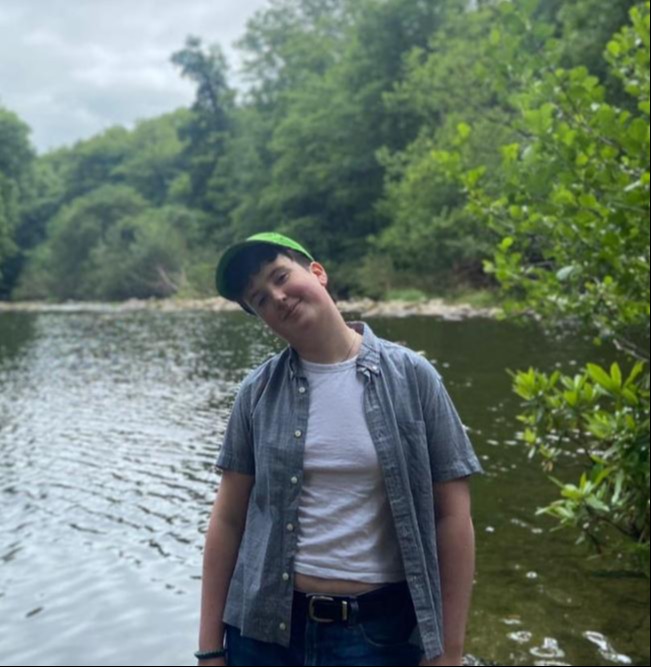
Hi! I am an undergraduate sociology and social anthropology student at the University of Cambridge, with a passion for the study of social movements and research into how activists and organisers can meaningfully effect change.