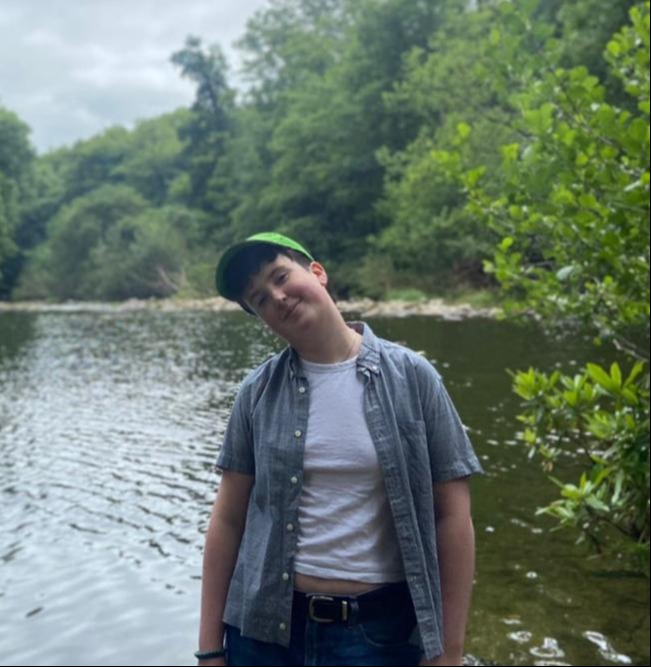
My experience of being a Laidlaw Scholar over the past 2 years has been one of stretching, pulling, and pushing in new directions. I have learnt that I have the ability to do things once almost unimaginable to me. I have met people engaged in such wide ranges of fantastic work – both scholars and non-scholars – and encountered a vast array of evidence that there are many people as yet unknown to me who are committed to living lives of research, community building, and resistance.
I want to thank everyone who has been a part of this experience, from Shannon Philip, my first-year research supervisor, to Jane Mumford, the previous Laidlaw coordinator in Cambridge, to Constanza Carrasco, my project leader at Intersecta, where I conducted my Leadership in Action. So many people have taken time to share their knowledge, experience and imagination with me over the course of this project, and I am so grateful to them all.
Key lessons:
Leadership made explicit
One of my core takeaways from my Laidlaw experience has been the chance to make questions of leadership and working in teams explicit. Though these are skills we all use in our day-to-day life, it is far too easy to presume that our gut instinct can carry us through challenges in these areas without needing explicit skills or toolsets. My Laidlaw experience firmly dispelled me of this illusion!
Through leadership workshops, the experience of collaborating with interlocutors to carry out research, and carrying out my LiA project, I have had many opportunities to have my ideas of leadership confront the real world. These experiences have been invaluable – I have learnt to pay active attention to who speaks, who is heard, and who is left invisible. I have developed the capacity to wait, letting group dynamics play out without instantly inserting myself in a role or trying to resolve ambiguities. I have gained the experience to ask questions, direct conversations, and take on leadership roles, and the awareness that these roles are both a privilege and a responsibility, something to be valued and taken seriously.
These skills and experiences have shaped my engagements in a range of areas in my life, from activism spaces to group projects. Leadership is not something I will ever take for granted, both while carrying it out and while being led by others, and I think this appreciation undergirds the capacity to working with other people with any kind of success.
New Questions
Looking back on the initial project proposal I submitted as part of my Laidlaw scholar application, I feel a tenderness towards my outlook of the world. My question developed over the course of my project, with the help of my fantastic supervisor as well as my experiences of actually undertaking research – but I had begun with a question that was enormously broad, reflecting a propensity to have everything explained all at once. Through this project, I have learnt that the best questions are not necessarily those which seek to provide every answer instantly, but instead are often those which work with others, learning from knowledge that is already being developed. Essential is being aware that the big questions can never be answered by an individual, but instead are part of a concert of collective meaning-making that we all participate in.
Having the real-world opportunity to conduct research, and be funded to do so, is not something many young people get. My ability to think about the world, to ask better questions, and to know where to start looking for answers has been shaped by my experiences of the Laidlaw scholarship – not only have the scope and interconnectedness of my questions shifted, but I have also gained confidence that I can actually find answers to questions, and undertake successful research.
As I move forward into the next phases of my life, I expect that my continued curiosity and developed sense of how to ask and answer questions will be a central skill, and is one that I am excited to have the chance to hone further while undertaking my undergraduate dissertation.
Confidence and resilience
It is in this area that I have perhaps been most surprised by changes over the course of my Laidlaw experience. I thought of myself as relatively confident prior to starting this programme, able to talk to new people and engage in new experiences if I psyched myself up and accepted some of the inevitable nerves of unfamiliarity. However, the growth I have experienced in my own confidence has been striking, and something that has really changed my experience of existing in the world.
Planning a trip alone in the Summer after I had just completed my Laidlaw research felt deeply intimidating. I spent some time in a European country I had travelled to before, and where I spoke the language, and found myself frequently exhausted, overwhelmed by being constantly outside of my comfort zone. Just a year later, I found myself in a country where I knew no one, spoke far less of the language, and was the farthest from home I had ever been. The experiences weren’t completely dissimilar – I still found my time in Mexico conducting my LiA at points exhausting, intimidating, and overwhelming. Yet the challenges of the experience were far more significant, and I was able to do all of it, despite the difficulties.
My learnings and growth as part of the Laidlaw scholarship programme have not made uncomfortable situations, unfamiliar environments, or human awkwardness disappear. But they have taught me that I can survive these things, and even enjoy them. Returning home after my time in Mexico I have encountered a version of myself that is more confident than ever before, more willing to engage in unfamiliarity, speak to a stranger, imagine that I might enjoy something completely new.
Final Thoughts:
The Laidlaw Programme has exposed me to such a wide range of new things, both inside myself, in others, and around the world. Coinciding with the first two years of my undergraduate degree, I have found myself transformed over the course of this period – I feel, simultaneously scared and excited, that I am becoming an adult, in a way that the person applying for this project 2 years ago simply wasn’t yet.
There is a danger in these projects that we can become self-referential and navel-gazing, focused primarily on the ways in which we have experienced personal growth and change. As I close this final piece for the Laidlaw Scholars website, I want to centre the ways in which I hope to go forward and work with others, learning and collaborating with them, and figuring out how we can collectively create the kinds of transformations needed for a more just and liberated world.
Having the opportunities I have accessed via the Laidlaw Programme has been a crazy privilege, and is one that I believe none of us should put to waste – the resources that we access should be fed back into our wider communities, distributed and shared through commitments to working with others and using our skills to contribute to the collective good. I feel very excited to embark on this project far beyond my time as a Laidlaw scholar, and am looking forward to seeing many of you on similar journeys.