1. What Went Well?
This week marked a turning point in my Leadership-in-Action project. While the first two weeks were focused on understanding SFW’s work and observing its impact in practice, this week centered on translating those insights into a concrete, ethically grounded framework for evaluating long-term outcomes.
The most important development was my meeting with Hendrix Hammond, a member of the organization's Clinical Governance group and a practicing psychotherapist. Going into the conversation, I was aware that he had expressed reservations about the initial project design, particularly around the ethical risks of re-engaging families who had navigated traumatic situations in their time as members of Family Group. What I had initially seen as a potential obstacle became one of the most constructive conversations of the placement so far.
Rather than rejecting the project outright, Hendrix helped clarify what a responsible version of this work could look like. His feedback provided a clear structure for redesigning the framework in a way that aligns with both clinical standards and the organisztion’s broader goals.
Several key principles emerged from this discussion. First, the importance of prospective consent—that families should be given the opportunity, at the point of completing Family Group, to opt in to future contact. This shifts the dynamic from reactive outreach to a more transparent, participant-led process. Second, the need to maintain a strict separation between therapeutic and evaluative roles, ensuring that any follow-up contact comes from a non-clinical member of the organization or an independent researcher, rather than from therapists themselves. Third, the recognition that longitudinal engagement should focus on parents, rather than children, to avoid unnecessary safeguarding complexities.
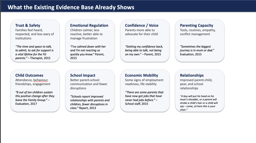
Beyond the ethical structure, the conversation also sharpened the substantive focus of the framework. Hendrix emphasized the importance of being clear about what kinds of outcomes we are trying to capture—particularly those that extend beyond immediate therapeutic effects. This aligned closely with what I had begun to observe in the field: that Family Group often produces broader “second-order” impacts, such as improved parental confidence, stronger engagement with schools, and, in some cases, changes in employment or daily stability.
Another important insight was the need to think more carefully about comparison over time. To demonstrate long-term impact, it is not enough to collect reflective accounts; there must be some way to relate those reflections back to earlier data points. This led to the idea of structuring the framework around a before–after–long-term model, linking future follow-up questions to data already collected during Family Group and at graduation.
Alongside this conceptual work, I continued building out the practical components of the project. I made progress on:
- drafting a formal framework document outlining the ethical principles, outcome domains, and methodological approach
- developing consent materials that reflect the idea of forward-looking, voluntary participation
- expanding my evidence database, systematically extracting and tagging findings from past evaluations
- and beginning to explore how S&FW’s existing data can be translated into funder-facing language, particularly around long-term outcomes and social value
What I am most proud of this week is the shift from a loosely defined project idea to something that is beginning to resemble a coherent, implementable system. The framework is no longer just about answering a question (“Does Family Group create lasting change?”), but about building the tools that allow the organization to answer that question responsibly in the future.
2. What Could Have Been Done Differently?
This week also highlighted areas where I could improve my approach.
The most important lesson was recognizing that I initially approached the project with a solution-first mindset, rather than fully understanding the constraints of the environment. My early focus was on designing a compelling way to capture long-term impact, but I had not yet sufficiently accounted for the ethical and institutional complexities involved in working with vulnerable populations.
The conversation with Hendrix made it clear that in settings like this, feasibility is not just logistical—it is ethical. A project that appears strong in design can still be inappropriate if it does not fully respect boundaries around consent, safeguarding, and professional roles.
In hindsight, I would have engaged earlier with the Clinical Governance perspective, rather than developing the initial design primarily through discussions with leadership. Doing so would have saved time and led to a more aligned starting point.
I also realized that I need to be more deliberate in structuring my own workflow. As the project becomes more complex—with multiple outputs developing in parallel (framework, consent materials, evidence database, funder analysis)—there is a risk of fragmentation. Moving forward, I will need to ensure that these strands remain clearly connected and feed into a single, coherent deliverable.
3. Leadership Reflection (3Cs Model)
Values
This week, the values of Curiosity and Good were again central to my approach. Curiosity drove me to engage deeply with the ethical concerns raised, rather than seeing them as barriers. At the same time, the value of Good—ensuring that the work is responsible and beneficial—became more prominent, particularly in shaping how I responded to feedback.
There was also a tension between Ambition and Responsibility. While I wanted to design a project that was impactful and rigorous, I had to recognize that ethical considerations must define the limits of what is possible.
Character
This week required a greater degree of humility and adaptability than previous weeks. The feedback I received could easily have been interpreted as a rejection of my initial ideas, but instead I treated it as an opportunity to improve the work.
Judgment was particularly important in how I responded to this feedback. Rather than defending the original proposal, I focused on understanding the underlying concerns and incorporating them into a stronger design.
Capacities
The capacity I relied on most this week was process thinking—the ability to take a complex, evolving set of inputs and translate them into a structured framework.
I also felt stretched in integrating multiple perspectives: balancing the priorities of Clinical Governance, organisational leadership, and funder expectations. Each of these groups has different concerns, and aligning them within a single framework is a non-trivial challenge.
4. Ethical Engagement
This week fundamentally reshaped my understanding of ethical engagement.
Previously, I had thought of ethics primarily as a set of constraints—guidelines that limit what can be done. Through my conversation with Hendrix, I began to see ethics more as a design principle: something that actively shapes how a project should be constructed.
The idea of prospective consent, for example, is not just a safeguard; it is a way of building trust into the structure of the project from the beginning. Similarly, separating therapeutic and evaluative roles is not just about avoiding risk—it is about preserving the integrity of both.
I also became more aware of the importance of not over-claiming impact. In a context where outcomes are influenced by many factors, there is a responsibility to present findings in a way that is both honest and meaningful. This is particularly important when communicating with funders, where there may be incentives to simplify or exaggerate results.
Overall, this week reinforced that ethical engagement is not an add-on to the project—it is central to its credibility and value.
5. Adjustment & Development for Next Week
Next week, I will focus on consolidating the different strands of work into a single, coherent output.
Specifically, I will:
- refine the longitudinal framework document based on feedback from both Mark and Clinical Governance
- further develop the consent and question design materials, ensuring they are practical and ready for use
- continue expanding the evidence database, with a focus on identifying patterns that support the framework’s outcome domains
- and advance the funder-oriented analysis, linking SFW’s existing data to the kinds of outcomes that funders prioritise
In terms of personal development, I want to continue strengthening my ability to translate feedback into improved design, particularly in complex, multi-stakeholder environments.
A concrete action I will take is to prepare a clear, structured presentation of the framework, so that it can be communicated effectively to the SFW team and refined collaboratively.

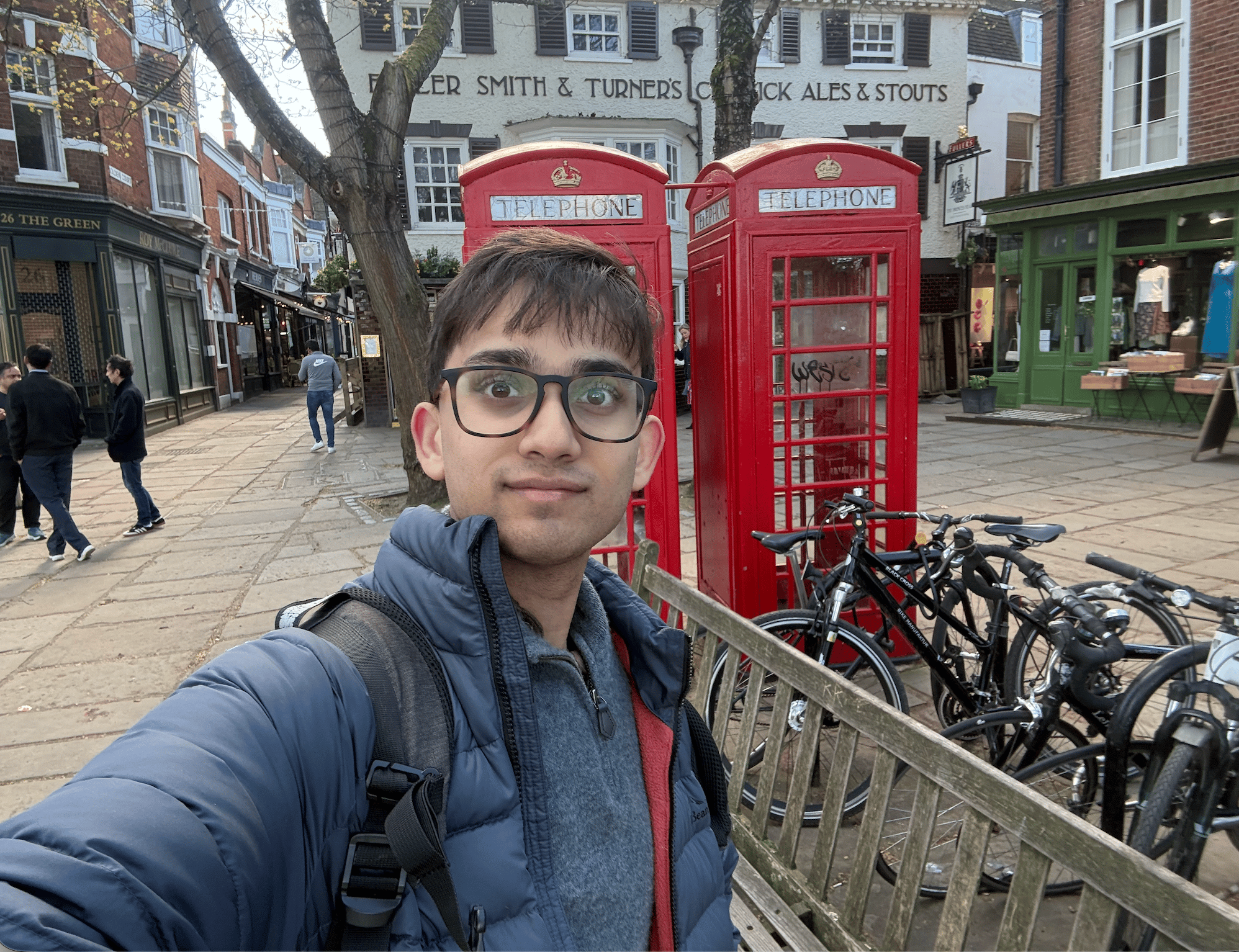
Hello! I’m Jiyon, a third-year student at Georgetown University from New York City. I am studying at the University of Oxford for the 2025-26 school year. I’m majoring in Economics and minoring in Mathematics, with my academic interests lying in public economics, governance, climate policy, and labor economics. In my first summer as a Laidlaw Scholar, I assisted a research project in Georgetown’s McCourt School of Public Policy on identifying causes of heterogeneity in U.S. state tax systems and associating variations in tax progressivity with different infant health outcomes. Separately, I have looked at how different types of public spending across U.S. states can improve social capital for the elderly. I am passionate about finding public policy solutions that improve quality of life, promote effective governance, and create durable socioeconomic institutions. In my second year of the scholarship, I am completing my Leadership-in-Action placement with The School and Family Works in London, where I am seeing firsthand the effect that multi-family therapy sessions in schools can have on student engagement, parental relations, and future outcomes.