LiA Reflection 1: Madeshi Inequality in Nepal
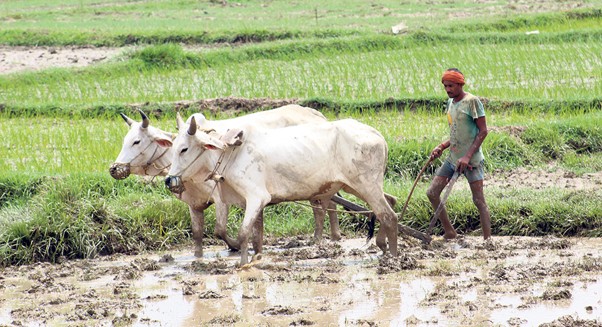
I’m currently conducting my LiA just outside the city of Janakpur, in southern Nepal, only 40km from the Indian border. I spent a couple of days in Kathmandu before travelling south. Driving through Janakpur, it was quickly evident that the city was significantly less economically developed than Kathmandu: dirt roads, fewer formal shops, unfinished concrete homes, and informal markets. A capital city is, of course, expected to look and feel more prosperous, but the contrast felt stark.
Fast forward to a few days ago, when I was sitting at dinner with Philip, the founder of the UK charity, and Dev, the founder of the Nepali charity. As I have come to learn, Dev has a unique ability to casually inject information into conversation that makes the average European jaw quickly drop to the floor. The jaw-loosener I received that night concerned the systemic inequality endured by Nepal’s Madheshi communities.
First, some context. Nepal is home to a vast number of ethnic, religious and cultural groups, further complicated by caste. So to make this story easier to follow, I will use some broad generalisations. Where I am in the southern plains are Madheshi communities, and they’re often branded by northern Nepalis as Indian or ‘insufficiently Nepali’. For the northerners, I will use Dev’s brilliant term “mountain and hilly people”. This divide has also been racialised through appearance: many Madheshis resemble their neighbours across the Indian border, while mountain and hilly people tend to have more East Asian or Tibetan features. Neither side is remotely uniform, but these perceived differences have shaped how people are treated.
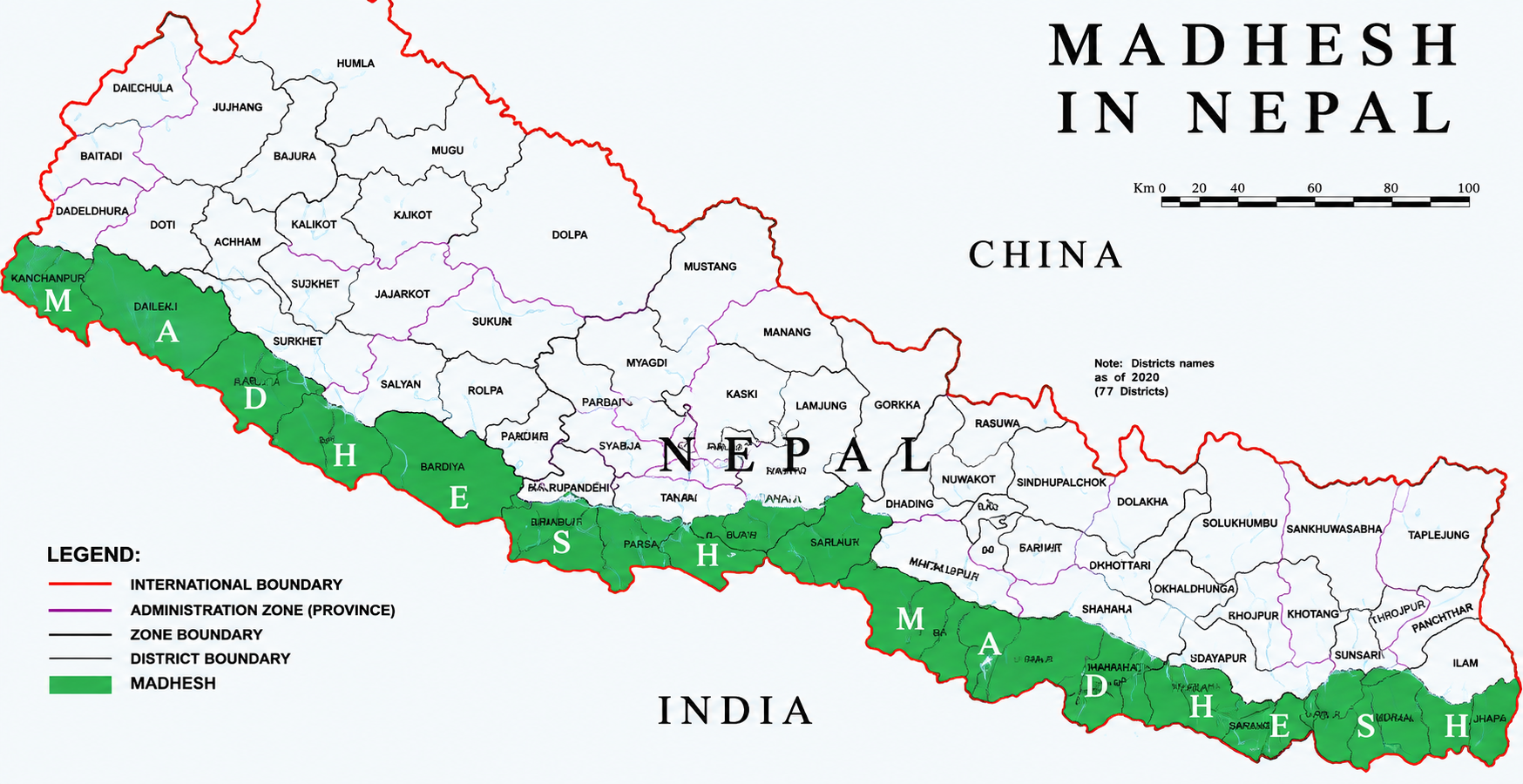
Next, the history. Much of the Madhesh was absorbed into the expanding Gorkhali state from the late eighteenth century (although its modern borders were shaped by war and treaties with British India). Yet the region remained culturally and administratively distant from Kathmandu, maintaining stronger connections with northern India. This created a strange contradiction: their land was firmly claimed by Nepal, while the people living on it were often treated as foreigners. Until around 1958, Madheshis often required passports to enter Kathmandu. Nepal’s 1952 Citizenship Act introduced the country’s first modern legal framework for citizenship. While this might be viewed as a positive step, it was followed by the considerably stricter Citizenship Act of 1964, which included a Nepali-language requirement.
For many Madheshi communities, who spoke regional languages (Maithili is still widely spoken where I am today) and had received little state education or practical incentive to learn Nepali, obtaining citizenship became a significant challenge. Crucially, without citizenship, Madheshi families struggled to secure legal ownership of their historical lands. At the same time, the Nepali government encouraged mountain and hilly people to settle in the southern plains, providing land through state-backed resettlement programmes. This contributed to the widespread displacement of Madheshi people. The reason for this? There were likely several, but Dev argues that an important political motivation was to prevent Madheshi communities from developing regional electoral majorities.
Today, landlessness remains a prevalent issue among Madheshi communities. Many farmers must rent the land they cultivate, often in return for a significant share of their harvest. Some deeply marginalised communities have to move between temporary settlements with no recognised land or address. When the COVID-19 pandemic broke out, these communities were consequently excluded from government relief, creating an extreme food shortage in which at least one child died of starvation. Even Dev – an accomplished local figure who is regularly consulted by the national government – is still awaiting the land ownership certificate for his family home. The landlessness issue has multiple causes, but historical exclusion has played an important role.
Despite notable progress in recent decades, other inequality persists. Nepal’s current prime minister, Balen, is the first Madheshi to lead the country. The 2015 Constitution guarantees equality and recognises Madheshis within its inclusion provisions. However, many Madheshi contest that same constitution, arguing that it continues to leave them politically disadvantaged. In the military, Dev explained that Madheshis were historically confined largely to non-combat roles rather than positions in which they could bear arms. While that formal exclusion supposedly no longer exists, its legacy remains visible. Madheshis account for only 2.88% of the Nepal Army, despite representing the third largest demographic group at 22%.
For this reflection, I have tried to incorporate external research to verify Dev’s side of the story. But even this is inherently difficult, as Madheshi voices and stories have themselves often been marginalised. The Madhesh forms part of the historic cultural region of Mithila, with its own rich traditions and history, yet Dev argues that these were systematically pushed aside within Nepal’s dominant national narrative. Much of what he was telling us survives through oral tradition and foreign scholarship.
So, back to my dislodged jaw. Dev’s ability to shock Europeans like me is partly due to his humble, understated nature. His vast achievements, which include organising emergency food relief for over 29,000 Madheshi households isolated during the pandemic, are revealed only through intimate conversation and the quiet confidence he exudes. But my shock also stems from the privileged way in which Europeans discuss these topics.
Western countries are by no means innocent. We have our own racialised oppression and inequality driven by various economic, social and legal structures – all of which should be a priority for any government. But what feels different here is how visible and accepted the distinction can be. There is an ease with which someone’s appearance and heritage remains connected to their land ownership, political representation and right to be considered genuinely Nepali. In most European societies, overt ethnic discrimination is at least widely regarded as fundamentally wrong (notwithstanding some recent unpleasant political movements).
Perhaps what struck me most therefore is not only that this inequality exists. It was the seemingly detached manner in which Dev discussed his community’s profound marginalisation. Europe is far from free of inequality, but our instinct to treat such discrimination as serious and unacceptable is something we should value – and continue to pursue.

![[LiA Poster] The Human Cost of the Green Transition: Indigenous communities and the Critical Minerals Rush in Australia](https://images.zapnito.com/cdn-cgi/image/metadata=copyright,fit=scale-down,format=auto,quality=95,width=256,height=256/https://images.zapnito.com/users/877945/documents/326599/53035ac0-e8bb-4695-bcc0-db0d93e2dad9-med.jpg)