When asked the question, “What did you do in Japan?”, I usually answer with a vague, “Oh, I worked with a nonprofit supporting English-speaking women in Japan as part of my research program.” For the few who want to know more, I describe my six weeks at FEW as two phases, split almost perfectly in half. The first three weeks focused on social media and event promotion, while the final three centred on legal and organizational work.
Before writing this report, I revisited my LiA project outline, which I completed on February 2, 2026, and reviewed the expectations and goals I had originally set for my six weeks at FEW Japan. Although I was not surprised that my project did not end up following the original outline, I was still struck by just how different my experience ultimately became. Not only did the timeline change, as I had initially planned to begin volunteering in May and finish in June but instead started in mid-April and finished before June, but the work I had planned with my mentor at FEW also took a complete 180. Needless to say, this report may look a little outside the box, as there is relatively little of my original project outline that I can refer back to.
Tasks and Responsibilities
I spent my first week getting acquainted with FEW’s board of directors. Because FEW is an entirely volunteer-run organization, it can be difficult to coordinate everyone’s schedules, as each board member has their own professional and personal commitments. As a result, I primarily met with my mentor throughout my time at FEW, while meeting other board members, including the president, only once or twice, either at the beginning of my volunteering period or closer to the end. Most of my work was completed online and synchronously, although I did have an in-person session with my mentor and another board member responsible for event planning. During this meeting, we discussed FEW’s current position, the areas in which they needed support, and how I could best be incorporated into their team. Afterwards, we had lunch with two additional board members, the legal secretary and director of fundraising. We learned about one another’s backgrounds and careers and discussed our different visions for FEW’s future. During this conversation, I was asked about my own career outlook. I mentioned that I was not entirely opposed to the idea of pursuing law, as all Asian parents would encourage and support, I joked. Little did I know that this conversation would set the foundation for the legal work I would experience during the second half of my time at FEW.
For the following two weeks, I continued meeting with different directors and worked particularly closely with the director of communications, who is responsible for creating social media posts, emails, and promotional materials for upcoming events and newsletters. During this period, I completed a set of five to seven social media posts and several posters for FEW’s upcoming Peer-2-Peer event, scheduled for May 28. After incorporating feedback and edits from the communications team, the promotional materials were ready to be published when we received the news that the event would have to be postponed due to a scheduling conflict. Although I had been involved in the communication, planning, and preparation for the event beyond simply creating its social media advertisements, I was unfortunately unable to see it come to fruition during my time at FEW. The event was ultimately held successfully a few weeks after my departure.
During my third week, I also compiled interview footage from FEW’s Shinnenkai, or Japanese New Year’s, event and edited it into seven reels organized around different questions and themes. This work required less supervision and was completed largely asynchronously on my own time. The legal secretary also approached me during this period and asked if I would be interested in helping her update FEW’s privacy policy, which I enthusiastically agreed to. She explained the type of work she wanted me to complete and how she wanted the final product to be structured. When she told me that she wanted me to write a memo on Japan’s privacy regulations as part of the process, she jokingly described it as being “like a real law intern.” At the time, I was excited by the opportunity to try something completely outside of my previous experience.
Shortly afterwards, my mentor had to leave Japan unexpectedly due to a family emergency. The board was then faced with the challenge of managing its regular operations while also figuring out who could take over her responsibilities with me. This resulted in a period where I was passed from one director to another. Fortunately, much of my work by this point required less direct supervision, allowing me to continue working relatively independently despite the change in circumstances.
By my fourth week, I was primarily working independently and building the background knowledge necessary for the legal work. This was divided into two main components: first, preparing a memo on Japan’s privacy regulations, and second, developing suggestions for revising FEW’s privacy policy, considering both its content and diction. The memo consisted of a summary of existing Japanese privacy laws, of which there are many, as well as a list of questions for different directors about how FEW currently handles personal information. These questions addressed issues such as how participants’ personal information is protected and what procedures are in place if a participant requests access to all of the personal information FEW has on file about them.
For the remaining weeks of my time at FEW, I focused on summarizing the relevant laws I could find and developing questions that would help FEW assess its existing practices. This process was not without its obstacles, with the most obvious being the language barrier. Google Translate cannot always do justice to legal jargon, so I often relied on AI-assisted explanations to make the translated material more comprehensible. Even then, I frequently found myself losing track of what a particular law or provision was referring to, especially when its relevant definition or exception appeared more than 100 lines earlier in the document.
Although the work was rewarding because it gave me the opportunity to explore an area I had been interested in but had never had the opportunity to experience, I did not find the satisfaction I had initially expected. In this sense, the experience was valuable precisely because it helped confirm my suspicion that law would not be a top career choice for me.
During my final week, I met with numerous directors, both in person and online, as I wrapped up my work at FEW. These conversations were very different from my initial meetings, when the focus had been on my expectations and how I could contribute to the organization. Instead, our final conversations centred more on personal experiences. I had the opportunity to listen to a wide range of women speak about their careers and personal journeys, how they define “success,” and how they have embraced or challenged the expectations placed upon them as women. These conversations left me greatly inspired and helped me feel more certain about the path I want to create for myself.
Impact of My Work
If I had to tie my six weeks at FEW to a broader framework, I would say most of it falls under UN SDG 5, Gender Equality, particularly Target 5.b, which recognizes ICT as a tool for empowering women, and Target 5.c, on strengthening the policies that support gender equality. I say this with the caveat that my contributions were fairly small relative to everything FEW does, but both halves of my project, the social media work and the privacy policy project, played some part in helping the organization become more accessible and more secure for the women it serves.
The social media work, which took up most of my first three weeks, contributed to FEW's outreach in a fairly straightforward way. I produced five to seven posts, a handful of posters for the Peer-2-Peer event, and seven reels built from footage of the Shinnenkai event. None of this feels particularly momentous on its own, but for an organization run entirely by volunteers, a consistent online presence is not a small thing. It is often the first impression someone gets of FEW, long before they show up to an event or reach out to a director. In that sense, the content I created was less about the posts themselves and more about giving FEW something to work with as it tries to reach new members, volunteers, and supporters, which is roughly what Target 5.b is getting at.
The second half of my time, somewhat unexpectedly, ended up connecting more to SDG 16, Peace, Justice and Strong Institutions, specifically Targets 16.6 and 16.10, which are about accountable institutions and protecting people's basic rights. This is the part of the project I did not see coming when I wrote my original outline back in February. My research into Japan's privacy regulations, and the memo I put together summarizing them alongside a list of questions for FEW's directors, will hopefully give the organization a stronger footing when it comes to managing the personal information it collects from members and event participants. I want to be honest that I did not have the authority to actually implement any of these changes myself, and I am not entirely sure how much of the memo will end up being used. But if even some of it becomes a reference point for future revisions, I think it still counts as a meaningful contribution, not just to a document, but to the structures that are supposed to protect the women FEW serves.
Looking at both halves together, I think they also speak to SDG 10, Reduced Inequalities, and Target 10.2 in particular, which calls for including people regardless of sex, race, ethnicity, or background. FEW exists to build community among women from very different walks of life in Japan, and my work touched that mission from two different angles: the social media side made the organization easier to find and easier to feel welcomed by, while the legal side worked on the less visible, more structural part of what makes that community function safely.
Sustainability of My Work
I think the honest answer to how sustainable this project is depends entirely on whether anyone at FEW keeps using what I made after I leave, which is not something I can fully know from here. For the social media work, at least, there are some concrete ways to check. FEW can look at views, reach, likes, shares, and saves on the Shinnenkai reels and posts, and beyond that, whether any of it translates into something more tangible, like higher event turnout, more membership inquiries, or interest from people who had never heard of FEW before. That would tell them whether what I made did more than just exist for a few weeks.
The legal work is harder to measure in the same way, mostly because its value was never really about engagement. It comes down to whether the questions I raised in my memo actually get answered, whether the privacy policy gets revised because of the research, and whether the directors put in place clear procedures for collecting, storing, and protecting personal information. If FEW makes a habit of periodically reviewing the policy, that would also help it keep pace with any changes to Japanese privacy law down the line, which, from what I saw, does not stay still for long.
If I am being realistic, though, none of this matters much unless FEW actually builds on it rather than just filing it away somewhere. The social content can be reworked into future promotions, and the memo can be a starting point rather than a finished product, but that only happens if someone picks it back up. This feels especially true for an organization that runs entirely on volunteers, where board members and their responsibilities change more often than in a typical workplace. If the materials get reused and the research gets referenced again later, then I think the six weeks I spent at FEW will have mattered a little longer than six weeks.
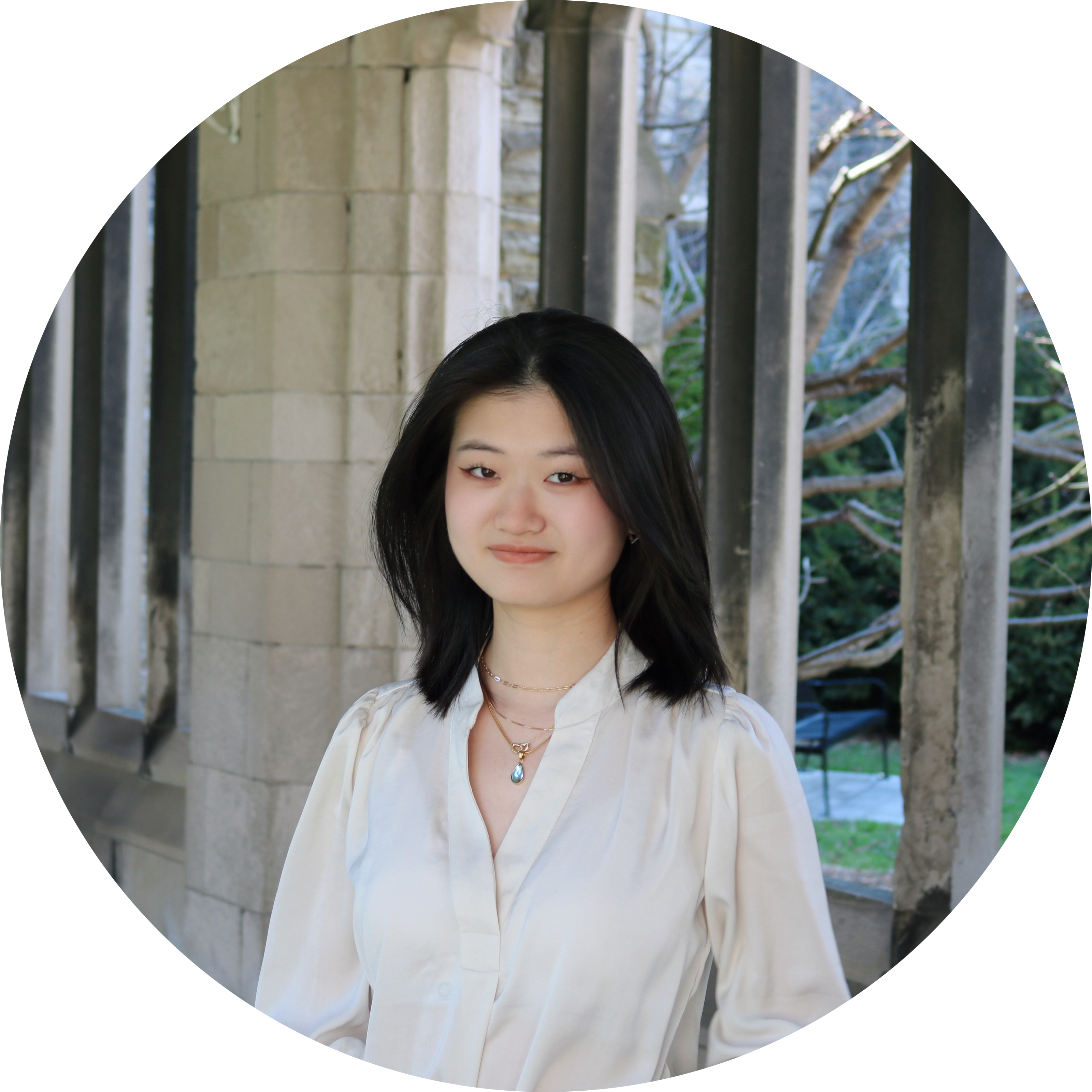
Hello :) My name is Ella, a second-year student at the University of Toronto!
My research looks at how Chinese slash fiction is used by women to reflect real-life struggles and promote feminist awareness. I focus on why this genre—centered on queer male relationships—is chosen to express female experiences, and how censorship and cultural factors in China influence that decision. In the past, I have researched how coming-of-age narratives are portrayed in Western slash fiction.
Outside of academia, I love to snowboard (in the winter) and ride my electric unicycle (in the summer). My favourite pastime is trying new foods and drinks while (sometimes) discussing how certain aspects of fanfiction reflect social justice issues.
My (more normal) hobbies include reading—anything except mysteries—with a focus on Asian North American stories, listening to pop and classical music, and playing badminton. I will be studying English and East Asian Studies over the next three years!