LiA Journal Entry 6
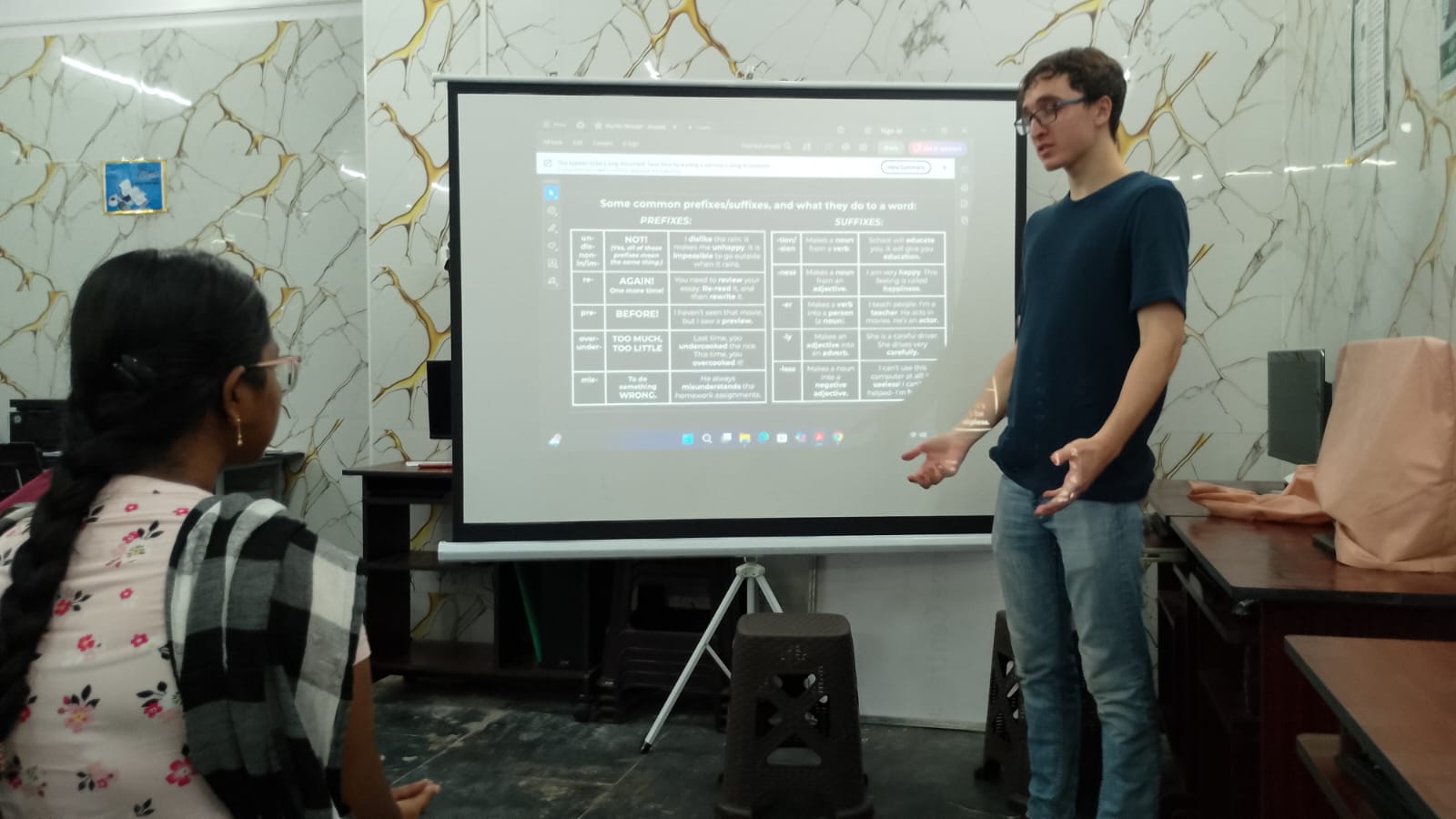
The end of my lesson yesterday brought with it a surprising realization: that there remained only a single week in my curriculum. Six weeks had passed by just like that. I've noticed before- in many different contexts -how getting engrossed in one's work can lead one to lose track of time -but considering that I planned out every day of this curriculum before I started, it's surprising that this endpoint still managed to sneak up on me so suddenly. I've developed a really meaningful connection with my students, and I really will miss them. In fact, I've already had to say goodbye to one of my classes, who received their last lesson on Friday (more on that later). My other class- the younger students in Korukkupet -had taken it upon themselves since the first week to teach me Tamil, since they figured it was only fair to do so in exchange for me teaching them English. (For those wondering, "tomato" is "தக்காளி"). And I must say, it'll be a little sad having no more "homework" to do (as they call their Tamil vocabulary lessons) just a week from now. Obviously, the end of my actual pedagogical work is much more substantive of a change: no more lesson planning, no more logistics texts with my colleagues, no more rehearsing practice questions so I can make eye contact instead of reading off a script. But even more than that, the absence I'll really feel is that of the personal connection I built with the teachers and students of Arunodhaya. The Changemaker value that this brings to mind is the need to be Extraordinary- to go above and beyond. I never saw phoning it in as an option. If students wanted to just learn grammar through some rote formula table, they could just Google that. I want my students to really listen, to connect with the material (and to the mindset of a native speaker) on such a level that it sticks in their minds well after I'm gone. And that means doing what it takes to make the lessons come alive, not just dictating out of a textbook. If I have to do a whole pantomime charades act about walking through a park and finding a bird to help explain the concept of the past continuous form, I'd be more than happy to.
 I've talked at length, in this reflection and others, about the importance of making sure my work has effects that last long after I depart Chennai. And that's never been more important than right now, as I head into the final week of classes. I envisioned this endpoint, when I began planning this curriculum, as the ultimate opportunity to reflect on everything we've covered, and how it can permanently bolster the academic and professional futures of my students. But- as has become a common theme in this project -little wrinkles in that plan inevitably started to show. Some of these are totally unpredictable for all involved: students take longer than expected to grasp a given concept, students have tests or classes which run late and cut into my lesson time. A prime example of this is the exam period which came about a week ago. Exams were scheduled for one week; I shift my lessons accordingly; the exams are suddenly delayed by a week due to paper leaks; I scramble to adjust my curriculum so we can stick to the same pace; the sudden shift in exams causes nationwide unrest which gets so bad that millions take to the streets in protest (google CJP if you want to know more- I can't do this justice here). I couldn't have possibly predicted any of that when I first began my curriculum planning, and neither could anyone else involved. That's just how life works- either you give up at the first sign of difficulty, or you have the determination to see things through. Some other detours in my lesson plans came directly from my colleagues. I was told, without much advance warning, that this past Friday (July 31st) would actually be the final lesson for my older group in Tiruvottiyur; they'd be fully booked thereafter with various academic obligations. Suddenly the fourth-to-last lesson became the last, and I had to rush to properly adjust all the remaining material and assessments. Now, sure, it would've been nice to get a little more time to make these adjustments. But my colleagues deal with the exact same last-minute detours. That's just the reality of work like this, and really any meaningful work: unexpected circumstances will come up or be placed upon you, and the pressure's on you to adjust accordingly. And this is a perfect example of the importance of ethical engagement. I can come up with all kinds of plans and roadmaps for how I want to deliver these lessons, but what matters far more is what kind of impact I'm leaving on the people I'm serving. My colleagues are vastly more experienced with education than I am, particularly in the context of Chennai's underprivileged youth. So they have the authority to advise me on how to provide my students with as meaningful an experience as possible. If my own plans conflict with their experienced advice, the latter wins 100 times out of 100. That philosophy, to me, is what ethical engagement is all about.
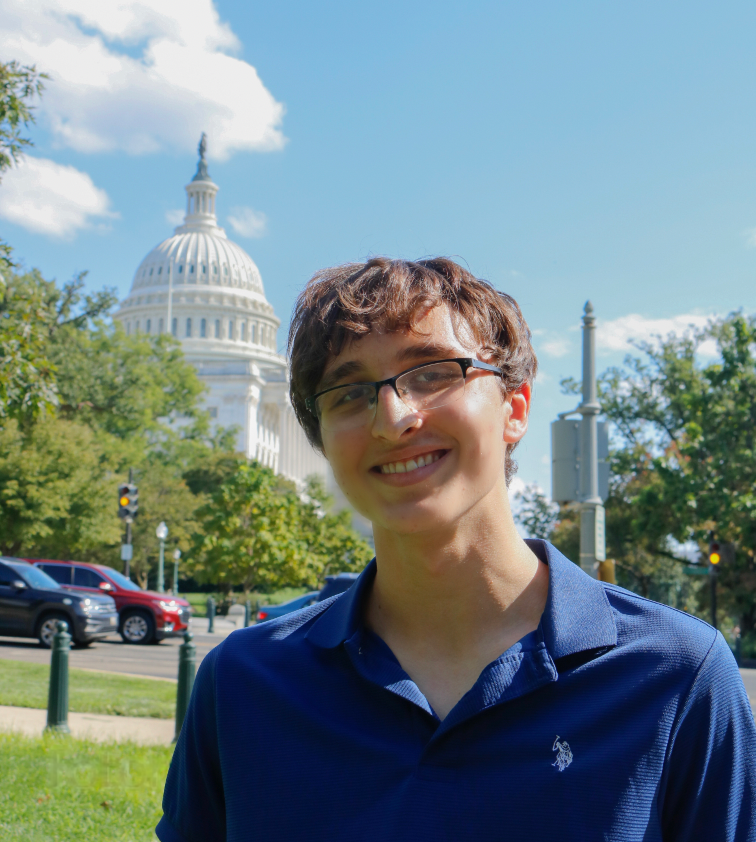
Hi, everyone! I'm Martin. I'm a third-year student at Georgetown majoring in Biology (with a concentration in Molecular Bio), and I'm planning to minor in Japanese. My focus has always been on cancer biology; so many people I've known have been affected by it, and my life's goal is to contribute to a cure. I'm half-American, half-Bulgarian, the child of two diplomats; I speak English fluently, and intermediate Bulgarian, Japanese, and Spanish. I have a lot of different interests outside of science: basketball and baseball, chess, politics, music, and a whole other list that's way too long for this blurb. Here's a random fact about me which I think is kinda cool: I once saw the tallest manmade thing on Earth (the Burj Khalifa) and the tallest thing on Earth, period (Mt. Everest) from the window of the same flight!
My research project for Laidlaw this summer is an application of the fields I've spent so much time studying- the focus is on cancer genetics, molecular biology, and laboratory technique. The goal of this project is to uncover information about a certain protein called SON, which is thought to be involved in the processes of gene splicing and transcription into RNA. Errors in these functions often result in cancer, so figuring out the roles and behaviors of proteins like SON could really help future endeavors like genetic libraries and drug discovery programs. I won't bog this down with an excessively detailed explanation of my method, but in brief, I'm using CRISPR technology to edit the SON gene and add DNA which encodes something called a protein tag. CRISPR can use a few different DNA repair techniques as a sort of "glue" to insert this protein tag; I'll be testing two of these techniques (NHEJ and MMEJ) to add depth to the experimental process. When the modified gene gets translated into SON protein, this tag gets produced as well. The tag can be lit up and investigated with a fluorescent microscope to determine where in the cell the SON protein localizes; it can also be targeted for degradation, allowing me to research the behaviors of cells with no SON protein and thus deduce its function through this knockout treatment. Which of these goals I can accomplish depends on the time and resources I have available, but I hope that summary sheds light on the problems I'm trying to tackle with this research project. In a word, I want to find out what SON does, and I'm going to use CRISPR-mediated protein tags to find out.
Please sign in
If you are a registered user on Laidlaw Scholars Network, please sign in