LiA Final Blog Post: How to Adapt Without an Adapter
On my very first day in France, I pulled out my adapter and realized it did not fit the outlet. I had brought the wrong one, and so I spent that first day in a foreign neighborhood on two percent battery, with no clue what to do next. That experience encapsulates my first few weeks in Marseille, and it portended the test of independence to come: learning to survive in a foreign country, and to embrace its culture and language while I was at it.
During one of our first leadership workshops, we discussed the stereotypes we came in with and how they limit the communities they describe. For example, Americans often assume that French people are rude. But the French people I had the privilege of meeting, whether shopkeepers, waiters, buildingmates, or the residents of Les Jardins d'Haïti, were kind, patient, and generous with their time and knowledge. They went out of their way to talk with me and help me practice my French.
Many people also stereotype Marseille as a dangerous part of France, and I entered the city fearful of exactly that. But once you stop letting a stereotype occlude you from seeing the beauty of the city, you realize that the charm of Marseille lies in its imperfection. It is an amalgamation of cultures, whether the Algerian and Comorian influences or the Italian and Armenian ones, and its beauty lies beneath the cracks where they meet.
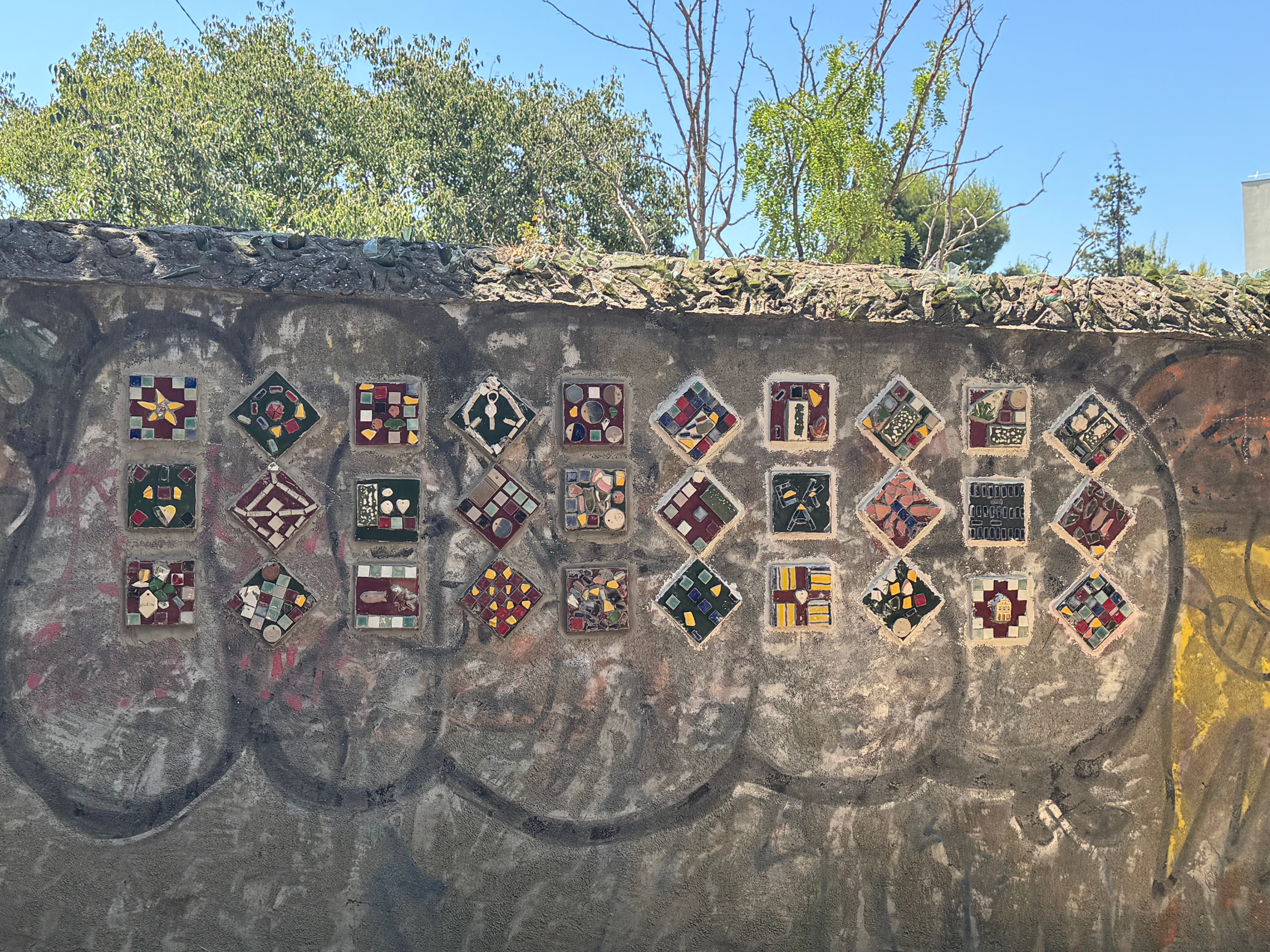
Speaking of amalgamation, building the mosaic at Les Jardins d'Haïti revealed a creative side of myself that I did not expect to enjoy so much. I valued the chance to produce something that reflected the art and beauty of the city around me. As a STEM student especially, I appreciated exercising a part of my brain that does not look at everything so formulaically.
More than anything else, though, I enjoyed the art of connecting, with the residents, with the wider French community, and with my fellow scholars. That is perhaps the most valuable takeaway I am bringing with me. There were many moments across the six weeks when English was not available to me, and I had to rely on my limited French alongside hand gestures, body language, tone, and expression. Breaking through the implicit barrier and arriving at something we both understood, together, as a shared experience in that moment, made the connection that followed all the more meaningful.
Going into my future profession, I want to replicate these small moments of joy. Most of what I will do as a physician will occur across a gap of some kind, whether of language, culture, or lived experience, and Marseille taught me that I like sitting at this nexus.
My LiA experience taught me about French culture, about artistic expression, about myself, and about everything I did not know coming into Marseille, and all I have yet to learn. Many scholars finish their LiA projects feeling satisfied. Yet in some ways, I feel more lost than I did before, aware of how much is left to discover—and that is exactly where I want to be.
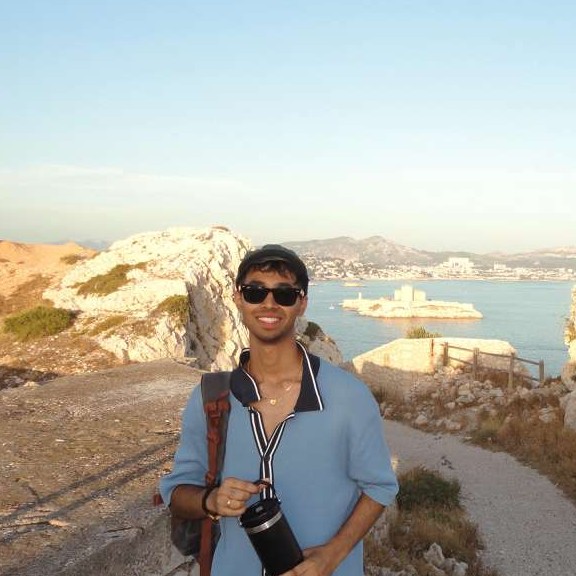
Hey, I'm Krithik! I'm a final-year student at Georgetown University and incoming medical student at Georgetown School of Medicine. I'm currently based in Marseille with make_sense and Les Jardins d'Haiti to understand how to foster intergenerational spaces and feel a little less alone together:)