LIA Experience Abroad Reflection
I'm sure that most — if not all of us — have engaged with some sort of media, music, or art that depicts New York City (NYC) to some extent. Whether it's "Empire State of Mind," "The Godfather," or most things "Spider-Man" related, NYC culture is unique as it's somewhat famous for being famous. Moreover, the fact that it's so present in modern culture means that most people will have some idea of how it functions, at least on the surface level.
Coming from Mississauga, with my big-city experience originating in Toronto, I definitely had an idea regarding what to expect from NYC. Moreover, my LIA was not my first time traveling to NYC. My first time was in August of 2025, when I received a grant from the Classics Department at UTM, which I used to travel to NYC to visit The Metropolitan Museum of Art. While my stay was quite short, I filled in my schedule to ensure I got to see as much of the city as possible, given that I didn't know when I would return. My time then gave me plenty of knowledge pertaining to the city. However, more importantly, it gave me a good amount of confidence in my ability to integrate into a new place swiftly — which made my transition to NYC for my LIA less intimidating.
To discuss the cultural competencies developed during my time in NYC is a unique venture, given that NYC is one of the most diverse cities in the world. Historically serving as a hub for immigrants from various places of origin, the city molds together various cultures to create a shared identity. Such a cultural melting pot is not new to me, given that Toronto is considered the most diverse city in the world, sharing many similar cultural aspects with NYC. This similarity made being in NYC very similar to Toronto — in fact, it was virtually like Toronto in many ways. In this sense, my experience in NYC was unlike that of some of my fellow Scholars who traveled to different continents, where they would be faced with completely different cultures. I found that often, people in NYC were very similar to those in Toronto in regard to their interactions with each other, which I ascribe to the natural workings of a big city in the West, where people are often very busy and independent, but also are ready to enjoy when they can. While I was able to leverage my knowledge of Toronto to identify these similarities, I personally live in Mississauga and am more used to the suburban lifestyle on a day-to-day basis, which made becoming culturally competent more a matter of getting used to the different ways of life that a big city entailed.
An example of an aspect of NYC living I became used to was a complete lack of dependence on personal vehicles. While in the GTA, the vast majority of my travel outside of a 5km radius is accomplished by driving, NYC serves the commuter, with an expansive subway system and even charges for drivers heading below 60th street with a vehicle. Living in such an urban landscape showed me the opposite of the life I was used to living, as all my movement happened through walking and the subway. The experience most definitely showed me the pros of a walkable city — going out with friends and traveling through the city was a breeze. Moreover, the city's density meant that more was fit into a smaller area, allowing there to be more experiences available for access. A con of this transportation culture is how it means exposure to the weather. If walking is the primary way to get to and between stations, individuals will be forcefully exposed to nature's forces. In my case, that meant walking in dress clothes in 30+ degree weather and being on subway cars which sometimes lacked air-conditioning. I can only imagine how it might be in the winter, which, while milder than Toronto's, still swings to sub-zero temperatures.
Work Culture
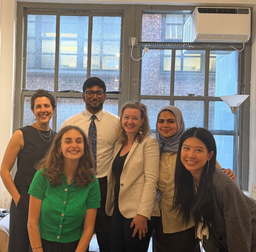
Like any workplace, my LIA organization was a place of discourse which had a culture which I learned and became a part of. Firstly, the ILF is defined by its mission of providing legal aid to the vulnerable. Being a part of the organization firstly meant embracing that mission and contributing to it through my work. To fulfill this mandate, it was necessary to also understand what the mission entailed, in order to be able to synthesize creative content which reflected it. In my own experience, this process was emphasized by my supervisor who encouraged my fellow intern and me to be intentional with our work by understanding what we wanted to see it do. Having this mindset was essential to crafting pieces which best served the organization's goals, which ranged from raising funds to promoting our mission online. Besides the work itself, the office culture of the organization focused on independent work, with trust placed in its employees to do what they needed to do.
International House
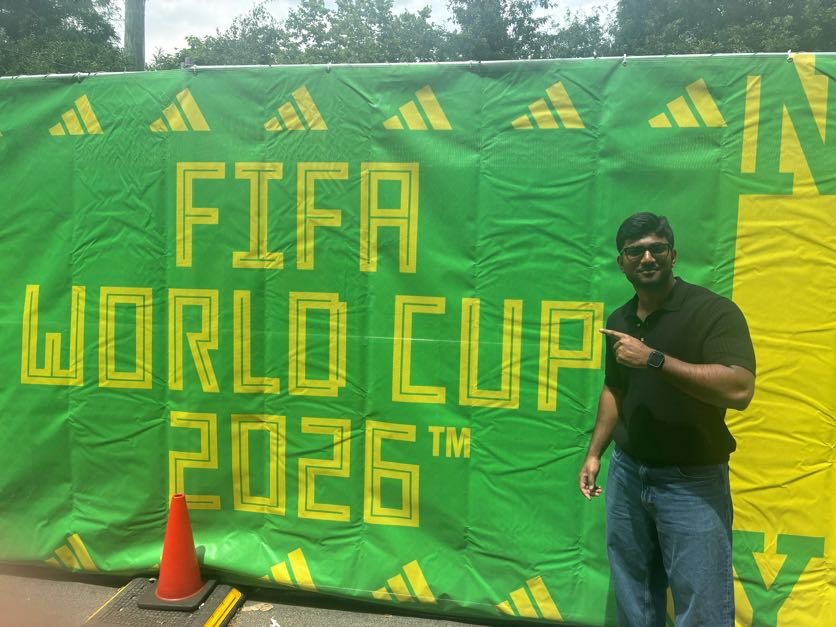
My reflection on my LIA experience cannot be complete without discussing the role my residence — the International House — played in nurturing a pleasant experience. The non-profit residence was founded in 1924 and serves to house postgrads, interns, and young working professionals. During my LIA preparation, looking for housing was undoubtedly the most difficult part of the process, especially given that I was looking for a space in NYC. Some insight from my brother pointed me to I-House, which quickly appeared as the perfect space to be. Perhaps the most attractive feature of the House was that it would allow me to be around other young people, giving me access to valuable community during my stay in the city. My intuition proved correct, as the most impactful part of my stay at I-House was the connections I developed. Given the demographic the House caters to, I found that every person I had the chance to speak to was truly unique and talented. From incoming Cambridge and Harvard PhD students to interns at organizations ranging from multinational banks to the Natural History Museum, I was fortunate to create some amazing connections with very fascinating individuals. In regard to the main theme of culture, I-House too was a place of discourse, and thus had its own culture which I subscribed to. For example, all residents are required to have a dining place (as in, they must add dollars to their meal card). This requirement was apparently designed to promote community by giving students the chance to eat together. This approach was complemented by the informal rule to never eat alone. In my first few weeks at I-House, I took this suggestion very seriously, and made it a point to constantly sit with new people at dinner. Another part of the I-House culture is to host various events and programming at the house to further promote community. This happened through official events offered by the House (such as the Independence Day BBQ) or by Fellows (older and experienced residents). Moreover, residents were able to host their own events and take advantage of the pub, in which videos could be streamed, or the game room. The pub was especially used during the FIFA World Cup when residents would stream games and enjoy discounted drinks. Ultimately, I-House's culture existed to serve the key tenet of the I-House culture, which can be traced back to its founding — to provide a place where mutual respect and friendship can burgeon across cultures and fields of study. This culture was vibrantly integrated into every part of life at the House, and I'm grateful to have been part of the I-House community.
Church Culture
During my stay in NYC, I had the privilege of attending one of the New York branches of my church, which operates internationally. On my way to NYC, I contacted the minister of my Toronto church, who connected me with the minister in New York. This allowed me to coordinate ways to attend services and engage with the church community. While my time with the church was limited to the weekends, I was fortunate to make the most of it, having the chance to attend services, contribute musically, and attend meetings at the houses of various church members. Staying connected to the church — which is a key part of my life in Toronto — was very valuable, especially as it gave me a second home during my time, and left me with strong connections with people I will continue to correspond with.
While completing my LIA in NYC was not a complete culture shock, the experience put me in an unfamiliar situation which I was able to adapt to, enabling me to learn about and become a part of the culture. In retrospect, what helped this process was undoubtedly the creation of community, through my workplace, residence, and church. Being an active member of these communities opened me up to fantastic new experiences and aided my transition to living in and enjoying my time in NYC.
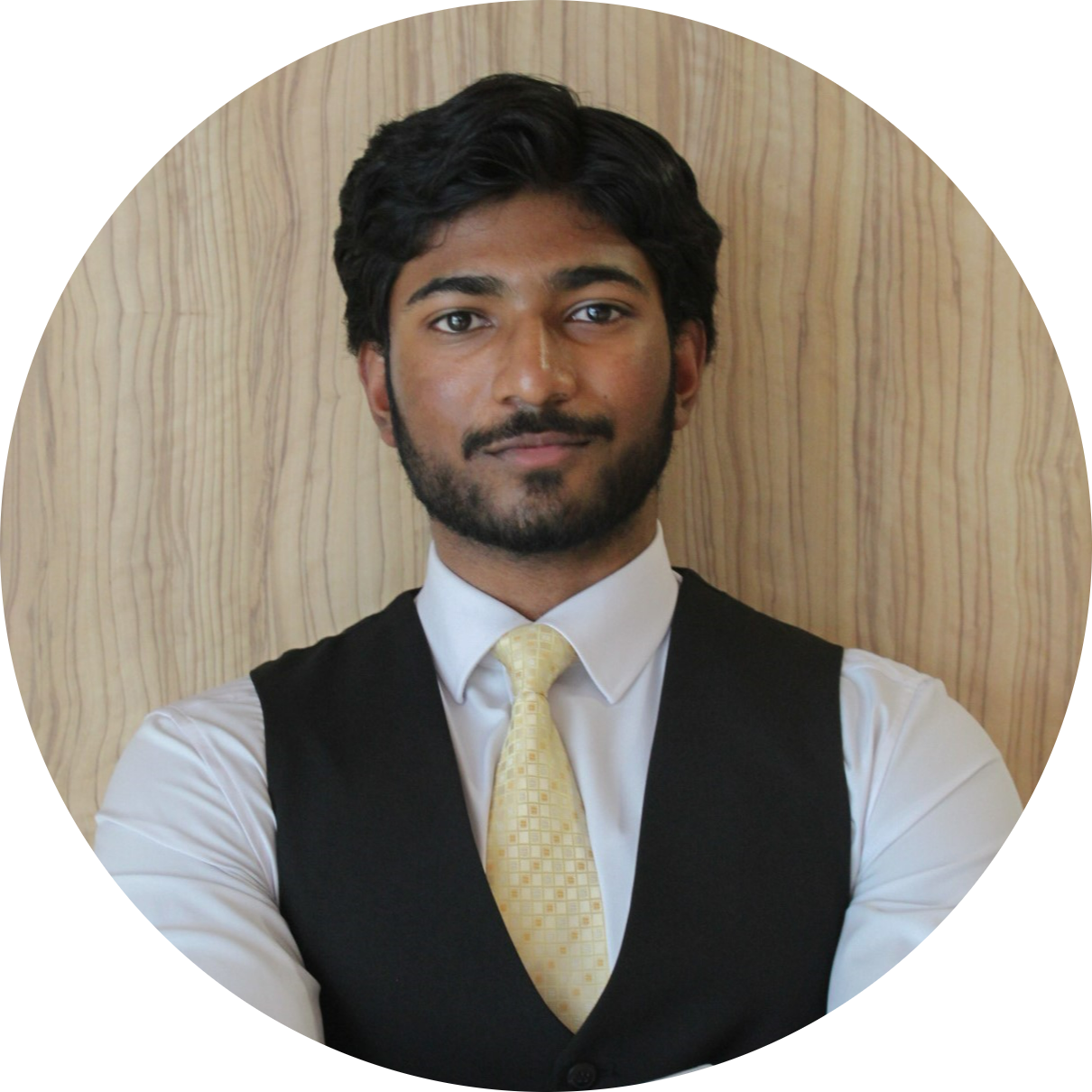
Hey! I’m Samuel Kamalendran, a second-year undergraduate student at the University of Toronto (Mississauga), where I major in Political Science and minor in English and Classics.
My research project is titled “In the Valley of the Shadow of Death: Evaluating the Protection Afforded to Vulnerable Canadians by Bill C-7” and will explore whether Canada’s assisted-dying legal framework sufficiently protects the disabled, mentally ill, and those in poverty.
I was first introduced to this topic through a term research paper in a Canadian Political Science course, and quickly became very engaged in the subject. What truly stood out to me about this subject was the intellectual conflict underpinning the debate about the Bill’s provisions. I was fascinated by the justifications both sides offered—all of which contained some measure of truth—and the simultaneous inability of scholars to come to a clear consensus. I was also very drawn to the real-life stories of individuals who interacted with MAiD—every one of which spoke directly to the implications of any law that intersected law, medicine, and the ethics of self-autonomy.
Furthermore, as an aspiring legal professional, I am especially interested in diving into the legal and parliamentary cases that drove the development of assisted-dying forward, and performing a comparative analysis of international jurisdictions to decipher key lessons which can answer questions about the effectiveness of MAiD frameworks.
In my free time, I enjoy working out, creating music on the piano and drums, and exploring local rivers, lakes, and trails with my brothers. I’m also active in journalism at my university, interested in AI and business, and passionate about serving my peers through my work with my school’s International Centre and my upcoming roles on various committees and boards.
I’m sincerely looking forward to learning more about you all and your research projects! I would love to connect with y’all via LinkedIn, email (at samuel.kamalendran@mail.utoronto.ca), and/or through the Scholars network. I hope everyone has a fun, relaxing, and productive summer! :)