Laidlaw Program Reflection
My Laidlaw journey began on LinkedIn, when I first became acquainted with the program through the page of a U of T Scholar. Since that was during the application process' off-season, I put the Laidlaw U of T website in a folder on my browser, and reopened it a few months later, when the 2025 cycle opened.
It's not an understatement to say that the application process for the U of T Laidlaw Cohort was the most demanding one I've done during undergrad. Though, it was this intensity that I'm grateful for, as the application necessitated the endurance and commitment that would be fundamental to the Laidlaw experience. Writing a full research proposal was intimidating, and sometimes concerning, since there was no guarantee that the work put into developing a detailed outline would yield a positive result. However, given that I was building my research out of a successful term paper I had written, which had given me significant knowledge in the area of assisted-death policy, I felt better able to draft a paper that could break new intellectual territory while maintaining awareness of consequential nuances. This experience in and of itself was a considerable learning experience and, once into the program, gave me a strong launching pad into conducting my research.
The application was followed by an intense group interview, featuring multiple extremely talented students, and required not just an awareness of one's research plans, but also collaboration and on-one's-feet critical thinking skills. A few weeks after the interview, I was absolutely and genuinely thrilled to receive admittance into the 2025 U of T Laidlaw Cohort. While I did not know the connections I would make as a Scholar or the doors that it would unlock for me, my intuition told me that this experience would be life-changing.
My Initial Reflections on the Programme
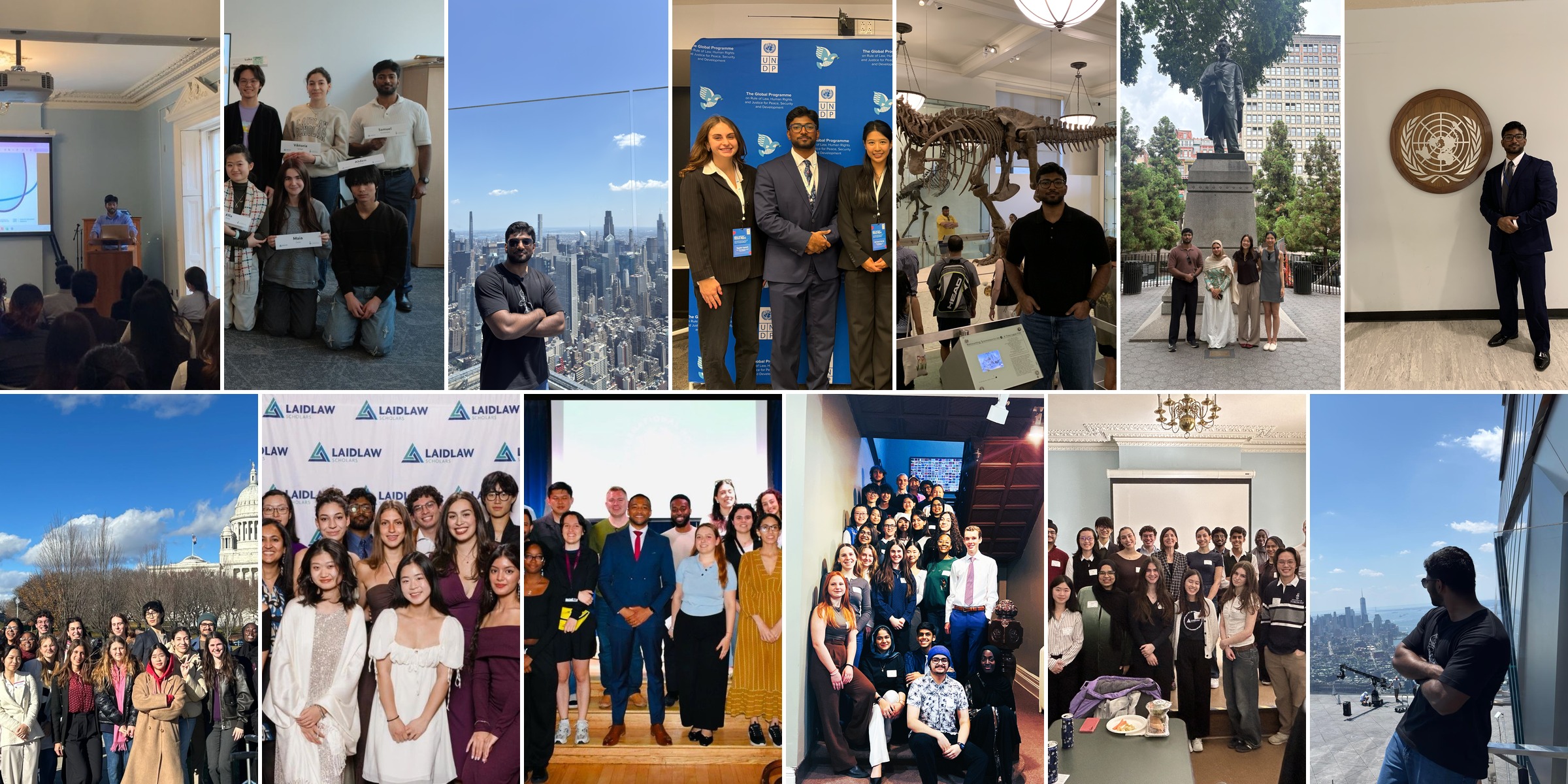
I am not exaggerating when I say that the Laidlaw Programme has been the defining title of my undergrad experience. Simply put, no other program available funds both intensive, self-directed research at the undergrad level, and an international experience that can be conducted anywhere in the world and with a plenitude of organizations and initiatives. Coming into this program, a phrase I heard over and over again, from past scholars to our supervisors, is that, "You get in what you put into the programme." To me, this meant simply being intentional: with every component of the programme, I had the responsibility to ponder and develop a clear definition of what I sought to do and how I could do it well. Taking this mindset into every opportunity I could, I saw the life-changing impact the program had on me. From sharpening my research skills in a practical manner as I developed my research report, to presenting my research to editors from Taylor and Francis at the 2026 North American Laidlaw Conference at Brown University, to representing the International Legal Foundation at the United Nations Headquarters in New York City, my Laidlaw experience has been nothing short of incredible.
Acknowledgements
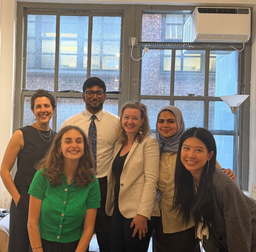
At this point, before I dive into a more critical analysis of my experience, I would like to extend my warmest gratitude to the Laidlaw Foundation and Lord Laidlaw, for granting to thousands of students the privilege of achieving their academic and professional ambitions; Laidlaw Foundation CEO Susanna Kempe for her leadership, impact, and on-the-ground presence throughout my Laidlaw experience; U of T Laidlaw Lead, Shraddha Prasad, for her commitment to the 2025 Laidlaw Cohort and her exceptional leadership and kindness; U of T Laidlaw Coordinators Elena Shik and You Jia Lee, who have been constant sources of guidance and support; my research supervisor, the phenomenal Dr. Christopher Greenaway, for offering his wisdom and research prowess during the research stage; and each and every one of my fellow 2025 Laidlaw Scholars, for their companionship and friendship over the last two years.
Critically Analyzing My Personal Growth
While speaking on my professional and academic growth to start my reflection may appear apt, what stood out to me when I became a Laidlaw Scholar was that the programme was not necessarily meant to nurture individuals who made more money or had the highest positions — it was to nurture leaders who had moral fibre and the character necessary to lead others to a more just and sustainable future. When it came to character, the Oxford Character Project stood out as a systematic, theory-backed way to reflect on our character and become aware of our individual weaknesses and strengths. A teaching which stuck with me was that even virtues can turn into weakness if they're taken to the extremes. Moreover, a personal takeaway from the OCP was that, just as intentionality is a critical function for research and work, it must also be applied to character. In other words, we should not treat character as a static composition that is the result of our experiences. Instead, we must be intentional in how it exists in us and how we interact with and form it. Moreover, a very notable impact the OCP has had was how it allowed Scholars to interact with fellows from around the world. While we often interact with our own university's scholars, it was a privilege to gain insight from the perspectives of Scholars from different parts of the globe, who carry various unique experiences and outlooks different from ours. The chance to get to know these individuals and network with them has been one of the best parts of the OCP!
The nature of my research also provided me ample opportunity for character growth, specifically in how it involved the careful analysis of how societies can fail the most vulnerable. During my research, I found that beyond theory, constitutional legal principles, or the judgements of professors, courts, or doctors, perhaps the most influential source of reflection and legal change is the real-life stories of individuals. Every legal case that revolutionized assisted-death policy (now known as MAID) in Canada was based on a real case, involving a plaintiff challenging an aspect of contemporary laws. It was these individual cases that formed the basis of court decisions which would alter policy across the nation. Learning about these pivotal cases, along with copious others which informed my awareness of the issue, showed me how important it was to approach the MAID question with an open mind, because, simply put, this was by no means a black or white issue, but one abounding with nuance. It was the variety of real-life interactions with MAID that pushed me to view the issue through an "autonomy-protection" lens — one that did not take one side but instead sought to balance both the right of the individual to determine their own path and the responsibility of the government to permit individual self-determination while also performing their obligation to protect the vulnerable — a challenging double-duty. Given that MAID is a medical-legal issue, looking at it through multiple angles and accounting for real, human experiences has proven an effective method for approaching a variety of social issues. Instead of basing our judgements on normative stances we deem to be wrong based on prior experience and knowledge, perhaps a more effective response is to adopt an outlook that connects first with the human experience behind a social issue, and then build off it with the use of various disciplines.
Just as my research pertained to vulnerable demographics, my internship at the International Legal Foundation involved contributing to a mission that catered to indigent clients around the world. Often, such clients would find themselves at identity-intersections that put them at a disadvantage in the legal system, whether that be their wealth, gender, or family status. As my work was centered at the organization's headquarters in North America (as opposed to international offices, which would involve more on-the-ground work), my work was focused on creating content that illuminated the work of the ILF and increased its audience, specifically among potential donors whose work could help fill the gap created by decreased federal funding. This work firstly would help the Foundation expand its mission, helping it to realize its goals of opening offices in more countries and reaching more clients. Secondly, the work of developing content gave me firsthand access to the impact of the ILF. Reading multiple cases as I worked to synthesize them into composite stories gave me firsthand insight into the exact work of the Foundation, and how it works to increase equitable access to legal aid, especially for vulnerable, indigent demographics. What stood out to me was the model the Foundation employed, and how effective it was. While funding and training come from the U.S. Headquarters, all the lawyers employed by the ILF in foreign countries are local, which not only makes them better advocates but also allows them to be distinct organizations that can still run even when, for example, national leadership changes and laws pertaining to foreign organizations change (which indeed was the case in the past). Moreover, through training, the local lawyers become apt in adopting a different way of advocating, such as fostering close relationships with clients, heavily relying on evidence to make strong arguments, and even introducing legal techniques unknown to their legal landscapes, but which serve their clients effectively (such as sentence mitigation arguments). The highlight from my experience was that law could be a powerful tool to address inequity. For vulnerable groups that may be discriminated against in the justice system, specifically the innocent falsely accused because they were in the wrong place at the wrong time, legal aid can change what otherwise would be an unfortunate life trajectory for them and their families. Working with the ILF put on display how careful and intelligent coordination can create an international response to such inequity.
In the Laidlaw context, to me, character development should lead to leadership development. Throughout my experience as a Scholar — both during the research and LIA components — I have consistently reflected on what it meant to be a leader. From my research, I looked at leadership through the policy and government perspective. For example, judges on the Supreme Court were powerful leaders by how their judgements would influence laws across the nation. Moreover, MPs (and Senators to a lesser degree) were leaders by how they could wield their influence to propose, vote on, and contribute to policies that would impact Canadians. Members of advocacy and lobby groups — including those for and against MAID advancement — are also leaders by how they use their passion to push for policy that they believe best serves the public. Journalists and academics are also critical leaders by how they disseminate knowledge and impact the public sphere's understanding of issues. When peering into this world of leaders in different disciplines and at different levels of authority, I noticed that what made them leaders was not their stance or opinions — instead, it was the fact that they took their stance as being something worthy to advocate for, and were inspired by this mission to the extent that they both sought to make a direct impact pertaining to the policy and inspire others to adopt similar views. In other words, it appears that being a leader means being an active agent — one who does not passively hold views, but actively acts on them. What I took from this observation is that, in our own lives, if we are to be leaders, we must firstly take the most critical stance on our views or on views we are debating adopting to ensure that they are worth fighting for. This doesn't mean that there is a worthy view on every topic — perhaps for certain issues, the only stance worth fighting for is that there is no objective answer. When we do have an ideal worthy to be believed in, we must ensure it is not relegated solely to our minds — we must actively engage with it. In a practical sense for many opinions, this doesn't need to involve advocating for or against policy or holding protests — it could mean living out our beliefs without hypocrisy or sharing our ideals with others. For the issues which do involve large-scale action, such as major social issues, the highest form of leadership is to engage in such a way as to drive the most change — whether through sharing ideas on a large platform, impacting policy directly, or leading protests and grassroots initiatives. It is these individuals — both for large- and small-scale issues — who epitomize leadership, drive impact, and inspire others to join their movements.
When it comes to leadership lessons from my LIA, I was undoubtedly left with great learning having interacted with so many leaders across different fields. Below is an excerpt from my last LIA Weekly Reflection, in which I reflected on my learnings in leadership.
"Being a Laidlaw Scholar and a student leader, leadership, especially in the university setting, is often something I end up pondering. Given that 'LIA' does stand for 'Leadership-in-Action,' my experience has given me various avenues to witness leadership firsthand. I think what I've found reflects my understanding of leadership while taking it further by giving real examples of individuals who take on the significant responsibility of leading others. For example, in my workplace, leadership is defined by position and is held by anyone overseeing another person. In the professional setting, I have found that a central trait of being a leader is being able to see what others cannot. It is only the individual who is on a perch overlooking the big picture, knowing what is next and what is required to get to the next level, who can most effectively be the person others look to for direction. Whether this is a CEO, an executive director, or even a supervisor managing entry-level workers — a leader must be able to see both the forest and the trees, and be able to relay that to their subordinates. However, leadership is obviously not confined to the workplace. In church, for example, ministers are responsible — but not just in the workplace-oriented sense of directing people to do things. Instead, I found them to lead by example and also serve as pillars of the community, being present at events, being available for counselling, and being a source of connection and reliability. Moreover, thorough reflection showed me that being a leader does not always mean that others will want to emulate you. Sometimes, being a leader means taking on a burden so heavy that others simply would prefer not to be under such weight. In that sense, sometimes leadership means being the person others may not want to be but collectively need. To represent and guide others is by no means a light task — to lead means having both the capability and the willingness to do what others are simply not able to do. I've found that this is often the case in many settings — anyone can take on a leadership title, but not everyone can reach the pinnacle of leadership: pushing forward every part of the organization."
Central to the Laidlaw experience at U of T have been the Leadership Development Sessions, facilitated by our phenomenal supervisors, Shraddha Prasad, Elena Shik, and You Jia Lee, along with Camile de Lacy. Besides the benefit of spending time with my talented fellow scholars, I found the sessions to be supportive by how they focused on personal development through a professional standpoint and offered a theoretical framework to support discussions on things like teamwork and conflict resolution. I also greatly enjoyed the more "fun" components of the sessions, namely the very well-designed escape room that pitted the Scholars against each other in some well-spirited competition, and the reflection-focused sessions that allowed us to engage in self-introspection.
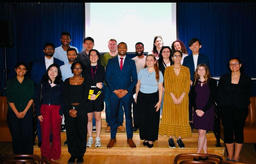
A reflection on the Laidlaw Programme wouldn't be complete without mentioning the 2025 North American Laidlaw Conference at Brown University in Rhode Island. Firstly, the chance to travel together with the 2025 Laidlaw Cohort gave us a unique opportunity to bond and get to know each other on a deeper level. Moreover, bringing together hundreds of scholars from around the world gave us the fantastic opportunity to form quality connections with truly inspiring individuals. Every part of the conference — from the main presentations to the breakout sessions to the researcher talks to the Gala — served to educate and inspire attendees, especially in regards to leadership, moral fibre, and resilience. I also had the privilege of being selected to present my research to editors from the British academic publisher, Taylor and Francis. The conference also shone by how it offered a pristine opportunity to develop my leadership skills through the speeches we heard. For example, the keynote speaker Dr. Prudence Carter shared experiences in leadership stemming from years leading a university. What stood out to me from her speech was how as a leader, when one prioritizes their values and the values of those around them, one must be ready for their decisions to not please everyone. Moreover, Raegan Sealy's story about her journey was truly inspiring as she shared her path through various challenges to becoming a Fulbright Scholar, and the leadership work she continues today.
Through all these experiences, a takeaway I am leaving the program with is concerning the power and necessity of embracing the unknown. It's natural to be scared when faced with strange and unfamiliar situations, but if we choose to overcome (not necessarily ignore) our natural fear and dive into new experiences, over time, we will develop a natural confidence that will enable us to repeatedly face new challenges, creating a very positive feedback loop. My LIA experience epitomizes this concept, as going into my LIA, I wasn't too concerned about potential issues that could arise. This confidence was not insane or unfounded — it originated from the various experiences I've had and sought to have over the past few years. For example, applying for a Classics grant enabled me to travel to NYC last year, making me acquainted with it in such a way that coming to it this time around was not a completely new experience. Moreover, my engagement as a student leader developed my interpersonal skills to a point where I was confident in my ability to create community anywhere I went — a skill I translated into making real connections in various settings in NYC. Despite all this past experience, at the same time, there was still apprehension given that I really didn't know what to expect during my time here, from my residence, to my job, to the weather. Even with this unfamiliarity, I practiced what I preached and dove straight into the experience, unaware of what I might face, but confident in my ability to withstand.
Returning to the sentiment with which I started my reflection, if Laidlaw has been life-changing, then it is only fitting to ask to what end has it changed my life. In an immediate sense, Laidlaw has given me experience in research that has both served as a medal on my resume and given me confidence in my ability to conduct long-term, self-directed research. Being able to say that I've engaged in funded research as an undergrad is truly a privilege, and it's something that's helped me boost my credibility as I have taken on roles in academic leadership, specifically as President of my Political Science Society. Moreover, my work has contributed to my network's growth. Besides it being a great talking point, especially given my research's topic, my work has enabled me to connect with the foremost Canadian MAID researcher, who also was the most influential in my research. LIA-wise, my affiliation with the ILF has put me in rooms I could never have imagined having access to and enabled me to meet truly unique and inspiring people. Moreover, serving the mission of pro-bono public defense has contributed to my philosophical approach to justice and has solidified my intention to make pro-bono work a critical part of my career in law. In regard to my professional trajectory, I see my Laidlaw experience contributing to my future by how it has expanded my outlook on leadership and service. The ways I have learned to more carefully consider various viewpoints when approaching a topic will be central, whether in the corporate, pro-bono, or academic setting. Moreover, my experience contributing to the addressing of inequities and specifically serving the vulnerable has shown me how meaningful such work is, inspiring me to continue engaging in such a mission.
To everyone who's been a part of my Laidlaw journey — thank you so much! This experience is one I will carry with me for the rest of my life, and is one which will echo both in my memories and through how it has impacted my career. I'm forever grateful for the privilege of being a Laidlaw Scholar and I aspire to be an alum whose life and impact reflect the values which this program stands for. Regardless of how many titles I take on as time goes by, the one that I'll always be proud to have is that of a Laidlaw Scholar.

Hey! I’m Samuel Kamalendran, a second-year undergraduate student at the University of Toronto (Mississauga), where I major in Political Science and minor in English and Classics.
My research project is titled “In the Valley of the Shadow of Death: Evaluating the Protection Afforded to Vulnerable Canadians by Bill C-7” and will explore whether Canada’s assisted-dying legal framework sufficiently protects the disabled, mentally ill, and those in poverty.
I was first introduced to this topic through a term research paper in a Canadian Political Science course, and quickly became very engaged in the subject. What truly stood out to me about this subject was the intellectual conflict underpinning the debate about the Bill’s provisions. I was fascinated by the justifications both sides offered—all of which contained some measure of truth—and the simultaneous inability of scholars to come to a clear consensus. I was also very drawn to the real-life stories of individuals who interacted with MAiD—every one of which spoke directly to the implications of any law that intersected law, medicine, and the ethics of self-autonomy.
Furthermore, as an aspiring legal professional, I am especially interested in diving into the legal and parliamentary cases that drove the development of assisted-dying forward, and performing a comparative analysis of international jurisdictions to decipher key lessons which can answer questions about the effectiveness of MAiD frameworks.
In my free time, I enjoy working out, creating music on the piano and drums, and exploring local rivers, lakes, and trails with my brothers. I’m also active in journalism at my university, interested in AI and business, and passionate about serving my peers through my work with my school’s International Centre and my upcoming roles on various committees and boards.
I’m sincerely looking forward to learning more about you all and your research projects! I would love to connect with y’all via LinkedIn, email (at samuel.kamalendran@mail.utoronto.ca), and/or through the Scholars network. I hope everyone has a fun, relaxing, and productive summer! :)