Letting Challenges Help You
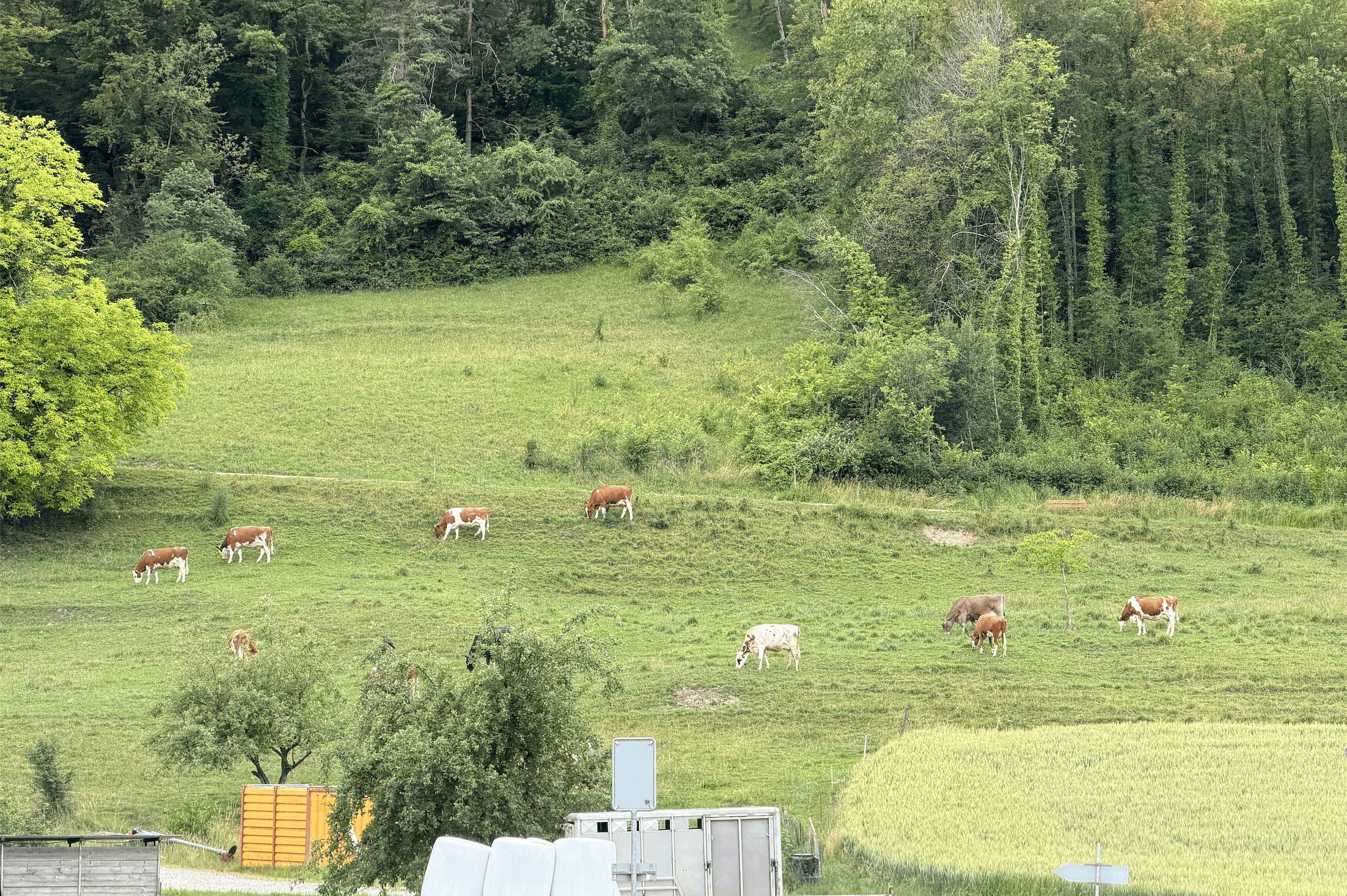
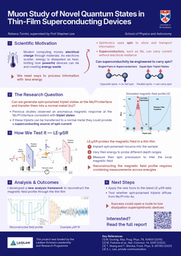
There is something reassuring about having a plan. At the beginning of my Laidlaw research summer, I certainly had one. For the first week and a half, I was going to work with a SQUID magnetometer to measure superconducting samples. Then I would travel to the Paul Scherrer Institute (PSI) in Switzerland for a week and take part in Low Energy Muon (LEM) experiments, and spend the remainder of the internship analysing the data we collected.
One of the questions they asked us during the interviews for the Laidlaw program was something along the lines of “It’s your first day, and the machine you need for your research is broken, what do you do?”. I can’t remember what my answer was, but it doesn’t matter. It was the first day, and I was told that the SQUID magnetometer had stopped working the previous evening… At first, this was simply frustrating; what were the chances?! I hoped these measurements would help me become familiar with the superconducting samples and experimental techniques before travelling to PSI, and having just started, I felt uncertain about how to move forward.
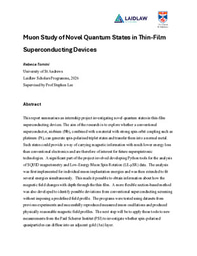
To spare me, my supervisor suggested that I instead start working with measurements that had already been taken. So, while waiting for the SQUID to be repaired, I wrote a simple Python program to read and analyse existing SQUID data. This was a way of making useful progress while the machine was unavailable, which in turn improved my understanding of what the experiments actually measured and how we could extract physical meaning from the data.
Then the program turned out to be rather more useful than expected.
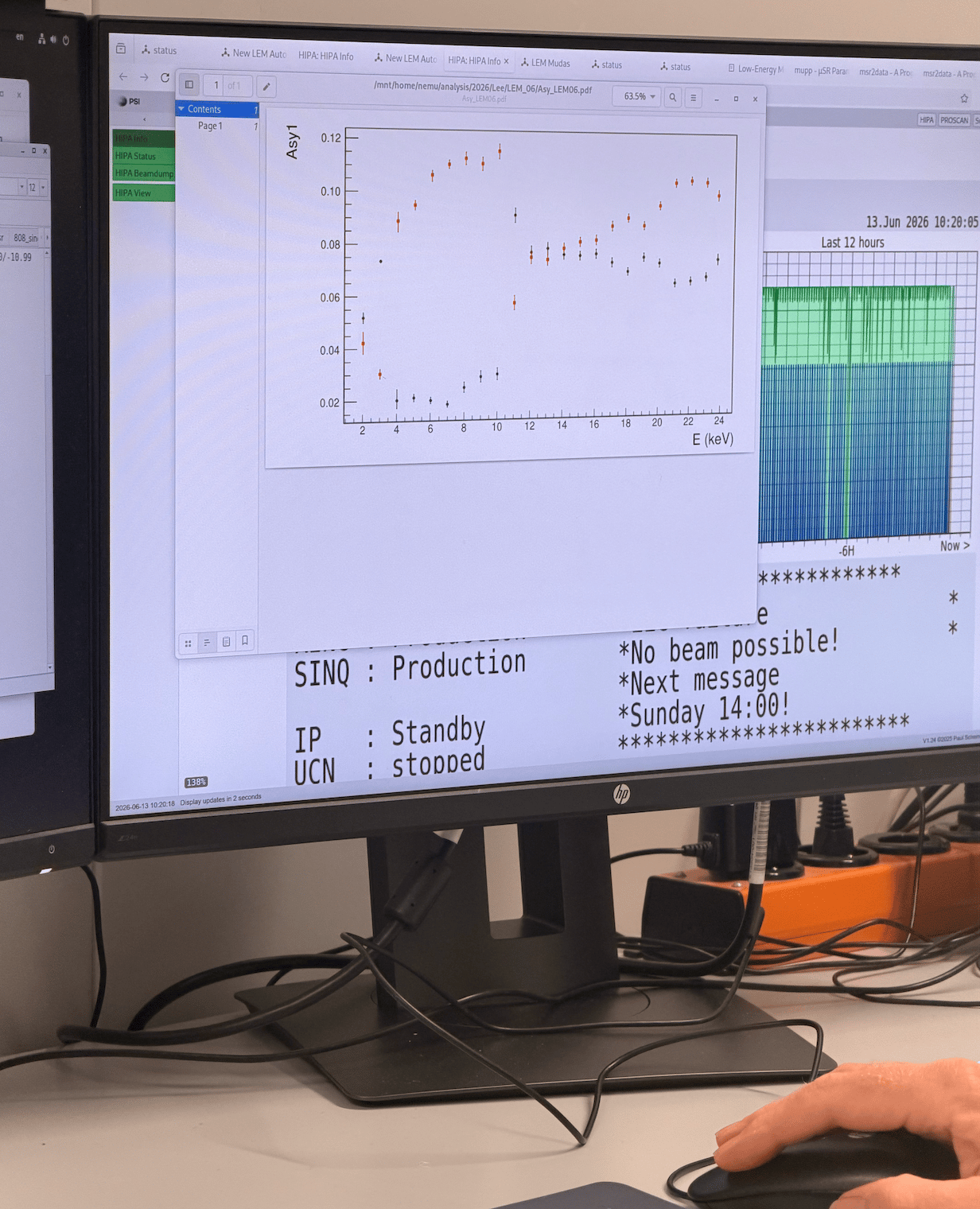
This led to the idea of applying a similar approach to LEM data, and I began developing programs to analyse the more complicated datasets produced by muon measurements. Each program seemed to generate an idea for another, and what started as a small solution to an inconvenient first week gradually turned into one of the main directions of my internship. Instead of working with a predetermined goal and schedule in mind, the project became a chain of questions: if we can do this, could we also do that?
Ironically, even the LEM instrument at PSI broke down on our second day there. (Apparently experimental equipment had decided to really test my adaptability this summer). Fortunately, this time the lesson was already becoming familiar.
Looking back, I think there are two particularly important ways in which unexpected challenges can contribute to research. This is as long as we don’t become upset by them and embrace them for what they really are: not a setback, but merely a disagreement between our initial expectations and the reality of the situation.
The first is that challenges force us to reconsider our perspective. When everything works according to plan, there is little reason to question the route we have chosen. We continue with the next step because it was always supposed to be the next step. However, when something unexpected happens, we have to look at the problem again; What are we actually trying to achieve? Is there another way of getting there? Are there possibilities we had ignored because we never needed to consider them?
Moreover, challenges can reveal possibilities that could not have been designed into the original plan. This seems particularly important in research; we make plans because we need direction, but research is ultimately an attempt to find something that we don’t already know. It would therefore be strange to expect its most interesting outcomes to be completely predictable. In some sense, if you can specify every useful result of a project before you have even started it, perhaps you have not left much room to discover anything surprising.
My experience this summer has changed the way I think about planning. We couldn’t have known how useful the programs I created would turn out to be beforehand, and I never would have gone down this route without the challenge of the machine breaking. I still consider a good plan to be important, but perhaps its purpose is not to predict exactly what will happen. Plans give us a direction, but learning to follow that direction is as important as recognising when to go beyond it. Otherwise, we may miss all the opportunities that lie in unexpected directions.