Learning to Lead Through Care: How Research and Leadership-in-Action Shaped My Path as an Ethical Global Citizen
Through an experimental study on social rewards and word learning in autistic adults, and a Leadership-in-Action project delivering art workshops with psychiatric patients at Kwai Chung Hospital, I explored the same core question in two different forms: how we can create more inclusive spaces that support meaningful participation and wellbeing. Together, these experiences have formed me as both a more capable leader and a more attentive person.
The Research Project
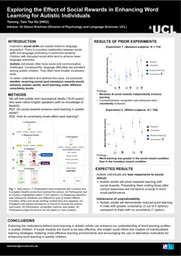
My research project examined whether social rewards (such as smiling faces and positive feedback) enhance word learning in autistic adults under varying levels of uncertainty, compared with monetary rewards. Using Swahili-English picture-word pairs, I designed the experimental task, engaged deeply with the literature on autism, social motivation, and intolerance of uncertainty, and analysed the implications of prior findings. Children’s ability to learn new words is essential for language development and academic success. Insights into the motivations of autistic adults can therefore inform more effective strategies for autistic children and help design learning environments better tailored to their needs.
Working with Dr Saloni Krishnan and her team at UCL profoundly shaped my perspective. Their sustained passion for children with special educational needs (SEN)—whose needs are frequently overlooked in mainstream schools—inspired me to place equity and inclusion at the centre of my thinking. The research process itself made clear how a one-size-fits-all approach in education often ignores motivational differences and heightened intolerance of uncertainty among autistic learners. Such approaches can inadvertently undermine the abilities of SEN children and label them as less capable, when the real issue frequently lies in mismatched systems rather than inherent deficits.
These experiences taught me to be a caring scholar who actively spots overlooked needs. I will remain curious about the differences between SEN and non-SEN learners, allowing that curiosity to drive future research that can reduce unnecessary suffering caused by rigid structures. Above all, I carry a responsibility to question inherited assumptions in psychology and education so that evidence can encourage more positive, inclusive change in the field.
This caring core—wanting to connect with and support people whose needs are routinely ignored by the mainstream community—became the bridge between my research and the Leadership-in-Action project. The analytical lens developed through studying motivational differences and systemic barriers in autistic learners extended naturally to psychiatric patients at the hospital, another group whose wellbeing and social participation are often sidelined. Curiosity about how best to help drove me to seek practical, evidence-informed ways of engaging them. I therefore chose to design and deliver art-based workshops, drawing on a growing body of evidence that art therapy and structured creative activities can reduce anxiety and depression, improve emotion regulation and self-expression, enhance social connectedness, and support recovery in people with mental health conditions. In this way, the research supplied both the evidence base and the analytical orientation that later informed—and was tested by—the applied work of creating more inclusive, supportive spaces through art workshops.
The Leadership-in-Action Project
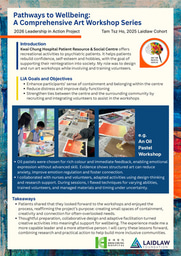
In the Leadership-in-Action component, I partnered with the Hong Kong Kwai Chung Hospital Patient Resource & Social Centre to design and deliver Pathways to Wellbeing, a series of art workshops aimed at enhancing participants’ sense of containment, reducing distress, improving daily functioning, and strengthening ties between the centre and the wider community through volunteer involvement.
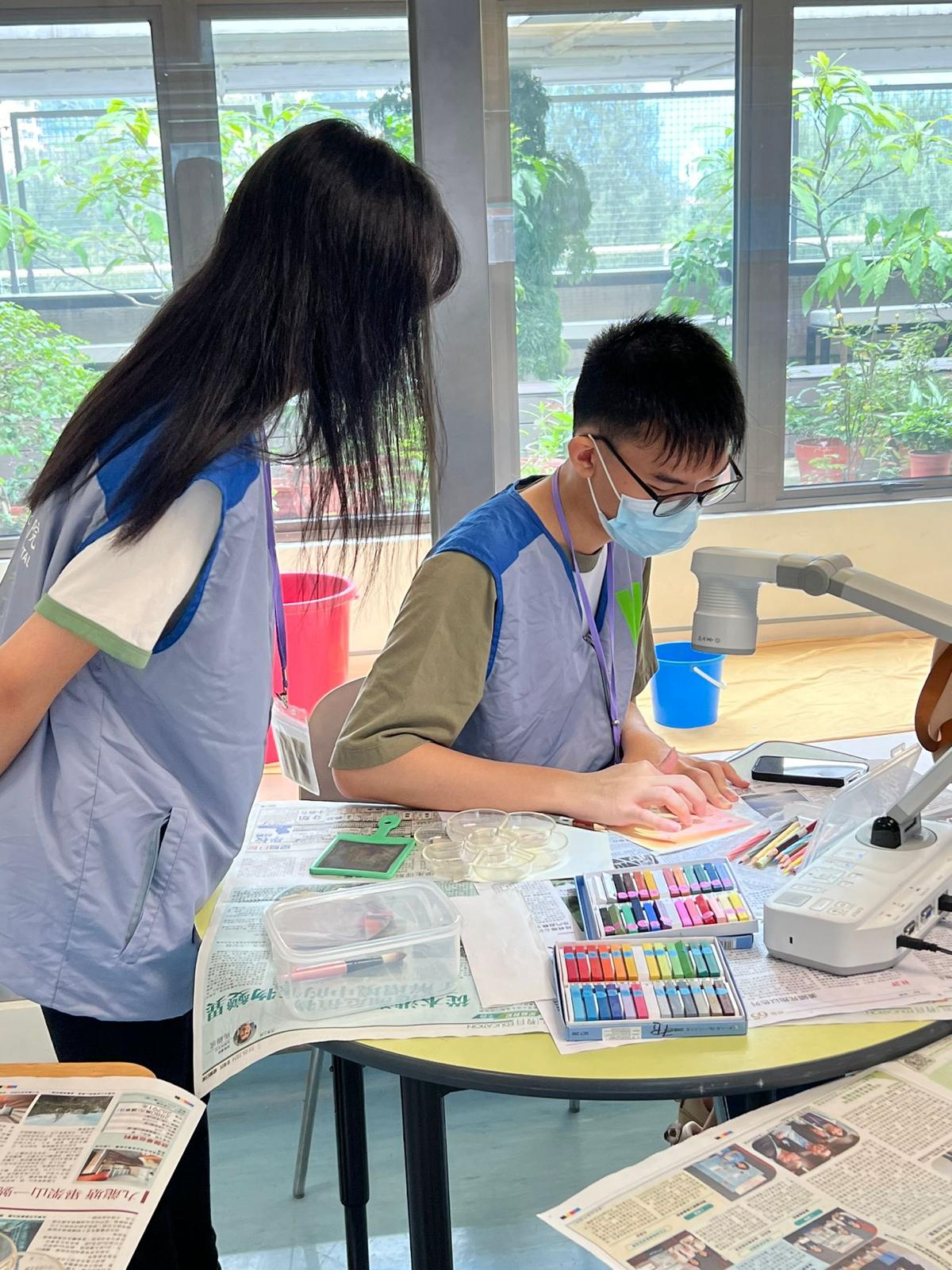
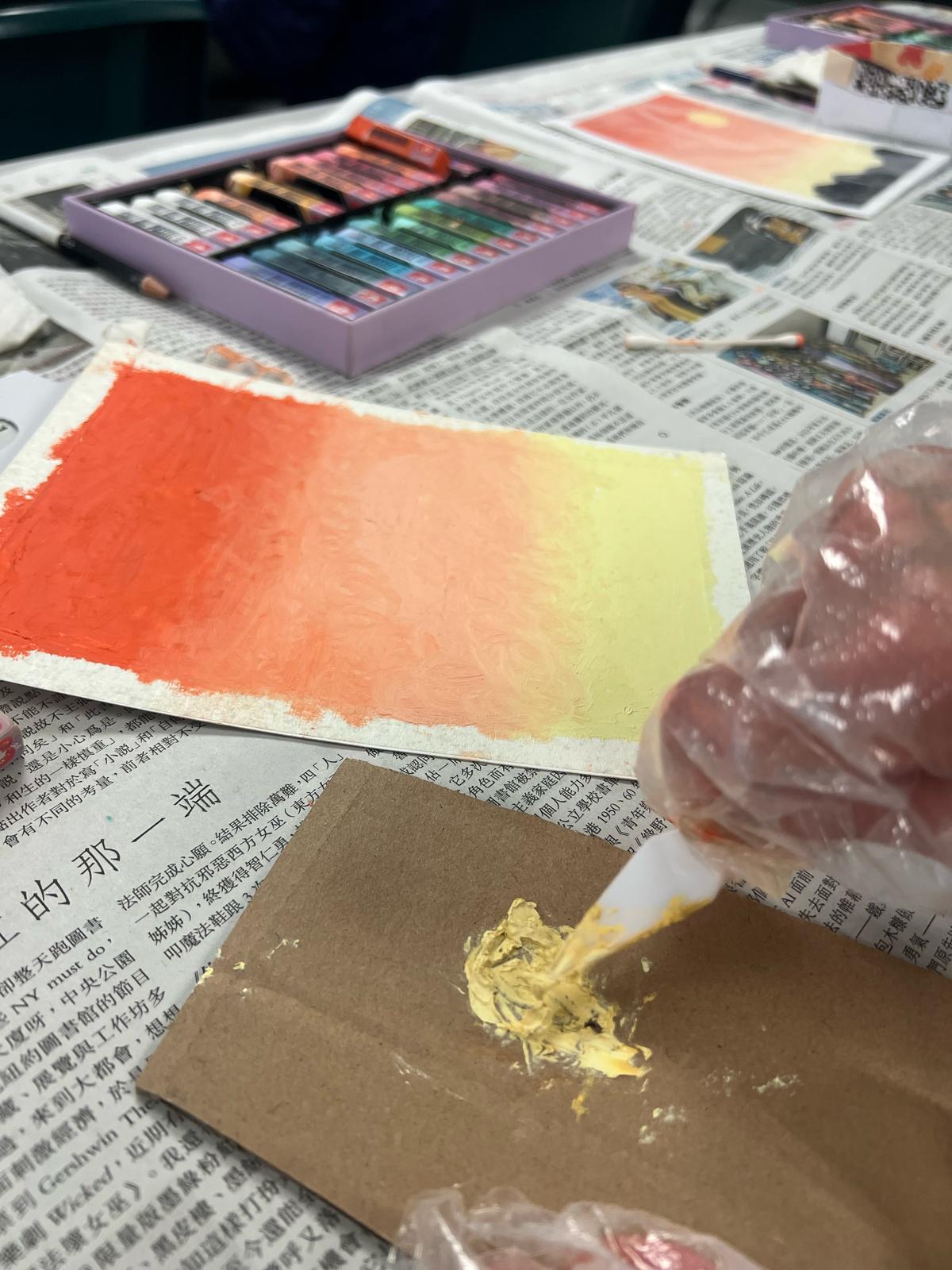
The first weeks were devoted to preparation. I researched art therapy approaches and drafted proposals for activities suited to participants who might have mental or physical disabilities. After careful consideration, I selected three media: Pastel Nagomi Art, paper clay, and oil pastels. Pastel Nagomi Art uses soft pastels blended with fingers or simple tools to create calm, flowing images; its low technical barrier and repetitive, meditative motions make it accessible for beginners and known for promoting relaxation. Paper clay offers a tactile, three-dimensional experience that supports fine-motor engagement and a tangible sense of accomplishment. Oil pastels provide rich colour and immediate visual feedback, encouraging emotional expression without requiring advanced skill. These choices were informed by evidence that structured creative activities can reduce anxiety and depression, improve emotion regulation and self-expression, and foster social connectedness among people with mental health conditions. Throughout this planning stage, I collaborated closely with nurses and fellow volunteers, practised design-thinking by continually adapting activities to anticipated abilities, and used prior research to build a clear rationale that helped secure support for the plan.
Once the workshops began, the realities of working with a new group demanded flexibility and steady project management. Many participants found certain techniques challenging because of their conditions, while others with prior art experience progressed far more quickly than expected. I responded by improvising additional decorative elements and simplified variations so that no one became bored or frustrated. These moments taught me to hold expectations lightly and to recognise how societal prejudices can subtly shape our assumptions about capability. Managing materials, timing, and individual support while remaining responsive required constant prioritisation and calm decision-making under uncertainty.
As the series continued, several patients who attended multiple sessions shared that they had begun looking forward to the next workshop and genuinely enjoyed the process. Their feedback was deeply encouraging. It reaffirmed the original purpose of the project: to create small, reliable spaces of containment, creativity, and connection for people whose needs are often overlooked. The experience confirmed that thoughtful preparation, collaborative design, adaptive facilitation, and a clear sense of purpose can turn creative activities into meaningful support for wellbeing.
Looking Ahead: Continuing as an Ethical Global Citizen
The research and Leadership-in-Action projects did not simply run in parallel; they interacted continuously and together reshaped me as a leader through Laidlaw’s 3Cs framework.
Change Maker Values became lived rather than abstract. The scholarship strengthened my determination to contribute beyond a single school or laboratory and to challenge wider societal prejudice and neglect of underprivileged groups. Research into motivational differences among autistic learners and the subsequent design of art workshops for psychiatric patients both expressed the same ambition: to create more inclusive spaces for people whose needs are routinely overlooked. I learned that being “Good” means actively caring, and that sustained determination—more pronounced now than before Laidlaw—is required if small, evidence-informed actions are to accumulate into meaningful societal change.
Character developed through the practical exercise of love, purpose, and growth. Looking carefully into the needs of SEN children through the literature and then meeting psychiatric patients face-to-face taught me to love the needy not as an abstract ideal but as a daily orientation. During the workshops, I practised this by adapting activities, listening, and remaining present. Across both projects, I clarified a lasting purpose: whatever path I take after graduation—research, NGO work, or schools—I will continue to notice those overlooked by mainstream systems and seek practical, research-supported ways to help them. The journey itself produced growth: greater humility when plans needed revision, and a clearer sense that ethical leadership begins with attentive care.
Capacities were forged in the movement between the two settings. In the People domain I learned to collaborate productively—with Dr Saloni Krishnan’s team, who corrected my statistical model and modelled rigorous yet generous mentorship, and with nurses and volunteers who guided me when I misjudged an activity. Communication proved essential in both contexts. In the Process domain I internalised the value of solid prior preparation: the literature review and proposal work that underpinned the research later supplied the conceptual and practical foundation for the workshops. In the Performance domain I practised creative adaptation—adjusting decorations, simplifying techniques, or inventing new elements when participants’ abilities diverged from expectations—while maintaining overall project direction.
Together, the experimental and applied experiences taught me that leadership is the integration of caring values, character formed through attentive practice, and capacities refined across research and real-world settings. The result is a more determined, purposeful, and adaptive orientation toward those whose needs remain invisible to the mainstream.
Looking back over these two years, I am deeply grateful to everyone who walked alongside me. I thank the UCL N-Code Lab team, especially Dr Saloni Krishnan and her colleagues, for their patience, intellectual generosity, and commitment to equity. I thank the nurses and volunteers at Kwai Chung Hospital Patient Resource & Social Centre, who welcomed me, corrected me when I needed it, and showed me what steady, practical care looks like. And I thank the Laidlaw Scholars who became friends along the way—their openness, challenges, and shared purpose made the journey richer and less solitary.
Through their help, I have not only become a more capable leader; I have become a better person—more attentive, more determined, and more willing to notice those whose needs are easily overlooked. The values and lessons of these two years are now embedded deeply. I will carry them forward as I continue to contribute to the communities around me, combining research and practical action so that more inclusive and caring spaces can take root. In that ongoing work, I hope to honour the people who shaped me and to help build a slightly better future.