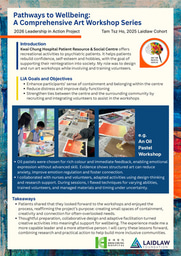
Project Title: Pathways to Wellbeing: A Comprehensive Workshop Series
In collaboration with the Kwai Chung Hospital Patient Resource & Social Centre in Hong Kong (primarily serving the Tsuen Wan District), I will develop and deliver a multi-modal workshop programme during the summer (May to August). The centre supports psychiatric patients by providing social, educational, recreational, and encouraging activities that help restore confidence, self-esteem, daily functioning, and social integration.
Overall Objective: To create a comprehensive, multi-modal workshop series that (a) enhances participants’ sense of containment and belonging within the centre, (b) reduces distress and improves daily functioning, and (c) strengthens ties between the centre and the surrounding community by actively recruiting and integrating volunteers to assist in the workshops.
Core Focus Areas (aligned with UN Sustainable Development Goals):
- SDG 3: Good Health and Well-being (primary)
- SDG 10: Reduced Inequalities (secondary)
SMART Goals:
- Creativity and Critical Thinking: Design diverse, engaging workshop content (e.g., art, storytelling, and mindfulness activities) tailored to the interests and capacities of psychiatric patients, informed by relevant literature on safe and effective wellbeing interventions such as art therapy.
- Collaboration and Leadership: Co-facilitate sessions alongside nurses and volunteers, while leading joint planning meetings to ensure smooth implementation and shared ownership.
- Social Awareness: Promote mental health awareness and reduce stigma by organising community talks and social media campaigns, while actively addressing the challenge of volunteer recruitment through partnerships with schools and NGOs to build a sustainable volunteer pool.
Expected Outcomes:
- Enhanced sense of containment and emotional safety for patients within the centre.
- Reduced distress levels and improved daily functioning among participants.
- Stronger community connections through successful volunteer recruitment, training, and integration, fostering greater civic awareness and social inclusion.
Evaluation and Impact Measurement: Outcomes will be assessed using self-reported mood and distress scales after each session, combined with volunteer debriefings and brief pre- and post-workshop surveys on stigma and mental health perceptions. Weekly progress meetings will further support accountability and allow real-time adjustments based on participant feedback.
This project builds on my prior volunteering experience with the centre and addresses two key challenges: difficulties in sustaining volunteer engagement and limited patient participation in existing activities. By placing myself at the centre of collaboration with nurses, clinicians, administrators, volunteers, and patients, the initiative will enable me to strengthen my communication, planning, and leadership skills while contributing to more inclusive and recovery-oriented support for psychiatric patients in Hong Kong.