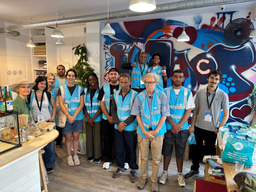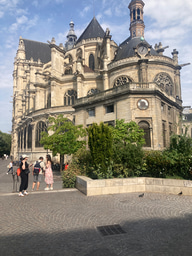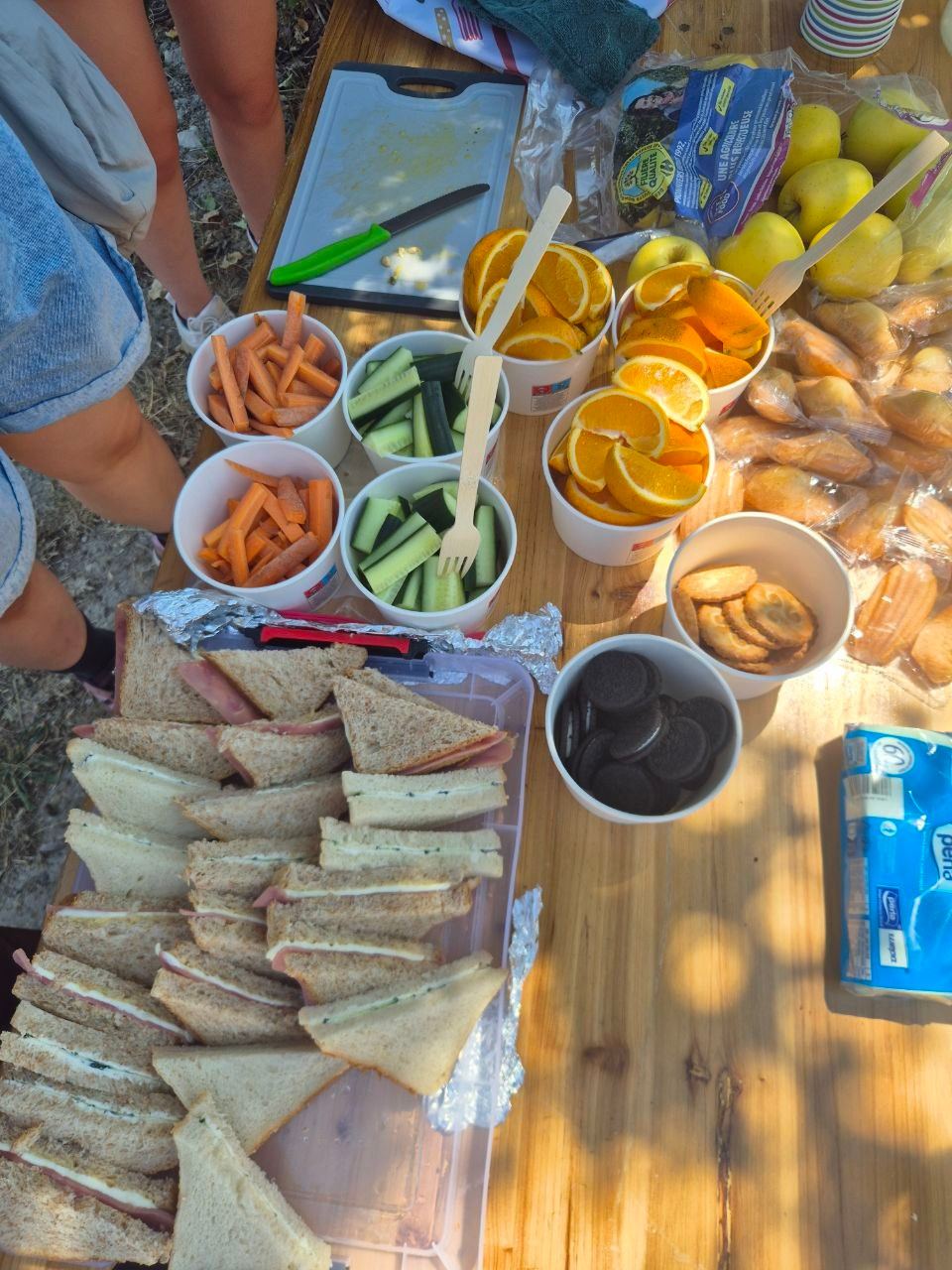
Serve the City Paris is a very community-facing organisation, and so I’ve found myself connecting with various members of the Paris community daily. That said, the conversations I’ve been having vary wildly: during one of the English language exchanges, I bonded with an Afghan woman over food; we had a picnic, where I met a man from the Ivory Coast and we argued about football in French; along a food distribution route, I met a Ukrainian refugee who was struggling to adjust, asking: Pourquoi moi? Pourquoi ma vie est comme ça?
As a volunteer, there are two questions we are not allowed to ask: How did you get to France? And: do you miss your family? It can be difficult to have conversations because I neither want to reduce someone to one part of their life, nor do I want to talk around it like it didn’t happen. Because of this, a lot of the conversations I have start from what the person wants to tell me; I tend to act as more of a listener. And it’s both fascinating and rewarding to let the other person lead the conversation, and only ask follow up questions. They simply want someone to listen.
My main concern coming into my LiA is how I would be received as an American. It’s one thing to critique and be aware of issues around the world and how the American government has contributed or been involved in them, and another thing to be interacting with people who have been on the other end of some of those choices, and, in a way, face to face with that. It has led to some very interesting conversations about American politics and others’ perceptions, with both STCP beneficiaries and volunteers. Some of them positive, others critical but insightful, and one that was incredibly offensive—but all learning experiences.
The cover photo this time is from the picnic/football event we hosted for our beneficiaries!

Hi! I’m Kamtoya Okeke (she/her). I’m a junior at Columbia University studying Cognitive Science, focusing on economics and human behavior.
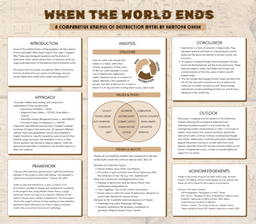
My research was focused on destruction myths, stories which depict the end of the world, and I explored how these myths reflect societal values and fears, as well as how they showcase the power of storytelling. I had the opportunity to publish my research poster, and have continued this research with external funding!
My LiA project was at Serve the City Paris, a nonprofit which supports refugees, asylum seekers, immigrants, and the unhoused in the city with food, language and culture exchanges, and more.
Feel free to reach out if you're interested in literature research and/or narrative forms, or just want to chat!