Leadership Development Essay
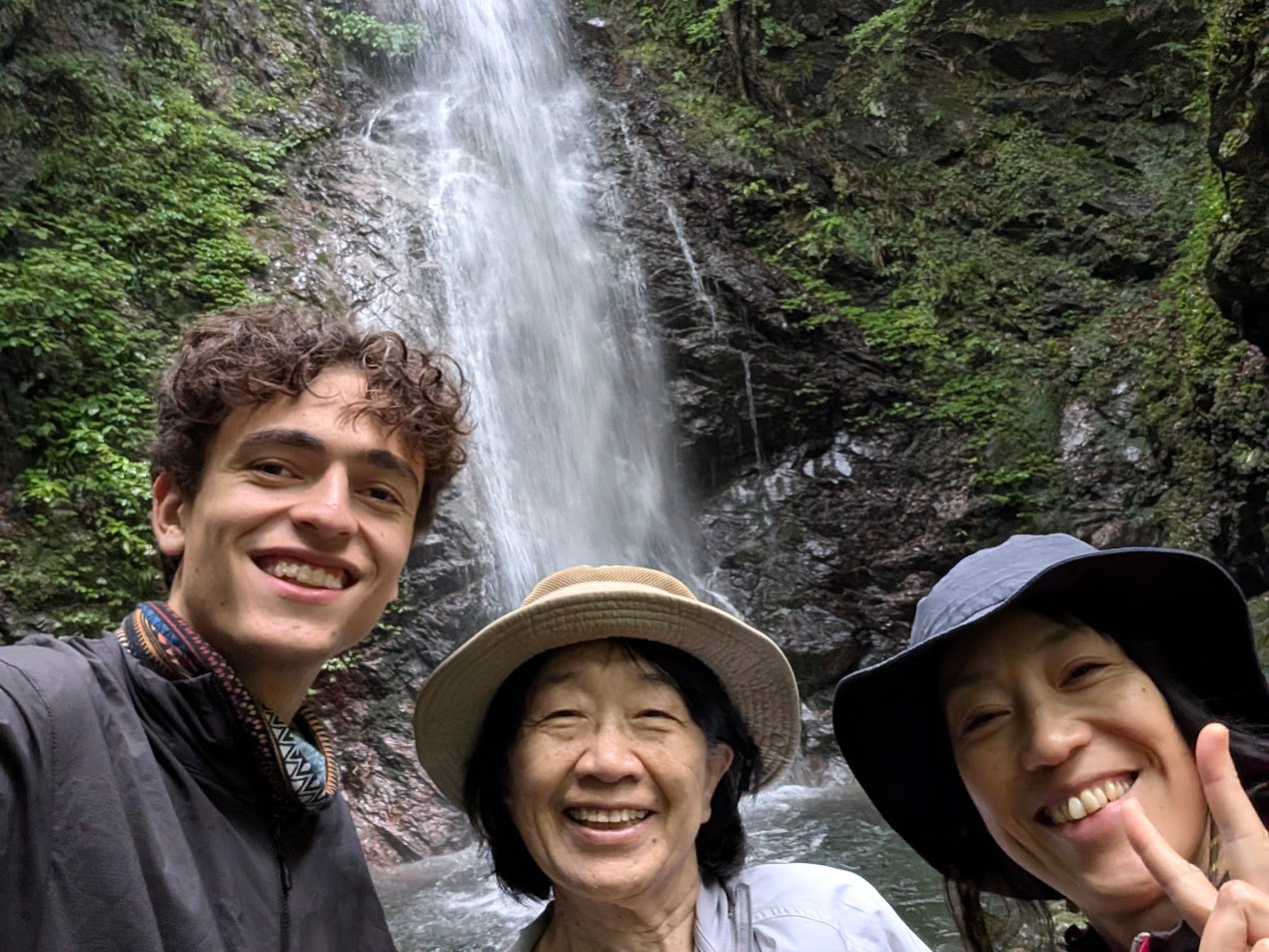
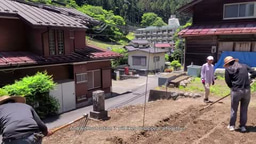
Two images remain in my mind from either end of my Laidlaw experience. In the first, I am in St Andrews, staring at my laptop screen for hours, trying to work out whether the results I have mean anything at all. In the second, I am on a sloped hillside in Hinohara, wearing jikatabi and harvesting wheat, listening to birdsong in the afternoon sun, sweat running down my face after hours of hard work.
While these experiences may at first seem worlds apart, they are more similar than they appear. In both, I found myself at the mercy of something beyond my control: noisy data and the natural world. Neither could be hurried or persuaded. What I could control was my response: whether I was patient enough to keep going and honest enough to admit when something was not working and ask for help. Much of what Laidlaw has taught me over the past two years can be summarised by this.
Character
My first summer of research focused on applying Bayesian networks to electroencephalography (EEG) data. I used these networks to analyse patterns in neural activity and determine whether any meaningful relationships emerged. Going into the project, I assumed the greatest challenge would be technical, something I felt well prepared for as a mathematics and computer science student. I was wrong.
I quickly discovered that real-world data is messy in ways that coursework never prepares you for. Countless hours over the summer were spent pursuing fruitless ideas, trying to determine whether what I was seeing represented meaningful patterns or simply random noise. I realised that research was less a test of my technical ability than of my temperament: the willingness to be wrong repeatedly, to acknowledge that openly in meetings with my supervisor, and to return with another idea the following week. Unlike coursework, where mistakes simply cost marks, being wrong in research cost time, requiring patience and resilience.
One habit, in particular, helped carry me through. I kept a written log of everything I did each day, including every approach, whether successful or, more often, unsuccessful. This was invaluable for reproducibility, but it also transformed my mindset. Rather than viewing failed approaches as wasted effort, I came to see them as documented steps that informed the next direction to explore.
Between the two summers, the Oxford Character Project gave me a language for understanding this development. What struck me most was its emphasis that character is not fixed, but formed through repeated practice and small daily choices. The monthly workshops encouraged me to reflect on the habits that shape who I become, reinforcing lessons I had already begun to learn through research.
Capacities
Finding a Leadership in Action project proved to be one of the most challenging parts of the entire programme. I knew I wanted to complete it in Japan, so I contacted every relevant non-profit organisation I could find, eventually sending emails to more than fifty organisations. Fewer than ten replied, and most of those responses were rejections. After months of searching, and only days before the deadline, I finally connected with Satoyama School Tokyo.
My Leadership in Action project was based in Hinohara, a rural mountain village in the western part of Tokyo Prefecture. Satoyama School Tokyo is a non-profit organisation dedicated to preserving the sustainable practices of traditional mountain village life while helping to revitalise the local community. Alongside taking part in farming and traditional building projects, I produced promotional videos for their social media and led oral history interviews with local residents.
As a mathematics and computer science student, the interviews were entirely outside my comfort zone. I knew I needed to prepare thoroughly if they were to be valuable, so I spent months researching oral history methodology and ethical interviewing practices. That preparation proved invaluable. Navigating the language barrier also presented significant challenges. Although I received tremendous support from translators at the University of Tokyo, there were many occasions when English simply was not an option. Having spent six months learning Japanese beforehand, combined with expressive body language and patience, I found ways to communicate effectively.
Perhaps the greatest lesson was that communication extends far beyond language. An afternoon spent at a local after-school club, where conversation was limited to gestures and a handful of Japanese phrases, ended with children hanging off my legs, trying to persuade me to stay. Some things transcend language.
The project also taught me to hold plans lightly. A wheat-milling workshop that I had helped organise was cancelled the night before because of a double typhoon warning. Rather than becoming frustrated, I learned to adapt and focus on what could still be achieved.
The most valuable capacity I developed, however, was designing for continuation. Although my project had measurable goals, my personal aim was to ensure that Satoyama School could continue expanding its archive of interviews and videos long after I had returned home. Building something sustainable became just as important as completing the project itself.
Global Mindset
Before Laidlaw, I would have described global citizenship in fairly superficial terms: travel, exposure, and an interest in other cultures. My Leadership in Action project made it something far more concrete and considerably more demanding.
The sharpest moments came during the oral history interviews. One interview took place in the home of Saka-san, an Edo-period house reached by a private monorail before a walk through dense woodland. He welcomed us with a homemade bamboo firework contraption before sharing memories of a lifetime spent in Hinohara. Another interviewee, the oldest participant, became visibly emotional as he recalled watching his father leave for the Second World War and described his return as the happiest moment of his life. Eighty years later, those memories remained vividly alive.
In those moments, I realised I was being entrusted with stories that were not mine to own. As a foreigner, I also recognised that I could never assume complete understanding. A global mindset begins with that humility: recognising that different histories, values, and ways of life deserve genuine curiosity in place of assumption. Speaking directly with local people taught me far more than I could ever have learned through books or documentaries.
At my farewell gathering, we cooked okonomiyaki together before I introduced everyone to ceilidh dancing. Three dances in, they were exhausted. It was a small moment, but it perfectly captured the mutual exchange that had defined my time in Hinohara.
What I Carry Forward
I leave the Laidlaw Scholarship with three commitments that will shape how I continue to lead ethically and act as a global citizen.
First, I will maintain integrity in my work. My future career will likely be in machine learning and data analysis, where results can be highly persuasive despite being difficult to interpret, and where the pressure to present a clean narrative can be significant. The habits of documenting failures, reporting results honestly, whether positive or negative, and treating data ethically are among the most valuable lessons Laidlaw has given me. They are habits I intend to carry into publication of my Laidlaw research and beyond.
Second, I will continue striving for sustained impact. I hope to remain involved with Satoyama School Tokyo wherever possible as the organisation continues to grow. More broadly, I want to approach future projects with the same mindset: creating work that continues to benefit others long after my direct involvement has ended.
Finally, I want to contribute to the Laidlaw community itself. I hope to support future scholars, whether from St Andrews or elsewhere, by sharing my experiences and offering advice wherever I can. In particular, I would be delighted to help another scholar pursue a Leadership in Action project with Satoyama School Tokyo.
The Laidlaw Scholarship has been one of the defining experiences of my time at university. It has shaped not only how I approach research and leadership, but also how I hope to contribute to the communities I become part of throughout my career. I will always be grateful to Lord Laidlaw and the entire Laidlaw team for making this experience possible.
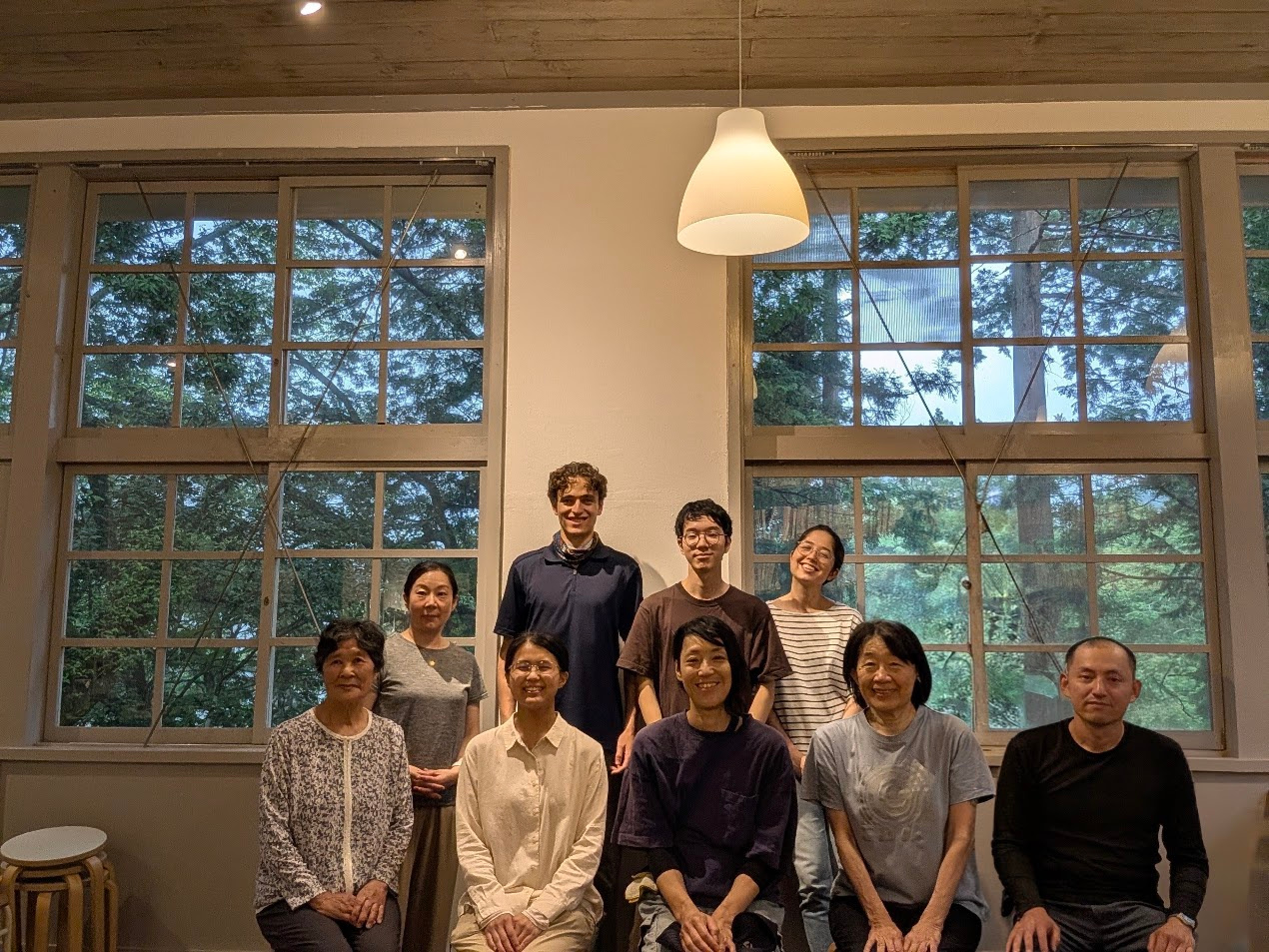
Tokyo staff and volunteers.

Hello! I am an incoming third year at the University of St Andrews, studying Mathematics.
My summer 1 research focus was on applying Bayesian networks to electroencephalography (EEG) data. My research poster was presented at the 2025 Global Laidlaw Scholars Conference in Durham, where it was selected by Taylor & Francis to be published.
My summer 2 Leadership in Action project is based in Hinohara village, Japan. I am partnering with Satoyama School Tokyo to support their ongoing efforts in learning, preserving, and sharing the traditions of a "satoyama" lifestyle: an old, nature-focused way of living in mountain villages.