I am extremely grateful to have been a part of the Laidlaw Scholars Leadership & Research Programme. Over two summers, I have been able to work with non-profit foundations, aiding the extremely vulnerable and working on climate preservation.
Overview of work completed during the Scholarship
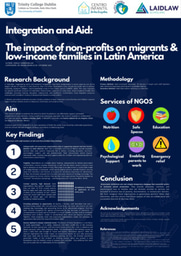
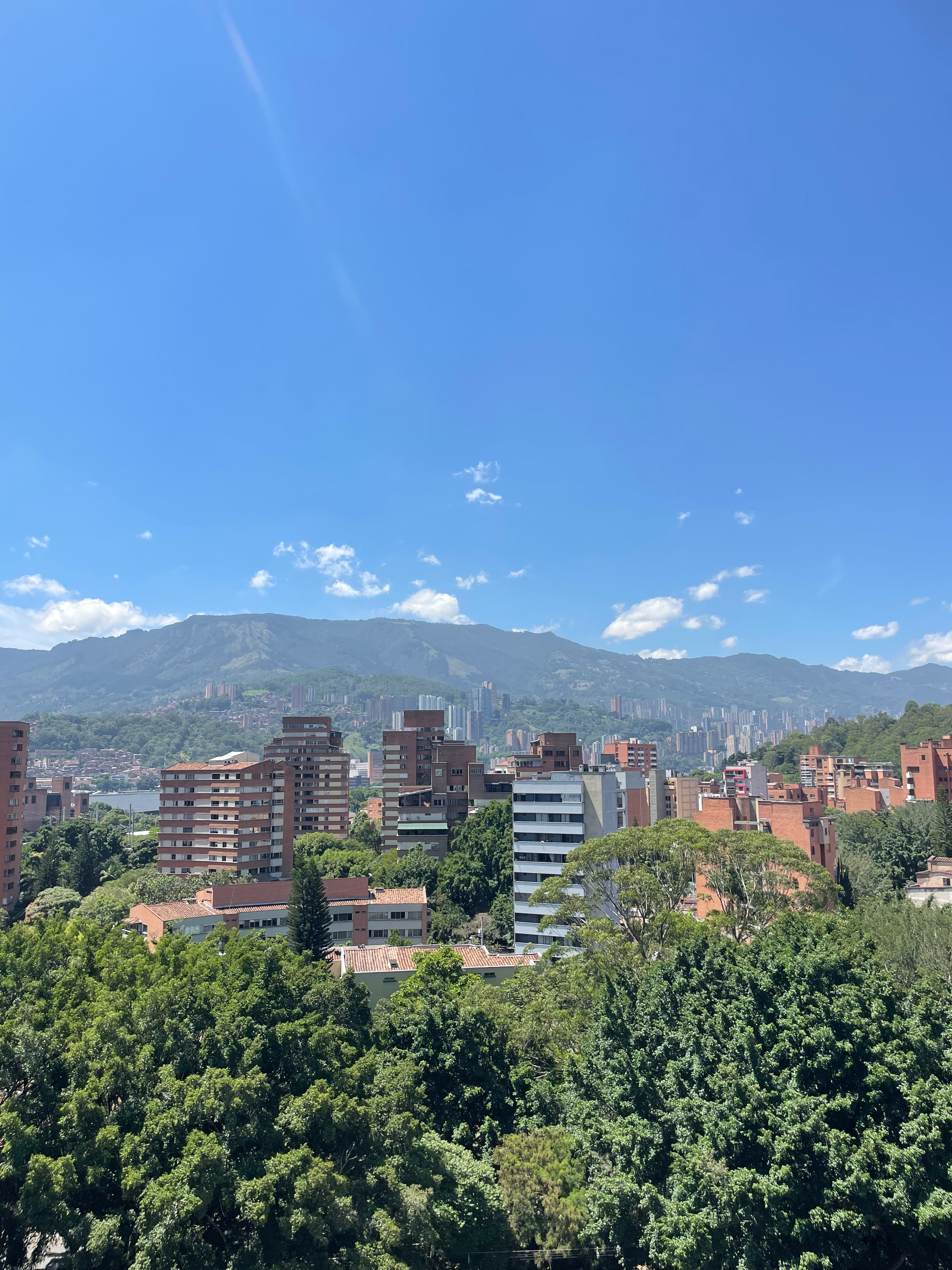
My first summer, the research portion of the scholarship, was spent working with localized organizations in Colombia (Medellin) and Mexico (San Miguel de Los Angeles). I had my first experience of conducting qualitative research at an undergraduate level, an experience which I value greatly. I had dual supervisors from the French and Hispanic studies departments, Dr Rachel Hoare and Dr Catherine Leen, to whom I am extremely grateful for their support and benefitted immensely from their expertise. This has given me the perfect experience to conduct further research in the future, including for my dissertation this year and for beyond my undergraduate degree. Through conducting interviews with staff members at these foundations, and volunteering myself within the foundation, I was able to determine just how essential these foundations were to local vulnerable populations and recognise how these foundations organise donations and general processes. I backed up this research with further readings from critical material and similar studies, which helped me to conclude that these organisations act as crucial government partners, rather than substitutes for government aid.
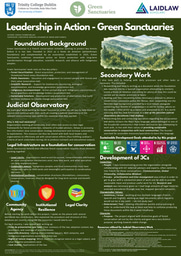
For my Leadership-in-action project, my second summer was spent working for a worldwide climate conservation organisation based in Paris, principally focused on their Judicial Observatory of climate conservation law, a tool which will latterly be used by other organisations, investors, local vulnerable communities and other interested entities as crucial information to help carry out conservation efforts and work towards viable change. I also carried out many other helpful tasks into their daily activities both concerning law and local language acquisition.
Development of the 3Cs
Capacities
During the summers, I was communicating across organizations speaking in formerly Spanish and latterly French, thus exemplifying qualities of communication, global citizenship and collaborative mindset. In terms of project management, both projects spanned over a strict six-week period and were personally set up by me with the organisations, thus developing my ability for project management and strategic planning to bring your vision to life. Finally, it is worth stressing that research and analysis were crucial to the work I carried out during both summers.
Changemaker Values
Principally, values pertaining to ethical and sustainable change were central to both summers of my programme, as previously mentioned, and it is this value that was part of what drew me to Laidlaw. During both summers, I worked in non-profit organisations, as this is a large part of my passion outside of Laidlaw– I believe ethical solutions to large-scale problems are critical to our future.
My projects spanned over different countries and involved environments in which I was not speaking my primary language, thus displaying bravery. Curiosity was distilled into my research project and LIA. Particularly, this value was critical for my research project, where the interviews necessitated a distinct curiosity as I investigated the functioning of these foundations, alongside the lives and experiences of the vulnerable families involved. Similarly, curiosity was necessary to read up and analyse secondary sources critically against my findings.
During my LIA, I had to be both determined and fast, rapidly intaking information, translating and processing quickly to understand the task at hand and help me to produce documents as part of the Judicial Observatory within the six-week time frame. Moreover, I showed ambition working and researching legal documents and processing case precedents, despite never having studied law.
Character
Alongside these summer programs, I also took part in the Oxford Character Project. I found that the manner that the programme framed character as a root system for capacities and changemaker values was seminal. For example, when I had to decide to prioritise privacy and empathy over curiosity, given that I was conducting interviews involving material about vulnerable parties, as I remember there were occasions where I had to redirect interviews from divulging personal material. Furthermore, the session on the Virtues and Vices Index led me to understand the importance of balance. Especially when I started, I had to balance my feelings of hesitance on the Courage Index during my LIA, when I felt out of depth with the legal workload, ultimately deciding to refer back to my supervisor, in order to understand parts of the workload with which I was struggling.
On the other hand, I recognise that at times I have tipped towards an excess vice, especially during my second summer. Sometimes, I found myself being overaccommodating and agreeing to take on too many tasks at once, which, while I did manage, could cause burnout in the future.
Global Mindset
Across the program, I took a global approach to both of my projects, working across different nationalities, identities and communities, both in localized spaces (my first summer) and across larger regions of aid (my second summer). Moreover, even when working at a local level, the research conducted can still carry global weight, in a similar manner to how I read and utilised secondary material to support my research paper. Similarly, even local support matters – this was a critical conclusion to my research project. If everyone who wanted to make a local change stopped their activity, the global effect would be disastrous. Small actions matter, no matter how small.
Conclusion
Going forward, I hope to carry the lessons that Laidlaw has taught me closely into my future studies and professional life. I am enormously grateful to those who made this scholarship and journey possible: To the Laidlaw Foundation, to my research and LIA supervisors, to the organisations I worked with for having invited me in, to the employability Laidlaw team at Trinity College, to my peers who were alongside me, whom I got to know so well during LEAD days and cohort trips.

I'm a Joint Honours French and Spanish student at Trinity College Dublin. My Laidlaw research has focused on immigration and the role of non-profits in supporting migrants and low-income families across Latin America, drawing on fieldwork in Medellín. For my Leadership in Action placement, I worked with Green Sanctuaries, a Paris-based environmental NGO, conducting legal and policy research on community-led conservation across France, Spain, Peru, and Ecuador. I'm interested in the intersection of law, language, and social/environmental justice.