International Blog 2025: AI Policy Research in Belgium, France, and the UK
Overview
This summer, I had the incredible opportunity to join a team of Duke University Laidlaw Scholars researching AI-generated music and Spotify’s platform accountability. Our project, "The Canary in the Coal Mine: Spotify, Generative AI, and the Future of Cultural Labor," explored how streaming platforms like Spotify are becoming testing grounds for questions of fairness, consent, and compensation around AI-generated creative works. Our research took us across Europe to Brussels, Paris, London, and Oxford, culminating in a research presentation at Oxford University's Rothermere American Institute (RAI). I learned and grew so much in the span of six weeks, and am immensely grateful for this transformative experience.
Belgium
Our first stop was Brussels, Belgium! We stayed in a municipality of Brussels known as Etterbeek on a delightful street bustling with restaurants, cafés, thrift stores, and pharmacies. Just a block away was the iconic Triumphal Arch park, where we spent many hours enjoying the beautiful architecture and lawns filled with picnickers.
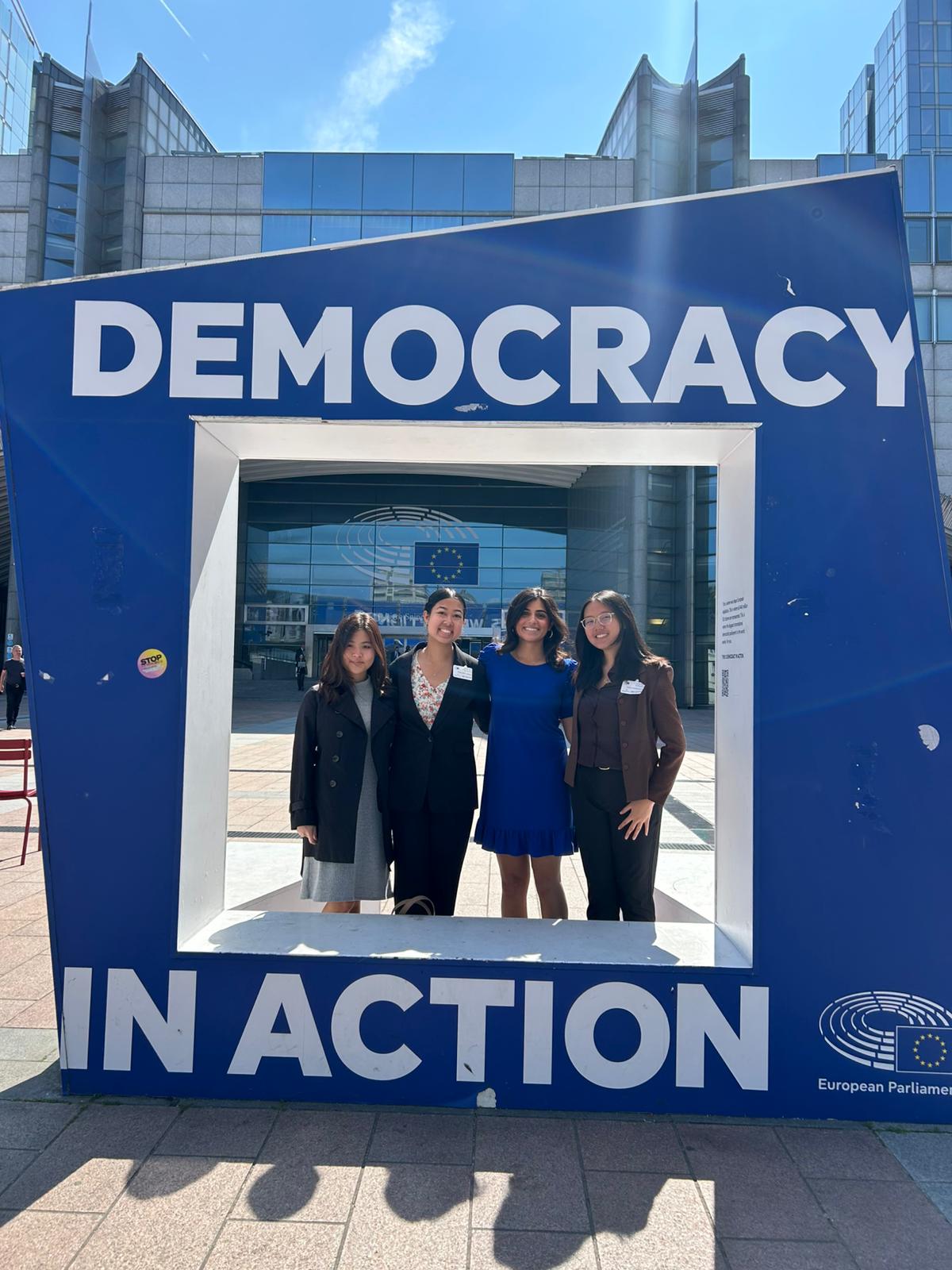
While in Belgium, we delved into the history of the European Union and the governance functions of the European Council and Parliament. We visited the Parliamentarium to learn about the history of the European Parliament, the U.S. Patent & Trademark Office (USPTO) Mission to the EU, and traced key dates in Europe’s foundations at the Museum of European History. We also met with inspiring people who played key roles in EU tech policy, including representatives from Twilio, the Directorate-General of Trade (DG TRADE), the European Data Protection Supervisor (EDPS), and a key architect of the EU AI Act.
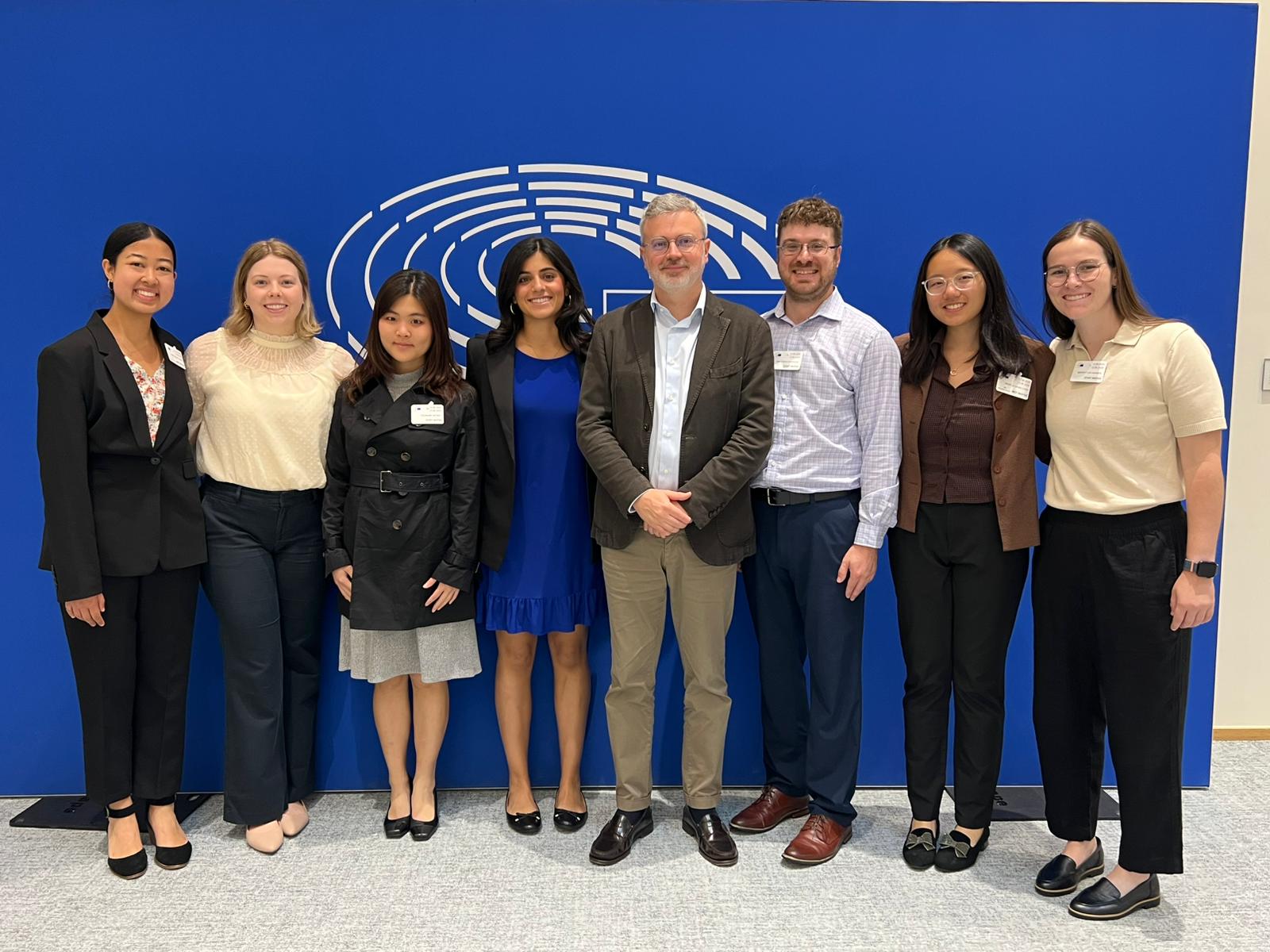
Tour of the EU Parliament, kindly led by a committee staff member
One highlight was a day at NATO headquarters, where we learned from Chief Information Officer Manfred Bordeaux-Dehmer about NATO’s work in cybersecurity and emerging technologies. We also visited the headquarters of Universal Music Group (UMG)—the recording label that signs Taylor Swift!—and had dinner with UMG Brussels executives, who described the role of AI in their music creation process. At Digital Europe, a trade association representing digital industries, we learned about challenges facing the sector.
We wrapped up our time in Brussels with a chocolate tour of the city, where our mentor Professor Hoffman took us to beloved chocolatiers. Each day after our meetings, we worked on our research paper, sifting through countless news articles, law reviews, and journals to learn about Spotify’s accountability mechanisms and the development of AI-generated music, as well as the legal rights musicians have to seek recourse.
We also fit in side adventures: we traveled to Antwerp by accident, while trying to get to Bruges, and enjoyed a delicious day of food, wandering, and thrifting. We additionally visited the headquarters of the International Federation of the Phonographic Industry (IFPI), heard from an expert from an automobile company on self-driving cars and data privacy, and met with lawyers at McDermott Will & Emery who specialize in cybersecurity and privacy.
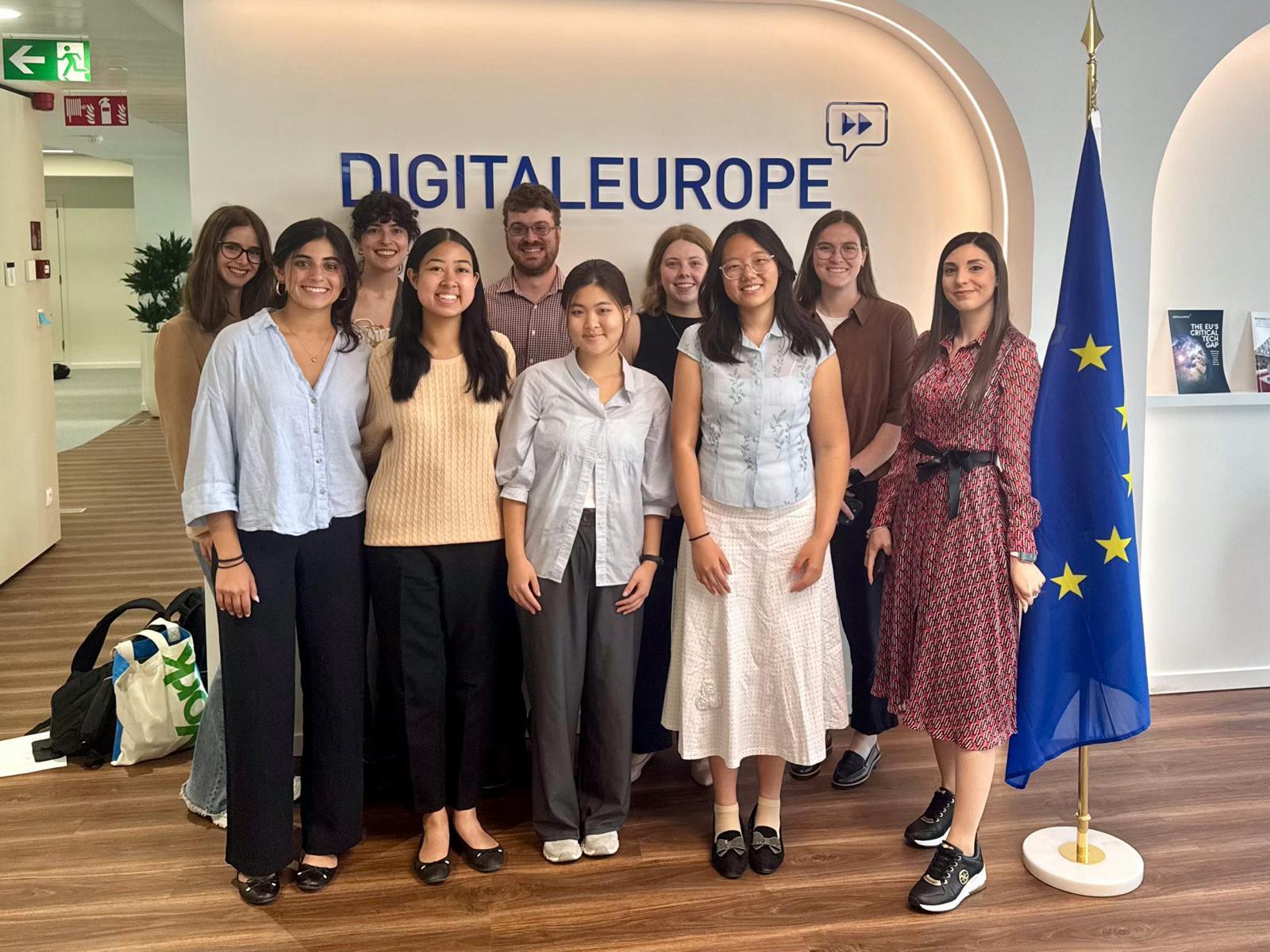
Visit to Digital Europe
France
After Brussels, we traveled by train to Paris, France. While in Paris, we had breakfast with the head of Packet Clearing House, an intergovernmental treaty organization responsible for maintaining Internet Exchange Points (IXPs), and also met a researcher on algorithmic bias. We had the incredible opportunity to visit the OECD headquarters, where staff members spoke about topics ranging from the OECD AI principles to tech-facilitated gender-based violence (TFGBV) to children’s online safety.
We also attended a concert by Grammy-nominated artist Tift Merritt, who traveled with our group and advised our research. We especially loved her song "Act As If," which captured the futility of trying to get an AI model to replicate human emotions—it simply cannot compare to authentic human creativity.
Our time in Paris coincided with Fête de la Musique, the celebration of the summer solstice, when millions of people across France take to the streets to play music and dance. It was magical to wander from evening into late night, listening to performances of everything from "Tainted Love" to ABBA’s "Dancing Queen." We also explored museums and churches, and tried delicious foods like umami beef carpaccio, crème brûlée, and flaky strawberry croissants.
United Kingdom
After our time in Paris, we took a train under the English Channel into London and then on to Oxford. We stayed in a cozy Airbnb on the outskirts of the city and began an intense stretch of work finalizing our research paper and preparing for our presentation at Oxford University.
At the Rothermere American Institute, we delivered our presentation in a roundtable format, inviting feedback from experts whose experience spanned the music industry, startups, and semiconductor companies. Their comments pushed us to refine our proposals. Immediately afterward, I moved into the New College dorms for Duke’s Oxford study abroad program, which I was also participating in, and continued my Laidlaw work from New College.
We continued revising the paper into its sixth and final iteration: a 40-page report tracing Spotify’s accountability structures, EU collective bargaining laws, and the rise of AI-generated music. We also began drafting op-eds to translate our findings into public conversation. We additionally traveled to London to watch London Pride and documented how music was used during the celebrations.
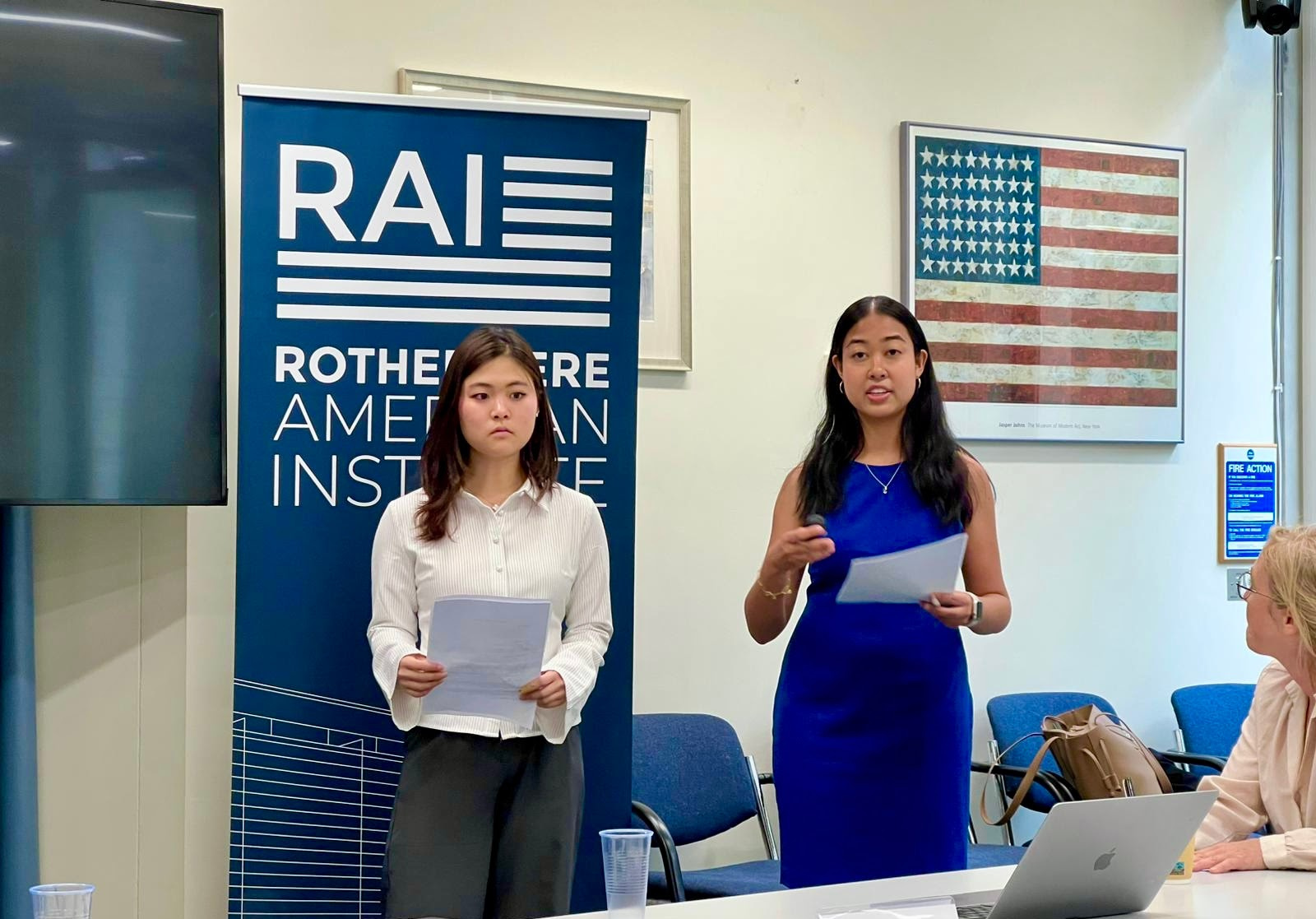
Research presentation at Oxford University's Rothermere Institute
Learning and Growth
This summer was tremendously influential for my learning and growth. My biggest takeaway was a sense of autonomy and freedom of movement. Growing up in a suburban town on a highway, I couldn’t go anywhere without a car. I still don't have a driver’s license—to my parents’ and friends’ chagrin—so I often felt stuck.
Living in highly walkable European cities changed that. Suddenly, I could step out the door and walk to stores, take the metro, or hop on a bus or train to anywhere in Belgium. At first, I was nervous to venture out alone—especially in Brussels, where the French language barrier made me hesitant to ask for help—but I quickly grew more confident. By the end of the trip, I was comfortable navigating metros, exploring new neighborhoods, and traveling independently. That sense of autonomy has stayed with me: I now feel ready to go anywhere in the world and find my way.
I grew tremendously as a researcher, gaining invaluable policy research skills from the act of steadily researching and revising components of our paper. I also delighted in the small, everyday moments with people across the countries we went to--from cheery interactions with our neighbors in Brussels to a lovely conversation with the elderly owner of a mom-and-pop shop as he cooked my order of chicken shwarma. I am deeply grateful for the opportunities to gain in-depth knowledge of a field that enthralls me, AI policy, both through academic research and idea-sparking conversations with leading experts. I am also grateful for the opportunity to have travelled so extensively--I have gained a profound sense of confidence in my freedom to traverse the world and ability to contribute to positive change in communities near and far.
Conclusion
My Laidlaw summer abroad gave me far more than a research project. It gave me a sense of autonomy, cultural insight, and lessons in leadership that shaped how I approach both policy and people. Most of all, it showed me that technology and culture are not separate but intertwined—and that how we govern one will inevitably shape the future of the other.

Hi, I'm Anika! I’m a sophomore at Duke University pursuing a double major in Computer Science and Public Policy. I’m passionate about exploring how emergent technology can be governed, developed, and deployed in a responsible and equitable manner. My Laidlaw Scholars research focused on European platform accountability, where I studied how AI-generated music affects creative democracy, labor rights, and data privacy in the EU and UK. This past summer, I co-authored a white paper titled "The Canary in the Coal Mine: Spotify, Generative AI, and the Future of Cultural Labor," which I presented at Oxford’s Rothermere American Institute alongside my team, while also engaging policymakers from NATO and the OECD throughout the paper-writing process.
Beyond research, I lead Girls for Algorithmic Justice, a nonprofit I founded to address gender equity issues in AI, including explicit deepfakes and algorithmic bias. Through our #StopExplicitDeepfakes campaign, I’ve been involved in advancing policy conversations at the U.S. federal level to expand protections for victims of digital harms. At Duke, I direct Duke Tech for Change, a student organization dedicated to responsible technology, and serve as an officer for Duke Cyber, where I help organize cyber policy opportunities and events. I also serve as a student advisor to the John Hope Franklin Human Rights Center and the Duke Office of University Scholars & Fellows. I'm deeply committed to linking technology with democracy and human rights.
Check out my LinkedIn for a more comprehensive overview of what I do! Please feel free to reach out any time at anika.dugal@duke.edu.



Please sign in
If you are a registered user on Laidlaw Scholars Network, please sign in