Inequaity in Ambition: Exploring Different Perspectives of Ambition at the Laidlaw Scholars Conference 2026
What Does Ambition Mean to Me?
The theme of this year’s Laidlaw Scholars Conference at Imperial College London was Ambition: Passion, Progress, and Possibility in a Changing World. Over three days, scholars from universities around the world came together to discuss leadership, research and creating meaningful change.
As I sit in the airport waiting for my flight back to Dublin, I’ve found myself reflecting on what ambition actually means to me. Six years ago, my ambition was to have a safe home for myself and my son. I wasn’t thinking about academic research, international conferences or leadership programmes. I was thinking about survival, stability and building a life where we could feel safe. Now, six years later, I’m a mature student at Trinity College Dublin, a Laidlaw Scholar, and have just attended a conference alongside students from some of the world’s leading universities.
Everyone here has arrived at the same place, but we all started from different positions.
Finding My Place at the Conference
Our first evening began with a buffet dinner and networking over wine, and I found myself meeting scholars from countries and universities I knew very little about. I really enjoyed meeting students from EPFL in Switzerland, as I’d never met anyone from there before!
But throughout the weekend, I had a reoccurring feeling that I was somewhere that hadn’t necessarily been built with people like me in mind.
I’m a single parent and someone who has experienced homelessness after domestic abuse. I’m also one of very few mature students in a room full of young people attending some of the most prestigious universities in the world. I met students who had attended private schools and international schools, people who think its the norm to know how to ski! Our experiences of childhood, education and opportunity were often worlds apart, and I often felt that I wouldn’t be able to catch up to the head start that they had been given in life.
When I spoke openly about my background, I sometimes felt people were unsure how to respond. Occasionally there was a sense of tiptoeing around the subject, which could have been because it was their first opportunity to have a conversation about homelessness with someone who experienced it firsthand. But I was more than happy to have these conversations!
Homelessness, domestic abuse and poverty shouldn’t be taboo subjects, and people who have experienced them belong in academic or professional spaces as much as someone who’s had a more comfortable start to their journey. If sharing my experiences helped make even one person more comfortable having those conversations, then that was worthwhile.
I felt strange this weekend. I wouldn’t necessarily describe the feeling as imposter syndrome. It’s hard for me to find the words to describe how I’ve felt this weekend, it might be adjacent to imposter syndrome? I knew I had earned my place at the conference. It was more an awareness that we had very different starting lines, and that ambition can mean very different things depending on the opportunities and challenges life has given us.
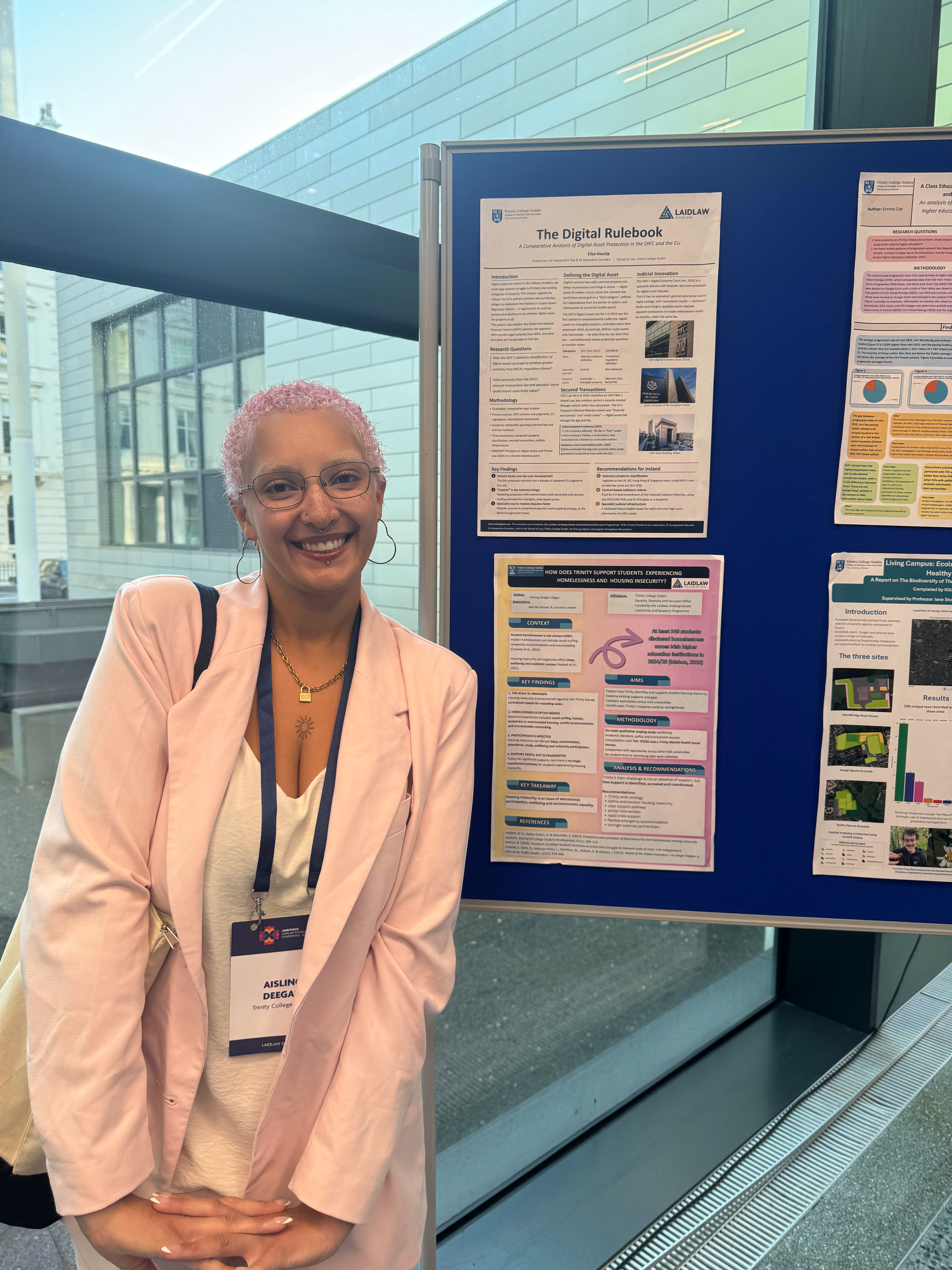
Standing beside my poster, How Does Trinity Support Students Experiencing Homelessness and Housing Insecurity?, was an extremely proud moment!
I didn’t receive a poster commendation, and I didn’t put myself forward to present my research on stage. At first I thought “Well that’s not very ambitious of me”, but on reflection I realise that its okay. My ambition has already taken me from living in a women’s refuge to being in a position to research how my university supports students experiencing homelessness and planning a LiA project where I can give back to the services who have supported me so much. That is just as good as a poster commendation for me!
The First Question of the Conference
After our reception, we gathered in LT200 for the opening introductions and a Q&A with the Scholars Advisory Board.
One scholar who particularly stood out to me was Ashley Gutierrez-Torres from Duke University, who had completed her Leadership in Action project with the International Rescue Committee, supporting unaccompanied immigrant young people in New York City. Ashley explained that the work was particularly close to home because her parents are immigrants.
As someone hoping to complete my own LiA working with homelessness charities, this really resonated with me. I have wondered whether working so closely with something I’ve personally experienced might be emotionally difficult. So, despite being nervous, I stood up and asked the very first question of the conference. I asked Ashley how she managed working on something so personal, explaining my own concerns about approaching homelessness through my LiA.
She gave an amazing response that has stayed with me. She explained that her experiences and family background had given her strength and that being able to give back to communities facing similar challenges was something positive. It was reassuring to hear that a personal connection to an issue doesn’t necessarily have to be a barrier to working in that area. It can also be a source of understanding, motivation and strength. That conversation was one of the first moments I began thinking differently about what I could bring to my own Leadership in Action project.
Research That Made Me Think Differently
One of my favourite parts of the weekend was discovering the incredibly varied research being undertaken by other scholars. I was particularly drawn to projects that explored inequality, accessibility and how institutions can better support the people who use their services.
Charlie Lawton from the University of Leeds presented research titled Building Employability for Gen Z: Navigating the Challenging Labour Market Road. His work explored how access to employment opportunities is influenced by socioeconomic background, particularly through unpaid internships, family connections and professional networks. His poster compared two students: Student A, who had financial support and family connections, and Student B, who lacked those advantages and had to balance education with paid employment. I immediately recognised myself as Student B. It reminded me that qualifications alone aren’t always enough to provide equal opportunities, particularly when some people have access to networks and experiences that others simply cannot afford. I also found myself thinking about how we define success in Ireland, where our Minister for Finance, Simon Harris, reached one of the country’s most senior political positions without completing his university degree. It made me reflect on the relationship between qualifications, opportunity, experience and the different routes people take into leadership.
Anette Sanchez from Durham University presented research exploring who collaborative learning actually works for. This was particularly relevant to me as a mature student and parent. I enjoy working with others, but organising group projects around childcare, employment and university responsibilities can be incredibly difficult. Her research challenged the assumption that group learning is automatically accessible and beneficial to everybody, particularly students with disabilities or additional support needs. It reminded me that even well-intentioned educational practices can create barriers when institutions don’t fully consider the diversity of their students.
Learning to Advocate for Ourselves and Others
Another talk that stayed with me came from Amanda Asiedu, who spoke about learning to advocate for herself after becoming unwell during her Leadership in Action placement in Ghana and having to return home. She described the difficulty of repeatedly telling her story to different healthcare professionals while she was sick. As a future speech and language therapist, this made me reflect on something we do regularly in clinical practice: taking case histories. For us, taking a case history is a routine part of gathering information and understanding someone’s needs. But for the person sitting opposite us, it might be the fifth or sixth time they’ve had to explain the same difficult experience. It reminded me of the importance of approaching every interaction with empathy and recognising the emotional energy that can be required of someone navigating healthcare services. Sometimes the most important lessons for our future careers come from listening to the experiences of people on the other side of the system.
Homelessness, Philanthropy and the Bigger Picture
One part of the conference that left me with mixed feelings was the Communicating Ambitious Impact workshop, facilitated by Rachael Williams from Streetwise Opera. Streetwise Opera is a charity that uses music and performance to support people who have experienced homelessness. I really liked the concept and could see how creative approaches like this might be useful when planning my own LiA.
However, I would have loved to see the discussions go further. The workshop focused largely on philanthropy, exploring why people donate, why they don’t, and how charities can communicate their impact to encourage greater support. Of course, securing funding is incredibly important for charities, and I understand why communicating impact matters. But as someone who has experienced homelessness, I felt there was an opportunity to explore the wider issues that can contribute to homelessness or complicate people’s experiences of it. Poverty, socioeconomic inequality, domestic abuse, addiction, involvement with the criminal justice system and other forms of disadvantage can all intersect with homelessness in different ways. These aren’t experiences shared by every person who becomes homeless, but they are important parts of understanding the complexity of the issue. I would have loved to see more space dedicated to these conversations, particularly at a conference bringing together young people who aspire to become leaders and create meaningful social change. For me, there is an important difference between understanding how to raise money to address a social issue and understanding the experiences, systems and circumstances that make that support necessary in the first place. I came away appreciating Streetwise Opera’s work while also reflecting on how important it is to include lived experience when discussing solutions to complex social problems.
My Favourite Talk: Making Homelessness Support Easier to Navigate
My favourite presentation of the weekend came from Leni Klöcker from the University of Cambridge, who shared her Leadership in Action project with Experience Cambridge CIC. Leni worked on developing homelessness signposting training to help people navigate the complicated network of services available in Cambridgeshire. Her project recognised that having support services available doesn’t necessarily mean they are accessible. People can be passed between organisations, given outdated information, or directed towards services that don’t meet their needs. Leni’s work aimed to improve coordination and make it easier for people to find the right support.
What I particularly appreciated was the emphasis on involving people with lived experience of homelessness in developing these resources. This was something I could personally relate to. When I was homeless, navigating the different organisations, services and supports available was incredibly difficult. At a time when you’re already dealing with uncertainty and stress, having to figure out which service does what, who you’re eligible to approach and where to turn next can be exhausting. Leni’s project addressed a very real problem that I recognised from my own experience. It was also a reminder that meaningful change doesn’t always need to involve creating something entirely new. Sometimes it’s about making the systems we already have easier to understand, more accessible and better connected. I found her work particularly inspiring as I begin thinking more seriously about my own LiA and how I might contribute to homelessness services.
The Next Generation of Leaders, Dressed Accordingly
And finally, something I absolutely loved about the conference was the fashion! Forget the traditional image of a professional conference full of identical suits and sensible shoes. There was dyed hair, piercings, tattoos, amazing outfits and so much individuality. I loved wearing a pink suit that matched my hair and research poster, and a cheetah print dress to the gala dinner.
I loved that nobody seemed to feel the need to leave their personality at the door to be taken seriously. We are the next generation of researchers, professionals and leaders, and we are also the generation that gets to challenge what professionalism looks like. Professionalism should be about how we conduct ourselves, how we treat others and the quality of the work we do, not whether we have tattoos, brightly coloured hair or a slightly unconventional outfit. It was refreshing to see so many people expressing themselves while taking part in important conversations about research and leadership.
Leaving London With a Different Perspective on Ambition
If there’s one thing I’m taking away from this weekend, it’s that ambition doesn’t look the same for everybody.
For some, ambition might mean pursuing a prestigious career, completing a PhD, founding an organisation or changing the world through research.
For others, ambition might begin with finding somewhere safe to sleep, leaving an abusive situation, returning to education or creating a better future for their children.
Neither experience should be dismissed, but we need to recognise that the work required to reach our goals can look very different depending on where we begin.
I’m incredibly grateful for the opportunity to attend the Laidlaw Scholars Conference, meet such interesting people and learn about the research and projects being undertaken around the world. I came away inspired by the scholars I met, challenged by some of the discussions and increasingly confident in the value of my own perspective. I also hope that opportunities like Laidlaw continue to become more accessible to students from less traditional backgrounds, because diversity in leadership shouldn’t just mean bringing together people from different countries and academic disciplines. It should also mean including people with different socioeconomic backgrounds, life experiences and routes into education.
Six years ago, I couldn’t have imagined myself standing beside a research poster at Imperial College London.
This weekend, I was reminded that I have just as much of a right to be in these spaces as anyone else.
We might not all have had the same starting line, but I’m very proud of myself for catching up in the race.
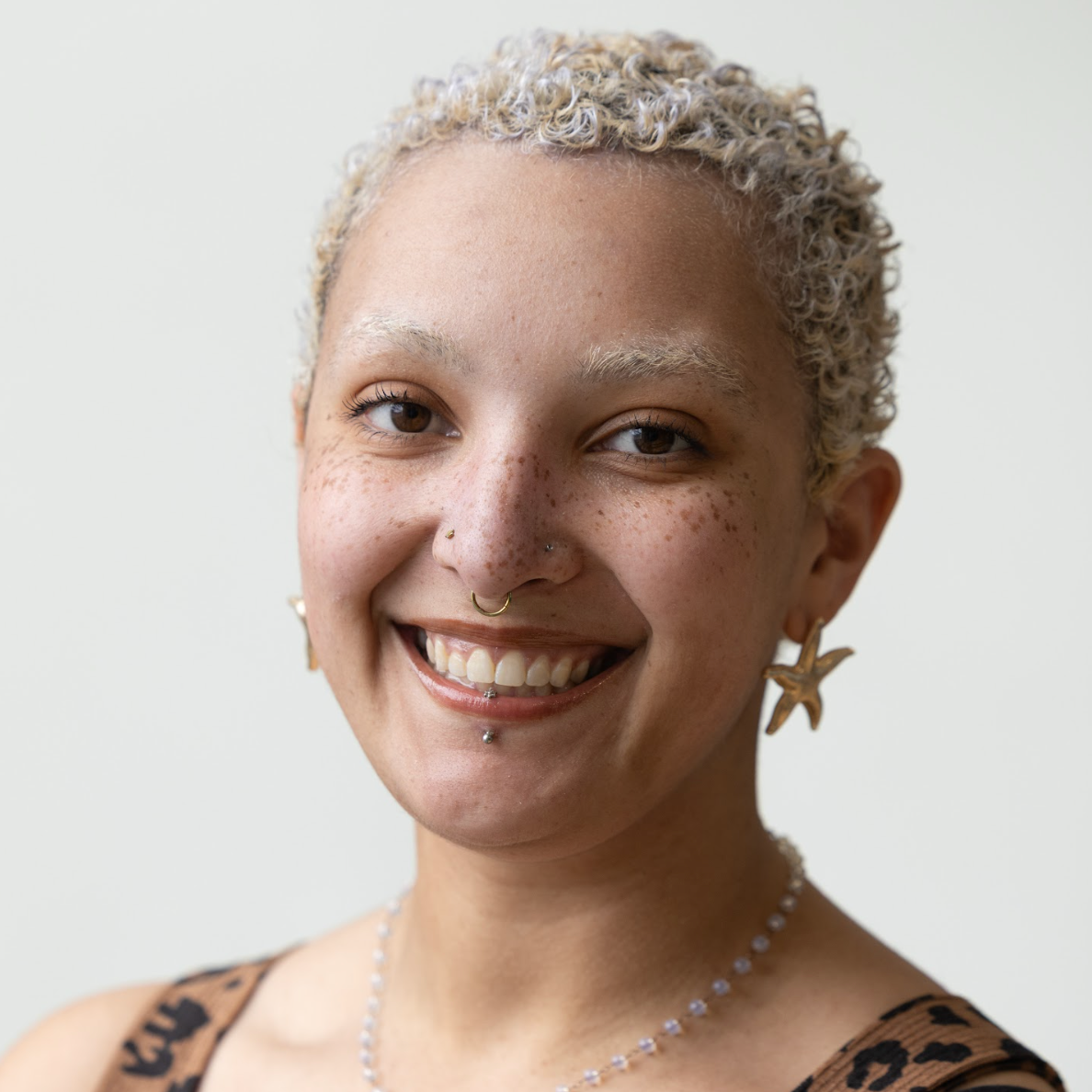
I’m a Speech and Language Therapy student at Trinity College Dublin and a member of the 2026 Laidlaw Scholars cohort. I returned to education as a mature student and single parent after experiencing firsthand the impact that Speech and Language Therapists can have on people’s lives, which inspired me to pursue the profession myself.
My research interests focus on socioeconomic inequality, access to education, inclusion, and student belonging within higher education. Through the Laidlaw Programme, I’m exploring how historically elite institutions such as Trinity engage with class and socioeconomic diversity, and how universities can move beyond widening access towards creating genuinely inclusive environments for students from all backgrounds.
Alongside my studies, I’m involved in student representation work as the Student Parent Officer in the Students’ Union Equality, where I advocate for equity and inclusion for student parents within university life.
Outside of academia, I’m also a DJ (briongloid on instagram and soundcloud x) with a love for garage and jungle music, and a very dedicated bird mother 🐥