I don't know anyone who hasn't failed at some point.


Sarah Tabrizi: The Long Work of Getting Somewhere
Last week marked ten years of partnership between the Laidlaw Foundation and UCL, one of the universities at the heart of our global community. It feels a fitting moment to turn to someone from within it whose career is a lesson in how long meaningful work can take, and how much failure it absorbs on the way. Sarah Tabrizi, Professor of Neurology at UCL and this month appointed CBE for her services to people with Huntington's disease, has spent close to thirty years working towards something the field had begun to think impossible. From the outside, a career like Tabrizi's looks like a line of breakthroughs. She is quick to tell the scientists she mentors that the reality is mostly the opposite:
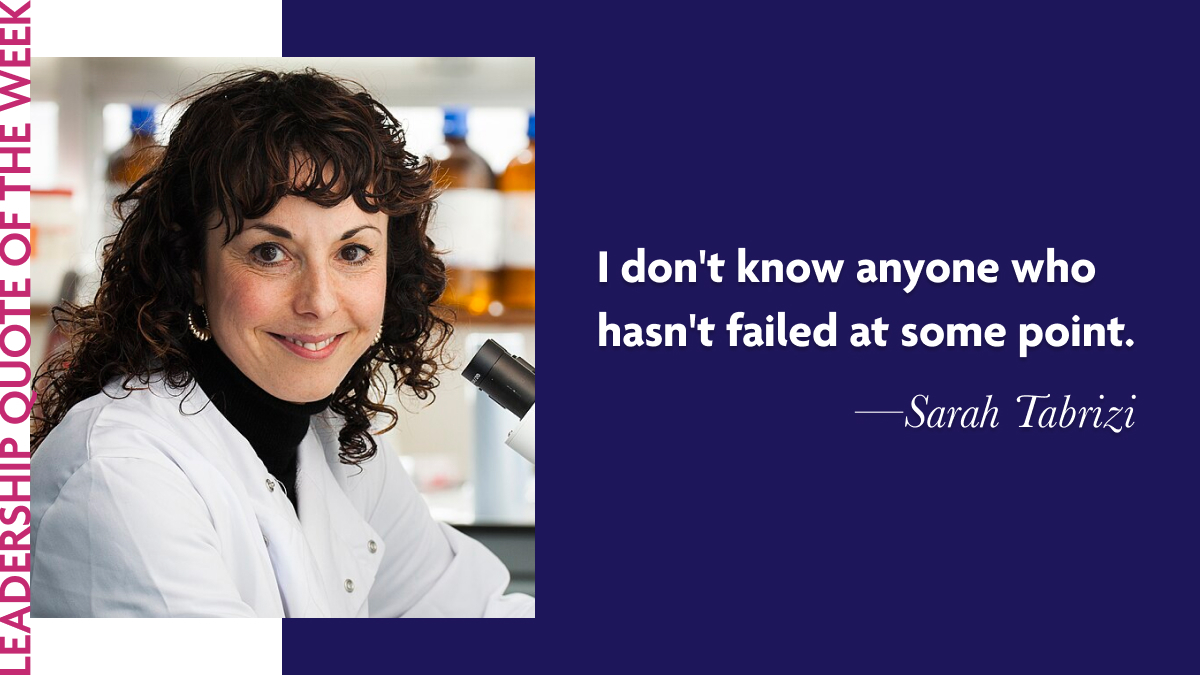
Sarah Tabrizi: "I don't know anyone who hasn't failed at some point."
A Field Built on Setbacks
Tabrizi co-founded the UCL Huntington's Disease Centre, now the largest Huntington's clinical group in Europe, and has spent her career on a disease whose gene was identified in 1993 but which resisted every attempt to slow it for the three decades that followed. Last year, the trial she advised as lead scientist reported that a new gene therapy had slowed the disease's progression by a striking margin, the first time any treatment had been shown to do so. That result did not arrive in spite of the years of trials that led nowhere. It arrived because she and the field kept running them, learning from each one, until something finally worked. The breakthrough is the visible part of a much longer story, most of which looked, at the time, like failure.
What the Failures Were For
When Tabrizi says she knows no one who has not failed, she is not offering reassurance so much as describing the actual texture of ambitious work. Research that matters tends to spend long stretches not succeeding, and the people who reach something at the end are usually the ones who were willing to stay in those stretches. For scholars beginning a research project or a Leadership in Action plan this year, this is worth holding onto early. The experiments that do not work, the directions that turn out to be wrong, the months where nothing seems to move, these are not signs you have taken a wrong turn. They are most of what the work is, and staying with them is how the occasional breakthrough becomes possible at all!
Values in Focus
Tabrizi's message speaks to the Laidlaw value of being #Ambitious and the Oxford Character Project virtue of #Drive. Ambition, in her case, has meant setting out to change the course of a disease that had defeated everyone before her, knowing the attempt would involve far more failure than success along the way. Drive is what sustains that kind of work, the initiative and persistence to keep going across the years when the results are not yet there, until at last they are.
A Call to Reflect
As you consider Sarah Tabrizi's words, we invite you to reflect and share in the comments: when has staying with something through its difficult, unrewarding stretch led you somewhere you could not have reached by an easier route?
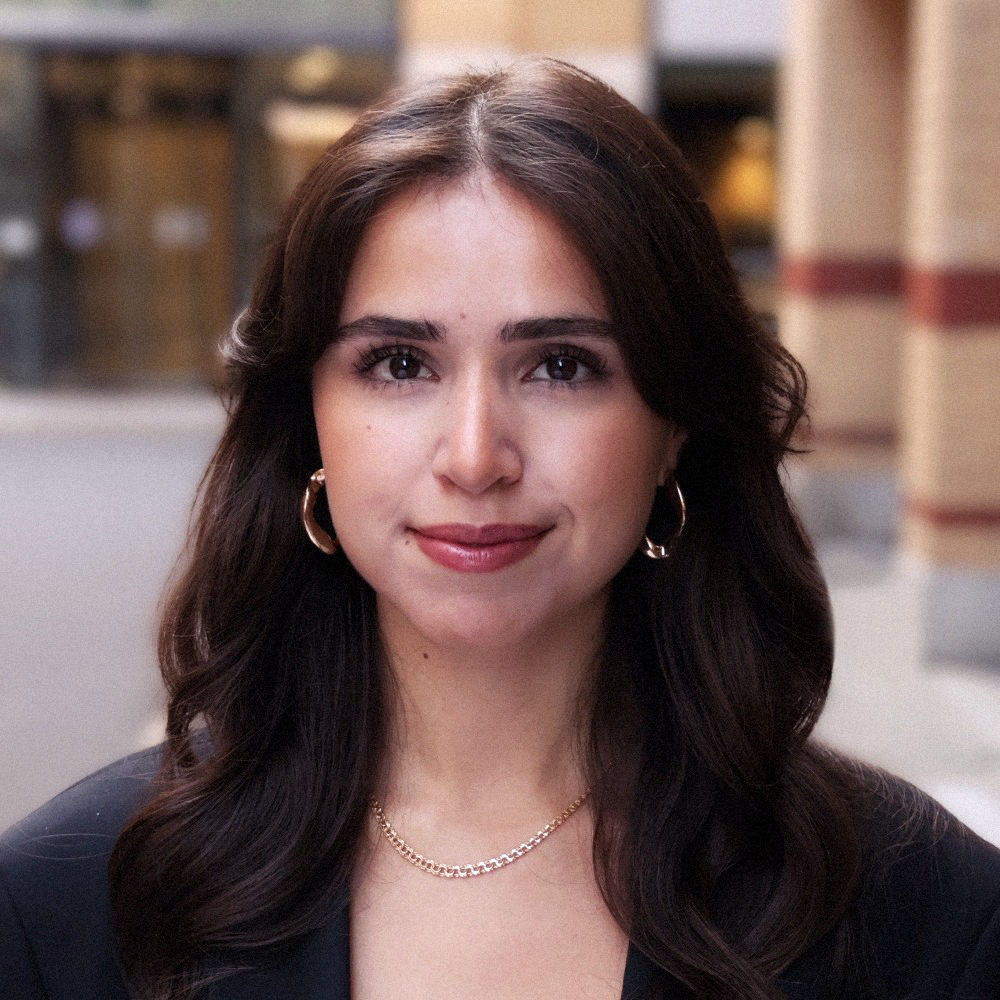
Hi! I'm Amanda, a third year Neuroscience student and Laidlaw alum from UCL. I'm Swedish-Persian and grew up in Sweden before moving to London for uni. These days, alongside my studies, I work for the Foundation as a Marketing Assistant.
For my first year research project, I worked on optimising alginate hydrogels for 3D astrocyte culture systems. In simpler terms, I was figuring out the best way to prepare a jelly-like scaffolds so that star-shaped brain cells called astrocytes could grow in three dimensions rather than flat on a dish. This matters because 3D environments mimic the brain more realistically, which could help researchers develop better treatments for neurological disorders!
For my Leadership-in-Action project, I co-created Beyond the Books, a resource designed to help students from underrepresented backgrounds navigate the unwritten rules of university life, from internships and networking to professional opportunities that aren't always obvious if you're the first in your family to go to uni.
Always happy to connect, whether you want to chat about neuroscience, widening access, the Laidlaw experience, or just say hello! One of my favourite things about this community is getting to meet people from different universities and backgrounds, so please do reach out! 🌟





Please sign in
If you are a registered user on Laidlaw Scholars Network, please sign in