“I am out with lanterns, looking for myself” – Emily Dickinson
In starting this blog post, I struggled initially to start. There seemed to be so few ways I could consolidate the last two years’ academic, professional, and personal journey throughout my time as a Laidlaw Scholar. As soon as the first few sentences had been written, though, the words poured onto the page in a way I haven’t experienced in a long time. The idea of writing without assessment has become foreign to me in my time at university, with coursework becoming the majority of what I write. But sharing my experiences and writing freely has provided me with a microcosm of one of my favourite parts about Laidlaw – the ability to learn and explore for the sake of learning.
My Research – Ancient Inspiration in a Modern, Global Context
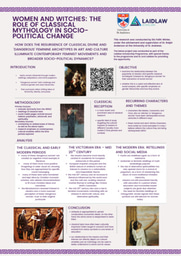
As someone who’s had a lifelong interest in research and academia, Laidlaw has allowed me to get a taste of self-managed research and allowed me to explore what I may want to pursue later in life. While so many of my circumstances have changed, the chance to pursue my lifelong passion is one that I’m incredibly grateful for. My classical research interest is something I often have to field – many people have strong opinions on its relevance or obsolescence, which I believe I’ve been able to disprove in my project. Gender in the classics is both a novel and widely explored idea, as a newer field in the grand scheme of classical research that has so often been conducted by the ruling class, gender, and racial demographic, but one that has shot to popularity in the last 20 years as feminist movements have evolved and the Classics have experienced a sort of modern renaissance. Standing now as they did in the 1800s as a symbol of erudition, the Classics have over time shifted from something that upholds the status qu to in many cases something that challenges it, which was something I was fascinated by. Feminist and revisionist retellings are everywhere in bookstores and in online spaces.
When I tell people what I study, I’m often met with mentions of Emily Wilson’s translations of Homeric epics and Natalie Haynes’ retellings of popular myths that centre women in an effort to grant them agency and complexity in texts that often fall short in that category. However, not every classical text in its original Greek flattens their female characters in the way the genre is known to – the period and target audience of a translation often varies the message drastically. For example, the first line of the Odyssey includes the word polytropos, literally translating to many-sided, figuratively translated as cunning, with a sort of morally heroic connotation in its attachment to Odysseus as a quintessentially Greek hero of the Trojan war. His story reflects so many elements of Greek culture from the importance of homecoming and hospitality to his reverence and occasional emblematic irreverence for the gods. He is a hero who has attained the favour of Athena, who protects him and his family. He is an ideal warrior-king. However, when Emily Wilson translated the Odyssey, polytropos was translated as “complicated.” While adding a more modern scrutiny of Odysseus’ morality and actions, this invokes a more duplicitous image of one of Greece’s favourite heroes, at least in its aversion of overt praise. Wilson’s translation, while accurate, at several points employs a more modern feminist lens to the narrative’s interpretation, a refreshing and welcome contrast to a story that so often leaves its women at the wayside. Translation truly is in the eye of the beholding culture.
This became a topic of interest for me, as one of my favourite plays, Euripides' Medea, provides a sort of tongue in cheek condemnation of one of the most iconic female villains of classical myth. His depiction affords her motives a proper stage while using the chorus to condemn her actions in what reads as (at least to me) a somewhat satirical manner. He does not condone Medea’s actions but instead invites audiences to understand them. It was seeing the varied translations of this story and this character that gave me the idea for my research, as I wanted to see how classical translation dialectically demonstrates the contemporary anxieties and culture of a time period and also influences wider cultural attitudes. The same characters demonised in prior iterations have been co-opted as feminist icons, something I wanted to explore through the vessel of witches and other ‘dangerous women,’ who have ascended through history from villain to hero.
The Research Summer – A Period of Change and Growth
Of course, much of what made Laidlaw so transformative wasn’t necessarily when I was putting pen to paper. In the in-between moments of my research, I met new people and connected with them, a sense of camaraderie built on braving a silent St Andrews summer. My first day of Laidlaw was also my first day in my new home, living with other people (including another Laidlaw scholar!) for the first time in my life. As someone very used to new beginnings, having to pack up my life every two years, this new period was exceptionally jarring as I’d started to realise I was, in fact, staying in one place for longer than I really ever have before. Being in a town as small as St Andrews has been a challenge and a blessing in equal measures, but Laidlaw allowed me to see a new side of it. The largely student-free and only slightly warmer summer gave me the space to not only find a space in our usually packed student union cafe, but to discover more facets of myself.
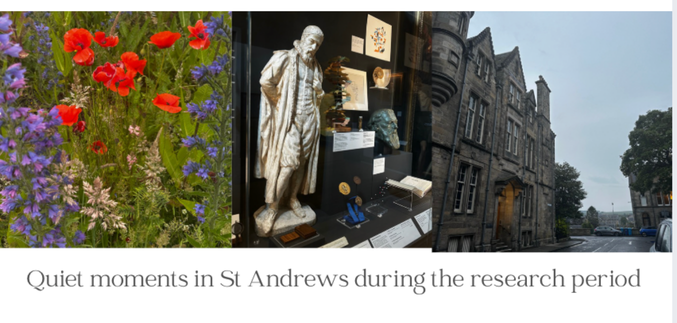
After the research period was over and the writing period was in full swing, I took a small break to go to Romania for my 20th birthday. As a lover of all things macabre, the birthplace of Dracula seemed the perfect place to ring in a new decade. Accompanied by a longtime friend, I explored the streets of Bucharest and the forests of Transylvania. This period became incredibly restorative for me as it forced interruptions of my routine which, dear to me as it is, occasionally came at the detriment of my mental health. One of the larger challenges I’ve faced in Laidlaw and in university is managing myself and my time with less external structure than I am used to, as my all-or-nothing mentality I am (slowly) trying to mitigate often led to long periods of intense work and long periods of crashing.
At risk of this becoming a travel log, I was in London immediately after to visit family. Laidlaw became a period of new beginnings and reunions, punctuated by all-nighters and caffeine fuelled research tirades. This became one of my most memorable trips as I saw Rachel Zegler (someone I’ve looked up to for many years) as Eva Peron (a previous historical special interest I look up to notably less). This trip was also when I was diagnosed with autism, freshly 20 years old. The diagnosis was not surprising, but the amount of impact it had on me was. Many mental health advocates and autistic people online share about the danger of ‘skill regression’ and autistic burnout, two things I had not heard of until I delved into a month-long research period of my diagnosis and realised what I was experiencing. Learning after 20 years that certain things were just not as challenging for other people and that my brain operated fundamentally differently, including an inability to tune out sensory stimuli I had always assumed everyone experienced, was a shock to say the least. For a while, my Laidlaw research took a back seat as I reckoned with this simultaneously new and omnipresent side of myself. The suspicions had been held for years but receiving confirmation and learning all the ways it had been affecting my life, which I took as universal experiences, was more challenging than I had anticipated. After reading about 10 books on my new diagnosis, it was time to return to my actual research, with a newfound appreciation and understanding of my skills and myself. I discovered how much better I could work and feel with only the barest accommodations (colour filters on my laptop, or earplugs in public are favourites). This period forced me to be kinder to myself and have healthier expectations for my productivity, which ended up working very well in the long run and has changed both how I support myself in my work and study, but how I support my peers when I have the opportunity.
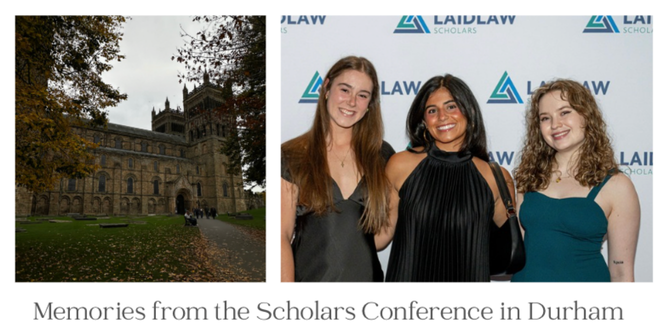
Third year passed in a blur of deadlines and, before I knew it, it was my second summer in the programme. I’m always struck by how much can change in the span of a few months. My summer was kicked off with my close friend’s wedding, and despite being half American, it was my first time visiting the states in four years. As with many of my counterparts who have grown up overseas, returning “home” is a loaded statement, often filled with a sense of alienation for a place that ‘should’ feel familiar. While unfamiliar, I found the U.S. to be incredibly welcoming. Despite the 19 years of my life I’ve lived outside the US, being back on the ‘mother ship’ as it’s called in my family made me realise so much of my identity and traits are more culturally derived than I had once thought – beyond the Midwestern accent I’ve somehow retained my whole life. In Laidlaw, we’re encouraged to be global citizens - a title I’ve heard and been called as long as I can remember - so it was strange for the first time to be, in a sense, a local.
The LiA Summer – Reflections in Character Development
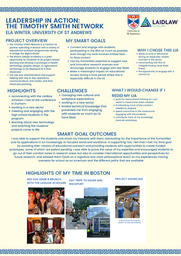
My LiA project involved doing project management and admin support for the Boston Design Academy, a technology and project learning focused summer internship for high school students in and around Boston. Upon first hearing about the Central LiA at the Laidlaw conference last October, I was immediately interested in the opportunity to support the education sector and do meaningful work in the US.
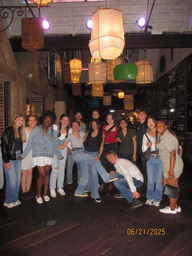
The LiA summer itself proved to be unpredictable. From a very optimistic start I quickly struggled interpersonally and with managing a new work environment. Coming from a background of both being raised by public servants and working as one myself, the NGO work environment was different to anything I had experienced before. I regained my sense of camaraderie with my fellow Laidlaw scholars throughout the six weeks, but I found the new expectations of the NGO field and the American work environment to be more challenging to accommodate. I’ve since reflected a lot on what to take with me into future work experience, such as asserting myself more strongly for accommodation and to ensure I can advocate for my talents being used more effectively. While I struggled during the work day, I’ve been able to specifically develop my accountability and found this to be an opportunity to provide and ask for support among my peers, which made the entire experience more enjoyable.
One of the highlights of my LiA was speaking with the high school students working in the Boston Design Academy (BDA). As someone who has a long term interest in the educational sector as a career path (in whatever form that ends up taking), I have reminded myself of how influential my own teachers were. Experiencing difficulties in high school is a universal experience, so I tried my best to be a positive and inspirational figure to the interns (the high school students) as much as I could. While my role involved little face to face involvement with them, I always made sure to talk with them, whether that be asking about their projects or exchanging book recommendations. I was a bit intimidated upon first starting at the BDA as a humanities student in what is admittedly a very STEM-focused programme, but I found that my knowledge and advice still had a place with the interns and I can only hope that I was a positive influence.
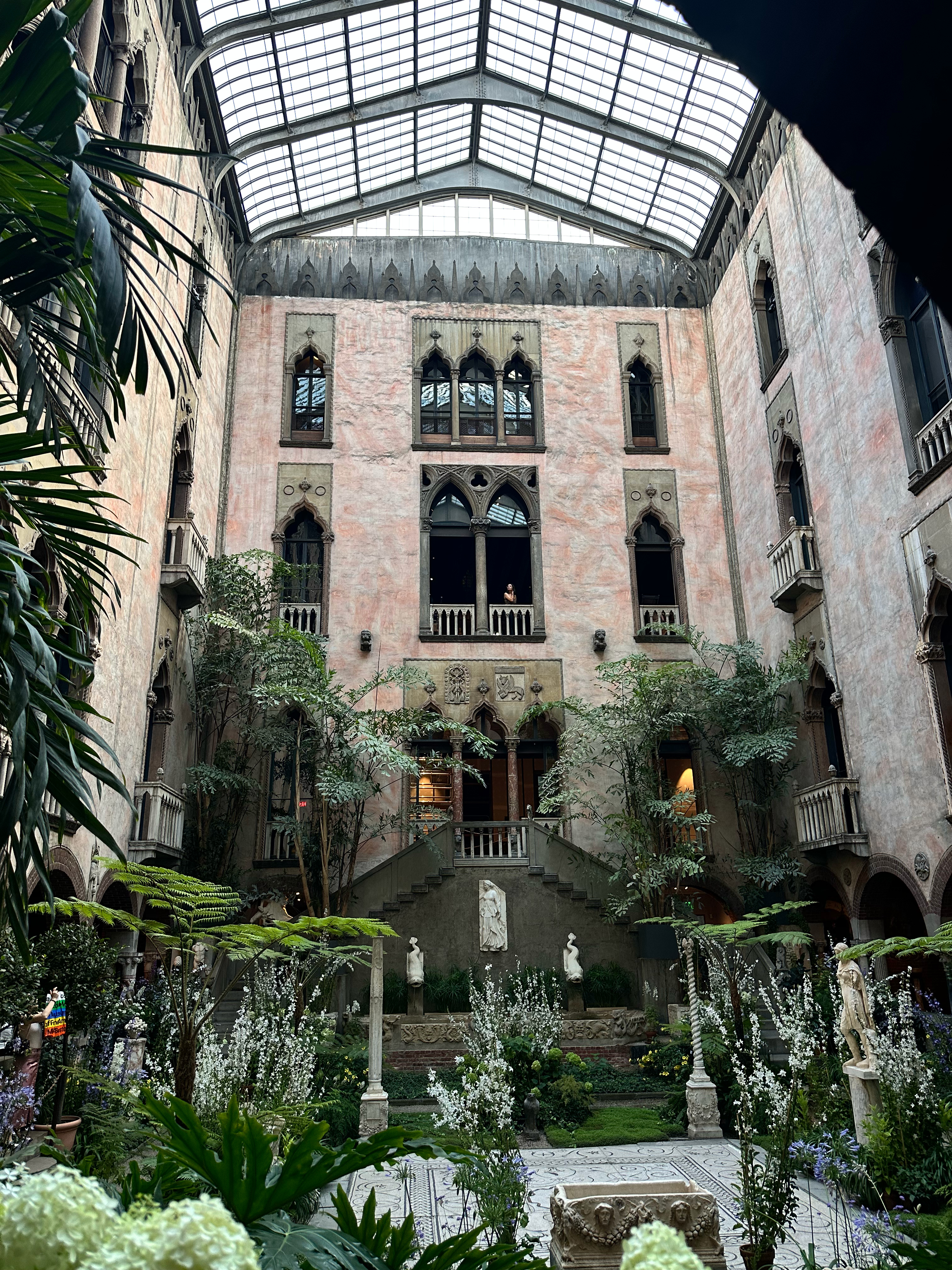
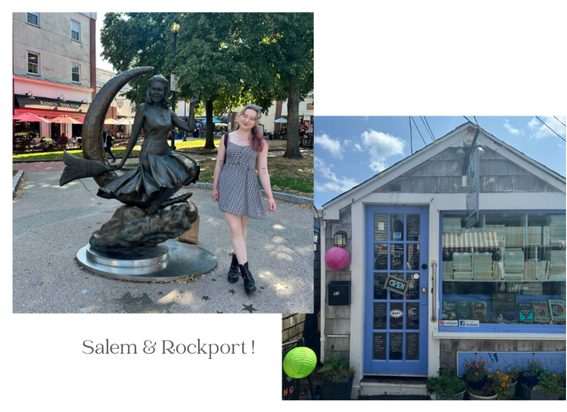
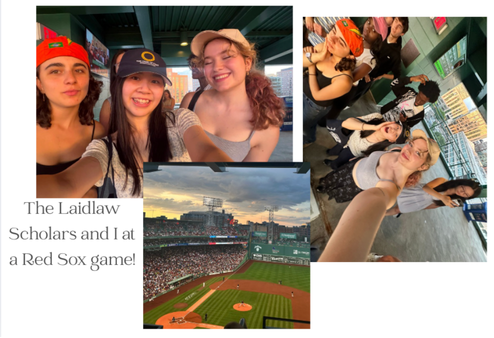
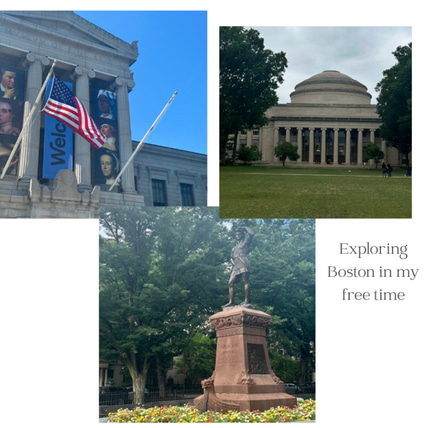
Beyond the chaos of the workday, I got to experience life in a big American city. I loved Boston from the first day I was there, and was lucky enough to have a week to explore the city before beginning my LiA. I saw the Fine Arts Museum’s impressive displays of Classical artefacts, but also got to learn so much more about my own country’s history and culture in a new and immersive way. I attended my first baseball game, a true American tradition my father has encouraged me to participate in for years, was in Boston for the 4th of July (surrounded by people in period-accurate clothing, just for fun), and explored the sites mentioned in one of my favourite childhood book series – Magnus Chase and the Gods of Asgard. Perhaps my favourite experiences were the trips I took to Salem. As a self-proclaimed witch enthusiast whose own Laidlaw research focused so heavily on depictions of witches and witchcraft, I loved exploring the city and was fortunate enough to be there on their 400 year anniversary. Who knew they had a lawn chair drill team?
My life has changed over my time in Laidlaw more than I could possibly fit into one post. Now that I’m back in sunny, sunny Scotland, I’ll be missing my time stateside. The last two years have given me so many opportunities and experiences I’ll carry with me for the rest of my life, but I’m excited for where my next chapters will take me.

School of Classics President | Laidlaw Scholar | Foreign Affairs Review Editor in Chief | 4x State Department Intern | Timothy Smith Network Alum