Geographic Luck | LiA Week 3
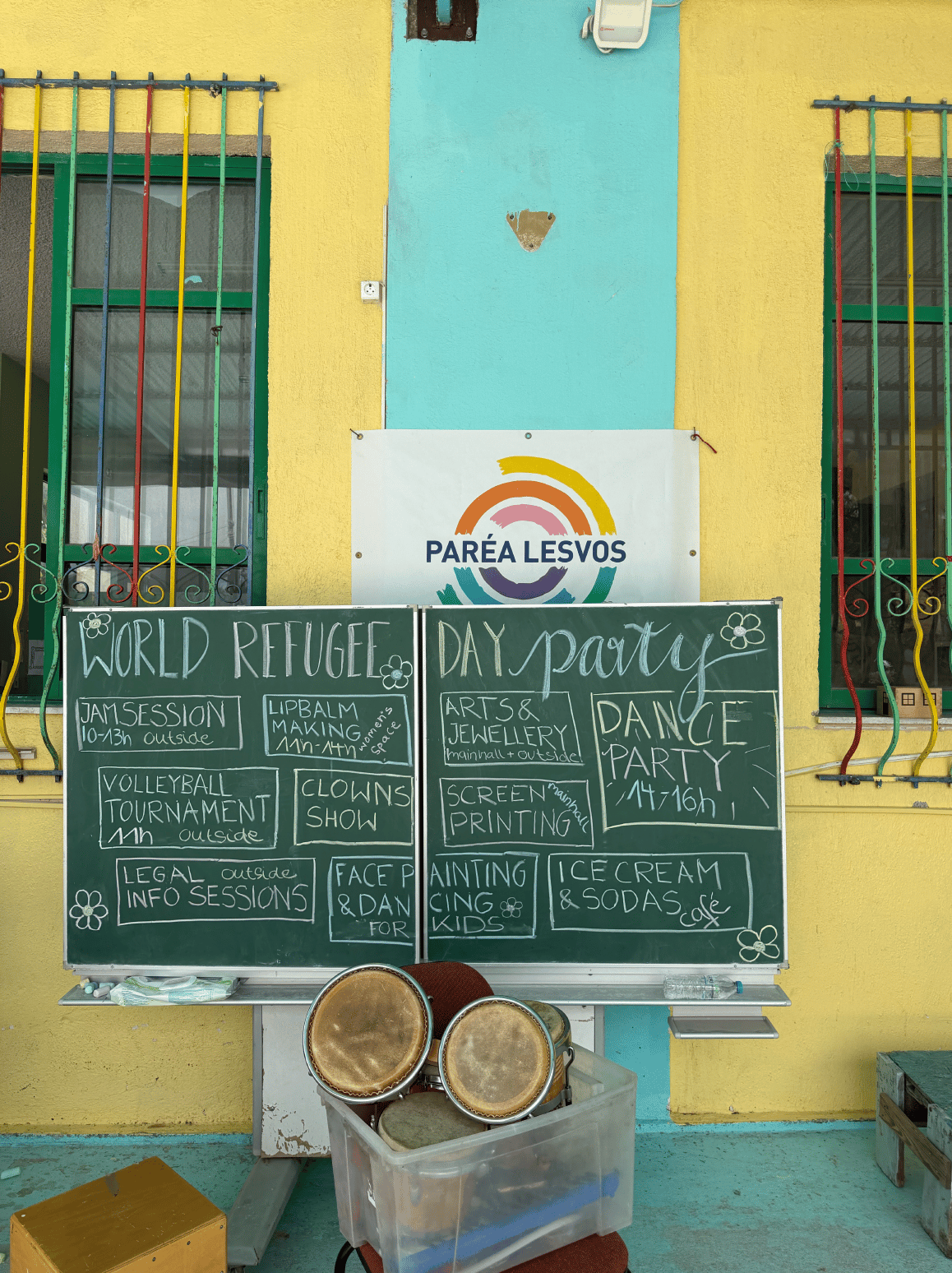
This week was World Refugee Day, and I don't think I expected it to become one of the experiences from Lesvos that I would think about the most. World Refugee Day takes place every year on 20 June, and I attended an event at PAREA Lesvos, another organisation working with refugee communities on the island. There were activities throughout the day: art, jewellery-making, face painting, games, food, music and eventually a dance party. It felt completely different from the legal environment in which I had been meeting applicants during the rest of the week.
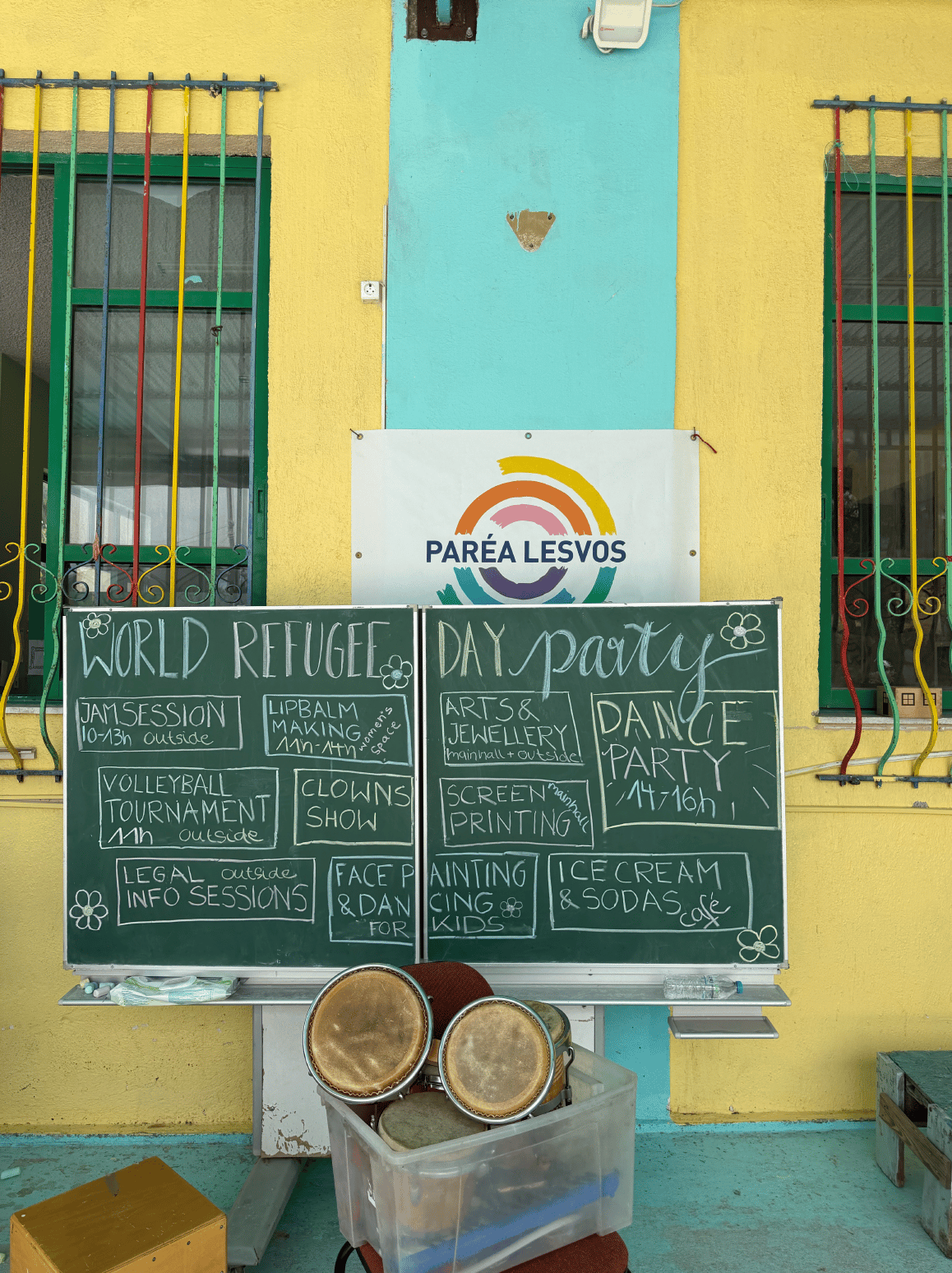
My message to the world
One activity in particular has stayed with me. There was a large hand-drawn world map titled “My Message to the World.” The countries were not already marked out in detail, so people could come over and add something representing where they were from through colours, drawings, flags, messages or whatever they wanted. I obviously decided I was going to make India extremely artistic, and then remembered that I have absolutely no artistic ability. I settled for colouring the Indian subcontinent orange, white and green like the Tiranga.
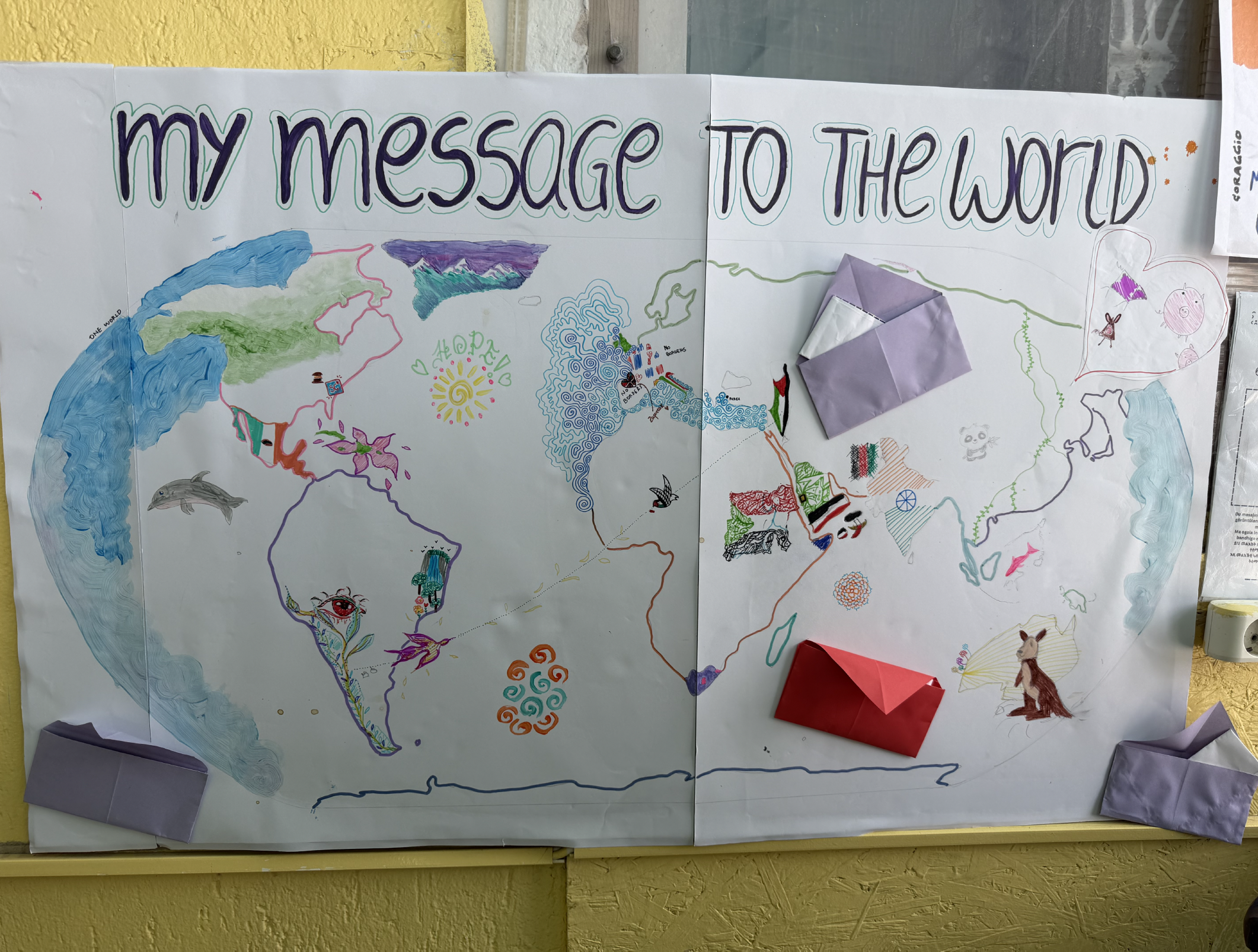
'My Message to the World' — still one of my favourite activities from the whole placement.
By the end, the map had been completely transformed. Different parts of the world were covered in colours, symbols and messages contributed by people standing beside each other who had come from completely different places. I've found myself thinking a lot about what I can only describe as geographic luck. I happened to colour India on that map, while other people added their own parts of the world. None of us chose where on that map our lives would begin, yet that accident of geography can influence the passport we hold, the opportunities available to us, our freedom of movement and, in the most extreme circumstances, whether we can safely remain in the place we call home. It was strange to stand around the same map together and think about how dramatically different our lives could have been simply because of where we happened to be born.
A party where nobody had to explain themselves
What I loved most about the day was how normal and joyful it felt. There were children running around, people eating, painting, making things and laughing, and eventually everyone started dancing. The playlist was suggested by the people there rather than by one organiser deciding what everyone should listen to. Some Afghan participants suggested Bollywood songs, other people requested Arabic music, and everyone ended up dancing to music from places that were not necessarily their own. And, of course, at some point they had to play Despacito. Apparently that one really is universal.
What made the day particularly meaningful was that some of the people there were the same people I would usually see around the camp. In that setting, I was used to meeting people when they had a problem, needed legal assistance, were worried about an interview, or were dealing with some kind of uncertainty. Because that was the context in which I normally saw them, it was easy, without even realizing it, to associate people with whatever difficulty had brought them to us. At PAREA, I saw some of those same people in a completely different light. For that one afternoon, they were so present. They were dancing, laughing, choosing songs, making things with their friends and children, and simply enjoying where they were and who they were with. It made me realize how limited my picture of someone can become when I only ever meet them at the moment when they need help.
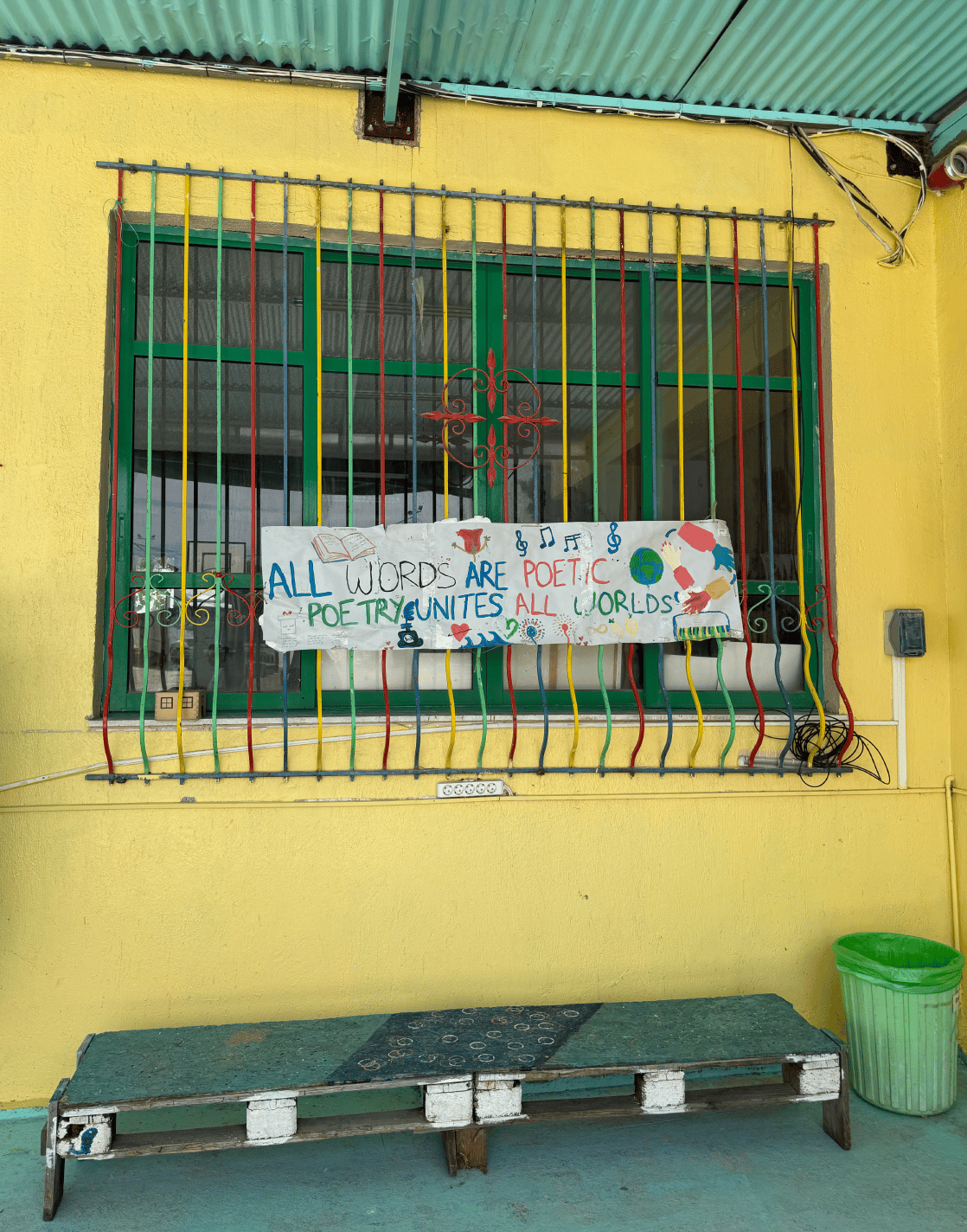
One of the little things around PAREA that stayed with me.
That contrast stayed with me because so much of my work necessarily involves asking people to revisit difficult parts of their lives. Legal interviews require applicants to explain experiences they may rather not return to, country-of-origin research often involves persecution and violence, and the asylum process itself asks someone to explain why they cannot safely return home. But none of those things tells you everything about the person sitting in front of you. At PAREA, nobody needed to explain what had happened to them or justify why they were there. For a few hours, they were simply present, and I think seeing people I recognized from the camp in that completely different environment made that lesson much more real for me.
A speech I don't think I'll forget
During the event, there was also a speech that I don't think I will forget. I don't want to reproduce it here because it was not my speech to retell, but I remember very clearly what it felt like listening to it. I had goosebumps and tears in my eyes for almost the entire time. Someone was simultaneously interpreting the speech, and even the interpreter was visibly finding it difficult at points because of how emotional the moment had become. PAREA later shared part of the moment on Instagram, which I have linked here. Read the speech HERE.
That stayed with me because interpretation had already become such an important theme in my placement. During training, I had learned about neutrality, precision and emotional regulation, all of which are essential. But watching that speech reminded me that interpreters are still human beings. They are hearing and processing the same words as everyone else while simultaneously carrying the responsibility of making sure another group of people can understand them. Seeing that happen in real time made everything I had learned about interpretation feel much less theoretical.
Behind every application is a story
Back at ELIL, I was also becoming increasingly aware of how difficult it could be for applicants to communicate information that might be extremely important to their cases. Sometimes people were vague or hesitant. Sometimes a straightforward question produced an answer that seemed to go somewhere completely different. Initially, part of me wondered why somebody would not simply explain everything if the information was important. The more meetings I observed, the less reasonable that assumption seemed.
Someone may have travelled through several countries, experienced violence or discrimination, arrived somewhere completely unfamiliar and then been asked to discuss deeply personal parts of their life with strangers. They may not understand the asylum system or know which details are legally relevant. Some information may also be extraordinarily difficult to say aloud. I saw this particularly clearly in a case involving an LGBTQ+ applicant from a country where same-sex relationships can carry serious legal and social consequences. Important information relating to the applicant's identity had not initially been fully disclosed. What stayed with me was not simply the legal significance of that omission, but the question of why somebody might be afraid to say it in the first place.
Fear, shame, culture, previous experiences with authorities and uncertainty about how someone will react can all affect what a person is comfortable disclosing. An omission on paper can look very simple, while the human explanation behind it may be anything but. That changed the way I thought about credibility and about the purpose of legal preparation. The role is not to construct a stronger-sounding story for someone; it is to help create the conditions in which they understand the process and can communicate their own experiences truthfully, clearly and fully.
What I'm taking from Week 3
This week made me think much more seriously about listening. Good listening is not only accurately hearing what somebody says. In legal work, it also means noticing what has not been explained, where something is unclear, whether someone understood the question and whether your own assumptions are influencing how you interpret their answer.
It also made me much more conscious of the difference between empathy and pity. The applicants I meet do not need to be reduced to the worst things that have happened to them, and World Refugee Day unexpectedly reinforced that for me. The same people who may spend another day explaining incredibly difficult parts of their lives in a legal interview can also spend an afternoon arguing about what song should play next, painting, eating, laughing and dancing with everyone else. That should not be surprising, but perhaps the fact that it felt important to see says something about how easily the word “refugee” can become someone's entire identity in our minds. It isn't.