Field Journal (week IV)
While all Laidlaw Scholars will be presenting their research at the Columbia Undergraduate Research Symposium in the fall, what are the more immediate expectations that you have for your research? Are you writing a paper? Will your research be part of a larger scientific study? Do you hope to produce an annotated bibliography that you reflect on down the line? Is your research now the first phase of a project you’ll continue to work on throughout the year, and/or next summer? Now that we are nearing the one month mark of the program, please write about your expectations for your research.
My most immediate expectation, very creatively, is to get my paper finished!
As stated in earlier weeks, one of the most important issues I have to tackle for this project is the genre of the paper. I have decided, in consultation with my sponsor, that I will treat it for now as a comparative politics paper rather than a history paper. Since this is a new genre for me, I have to rethink some of the assumptions and methodologies that I usually use.
Most importantly, unlike in a history paper, narrowing the scope of the text within a page limit is much more difficult for a political science paper. In a history paper, one can scale down the burden of the argument by either a) focusing on fewer issues/puzzles or b) limiting the approaches to those issues. This is acceptable because a history paper is narratively driven. However, in a political science paper, the dilemma becomes much more difficult: it requires me to derive a causal mechanism, which means I necessarily must state the premise, reasoning, and conclusion in sufficient detail. Unlike history, where I can focus more isolatedly on causes, practices, or consequences, here those three are very difficult to separate because they are interconnected. For my research topic, the consequences of corruption become very unclear and arbitrary without reference to its contingent nature and its contingent cause—and the difficulty lies in how to address it.
So, the expectation I have for myself this week is clear: figure out what the paper will look like by the end, so I can devote the final two weeks exclusively to making that vision happen.
Why does your research matter? Explain the significance of the question you are investigating, and why you are interested in it.
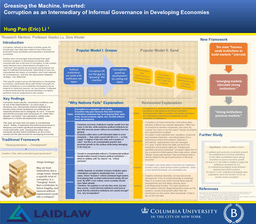
My paper deals with, in retrospect, a hyper-specific issue in a hyper-specific timeframe in a hyper-specific region. But the reason why it is fruitful is that while the context and setting are contingent (as in everything), the lesson within the framework is universal (after all, this is what separates the social sciences from the humanities).
The insight that I think the paper is able to generate is this: it simultaneously challenges (and respects) the rhetoric from both the generic, conventional Western side (that modern institutions are a prerequisite to economic development and curtailing corruption) and its Chinese counterpart (that the early reform era was a masterpiece that achieved both purposes without reliance on "modern" institutions). Furthermore, it challenges their shared assumption that corruption is something simply "removable" (it is, but it is more nuanced than that). Rather, I point out that sometimes the "vice of corruption" is so inextricably linked to the system that removal without oversight is like removing a makeshift block in a Jenga tower—that block must be removed eventually, but an outright, sudden removal of it is costly. There is quite a lot of literature around that has already discussed it as a "second-best institution" (I have some dispute over it in the paper, but I will spare it here).
Overall, I believe this is interesting and motivating because this perspective sits somewhat uncomfortably with both orthodoxies. The point here is obviously not to state that they are wrong, but rather that there are sometimes shared assumptions across polar opposite views which, when challenged, cast doubt on the entire spectrum. That, I think, is worthy of studying because it forces us to pause and think about whether the conflict truly exists.
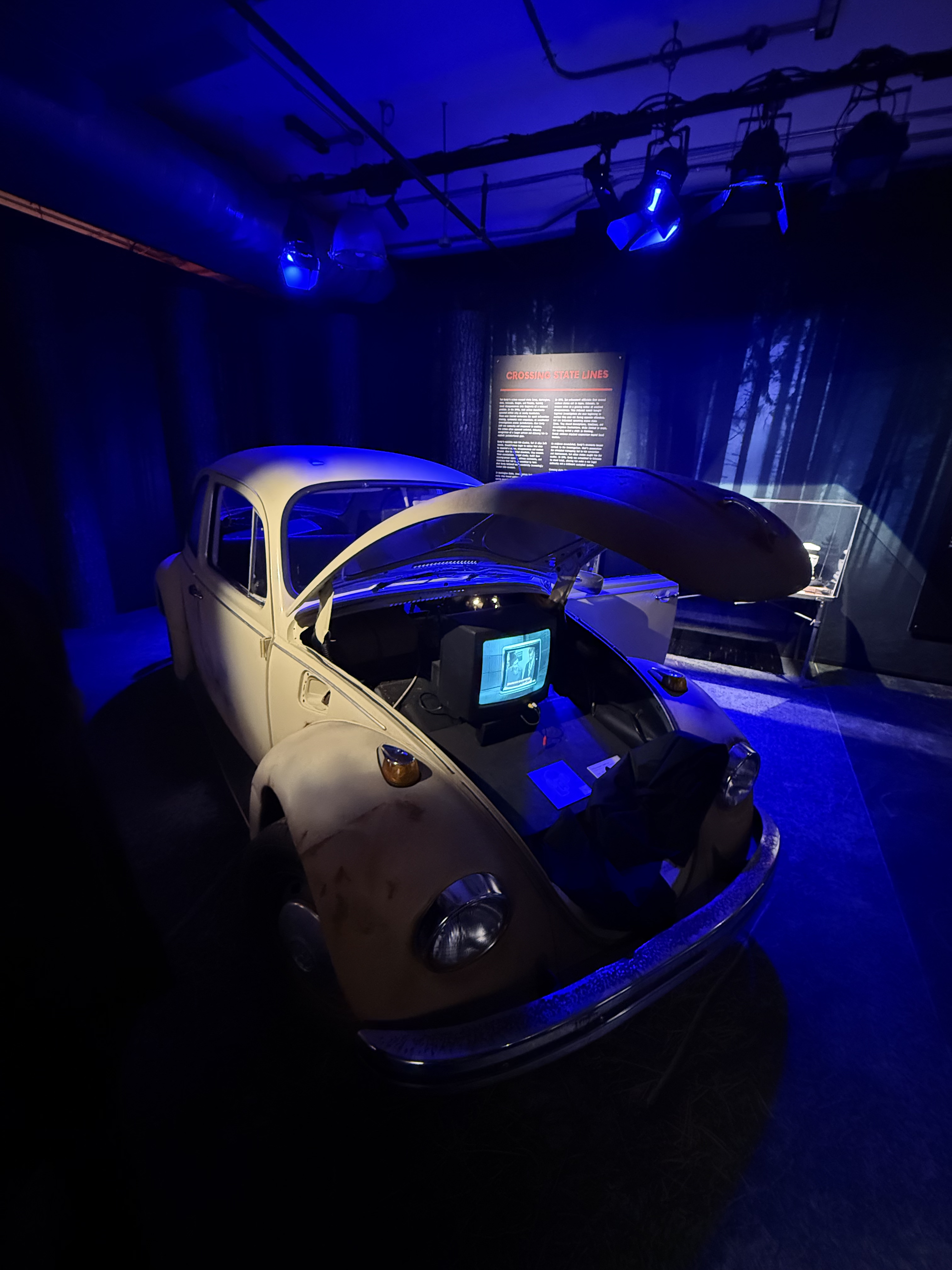
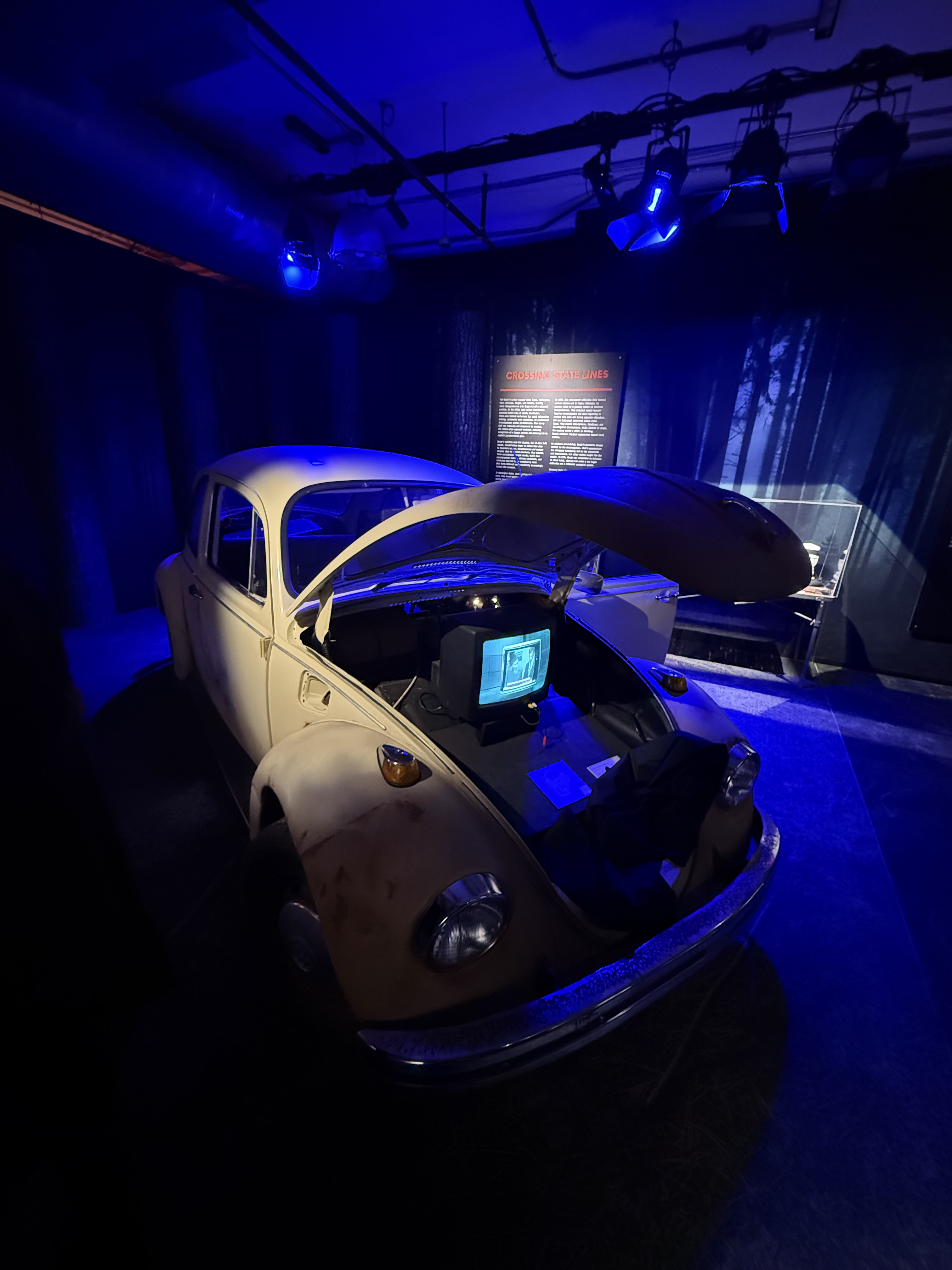
(This is simply me finally realizing that posting a picture is probably good. Context: Has nothing to do with the research, but this is me visiting an exhibit about serial killers-- my friend from John Jay School of Criminal Science invited me over there)
Hello there!
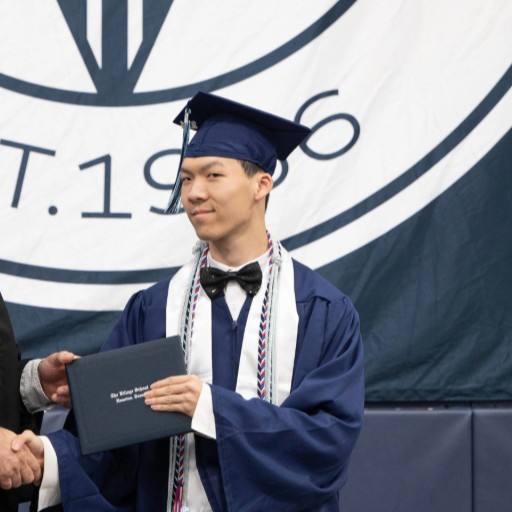
I'm a history major at Columbia University. I spent 14 years as a border-crossing student, living in mainland China and commuting to Hong Kong every day. I spent my high school years in Houston, Texas. My primary focus is transnational Asian history, though I am also broadly interested in philosophy, IR, and political theory.
I spent my freshman year at Rice and transferred to Columbia as a sophomore. I'm currently a rising junior.
I speak English, Mandarin, and Cantonese. I am currently unsuccessfully acquiring Japanese and French.