What new ideas, challenges, or other issues have you encountered with regard to your project (this might include data collection, information that contradicts your assumptions or the assertions of others, materials that have enriched your understanding of the topic or led you to change your project, etc.)?
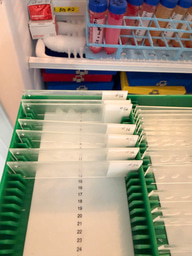
One of the biggest challenges was finding two antibodies — one marking the "sending" side of a brain connection and one marking the "receiving" side — that would show up overlapping under the microscope, which took some trial and error before I landed on a working pair. I also did not learn a preexisting method to quantify my imaged tissue. Since there wasn't an existing step-by-step method that fit exactly what I needed, I designed and wrote my own analysis protocol. I found that writing protocols, although time-consuming and requiring research in its own regard, was very gratifying for me as I enjoyed the process of breaking down a complex task into clear, logical steps that were essential for my project.
How have these ideas or challenges shaped the bigger picture of your research? Has the scope or focus of your topic changed since you began this project? If so, how?
Initially, I planned to conduct my experiments using a mouse model of retinal vein occlusion. However, due to issues with finding where the brains from those animals were stored in my lab, I switched to a mouse model of Leigh's disease. Leigh's disease is a devastating neurodegenerative disorder that also affects vision and the visual pathway I was originally investigating (retinal ganglion cells → dLGN → visual cortex). As a result, I will be examining essentially the same neural pathway and experimental questions, but in a different disease model.
Now that you’ve engaged in Part II of the Leadership Retreat, reflect on a learning point that remains with you as a new way to understand leadership, and to incorporate into your own engagement, in the future.
I have learned that I should be more receptive and even seek out critical feedback, rather than viewing it as a reflection of myself. Moving forward, I want to actively create space for others to challenge my ideas, since a leader who treats feedback as a threat ultimately limits both their own growth and their team's honesty. Seeking out criticism rather than waiting for it to surface also signals to a team that growth is expected and welcomed.
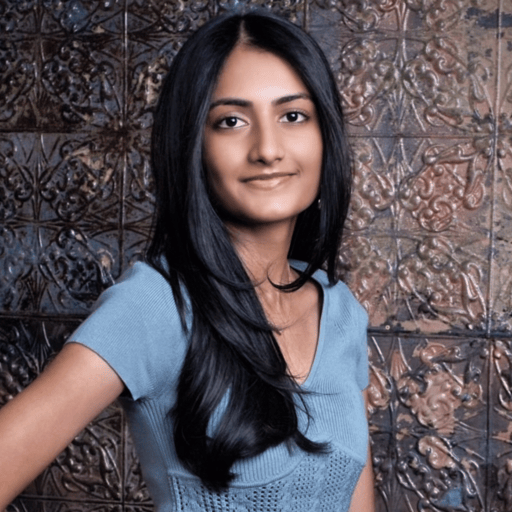
Hi everyone! I'm a rising sophomore majoring in Neuroscience and Behavior. My research at Columbia University Irving Medical Center's Troy Lab investigates how retinal vein occlusion (RVO) — a leading vascular cause of vision loss and blindness — affects the lateral geniculate nucleus, the thalamic structure that relays visual information from the retina to the cortex. RVO is typically treated as a disease of the eye, but vision depends on the entire pathway, and damage at the retina may drive changes deeper in the brain that go unrecognized in current care. I'm interested in characterizing those downstream effects on the LGN and identifying neurological markers that could help explain why some patients lose vision permanently while others recover, ultimately informing earlier intervention before blindness becomes irreversible. Outside the lab, I love singing a capella with Columbia Sur and exploring the city. I'm excited to meet everyone and please feel free to reach out!