While all Laidlaw Scholars will be presenting their research at the Columbia Undergraduate Research Symposium in the fall, what are the more immediate expectations that you have for your research? Are you writing a paper? Will your research be part of a larger scientific study? Do you hope to produce an annotated bibliography that you reflect on down the line? Is your research now the first phase of a project you’ll continue to work on throughout the year, and/or next summer? Now that we are nearing the one month mark of the program, please write about your expectations for your research.
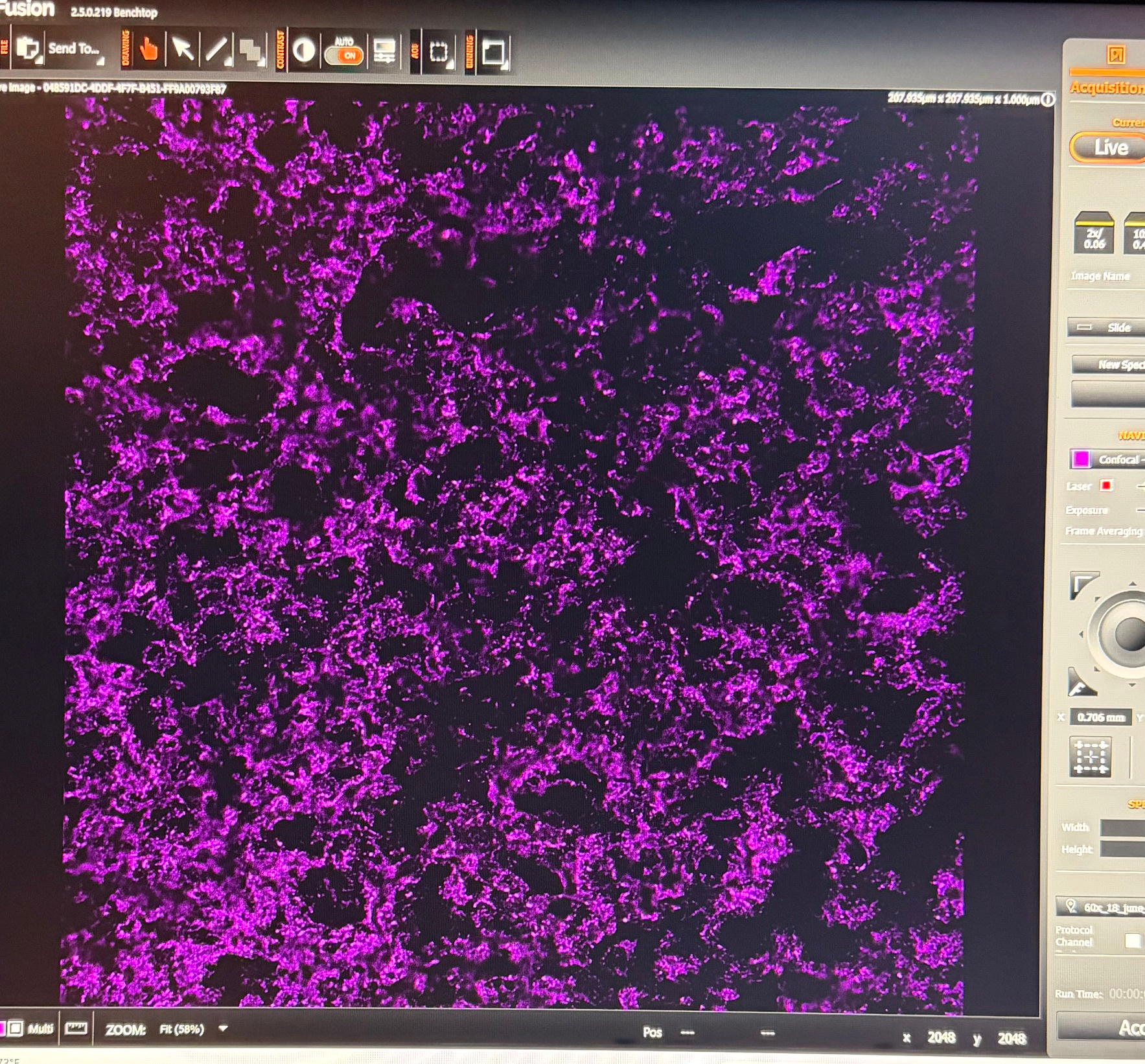
My research is embedded in a larger scientific study that has been ongoing in the Troy Lab for several years. The immediate goal of my Laidlaw project is to determine whether retinal vein occlusion (RVO) produces neurodegeneration in the dorsal lateral geniculate nucleus (dLGN) with a specific focus on which structures are affected (synapses, neurons) and how. Then, if the histological data confirm dLGN involvement, the next phase will examine whether mice treated with the therapy for RVO that my lab has previously developed show attenuation of those same changes — situating my findings within the lab's broader therapeutic work. In terms of deliverables, I am writing a research paper and preparing a poster for the Laidlaw program, both of which will synthesize my experimental findings from this summer.
Why does your research matter? Explain the significance of the question you are investigating, and why you are interested in it.
Retinal vein occlusion is the second most common retinal vascular disorder in the world that leads to blindness, and yet what it actually does to the brain is still not well understood. Past research trials have historically focalized the retina, the site of the occlusion, but the visual pathway extends much further. My project asks whether RVO triggers degeneration in the dorsal lateral geniculate nucleus, a relay station nestled between the retina and the visual cortex, and whether the Troy Lab's therapeutic intervention can stop it. That question is important because it 1. addresses trans-synaptic neurodegeneration in the context of retinal vascular disease and 2. analyzes if damage is propagating into the brain while clinicians treat only the eye, highlighting how current endpoints are missing the full picture.

Hi everyone! I'm a rising sophomore majoring in Neuroscience and Behavior. My research at Columbia University Irving Medical Center's Troy Lab investigates how retinal vein occlusion (RVO) — a leading vascular cause of vision loss and blindness — affects the lateral geniculate nucleus, the thalamic structure that relays visual information from the retina to the cortex. RVO is typically treated as a disease of the eye, but vision depends on the entire pathway, and damage at the retina may drive changes deeper in the brain that go unrecognized in current care. I'm interested in characterizing those downstream effects on the LGN and identifying neurological markers that could help explain why some patients lose vision permanently while others recover, ultimately informing earlier intervention before blindness becomes irreversible. Outside the lab, I love singing a capella with Columbia Sur and exploring the city. I'm excited to meet everyone and please feel free to reach out!