What new ideas, challenges, or other issues have you encountered with regard to your project (this might include data collection, information that contradicts your assumptions or the assertions of others, materials that have enriched your understanding of the topic or led you to change your project, etc.)?
One of the more unexpected challenges has been figuring out exactly who Ahad Ha'am was reading, and what he actually took from those writers. Again and again, I find myself tracing an idea back to a philosopher only to discover that the position Ha'am attributes to them is much harder to locate in their work than I expected. That has forced me to become much more careful about distinguishing direct influence from intellectual inheritance, or even from ideas that had simply become common currency by the late nineteenth century.
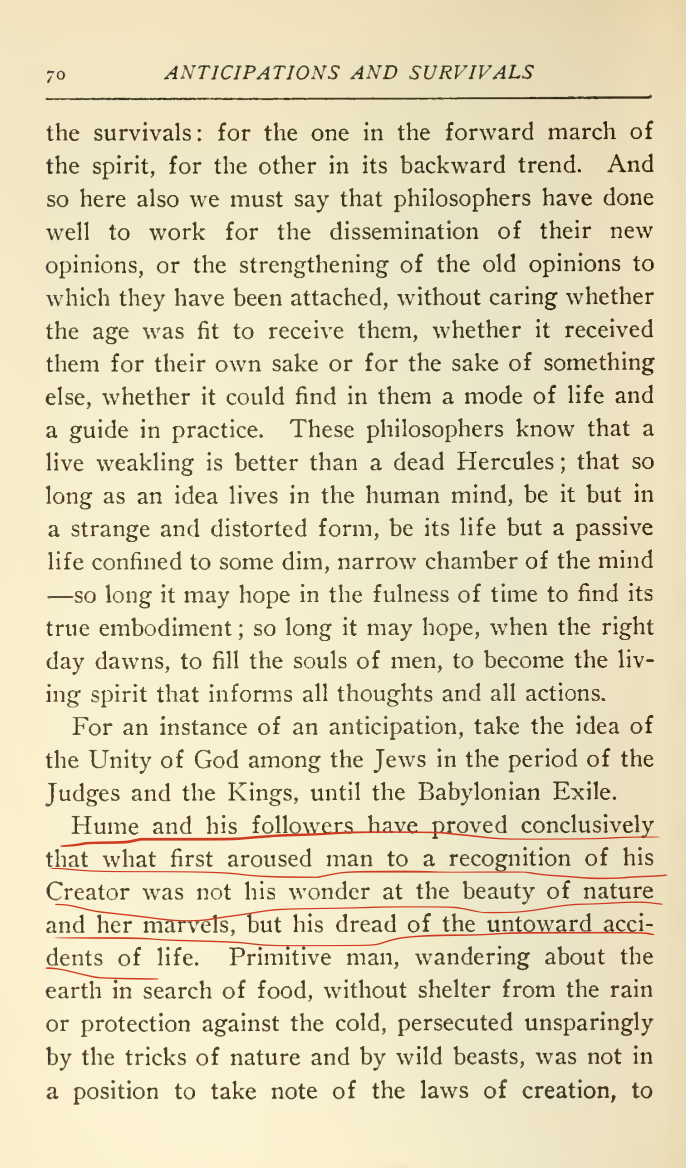
A passage that especially caught my attention comes from Ha'am's "Anticipations and Survivals." He writes that "Hume and his followers have proved conclusively" that religion arose not from wonder at nature but from fear of life's uncertainties. Whether or not that is a fair reading of Hume, I was struck by what Ha'am does with it. Rather than treating religion as an error to be discarded, he treats fear as a permanent feature of human life and asks what kinds of institutions, beliefs, and communities people construct in response to it. That shifted my attention away from asking only what Ha'am believed toward asking how he used philosophical authorities to build a broader argument about human nature and political life.
How have these ideas or challenges shaped the bigger picture of your research? Has the scope or focus of your topic changed since you began this project? If so, how?
The scope of the project has shifted somewhat. I began wanting to explain Ahad Ha'am's political thought, but I've become more interested in the way he argues than in the conclusions he reaches. Instead of treating his essays as straightforward statements of political philosophy, I've started reading them as interventions into a conversation that stretches from the Enlightenment through German Idealism and into modern nationalism.
That shift has made the project less about identifying intellectual influences and more about understanding how ideas move across traditions. I'm becoming increasingly interested in the way philosophers inherit concepts, reinterpret them, and sometimes attribute positions to earlier thinkers that they never explicitly held. That has made the project more historical than I initially expected, but it has also given me a clearer sense of what I hope the paper contributes.
Now that you’ve engaged in Part II of the Leadership Retreat, reflect on a learning point that remains with you as a new way to understand leadership, and to incorporate into your own engagement, in the future.
I've always thought of leadership as an activity rather than a position. I don't think the retreat fundamentally changed that view, but it made me more conscious of how leadership operates in complicated social settings. It is easy to think about leadership when everyone agrees on a goal. It is much harder when people have different priorities, incomplete information, or competing expectations.
The retreat made me want to be more mindful of how I contribute in those situations. Sometimes leadership means speaking first, but just as often it means asking better questions, recognizing when someone else should take the lead, or helping a group move toward a decision without forcing one. I think that awareness will be useful not only during the rest of the Laidlaw program but in any collaborative work I do moving forward.

I'm a scholar of Comparative Intellectual History at Columbia University.