My first project this summer was with the AU Ignite program, studying and helping redesign how soft skills are taught to trainees. AU Ignite runs through SEDI, the Skill and Entrepreneurship Development Institute, Ambuja Cement Foundation's flagship livelihood skilling initiative for rural and semi-urban youth. My job was to provide recommendations on how to improve their soft skills program.
The project started from a simple observation. SEDI already tailors its technical training by trade: a banking trainee and a General Duty Assistant trainee learn completely different hard skills for their very different jobs. But soft skills training has not followed that same logic. It is taught generically, one track for everyone, even as employers keep telling Ambuja that soft skills are exactly where SEDI graduates are weakest.
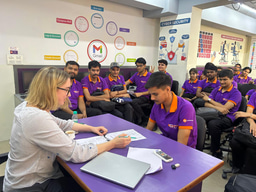
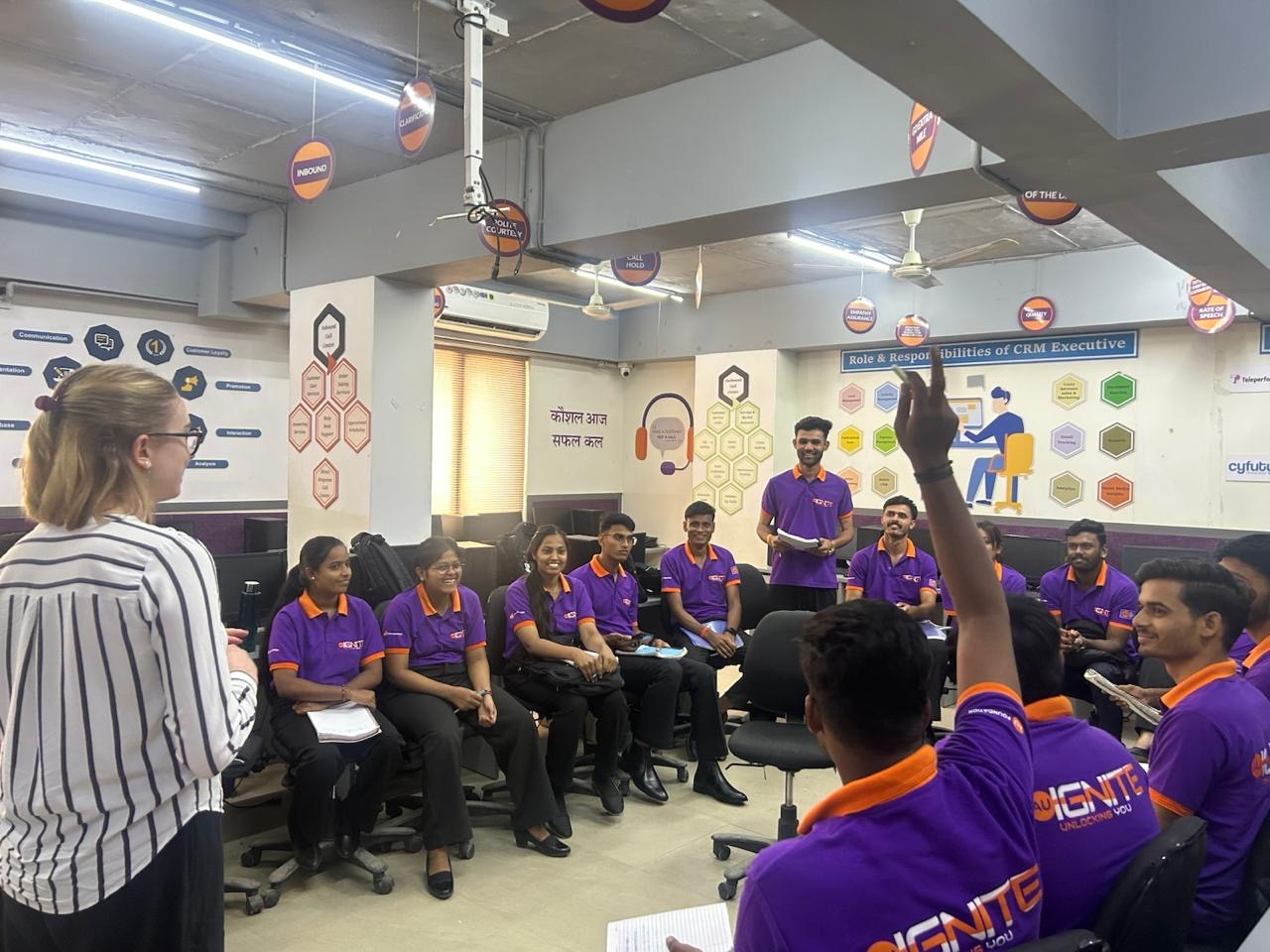
To understand why, I spent time in four centers (Gopalpura, C Scheme, Parivartan, and Govardhan), interviewing the soft skills trainers there: Himanshi Singh, Dolly Khandelwal, Sanskriti Gupta, and Anjali Yadav. I did not want to just study the classroom from the outside, though. I sat in on Himanshi's live sessions in Gopalpura, then ran a full week long soft skills and confidence-building course myself, with a cohort of twenty trainees out of a class of thirty five. The confidence-building ended up being as much of an exercise for me as it was for the trainees. This was my first time teaching a class, and I learned a lot from the public speaking experience.
The bulk of my report comes from my conversations with the soft skills trainers, who have been teaching the topic for years. A few major themes emerged. Communication and English proficiency were mentioned by all trainers, since mother tongue interference is a real and consistent barrier. Grooming is what one trainer called the single most consistent need across all of SEDI. Empathy and problem solving, especially for trade-facing roles like healthcare support and banking were also discussed. There is a strong preference for activity-based learning over lecture, since trainees engage and retain far more from doing something than from being told something. And retention and workplace ethics, helping trainees understand why staying in that first job actually matters for a career.
From all of that, my main recommendation was structural: move from one generic soft skills track to curricula that are actually weighted by trade, with shared foundations in the first month and trade-specific skills in the second. I built out an eight-week worked example for four pilot trades. General Duty Assistant trainees need empathy and patience as the throughline, since they handle patients under real stress. Entrepreneurship Development trainees need negotiation and pitching. Banking trainees need to explain loan and EMI terms persuasively without ever overpromising. Retail Sales Associate trainees need product knowledge and objection handling. I also spent some time thinking about how AI fits into all of this, since it is already showing up in these classrooms whether anyone has planned for it or not.
By the end of six weeks, I had interviewed four trainers, taught twenty trainees myself, and drafted a curriculum for SEDI training centers.