Field Journal 4
On July 12th, 2026, I flew fifteen hours to Mumbai for an internship at the Ambuja Foundation supported by the Laidlaw Program at Columbia University. This was my first time travelling alone to a country so far away, and I was both excited and nervous during my first day in the bustling streets of Mumbai.
Thanks to the Columbia Global Center (CGC)’s help, most of my logistics were already sorted out by the time I arrived. From housing deliberations with Ambuja’s team, to travel arrangements and last-minute visa advice, the CGC team was incredibly helpful in the months prior to my departure. After so much back and forth between time zones, I was glad to have the opportunity to meet the team in person.
As I set off to visit their office, I quickly realized I underestimated the difficulty of the journey to the other end of the city. Walking on the sidewalk, purchasing a metro card, crossing the street, were skills I had taken granted my whole life.
Before coming to Mumbai, I had read that a brand-new metro line had been built called aqua line, connecting the northern and southern parts of the city. Accustomed to traveling by subway in New York, the metro in Mumbai seemed like my obvious mode of transport.
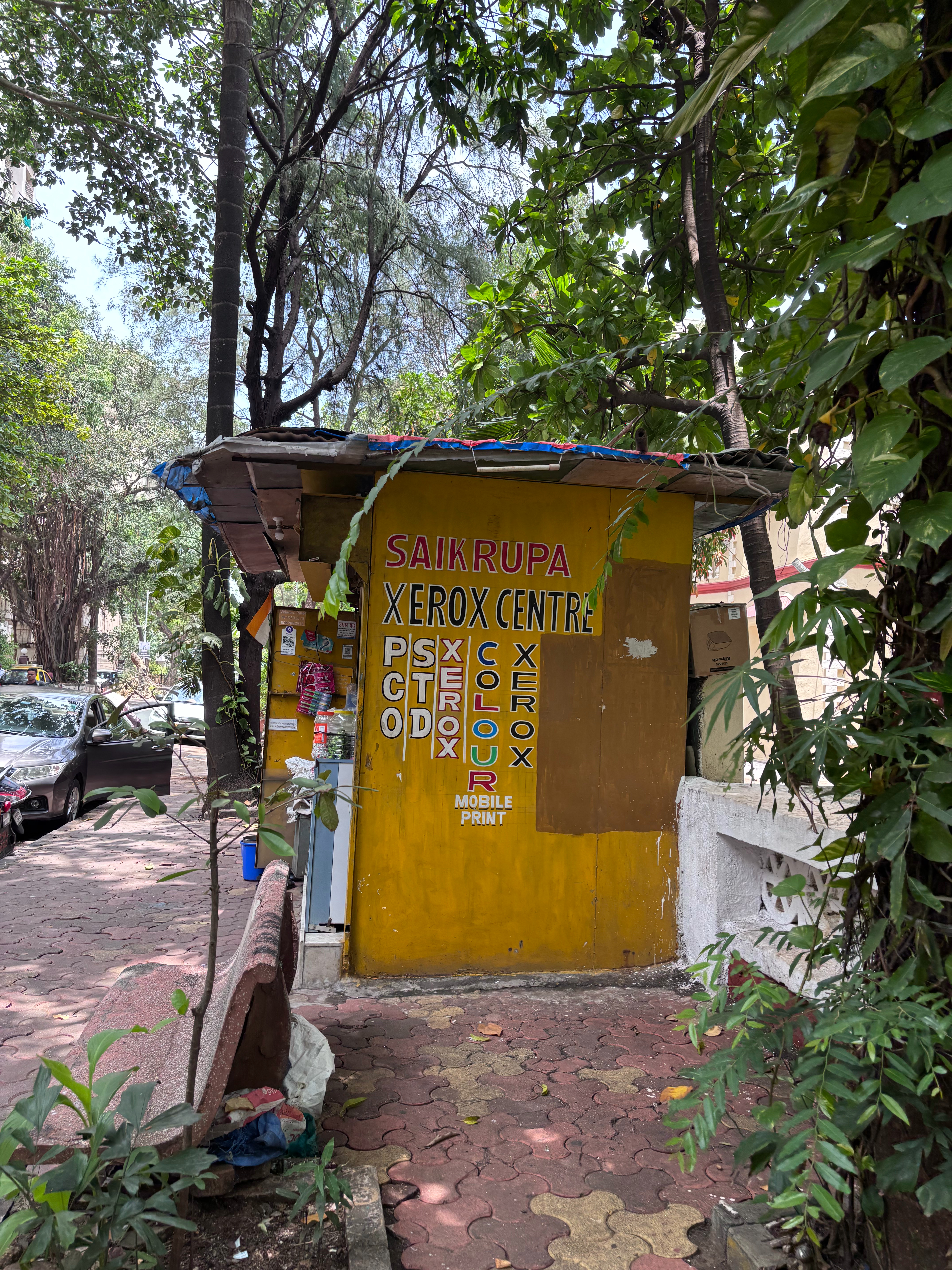
I walked towards the closest stop, only ten minutes away. I first tried to walk on the sidewalk, only to realize it was already occupied. Street vendors parked on the sidewalk were offering services from outdoor haircuts to lunch stalls and printing services. In other places, the sidewalk was covered with fallen palm tree branches, dirt, and trash. All pedestrians were walking on the road, weaving through the heavy traffic.
To cross the street, I waited at the crosswalk for cars to let me through. No one stopped. No one even slowed down. I looked around me to see locals confidently walking into oncoming traffic. They clearly knew traffic rules that I did not. My best strategy, I decided, was to follow someone else who was already crossing.
I finally spotted the metro stop, past a construction site. Relieved, I went in and asked to buy a metro card. The agent requested my phone number and passport number. After entering my information: error. She seemed confused and called her colleague over. They concluded that the problem was my foreign phone number and said I could use a friend’s phone number instead.
Not knowing what to do, I contacted Shama from the Global Center to ask for her advice. She agreed to provide her information. An error alert appeared again. At this point, the agent told me to WhatsApp call Shama and to hand her my phone. After deliberating in rapid Hindi while I stood there, they solved the issue and gave me a metro card. Perfect! I handed over my credit card to pay.
“We don’t take credit cards here.”
Oh no.
I didn’t have any cash. The agent and I were now both laughing at how ridiculous this was getting. She told me to find an ATM and come back.
Finding an ATM turned out to be its own ordeal. It was taking me forever to get anywhere since I kept needing to cross the street. Traffic was heavy, and everyone was honking. I gave up and called an Uber. The car arrived within minutes. The comfortable twenty-minute ride along the coastal road cost me less than the NYC subway.
***
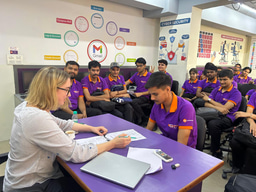
The Mumbai CGE office is located in Lower Parel, at the heart of Mumbai’s business district. And yet, as I saw photos of the Thinker statue and butler library on the walls, it felt like I was at an office on Columbia’s Campus. Everyone at the office welcomed me so nicely. They asked what difficulties I had encountered in my first days here and then proceeded to find solutions for each one.
I had bought 20GB travel data that I planned on using with my American phone number in India, but the connection was poor. The CGC advised me to get an Indian e-sim instead, and Shama brought me to the sim carrier herself. We walked from the office to Airtel where Shama spoke in Hindi with the attendant and did all the paperwork. I now had a working phone number and unlimited data for a fraction of the price I had paid for 20GB of travel data.
Regarding payment, it turns out that the metro card not accepting credit cards was hardly an exception. Even in international cities like Mumbai, you need to use cash or UPI for many transactions. I wasn’t able to withdraw cash in Mumbai, and before my trip here I had never heard of a UPI. I later learned that UPIs, or Unified Payments Interface, are the most common form of payment in India. The CGC helped me set up a UPI and withdraw cash.
I was able to return to the metro attendant and buy my travel pass for the aqua line. As I travelled through Mumbai in the cleanest and safest metro line I’ve ever seen, I reflected on how much more confident I felt in India after visiting the Mumbai Global Center. I am incredibly grateful for all their support. I now have reliable transport, a phone number to communicate with locals, and a working payment system. Maybe someday I’ll even learn to how to cross the road.